As the conflict nears its 50th day, how much has the risk premium for oil prices evaporated?
2026-04-17 19:59:15
On Friday, April 17, the price of the WTI crude oil futures main contract fell back to around $88 per barrel, a daily drop of about 3.5%. This pullback continued the pressure that had been building this week due to the escalating optimism surrounding US-Iran negotiations. Trump recently stated publicly that the two sides had made progress on key terms, including allowing the Strait of Hormuz to reopen to navigation, although Iran has not yet officially confirmed the details.
The conflict has entered its 50th day. Previous Iranian restrictions and naval operations have brought oil flows through the strait to a near standstill, significantly impacting global supply. The current ceasefire agreement faces expiration on April 22nd, and a second round of negotiations is expected soon. The market is widely focused on whether an extension of the ceasefire is necessary to advance negotiations on the details of the framework agreement.
Optimism surrounding US-Iran negotiations is becoming the primary downward driver in the current crude oil market. In his latest statement, Trump emphasized that negotiations are "progressing very well" and an agreement could be reached soon, hinting at the possibility of extending the current ceasefire to complete comprehensive details if necessary. A US official revealed that if a framework agreement is reached, the ceasefire may need to be extended for several months to finalize the terms. Iran, on the other hand, has proposed allowing ships freedom of navigation through the Omani side of the Strait of Hormuz under the guarantee of an agreement, avoiding the risk of renewed conflict. This development has directly alleviated market concerns about supply disruptions, causing the geopolitical risk premium in crude oil prices to recede rapidly.
During the previous conflict, the Strait of Hormuz, a vital waterway for approximately 20% of global oil transportation, was nearly shut down, creating a supply gap of about 11 million barrels per day. WTI crude oil prices consequently surged to above $100 per barrel. Now, with the prospects for negotiations clearing, if the ceasefire is maintained in the short term, the upside potential for oil prices will be significantly limited. Once a comprehensive agreement is reached, expectations of supply recovery will further fuel the bearish momentum, and WTI crude oil may retest pre-war levels. Conversely, if negotiations unexpectedly break down, a technical rebound may occur in the short term, but as long as the ceasefire framework remains intact, the overall upward sustainability will still face challenges. Traders are closely monitoring the potential meeting over the weekend, as this event has become a key variable determining the short-term direction of oil prices.
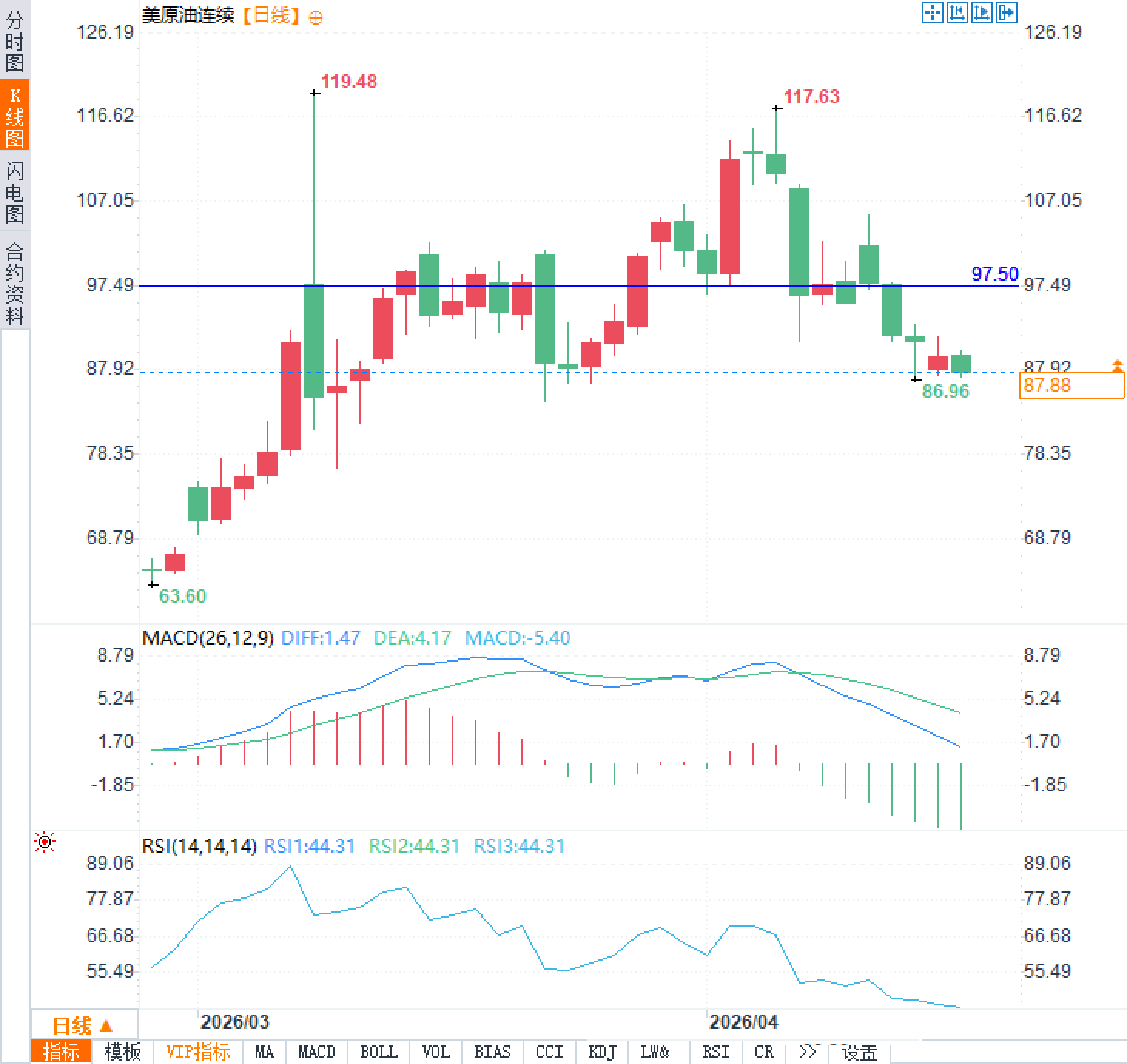
The prospect of the Strait of Hormuz reopening is central to current fundamental analysis. Even if negotiations progress, infrastructure repairs and ship redeployment will still take months, meaning a short-term supply recovery will not be immediate. However, the market has already priced in this long-term negative factor, with WTI crude oil technically breaking through several key support levels, opening a further downside channel. Traders generally believe that if negotiations continue over the weekend, oil prices could test the $84 level or even lower.
From the supply side, Iranian crude oil exports were significantly restricted during the conflict, accelerating the depletion of global inventories. The current negotiation framework includes provisions guaranteeing navigation through the Strait of Hormuz; once implemented, this will release pent-up production. With the restoration of Iranian oil production capacity, coupled with potential increases in production from other oil-producing countries, the risk of a global supply glut will gradually emerge. In contrast, while demand is supported by seasonal factors, signs of slowing global economic growth are limiting consumption growth, making it difficult to fully offset the impact of the supply-side release.
The conflict significantly reshaped global trade flows, with U.S. crude oil and petroleum product exports surging to near-record levels, totaling nearly 12.7 million barrels per day, of which crude oil exports accounted for 4 to 5 million barrels per day. This shift pushed the U.S. net exporter of crude oil closer to its post-World War II high. European and Asian buyers turned to U.S. sources to replace disrupted Middle Eastern supplies, directly supporting the profits of U.S. producers and alleviating some of the pressure from global supply shortages.
Meanwhile, the 10-day ceasefire agreement between Israel and Lebanon further eased tensions in the Middle East, reducing additional geopolitical risk premiums. The reshaping of trade flows is reflected not only in surging exports but also in adjustments to shipping routes and freight rate volatility. Traders are watching whether persistently high export data will further depress US domestic benchmark prices and transmit this to the global pricing system.
The conflict has entered its 50th day. Previous Iranian restrictions and naval operations have brought oil flows through the strait to a near standstill, significantly impacting global supply. The current ceasefire agreement faces expiration on April 22nd, and a second round of negotiations is expected soon. The market is widely focused on whether an extension of the ceasefire is necessary to advance negotiations on the details of the framework agreement.
The prospects for US-Iran negotiations are suppressing crude oil risk premiums.
Optimism surrounding US-Iran negotiations is becoming the primary downward driver in the current crude oil market. In his latest statement, Trump emphasized that negotiations are "progressing very well" and an agreement could be reached soon, hinting at the possibility of extending the current ceasefire to complete comprehensive details if necessary. A US official revealed that if a framework agreement is reached, the ceasefire may need to be extended for several months to finalize the terms. Iran, on the other hand, has proposed allowing ships freedom of navigation through the Omani side of the Strait of Hormuz under the guarantee of an agreement, avoiding the risk of renewed conflict. This development has directly alleviated market concerns about supply disruptions, causing the geopolitical risk premium in crude oil prices to recede rapidly.
During the previous conflict, the Strait of Hormuz, a vital waterway for approximately 20% of global oil transportation, was nearly shut down, creating a supply gap of about 11 million barrels per day. WTI crude oil prices consequently surged to above $100 per barrel. Now, with the prospects for negotiations clearing, if the ceasefire is maintained in the short term, the upside potential for oil prices will be significantly limited. Once a comprehensive agreement is reached, expectations of supply recovery will further fuel the bearish momentum, and WTI crude oil may retest pre-war levels. Conversely, if negotiations unexpectedly break down, a technical rebound may occur in the short term, but as long as the ceasefire framework remains intact, the overall upward sustainability will still face challenges. Traders are closely monitoring the potential meeting over the weekend, as this event has become a key variable determining the short-term direction of oil prices.
Supply Flood Risks Amid Expectations of Strait of Hormuz Reopening
The prospect of the Strait of Hormuz reopening is central to current fundamental analysis. Even if negotiations progress, infrastructure repairs and ship redeployment will still take months, meaning a short-term supply recovery will not be immediate. However, the market has already priced in this long-term negative factor, with WTI crude oil technically breaking through several key support levels, opening a further downside channel. Traders generally believe that if negotiations continue over the weekend, oil prices could test the $84 level or even lower.
From the supply side, Iranian crude oil exports were significantly restricted during the conflict, accelerating the depletion of global inventories. The current negotiation framework includes provisions guaranteeing navigation through the Strait of Hormuz; once implemented, this will release pent-up production. With the restoration of Iranian oil production capacity, coupled with potential increases in production from other oil-producing countries, the risk of a global supply glut will gradually emerge. In contrast, while demand is supported by seasonal factors, signs of slowing global economic growth are limiting consumption growth, making it difficult to fully offset the impact of the supply-side release.
Surge in US crude oil exports and the reshaping of global trade flows
The conflict significantly reshaped global trade flows, with U.S. crude oil and petroleum product exports surging to near-record levels, totaling nearly 12.7 million barrels per day, of which crude oil exports accounted for 4 to 5 million barrels per day. This shift pushed the U.S. net exporter of crude oil closer to its post-World War II high. European and Asian buyers turned to U.S. sources to replace disrupted Middle Eastern supplies, directly supporting the profits of U.S. producers and alleviating some of the pressure from global supply shortages.
Meanwhile, the 10-day ceasefire agreement between Israel and Lebanon further eased tensions in the Middle East, reducing additional geopolitical risk premiums. The reshaping of trade flows is reflected not only in surging exports but also in adjustments to shipping routes and freight rate volatility. Traders are watching whether persistently high export data will further depress US domestic benchmark prices and transmit this to the global pricing system.
Frequently Asked Questions
Question 1: What is the logic behind the current optimistic expectations for US-Iran negotiations suppressing WTI crude oil prices?
A: Progress in negotiations directly reduced the geopolitical risk premium, and the market priced in increased supply expected after the strait reopens. Even if the short-term recovery is limited, psychological factors have already led to a price decline. Traders differentiate between a framework agreement and comprehensive details; the former may drive a short-term pullback, while the latter determines the depth of the medium-term bear market.
Question 2: How long will it take for the Strait of Hormuz to be fully restored, and how will oil prices change during that time?
A: Infrastructure repairs and shipping recovery are expected to take several months, and short-term oil prices will remain driven by news regarding the negotiations. If the ceasefire is extended, WTI may continue to test support below $84; if negotiations unexpectedly break down, the probability of a short-term rebound increases, but overall supply pressure is unlikely to reverse.
- Risk Warning and Disclaimer
- The market involves risk, and trading may not be suitable for all investors. This article is for reference only and does not constitute personal investment advice, nor does it take into account certain users’ specific investment objectives, financial situation, or other needs. Any investment decisions made based on this information are at your own risk.