Crude oil has already erased all war premiums. With the Strait of Hormuz just opened, how much is hidden in Iran's three-page memorandum? Will the oil market rebound to its starting point next week?
2026-04-18 13:06:02
This week, the global energy and metals markets experienced significant volatility, with the rapid easing of geopolitical risks becoming the dominant factor in market movements. The crude oil market recorded a significant decline, erasing the risk premium accumulated over the previous weeks. Brent crude fell 2.57% for the week, with a volatility of 18.47%; US crude plunged 12.16% for the week, with an even wider volatility of 27.88%, demonstrating the extreme polarization between bulls and bears driven by news. In contrast, safe-haven asset gold showed strong resilience, recording a 1.79% gain for the week, with volatility remaining within a relatively moderate range of 5.26%. The core market driver has shifted from fears of supply disruptions to pricing in expectations of easing geopolitical tensions and normalized supply.

This week, crude oil prices experienced a collapse from their highs, particularly on Friday, when both major benchmark oil prices saw their largest single-day drops since early April. Brent crude futures settled at $90.38 per barrel, a drop of 9.07%, having touched a low of $86.09 during the session; U.S. crude futures closed at $83.85 per barrel, a sharp decline of 11.45%, having briefly fallen below the $81 mark during the session.
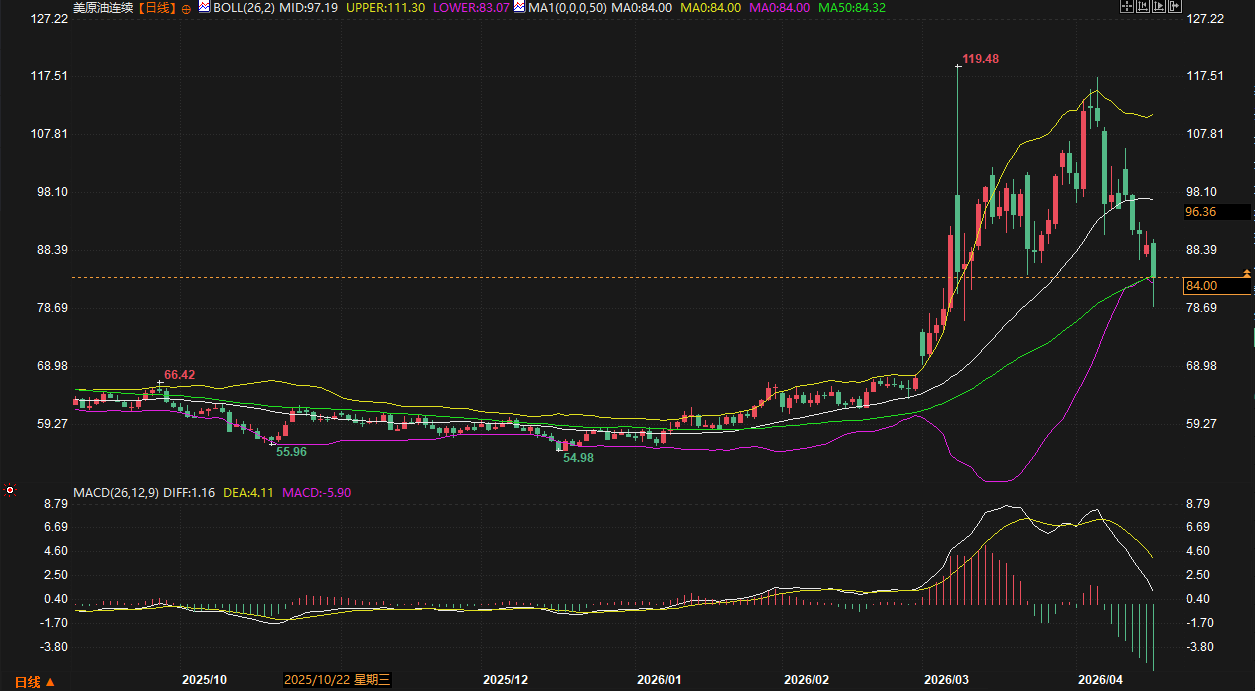
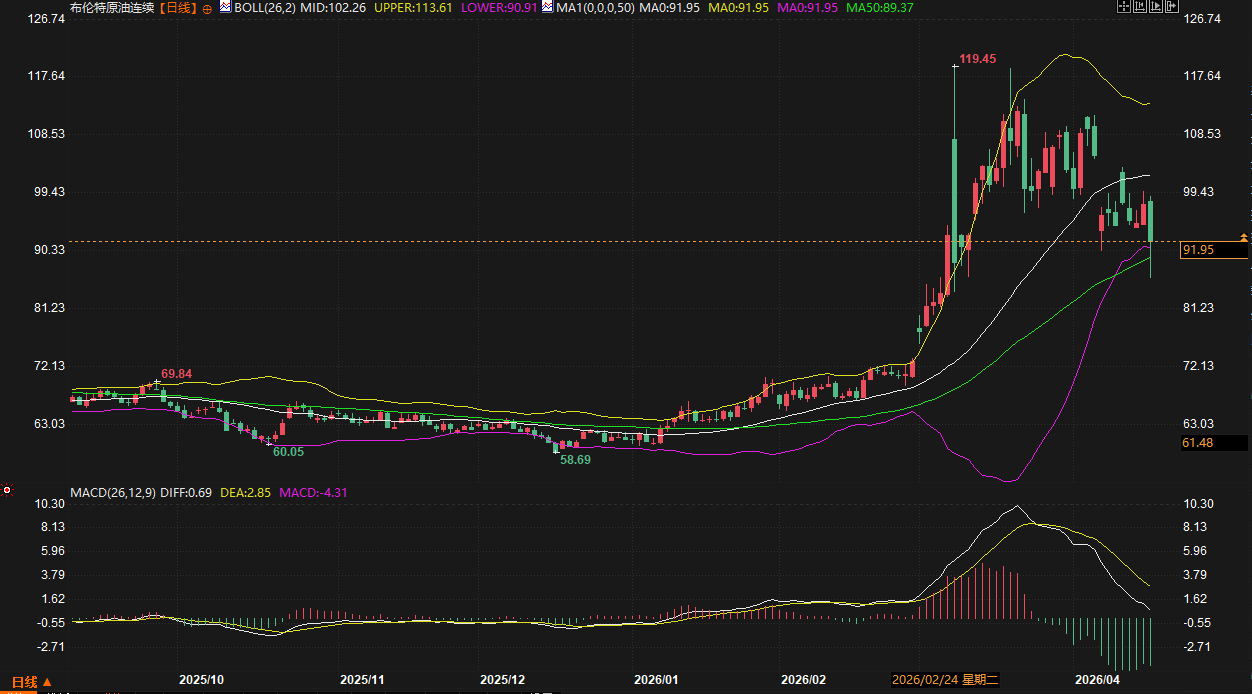
Regarding economic data and key events, Iran's official statement on the Strait of Hormuz became crucial in reversing market trends. A senior Iranian official stated that the strait would be open to all merchant ships during the ceasefire, although passage still requires coordination with relevant armed forces. This directly alleviated market concerns about the disruption of global energy lifelines. Simultaneously, news circulated in the market about progress in a three-page memorandum of understanding between the US and Iran, concerning the unfreezing of funds and the end of the conflict. Ship tracking data showed that approximately 20 oil tankers had already passed through the strait from the Persian Gulf towards exports, substantially relieving supply-side pressure. Furthermore, Baker Hughes data showed that US energy companies cut the number of oil and gas drilling rigs for the second consecutive week. Despite this production contraction, the data had minimal supporting effect on oil prices given the significant impact of the geopolitical positive factors.
Major overseas institutions believe that current oil prices are in the process of rapidly digesting risk premiums . Analysts point out that the surge in oil prices over the past two weeks largely stemmed from anticipation of supply disruptions rather than actual physical supply gaps. With the opening of shipping lanes and greater clarity on the progress of negotiations, crude oil pricing logic is returning to reflect the normalization of supply. Other analysts caution that despite progress in negotiations, the US military measures against Iran remain in effect in form, meaning that full normalization of geopolitical relations will take time to observe.
The gold market exhibited a completely different logic from crude oil this week. While crude oil prices plummeted due to easing geopolitical tensions, gold, despite downward pressure, still closed positive for the week. This divergence reflects deep-seated market anxieties about macroeconomic uncertainties . Gold prices rose 1.79% for the week, with a volatility of 5.26%, indicating that while investors were selling off their crude oil positions, they did not massively withdraw from the safe-haven metal.
Analysts believe that gold's resilience stems from fluctuating global inflation expectations and an uncertain outlook for monetary policy. Even though falling energy prices have reduced future inflationary pressures, long-term credit volatility and structural changes in the geopolitical landscape ensure that gold remains a strong safe-haven asset. Overseas research institutions point out that current fund flows in the gold market exhibit strong defensive characteristics, with short-term fluctuations largely driven by technical profit-taking following geopolitical gains rather than a trend reversal.
Overall, this week marked a turning point for global commodity market pricing power, shifting from "war expectations" back to a "peace premium." The sharp correction in the crude oil market signaled the end of the short-term extreme geopolitical premium, with prices returning to near their fundamental anchor. However, the fundamental recovery will not be instantaneous, and subsequent attention should be paid to the progress made by the US in reclaiming specific materials and the implementation of the unfreezing of Iranian funds. For precious metals, the waning of short-term safe-haven demand may cause volatility, but their long-term safe-haven logic has not been substantially undermined. In the coming week, the market will enter a policy observation period, focusing on marginal changes in relevant trade policies and capacity utilization data from major economies.
Question 1: What is the logic behind the impact of the reopening of the Strait of Hormuz on crude oil supply premiums?
A: The Strait of Hormuz, as a vital choke point for global crude oil trade, handles approximately one-fifth of global oil consumption. The core logic behind the previous surge in oil prices lay in the increased risk hedging costs caused by "supply disruption expectations." When Iran announced the opening of the strait and merchant ships began actual passage, this premium (i.e., risk premium) for extreme probability events quickly disappeared. The market shifted its focus from "not being able to buy oil" to "how much oil can be shipped out," and the pricing logic switched from geopolitical drivers back to physical trade drivers, leading to a stampede-like price drop of over 9% in a single day.
Question 2: What potential implications does the memorandum of understanding mentioned in the US-Iran negotiations have for the long-term energy landscape?
A: Although progress has only reached the level of a memorandum of understanding, the unfreezing of funds and the end of the conflict suggest that Iran's long-restricted production capacity may return to the global market. While rhetoric about a military blockade persists, the diplomatic-first strategy has significantly reduced the probability of geopolitical friction leading to the weaponization of energy. This means that global crude oil supply will have greater marginal growth potential, which, in the long run, will suppress the central fluctuation range of crude oil prices.
Question 3: Why are US energy companies still cutting the number of drilling rigs while oil prices are plummeting?
A: This seemingly contradictory phenomenon reflects the capital discipline of US shale oil producers. Drilling rig adjustments often lag behind spot price fluctuations; the current reductions reflect a response to previous price volatility and rising costs. Furthermore, under pressure from global energy transition and environmental policies, US oil producers are more inclined to maintain profits and dividends rather than blindly expand production. This supply-side contraction, coupled with the potential release of supply from the Middle East, creates a game of strategy, increasing the complexity of the future market structure.
Question 4: Why did gold still record weekly gains despite a sharp decline in energy prices?
A: This reflects the difference in the safe-haven logic between gold and crude oil. Crude oil premiums primarily stem from "supply disruptions," and once the conflict eases, prices revert to fundamentals. Gold premiums, however, include hedging against declining global currency purchasing power and the debt crisis, in addition to geopolitical factors. Even if inflationary expectations stemming from crude oil weaken, the defensive demand for gold will not completely disappear as long as substantial long-term peace in the geopolitical situation is not achieved, or as long as the Federal Reserve's policy path remains uncertain.
Question 5: What guidance does the recent frequent "tariff rhetoric" have for the future trend of commodities?
A: Tariff rhetoric is often seen as a harbinger of rising trade protectionism, and its impact on commodities is two-way. On the one hand, tariffs may curb global trade and reduce shipping and industrial demand for crude oil; on the other hand, imported inflation from tariffs may push up nominal prices and strengthen gold's safe-haven appeal. When dealing with such information, traders need to focus on its substantial increase in supply chain costs, rather than merely engaging in emotional speculation. This is a key anchor for judging future bull and bear market shifts in commodities.
International crude oil: Collapse of risk premiums and reopening of shipping routes
This week, crude oil prices experienced a collapse from their highs, particularly on Friday, when both major benchmark oil prices saw their largest single-day drops since early April. Brent crude futures settled at $90.38 per barrel, a drop of 9.07%, having touched a low of $86.09 during the session; U.S. crude futures closed at $83.85 per barrel, a sharp decline of 11.45%, having briefly fallen below the $81 mark during the session.
Regarding economic data and key events, Iran's official statement on the Strait of Hormuz became crucial in reversing market trends. A senior Iranian official stated that the strait would be open to all merchant ships during the ceasefire, although passage still requires coordination with relevant armed forces. This directly alleviated market concerns about the disruption of global energy lifelines. Simultaneously, news circulated in the market about progress in a three-page memorandum of understanding between the US and Iran, concerning the unfreezing of funds and the end of the conflict. Ship tracking data showed that approximately 20 oil tankers had already passed through the strait from the Persian Gulf towards exports, substantially relieving supply-side pressure. Furthermore, Baker Hughes data showed that US energy companies cut the number of oil and gas drilling rigs for the second consecutive week. Despite this production contraction, the data had minimal supporting effect on oil prices given the significant impact of the geopolitical positive factors.
Major overseas institutions believe that current oil prices are in the process of rapidly digesting risk premiums . Analysts point out that the surge in oil prices over the past two weeks largely stemmed from anticipation of supply disruptions rather than actual physical supply gaps. With the opening of shipping lanes and greater clarity on the progress of negotiations, crude oil pricing logic is returning to reflect the normalization of supply. Other analysts caution that despite progress in negotiations, the US military measures against Iran remain in effect in form, meaning that full normalization of geopolitical relations will take time to observe.
International Gold: Structural Divergence in Safe-Haven Sentiment
The gold market exhibited a completely different logic from crude oil this week. While crude oil prices plummeted due to easing geopolitical tensions, gold, despite downward pressure, still closed positive for the week. This divergence reflects deep-seated market anxieties about macroeconomic uncertainties . Gold prices rose 1.79% for the week, with a volatility of 5.26%, indicating that while investors were selling off their crude oil positions, they did not massively withdraw from the safe-haven metal.
Analysts believe that gold's resilience stems from fluctuating global inflation expectations and an uncertain outlook for monetary policy. Even though falling energy prices have reduced future inflationary pressures, long-term credit volatility and structural changes in the geopolitical landscape ensure that gold remains a strong safe-haven asset. Overseas research institutions point out that current fund flows in the gold market exhibit strong defensive characteristics, with short-term fluctuations largely driven by technical profit-taking following geopolitical gains rather than a trend reversal.
Overall, this week marked a turning point for global commodity market pricing power, shifting from "war expectations" back to a "peace premium." The sharp correction in the crude oil market signaled the end of the short-term extreme geopolitical premium, with prices returning to near their fundamental anchor. However, the fundamental recovery will not be instantaneous, and subsequent attention should be paid to the progress made by the US in reclaiming specific materials and the implementation of the unfreezing of Iranian funds. For precious metals, the waning of short-term safe-haven demand may cause volatility, but their long-term safe-haven logic has not been substantially undermined. In the coming week, the market will enter a policy observation period, focusing on marginal changes in relevant trade policies and capacity utilization data from major economies.
【QA Module】
Question 1: What is the logic behind the impact of the reopening of the Strait of Hormuz on crude oil supply premiums?
A: The Strait of Hormuz, as a vital choke point for global crude oil trade, handles approximately one-fifth of global oil consumption. The core logic behind the previous surge in oil prices lay in the increased risk hedging costs caused by "supply disruption expectations." When Iran announced the opening of the strait and merchant ships began actual passage, this premium (i.e., risk premium) for extreme probability events quickly disappeared. The market shifted its focus from "not being able to buy oil" to "how much oil can be shipped out," and the pricing logic switched from geopolitical drivers back to physical trade drivers, leading to a stampede-like price drop of over 9% in a single day.
Question 2: What potential implications does the memorandum of understanding mentioned in the US-Iran negotiations have for the long-term energy landscape?
A: Although progress has only reached the level of a memorandum of understanding, the unfreezing of funds and the end of the conflict suggest that Iran's long-restricted production capacity may return to the global market. While rhetoric about a military blockade persists, the diplomatic-first strategy has significantly reduced the probability of geopolitical friction leading to the weaponization of energy. This means that global crude oil supply will have greater marginal growth potential, which, in the long run, will suppress the central fluctuation range of crude oil prices.
Question 3: Why are US energy companies still cutting the number of drilling rigs while oil prices are plummeting?
A: This seemingly contradictory phenomenon reflects the capital discipline of US shale oil producers. Drilling rig adjustments often lag behind spot price fluctuations; the current reductions reflect a response to previous price volatility and rising costs. Furthermore, under pressure from global energy transition and environmental policies, US oil producers are more inclined to maintain profits and dividends rather than blindly expand production. This supply-side contraction, coupled with the potential release of supply from the Middle East, creates a game of strategy, increasing the complexity of the future market structure.
Question 4: Why did gold still record weekly gains despite a sharp decline in energy prices?
A: This reflects the difference in the safe-haven logic between gold and crude oil. Crude oil premiums primarily stem from "supply disruptions," and once the conflict eases, prices revert to fundamentals. Gold premiums, however, include hedging against declining global currency purchasing power and the debt crisis, in addition to geopolitical factors. Even if inflationary expectations stemming from crude oil weaken, the defensive demand for gold will not completely disappear as long as substantial long-term peace in the geopolitical situation is not achieved, or as long as the Federal Reserve's policy path remains uncertain.
Question 5: What guidance does the recent frequent "tariff rhetoric" have for the future trend of commodities?
A: Tariff rhetoric is often seen as a harbinger of rising trade protectionism, and its impact on commodities is two-way. On the one hand, tariffs may curb global trade and reduce shipping and industrial demand for crude oil; on the other hand, imported inflation from tariffs may push up nominal prices and strengthen gold's safe-haven appeal. When dealing with such information, traders need to focus on its substantial increase in supply chain costs, rather than merely engaging in emotional speculation. This is a key anchor for judging future bull and bear market shifts in commodities.
- Risk Warning and Disclaimer
- The market involves risk, and trading may not be suitable for all investors. This article is for reference only and does not constitute personal investment advice, nor does it take into account certain users’ specific investment objectives, financial situation, or other needs. Any investment decisions made based on this information are at your own risk.