Gold falls below $4,800: Escalating tensions between the US and Iran in the Strait of Hormuz, coupled with soaring US Treasury yields, and a strong dollar, are putting downward pressure on gold prices.
2026-04-20 14:39:15
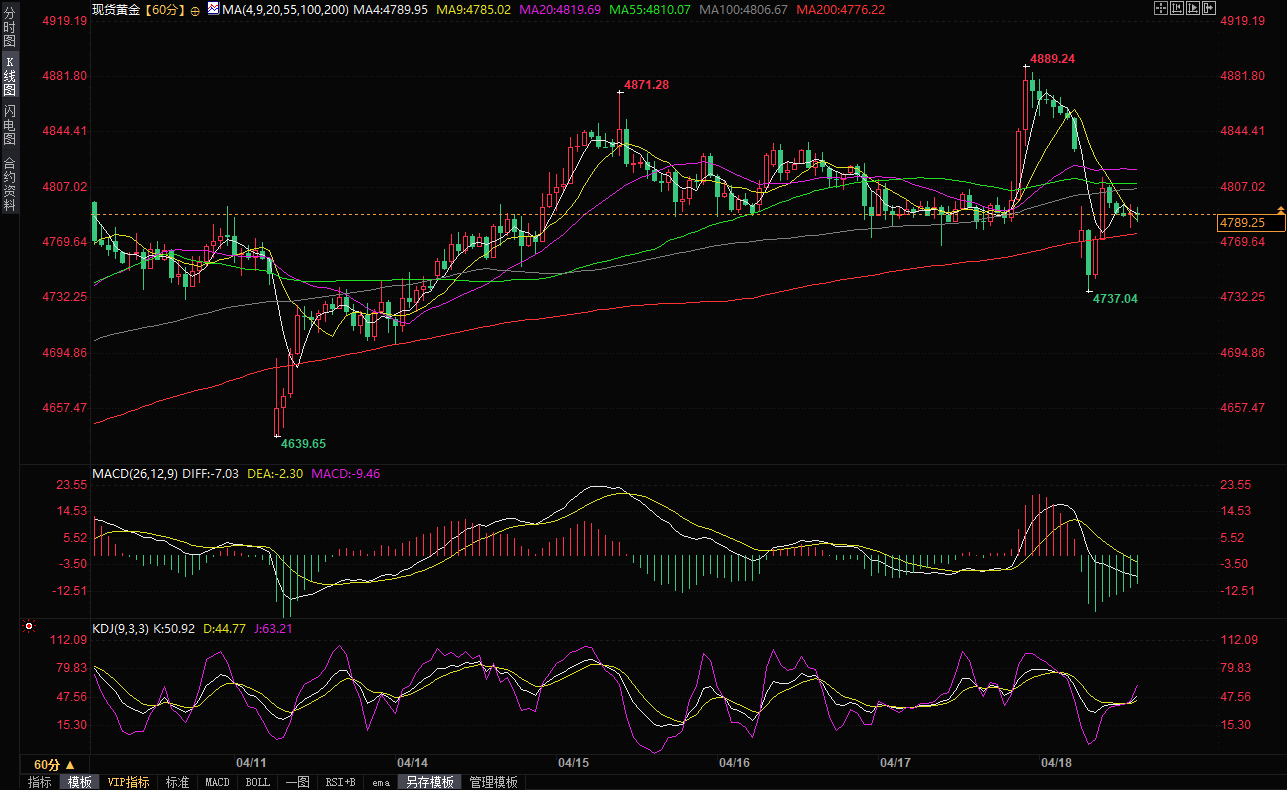
Amidst volatile global geopolitical conditions, spot gold is facing significant downward pressure again. On Monday (April 20), spot gold touched a one-week low of $4,737-$4,738 during the Asian session. Although it subsequently rebounded moderately, it remained under pressure overall. Currently, gold prices continue to hover below $4,800, with market sentiment cautious and investors closely monitoring the latest developments in the US-Iran conflict and signals from US monetary policy.
One of the core drivers of the current weakness in gold prices is the ongoing tensions in the Middle East. The standoff between the United States and Iran over the Strait of Hormuz is escalating, directly impacting international oil prices and inflation expectations for this vital global energy transport route.
According to the latest developments, the US Navy intercepted and seized an Iranian cargo ship in the Gulf of Oman, an action seen as part of a blockade. Iran responded strongly, arguing that this violated the expiring ceasefire agreement, and closed the Strait of Hormuz again after a brief period of closure. Previously, a 10-day ceasefire agreement between Israel and Hezbollah in Lebanon had briefly eased tensions, but failed to fundamentally resolve the conflict.
US President Donald Trump has made it clear that the naval blockade of Iranian ports will continue until a comprehensive peace agreement is reached between the two countries. This hardline stance has further dampened market optimism regarding a rapid advancement in peace negotiations before the ceasefire expires on April 22.
The White House confirmed that U.S. Vice President JD Vance was originally expected to lead a delegation to the second round of negotiations to end the war with Iran, but the plans remain uncertain. Iranian state media, on the other hand, explicitly stated that Iranian officials will refuse to participate in any negotiations as long as the U.S. blockade remains in place. This stalemate has not only prolonged geopolitical uncertainty but also triggered a new wave of risk aversion globally, driving capital flows to traditional safe-haven assets such as the U.S. dollar.
Besides geopolitical risks, internal factors in the financial markets also significantly suppressed gold prices. A sharp rise in crude oil prices during the day reignited market concerns about rising inflation. This change directly pushed up US Treasury yields, enhancing the attractiveness of the US dollar.
The US dollar index opened higher, hitting a one-week high before retreating slightly, but remained relatively strong overall, pausing its rebound from near two-month lows. While this dollar performance provided a brief respite for gold, it failed to reverse the overall downward trend. As a non-interest-bearing asset, gold is naturally at a disadvantage in an environment of rising yields, and its intraday rebound only reached a high of around $4,815 before encountering resistance.
It's worth noting that expectations regarding Federal Reserve policy have also added complexity to the market. The CME Group's FedWatch tool shows approximately a 40% probability of a Fed rate cut by the end of the year. While this expectation has limited further significant appreciation of the dollar and provided some support for gold, dollar bulls have not aggressively increased their positions. In the absence of clear follow-through buying, investors should remain highly cautious when considering a continuation of the gold rally from its March lows (around $4,100).
There are no major US economic data releases today, and the short-term trends for gold and the US dollar will largely depend on the latest developments in the US-Iran situation. Any news regarding a breakthrough in negotiations or an escalation of the conflict could trigger significant volatility.
From a technical perspective, gold is currently in a relatively fragile position. Spot gold prices have struggled to break through the 100-hour simple moving average (SMA) and have failed to firmly hold above the $4,800 level.
Specifically, the Relative Strength Index (RSI) is hovering around 44, indicating that upward momentum is gradually waning. Meanwhile, the Moving Average Convergence Divergence (MACD) indicator remains in negative territory, with the fast line below the slow line and the histogram showing negative values. These signals collectively suggest that bearish forces still dominate. Unless gold can decisively return above the 100-hour moving average, downside risks will persist.
Currently, the 100-hour SMA is located around $4805.60, which is the first and most obvious resistance level in the short term. Only a sustained breakout above this key barrier can effectively alleviate the current downward pressure and open up space for a stronger rebound.
Conversely, as long as gold prices remain below this resistance level, any seemingly positive rebound may only be a technical correction rather than a trend reversal, and could easily encounter profit-taking and selling pressure from short sellers again.
In summary, spot gold is currently facing a confluence of multiple negative factors. The tense standoff between the US and Iran in the Strait of Hormuz, inflationary concerns stemming from oil prices, rising US Treasury yields, and the relative strength of the US dollar are all contributing to the downward pressure on gold prices. Technical indicators also show clear bearish signals, further increasing the risk of a short-term correction.
However, the geopolitical situation is constantly changing, and any positive developments in ceasefire negotiations or a shift in Federal Reserve policy expectations could quickly alter market sentiment. For investors, maintaining flexibility in the current environment, closely monitoring the latest developments in the US-Iran conflict, and observing key technical levels will be crucial for understanding the future direction of gold. In the short term, the support level for gold is worth watching, while whether or not the $4800-$4805 area is broken will directly determine the strength of the rebound.
At 14:37 Beijing time, spot gold was trading at $4788.11 per ounce.
Geopolitical conflict looms large: Strait of Hormuz becomes the focus again
One of the core drivers of the current weakness in gold prices is the ongoing tensions in the Middle East. The standoff between the United States and Iran over the Strait of Hormuz is escalating, directly impacting international oil prices and inflation expectations for this vital global energy transport route.
According to the latest developments, the US Navy intercepted and seized an Iranian cargo ship in the Gulf of Oman, an action seen as part of a blockade. Iran responded strongly, arguing that this violated the expiring ceasefire agreement, and closed the Strait of Hormuz again after a brief period of closure. Previously, a 10-day ceasefire agreement between Israel and Hezbollah in Lebanon had briefly eased tensions, but failed to fundamentally resolve the conflict.
US President Donald Trump has made it clear that the naval blockade of Iranian ports will continue until a comprehensive peace agreement is reached between the two countries. This hardline stance has further dampened market optimism regarding a rapid advancement in peace negotiations before the ceasefire expires on April 22.
The White House confirmed that U.S. Vice President JD Vance was originally expected to lead a delegation to the second round of negotiations to end the war with Iran, but the plans remain uncertain. Iranian state media, on the other hand, explicitly stated that Iranian officials will refuse to participate in any negotiations as long as the U.S. blockade remains in place. This stalemate has not only prolonged geopolitical uncertainty but also triggered a new wave of risk aversion globally, driving capital flows to traditional safe-haven assets such as the U.S. dollar.
Inflation concerns and a stronger dollar: Multiple factors combined to suppress gold prices.
Besides geopolitical risks, internal factors in the financial markets also significantly suppressed gold prices. A sharp rise in crude oil prices during the day reignited market concerns about rising inflation. This change directly pushed up US Treasury yields, enhancing the attractiveness of the US dollar.
The US dollar index opened higher, hitting a one-week high before retreating slightly, but remained relatively strong overall, pausing its rebound from near two-month lows. While this dollar performance provided a brief respite for gold, it failed to reverse the overall downward trend. As a non-interest-bearing asset, gold is naturally at a disadvantage in an environment of rising yields, and its intraday rebound only reached a high of around $4,815 before encountering resistance.
It's worth noting that expectations regarding Federal Reserve policy have also added complexity to the market. The CME Group's FedWatch tool shows approximately a 40% probability of a Fed rate cut by the end of the year. While this expectation has limited further significant appreciation of the dollar and provided some support for gold, dollar bulls have not aggressively increased their positions. In the absence of clear follow-through buying, investors should remain highly cautious when considering a continuation of the gold rally from its March lows (around $4,100).
There are no major US economic data releases today, and the short-term trends for gold and the US dollar will largely depend on the latest developments in the US-Iran situation. Any news regarding a breakthrough in negotiations or an escalation of the conflict could trigger significant volatility.
The technical indicators show a clear bearish signal: the 100-hour moving average has become a key resistance level.
From a technical perspective, gold is currently in a relatively fragile position. Spot gold prices have struggled to break through the 100-hour simple moving average (SMA) and have failed to firmly hold above the $4,800 level.
Specifically, the Relative Strength Index (RSI) is hovering around 44, indicating that upward momentum is gradually waning. Meanwhile, the Moving Average Convergence Divergence (MACD) indicator remains in negative territory, with the fast line below the slow line and the histogram showing negative values. These signals collectively suggest that bearish forces still dominate. Unless gold can decisively return above the 100-hour moving average, downside risks will persist.
Currently, the 100-hour SMA is located around $4805.60, which is the first and most obvious resistance level in the short term. Only a sustained breakout above this key barrier can effectively alleviate the current downward pressure and open up space for a stronger rebound.
Conversely, as long as gold prices remain below this resistance level, any seemingly positive rebound may only be a technical correction rather than a trend reversal, and could easily encounter profit-taking and selling pressure from short sellers again.
In summary, gold is under short-term pressure, and the market outlook remains to be seen, depending on both geopolitical and policy variables.
In summary, spot gold is currently facing a confluence of multiple negative factors. The tense standoff between the US and Iran in the Strait of Hormuz, inflationary concerns stemming from oil prices, rising US Treasury yields, and the relative strength of the US dollar are all contributing to the downward pressure on gold prices. Technical indicators also show clear bearish signals, further increasing the risk of a short-term correction.
However, the geopolitical situation is constantly changing, and any positive developments in ceasefire negotiations or a shift in Federal Reserve policy expectations could quickly alter market sentiment. For investors, maintaining flexibility in the current environment, closely monitoring the latest developments in the US-Iran conflict, and observing key technical levels will be crucial for understanding the future direction of gold. In the short term, the support level for gold is worth watching, while whether or not the $4800-$4805 area is broken will directly determine the strength of the rebound.
At 14:37 Beijing time, spot gold was trading at $4788.11 per ounce.
- Risk Warning and Disclaimer
- The market involves risk, and trading may not be suitable for all investors. This article is for reference only and does not constitute personal investment advice, nor does it take into account certain users’ specific investment objectives, financial situation, or other needs. Any investment decisions made based on this information are at your own risk.