The ceasefire has been extended, but the standoff remains, adding new factors to the gold price game.
2026-04-22 16:26:59
Gold rebounded during the Asian and European sessions on Wednesday (April 22). On Tuesday, gold plunged as much as 3% during the New York session. After the news of the extension of the US-Iran ceasefire agreement, the US dollar continued to be under pressure, and gold (XAU/USD) took the opportunity to refresh its intraday high, rebounding from the support level of $4,705.
On Tuesday, Trump announced an extension of the US-Iran ceasefire without mentioning a timeframe, attempting to create conditions for peace talks between the two sides. However, the Iranian Revolutionary Guard stated that Iran had not requested an extension of the ceasefire and threatened to break the blockade by force.
The US continues its blockade of Iranian cruise ships, and the standoff in the Strait of Hormuz remains unresolved. The decline in the US dollar is significantly limited, and the rise in gold prices is also suppressed. Gold bulls need to remain vigilant.
An advisor to Speaker Kalibaf denounced Trump's announcement as a "trick to buy time for a surprise attack," saying, "Now is the time for Iran to take the initiative."
Furthermore, with the US blockade of Iranian ports continuing and Iran insisting that the US lift the blockade before resuming negotiations, geopolitical risks continue to escalate, supporting the US dollar's status as a safe-haven reserve currency, making it difficult for gold prices to break out of a one-sided upward trend.
With no major US economic data released on Wednesday, the dollar and gold prices were mainly driven by geopolitical news, leading to significantly increased market volatility.
Meanwhile, strong US retail sales data and upward revisions of first-quarter economic growth forecasts by economists highlighted the resilience of the US economy, which directly curbed the downward momentum of the dollar.
At this hearing, Warsh fully disclosed the Federal Reserve's reform blueprint. A series of radical measures directly address the current pain points in the Fed's operation and will also profoundly affect the logic of gold trading. The market speculates that it may reduce the Fed's balance sheet by reducing bond purchases, not renewing maturing bonds, and encouraging banks to buy Treasury bonds, while also carrying out reforms to reduce the Fed's influence on the market.
He explicitly proposed canceling the regular press conferences that had become the norm since the financial crisis, and completely restructuring the policy communication channels between the Federal Reserve and the market; at the same time, he planned to abandon forward guidance, believing that this tool could not stabilize market expectations and would instead restrict the Fed's decision-making flexibility.
Even more disruptive, Warsh publicly rejected the core PCE price index, which the Federal Reserve had used for many years, saying that this core inflation indicator was just a rough guess about price trends. He was determined to abandon this core reference for monetary policy and break the Federal Reserve's long-standing policy analysis framework.
The market had questioned whether Warsh's reforms were merely a political show to appease Trump, but his series of measures were essentially a policy combination to implement interest rate cuts and balance sheet reduction, thereby lowering long-term interest rates and easing the pressure on American consumers' mortgages, credit cards, and other consumer credit.
Warsh bluntly stated that the Fed's long-term policy mistakes have led to runaway inflation after the pandemic, causing it to lose market credibility. Only by fundamentally reshaping its operating model can it rebuild public trust and achieve its goal of cutting interest rates.
For gold trading, the expectation of interest rate cuts is theoretically beneficial to non-interest-bearing gold, but the simultaneous reduction of the balance sheet will withdraw market liquidity and push up real interest rates, which will put significant downward pressure on gold prices.
In the short term, the unresolved situation between the US and Iran remains a major factor affecting gold prices. Internal divisions within Iran, the US's continued troop buildup to aid negotiations, and the US's need for victory at the negotiating table in the midterm elections all contribute to gold's tendency to move inversely to geopolitical risks. While Warsh emphasizes that the Fed's independence will not be affected by the president, as past presidents have sought interest rate cuts, a combination of interest rate cuts and balance sheet reduction is still possible, given his acknowledgment of the US's burden of high interest rates. This currently exerts upward pressure on gold prices.
The long-term narrative of US interest rate cuts, central bank gold purchases, and declining global inflation will return, thus dominating gold prices.
Traders need to closely monitor the latest developments in the US-Iran situation and Warsh's subsequent policy statements, while continuing to track gold holdings to verify whether there are clear signals of increased buying. If so, gold prices may resume their previous upward trend.
As discussed in previous articles, spot gold continues to trade within an upward channel. Yesterday, it tested the lower boundary of the channel and found support at both the lower boundary and the key price level of 4705.
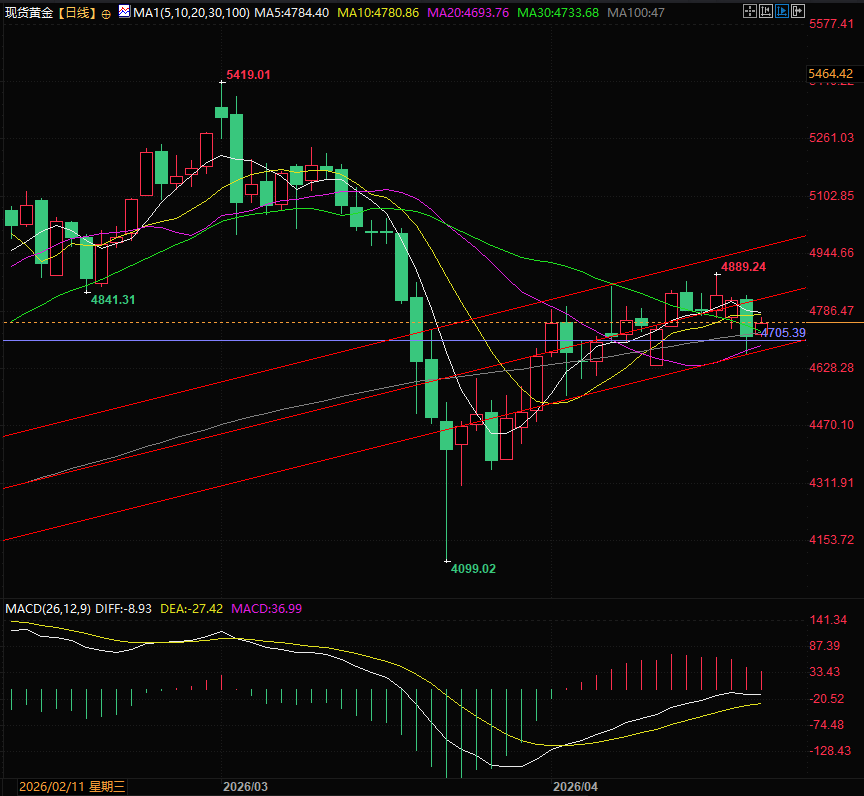
(Spot gold daily chart, source: EasyForex subsidiary)
At 16:25 Beijing time, spot gold was trading at $4,755 per ounce.
On Tuesday, Trump announced an extension of the US-Iran ceasefire without mentioning a timeframe, attempting to create conditions for peace talks between the two sides. However, the Iranian Revolutionary Guard stated that Iran had not requested an extension of the ceasefire and threatened to break the blockade by force.
The US continues its blockade of Iranian cruise ships, and the standoff in the Strait of Hormuz remains unresolved. The decline in the US dollar is significantly limited, and the rise in gold prices is also suppressed. Gold bulls need to remain vigilant.
An advisor to Speaker Kalibaf denounced Trump's announcement as a "trick to buy time for a surprise attack," saying, "Now is the time for Iran to take the initiative."
Furthermore, with the US blockade of Iranian ports continuing and Iran insisting that the US lift the blockade before resuming negotiations, geopolitical risks continue to escalate, supporting the US dollar's status as a safe-haven reserve currency, making it difficult for gold prices to break out of a one-sided upward trend.
Positive US economic data and hawkish signals from the Federal Reserve weighed on gold prices.
With no major US economic data released on Wednesday, the dollar and gold prices were mainly driven by geopolitical news, leading to significantly increased market volatility.
Meanwhile, strong US retail sales data and upward revisions of first-quarter economic growth forecasts by economists highlighted the resilience of the US economy, which directly curbed the downward momentum of the dollar.
Warsh's reform blueprint revealed: radical measures reshape the Fed's operating model
At this hearing, Warsh fully disclosed the Federal Reserve's reform blueprint. A series of radical measures directly address the current pain points in the Fed's operation and will also profoundly affect the logic of gold trading. The market speculates that it may reduce the Fed's balance sheet by reducing bond purchases, not renewing maturing bonds, and encouraging banks to buy Treasury bonds, while also carrying out reforms to reduce the Fed's influence on the market.
He explicitly proposed canceling the regular press conferences that had become the norm since the financial crisis, and completely restructuring the policy communication channels between the Federal Reserve and the market; at the same time, he planned to abandon forward guidance, believing that this tool could not stabilize market expectations and would instead restrict the Fed's decision-making flexibility.
Even more disruptive, Warsh publicly rejected the core PCE price index, which the Federal Reserve had used for many years, saying that this core inflation indicator was just a rough guess about price trends. He was determined to abandon this core reference for monetary policy and break the Federal Reserve's long-standing policy analysis framework.
Interest rate cuts and balance sheet reduction become the core objectives, intensifying the battle between bulls and bears in the gold market.
The market had questioned whether Warsh's reforms were merely a political show to appease Trump, but his series of measures were essentially a policy combination to implement interest rate cuts and balance sheet reduction, thereby lowering long-term interest rates and easing the pressure on American consumers' mortgages, credit cards, and other consumer credit.
Warsh bluntly stated that the Fed's long-term policy mistakes have led to runaway inflation after the pandemic, causing it to lose market credibility. Only by fundamentally reshaping its operating model can it rebuild public trust and achieve its goal of cutting interest rates.
For gold trading, the expectation of interest rate cuts is theoretically beneficial to non-interest-bearing gold, but the simultaneous reduction of the balance sheet will withdraw market liquidity and push up real interest rates, which will put significant downward pressure on gold prices.
Summary and Technical Analysis:
In the short term, the unresolved situation between the US and Iran remains a major factor affecting gold prices. Internal divisions within Iran, the US's continued troop buildup to aid negotiations, and the US's need for victory at the negotiating table in the midterm elections all contribute to gold's tendency to move inversely to geopolitical risks. While Warsh emphasizes that the Fed's independence will not be affected by the president, as past presidents have sought interest rate cuts, a combination of interest rate cuts and balance sheet reduction is still possible, given his acknowledgment of the US's burden of high interest rates. This currently exerts upward pressure on gold prices.
The long-term narrative of US interest rate cuts, central bank gold purchases, and declining global inflation will return, thus dominating gold prices.
Traders need to closely monitor the latest developments in the US-Iran situation and Warsh's subsequent policy statements, while continuing to track gold holdings to verify whether there are clear signals of increased buying. If so, gold prices may resume their previous upward trend.
As discussed in previous articles, spot gold continues to trade within an upward channel. Yesterday, it tested the lower boundary of the channel and found support at both the lower boundary and the key price level of 4705.
(Spot gold daily chart, source: EasyForex subsidiary)
At 16:25 Beijing time, spot gold was trading at $4,755 per ounce.
- Risk Warning and Disclaimer
- The market involves risk, and trading may not be suitable for all investors. This article is for reference only and does not constitute personal investment advice, nor does it take into account certain users’ specific investment objectives, financial situation, or other needs. Any investment decisions made based on this information are at your own risk.