After the Taiwan Strait was closed again, the USD/JPY exchange rate experienced a dramatic reversal.
2026-04-20 17:22:53
On Monday, April 20, the USD/JPY exchange rate stabilized around 159, successfully erasing some of the losses from the previous Friday. This movement was directly driven by the renewed tensions between the US and Iran, with market demand for safe-haven assets rising again as the ceasefire agreement deadline approached (April 22). Over the weekend, Iran re-closed the Strait of Hormuz in response to the US maintaining its blockade, leading to a significant rebound in the exchange rate.
Despite ongoing diplomatic efforts and the possibility of a ceasefire extension, uncertainty has driven up short-term volatility. Traders are focused on headlines as geopolitical events dominate exchange rates, while neutral Japanese domestic macroeconomic data has limited the yen's independent movement. Overall, USD/JPY is currently consolidating between a key support zone and a trendline, awaiting clarity on the situation.
The core driver of the current market lies in the progress of ceasefire negotiations between the US and Iran. Iran initially announced the reopening of the Strait of Hormuz, but subsequently closed it again due to the US insistence on maintaining the blockade until an agreement is reached. This back-and-forth directly triggered risk hedging behavior, supporting the US dollar as a traditional safe-haven asset. The market anticipates a possible extension of the ceasefire, but if diplomatic efforts fail to materialize in a timely manner, the risk of escalating tensions remains, further amplifying exchange rate volatility.
From a fundamental perspective, geopolitical events typically impact the foreign exchange market through risk premiums: when risk aversion intensifies, the US dollar index tends to strengthen, while the Japanese yen, although also a safe-haven asset, often fluctuates in tandem with the dollar index under its dominance. In this round of events, news related to the Strait of Hormuz has become the most direct catalyst for exchange rates. Traders are constantly monitoring any diplomatic breakthroughs or unexpected escalation signals, as such headlines can alter market pricing within hours. In the current environment, any news of a ceasefire extension or breakdown could trigger a 10-20 point intraday swing in the USD/JPY exchange rate, which is precisely the risk point that traders are closely monitoring.
The recent movement of the US dollar has been primarily driven by geopolitical risk premiums, rather than domestic data. Positive news before the weekend initially pressured the dollar, but Iran's re-closure of the Strait of Hormuz quickly reversed the situation, pushing the exchange rate back up. This dynamic aligns with typical risk-averse logic: under tensions, funds tend to flow into dollar assets to hedge against uncertainty.
Despite the lack of extreme volatility in US economic data, events in the Middle East have indirectly increased global risk aversion, supporting the US dollar's performance against major currencies. Similar events often accompany oil price fluctuations, indirectly impacting exchange rates, but the dollar's safe-haven appeal has been more pronounced in this instance. The USD/JPY pair has rebounded from recent lows, indicating that the market is pricing in a potential diplomatic impasse. Overall, the dollar's fundamentals will continue to be influenced by external events in the short term until a ceasefire agreement is formally confirmed.
Regarding the yen, Japan's macroeconomic conditions continue to point to a neutral policy path. Japan's consumer price index rose 1.3% year-on-year in February, with core indicators also at or below the 2% target range, indicating a gradual easing of inflationary pressures. Meanwhile, while geopolitical events have pushed up some import costs, they have also exerted downward pressure on economic growth, and business confidence has not yet fully recovered.
The Bank of Japan kept its benchmark interest rate unchanged at 0.75% in March, with its next meeting scheduled for the end of April. The market currently prices in only about a 17% probability of a rate hike. Bank of Japan Governor Kazuo Ueda recently stated that Japan's financial environment remains accommodative, and policy adjustments will be assessed after geopolitical tensions stabilize. If a ceasefire agreement is reached and economic data improves, a June rate hike could lay the groundwork for a subsequent increase, but the central bank currently prefers to observe and wait to avoid premature tightening.
This means that the yen is unlikely to decouple from the dollar's performance in the short term, and traders are focusing on how the Bank of Japan will balance the dual pressures of inflation and growth.
Data shows that Japan's inflation is easing significantly, limiting the potential for the yen to appreciate.
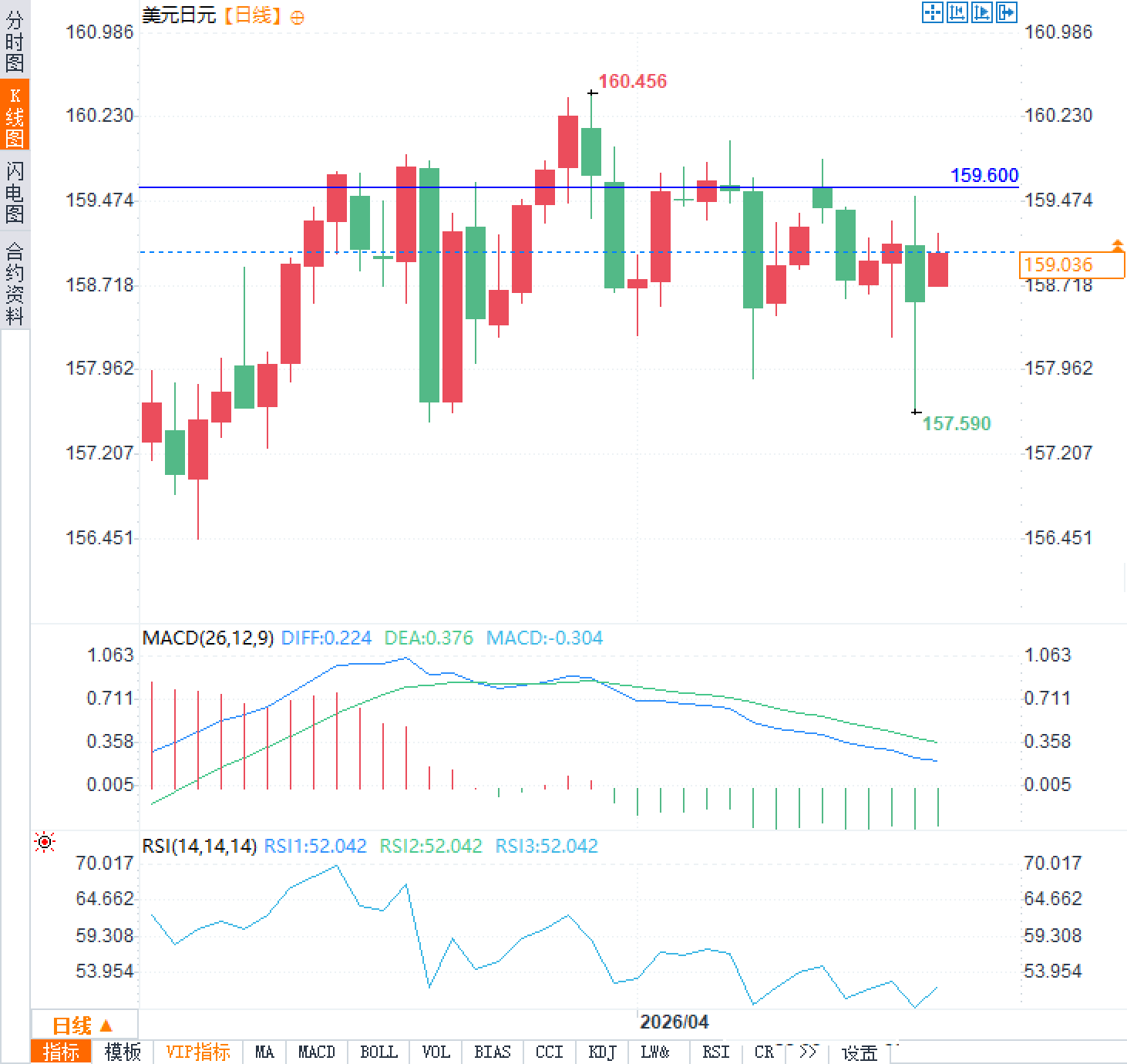
Despite ongoing diplomatic efforts and the possibility of a ceasefire extension, uncertainty has driven up short-term volatility. Traders are focused on headlines as geopolitical events dominate exchange rates, while neutral Japanese domestic macroeconomic data has limited the yen's independent movement. Overall, USD/JPY is currently consolidating between a key support zone and a trendline, awaiting clarity on the situation.
Geopolitical tensions dominate short-term exchange rate fluctuations
The core driver of the current market lies in the progress of ceasefire negotiations between the US and Iran. Iran initially announced the reopening of the Strait of Hormuz, but subsequently closed it again due to the US insistence on maintaining the blockade until an agreement is reached. This back-and-forth directly triggered risk hedging behavior, supporting the US dollar as a traditional safe-haven asset. The market anticipates a possible extension of the ceasefire, but if diplomatic efforts fail to materialize in a timely manner, the risk of escalating tensions remains, further amplifying exchange rate volatility.
From a fundamental perspective, geopolitical events typically impact the foreign exchange market through risk premiums: when risk aversion intensifies, the US dollar index tends to strengthen, while the Japanese yen, although also a safe-haven asset, often fluctuates in tandem with the dollar index under its dominance. In this round of events, news related to the Strait of Hormuz has become the most direct catalyst for exchange rates. Traders are constantly monitoring any diplomatic breakthroughs or unexpected escalation signals, as such headlines can alter market pricing within hours. In the current environment, any news of a ceasefire extension or breakdown could trigger a 10-20 point intraday swing in the USD/JPY exchange rate, which is precisely the risk point that traders are closely monitoring.
US Dollar Fundamentals: Safe-Haven Demand and External Risk Premium
The recent movement of the US dollar has been primarily driven by geopolitical risk premiums, rather than domestic data. Positive news before the weekend initially pressured the dollar, but Iran's re-closure of the Strait of Hormuz quickly reversed the situation, pushing the exchange rate back up. This dynamic aligns with typical risk-averse logic: under tensions, funds tend to flow into dollar assets to hedge against uncertainty.
Despite the lack of extreme volatility in US economic data, events in the Middle East have indirectly increased global risk aversion, supporting the US dollar's performance against major currencies. Similar events often accompany oil price fluctuations, indirectly impacting exchange rates, but the dollar's safe-haven appeal has been more pronounced in this instance. The USD/JPY pair has rebounded from recent lows, indicating that the market is pricing in a potential diplomatic impasse. Overall, the dollar's fundamentals will continue to be influenced by external events in the short term until a ceasefire agreement is formally confirmed.
The Japanese yen faces constraints from a neutral monetary policy environment.
Regarding the yen, Japan's macroeconomic conditions continue to point to a neutral policy path. Japan's consumer price index rose 1.3% year-on-year in February, with core indicators also at or below the 2% target range, indicating a gradual easing of inflationary pressures. Meanwhile, while geopolitical events have pushed up some import costs, they have also exerted downward pressure on economic growth, and business confidence has not yet fully recovered.
The Bank of Japan kept its benchmark interest rate unchanged at 0.75% in March, with its next meeting scheduled for the end of April. The market currently prices in only about a 17% probability of a rate hike. Bank of Japan Governor Kazuo Ueda recently stated that Japan's financial environment remains accommodative, and policy adjustments will be assessed after geopolitical tensions stabilize. If a ceasefire agreement is reached and economic data improves, a June rate hike could lay the groundwork for a subsequent increase, but the central bank currently prefers to observe and wait to avoid premature tightening.
This means that the yen is unlikely to decouple from the dollar's performance in the short term, and traders are focusing on how the Bank of Japan will balance the dual pressures of inflation and growth.
| index | February 2026 data (%) | Previous value (%) | 2% target deviation |
|---|---|---|---|
| Consumer Price Index Year-on-Year | 1.3 | 1.5 | Below target |
| Core Consumer Price Index | 1.6 | 1.7 | Below target |
| Tokyo Core CPI | 1.7 | 1.8 | Below target |
Frequently Asked Questions
Question 1: Why can the USD/JPY exchange rate quickly wipe out losses?
A: This is mainly due to the renewed tensions between the US and Iran. Iran's move to reclose the Strait of Hormuz triggered demand for risk hedging, immediately highlighting the safe-haven appeal of the US dollar and driving a rebound in its exchange rate.
Question 2: Why is the probability of the Bank of Japan raising interest rates at its April meeting remaining low?
A: Japan's February inflation data eased to 1.3%, with core indicators below the 2% target, and geopolitical events putting pressure on growth. Bank of Japan Governor Kazuo Ueda emphasized that the financial environment remains loose and that action should be taken only after the situation becomes clearer. Therefore, the market is only pricing in a 17% probability, clearly indicating a neutral policy stance.
Question 3: What potential impact would an extension of the ceasefire agreement have on the USD/JPY exchange rate?
A: The extension will alleviate risk premiums, potentially weakening the safe-haven support for the US dollar and putting downward pressure on the exchange rate. However, if diplomatic progress falls short of expectations, continued tensions will maintain the strength of the US dollar, while the yen will continue to be weighed down by the Bank of Japan's neutral policy. The key issue lies in the gap between the speed of the event's implementation and the market's already priced-in expectations.
- Risk Warning and Disclaimer
- The market involves risk, and trading may not be suitable for all investors. This article is for reference only and does not constitute personal investment advice, nor does it take into account certain users’ specific investment objectives, financial situation, or other needs. Any investment decisions made based on this information are at your own risk.