With 16 hours remaining in the US-Iran ceasefire, the dollar rebounded but oil prices failed to follow suit. Will a second round of peace talks be able to begin at the last minute?
2026-04-21 16:59:07
On Tuesday (April 21), during the Asian and European sessions, the US dollar index rose rapidly by 0.26% to trade around 98.26.
The temporary ceasefire between the US and Iran is set to expire at 8:00 AM Beijing time on April 22, less than 16 hours from now.
Previously optimistic expectations for a de-escalation in the Middle East continued to suppress the rise of the US dollar, and the US dollar index once again approached the 98.000 mark;
However, with the Iranian delegation yet to depart and the US taking a hard line, there remains significant uncertainty as to whether a second round of talks can begin. Last-minute news could trigger sharp short-term fluctuations in the US dollar. It is worth noting, however, that oil prices have not risen in tandem, and the market still maintains considerable optimism.
Meanwhile, the US blockade of the Strait of Hormuz against Iranian oil tankers is still ongoing. After Iran temporarily allowed passage on April 18, 19-22 ships under the Convention sailed out of the Strait of Hormuz, but the strait was subsequently forced to close again.
The temporary ceasefire agreement between the US and Iran took effect at 8:00 AM Beijing time on April 8 and will last for two weeks, with no automatic extension clause.
Based on the agreed two-week cycle and Beijing time, the ceasefire will officially end at 8:00 on April 22, which corresponds to 3:30 on April 22 in Iran and 20:00 on April 21 in Washington.
Although the US stated that the ceasefire would expire at 20:00 Washington time on April 22, this statement does not change the original expiration time of the agreement, and the market still regards 8:00 Beijing time on April 22 as the key node.
As of press time, with less than 16 hours remaining before the ceasefire expires, Iran has not yet sent a negotiating delegation to Pakistan, according to the latest reports from Iranian media.
Diplomatic sources revealed that, conservatively estimated, Iran could still send a negotiating team to Islamabad before 20:00 Beijing time on April 21. The direct flight would only take about 3-3.5 hours, and the entire journey (including airport transfers and security checks) usually takes 4-5 hours. Theoretically, they could still arrive before the ceasefire expires to participate in the negotiations.
The US dollar has been declining recently due to market expectations of further easing of the conflict in the Middle East, with the dollar index once again approaching the 98.000 mark.
Lee Hardman, senior foreign exchange analyst at MUFG Bank, pointed out that market optimism about a potential settlement agreement between the two sides and the gradual return to normalcy of shipping in the Strait of Hormuz is continuing to suppress the upward momentum of the US dollar.
Demand for safe havens has subsided: the US dollar has quickly given back its gains from the beginning of the week, returning to the price range it was in before the outbreak of the Middle East conflict at the end of February, indicating that the market has largely digested the risk of escalation.
The rhythm was volatile: Despite the weekend's turbulent situation—Iran opened fire on ships in the Strait of Hormuz and the US took over an Iranian vessel—market participants remained optimistic that the Middle East conflict would continue to de-escalate, which became a significant drag on the dollar's performance.
The rebound is weak: Even if the peace agreement is eventually implemented, Lee Hardman believes that it is unlikely to trigger a new round of sharp decline in the US dollar, as the market has already priced in some of the optimistic expectations.
Reports indicate that even though the two sides still have differences on core issues such as the blockade of the Strait of Hormuz and the right to enrich uranium, there is still a high probability that an agreement will be reached in the coming days to substantially end the conflict, and further consultations will only be needed on nuclear issues and military-related matters.
Iran adopts a cautious stance: The Iranian Foreign Ministry has made it clear that there are no plans for a second round of negotiations with the United States, and the core differences remain unresolved.
The US has taken a hard line: Trump has repeatedly stated that if a long-term agreement is not reached by then, the ceasefire will almost certainly not be extended, and bombing and sanctions against Iran will be resumed. Pro-Iranian militias in Iraq may also resume operations at the same time.
The window of opportunity is closing: the Iranian delegation has not yet departed, and the time remaining before the ceasefire expires is limited, increasing the uncertainty surrounding the start of negotiations.
The market will closely monitor the progress of the return to normalcy in shipping through the Strait of Hormuz to gauge the pace of easing global energy supply constraints.
As a vital global energy choke point, the Strait of Hormuz handles approximately 25%–30% of the world's maritime oil trade. Its navigation status directly impacts international oil prices and global inflation expectations, which in turn affects the US dollar's trajectory.
Lee Hardman emphasizes that the current fluctuations in the US dollar reflect more of a change in risk aversion than a fundamental shift in the underlying economic situation.
If the second round of peace talks fails to begin and the conflict resumes after the ceasefire expires, the US dollar is expected to rebound rapidly, rekindling the logic of risk-averse trading.
Conversely, if the two sides reach an agreement and the conflict is substantially resolved, the US dollar may come under further pressure, but the downside is limited because the market has already priced in some of the positive expectations.
With less than 16 hours remaining before the US-Iran ceasefire expires, the US dollar index broke through the 98.00 mark, and US Treasury bonds rose simultaneously, but oil prices did not show a significant response, as the market seeks a balance between optimistic expectations and uncertainty.
Whether the Iranian delegation will depart, whether a second round of peace talks can begin, and whether the ceasefire will be extended—the answers to these questions will be revealed in the coming hours, directly determining the short-term trajectory of the US dollar and global market risk appetite.
From a technical perspective, the US dollar index rebounded after falling to the bottom of its trading range. Currently, it has support at the 98 level, resistance at 98.5, and then at 98.7.
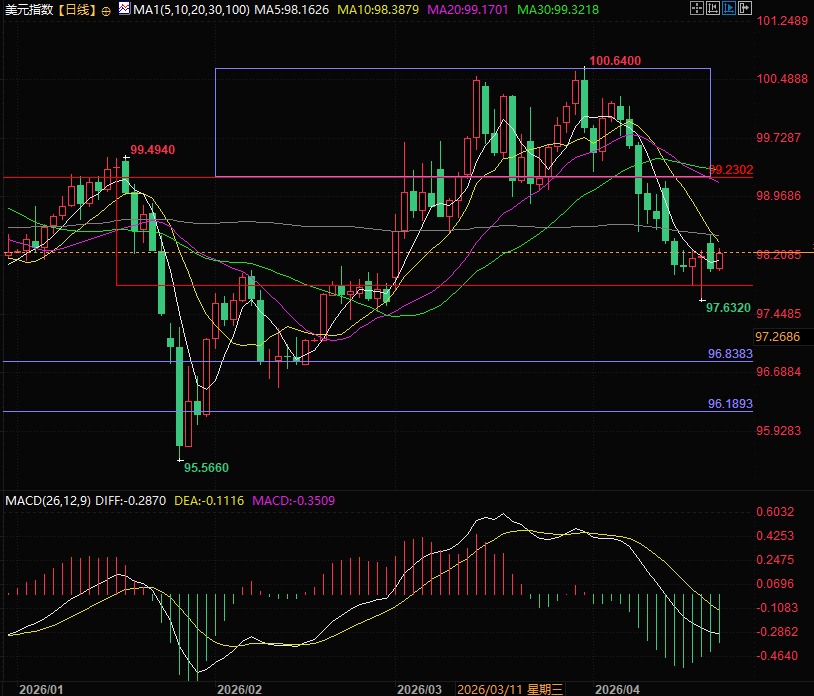
(US Dollar Index Daily Chart, Source: FX678)
At 16:56 Beijing time, the US dollar index is currently at 98.25.
The temporary ceasefire between the US and Iran is set to expire at 8:00 AM Beijing time on April 22, less than 16 hours from now.
Previously optimistic expectations for a de-escalation in the Middle East continued to suppress the rise of the US dollar, and the US dollar index once again approached the 98.000 mark;
However, with the Iranian delegation yet to depart and the US taking a hard line, there remains significant uncertainty as to whether a second round of talks can begin. Last-minute news could trigger sharp short-term fluctuations in the US dollar. It is worth noting, however, that oil prices have not risen in tandem, and the market still maintains considerable optimism.
Meanwhile, the US blockade of the Strait of Hormuz against Iranian oil tankers is still ongoing. After Iran temporarily allowed passage on April 18, 19-22 ships under the Convention sailed out of the Strait of Hormuz, but the strait was subsequently forced to close again.
Ceasefire deadline and time anchor
The temporary ceasefire agreement between the US and Iran took effect at 8:00 AM Beijing time on April 8 and will last for two weeks, with no automatic extension clause.
Based on the agreed two-week cycle and Beijing time, the ceasefire will officially end at 8:00 on April 22, which corresponds to 3:30 on April 22 in Iran and 20:00 on April 21 in Washington.
Although the US stated that the ceasefire would expire at 20:00 Washington time on April 22, this statement does not change the original expiration time of the agreement, and the market still regards 8:00 Beijing time on April 22 as the key node.
As of press time, with less than 16 hours remaining before the ceasefire expires, Iran has not yet sent a negotiating delegation to Pakistan, according to the latest reports from Iranian media.
Diplomatic sources revealed that, conservatively estimated, Iran could still send a negotiating team to Islamabad before 20:00 Beijing time on April 21. The direct flight would only take about 3-3.5 hours, and the entire journey (including airport transfers and security checks) usually takes 4-5 hours. Theoretically, they could still arrive before the ceasefire expires to participate in the negotiations.
US Dollar Index: Safe-haven demand recedes, falling back to the 98.000 level.
The US dollar has been declining recently due to market expectations of further easing of the conflict in the Middle East, with the dollar index once again approaching the 98.000 mark.
Lee Hardman, senior foreign exchange analyst at MUFG Bank, pointed out that market optimism about a potential settlement agreement between the two sides and the gradual return to normalcy of shipping in the Strait of Hormuz is continuing to suppress the upward momentum of the US dollar.
Demand for safe havens has subsided: the US dollar has quickly given back its gains from the beginning of the week, returning to the price range it was in before the outbreak of the Middle East conflict at the end of February, indicating that the market has largely digested the risk of escalation.
The rhythm was volatile: Despite the weekend's turbulent situation—Iran opened fire on ships in the Strait of Hormuz and the US took over an Iranian vessel—market participants remained optimistic that the Middle East conflict would continue to de-escalate, which became a significant drag on the dollar's performance.
The rebound is weak: Even if the peace agreement is eventually implemented, Lee Hardman believes that it is unlikely to trigger a new round of sharp decline in the US dollar, as the market has already priced in some of the optimistic expectations.
Negotiation Prospects: Hope and Uncertainty Coexist
Reports indicate that even though the two sides still have differences on core issues such as the blockade of the Strait of Hormuz and the right to enrich uranium, there is still a high probability that an agreement will be reached in the coming days to substantially end the conflict, and further consultations will only be needed on nuclear issues and military-related matters.
Iran adopts a cautious stance: The Iranian Foreign Ministry has made it clear that there are no plans for a second round of negotiations with the United States, and the core differences remain unresolved.
The US has taken a hard line: Trump has repeatedly stated that if a long-term agreement is not reached by then, the ceasefire will almost certainly not be extended, and bombing and sanctions against Iran will be resumed. Pro-Iranian militias in Iraq may also resume operations at the same time.
The window of opportunity is closing: the Iranian delegation has not yet departed, and the time remaining before the ceasefire expires is limited, increasing the uncertainty surrounding the start of negotiations.
Market Focus: Strait of Hormuz and Energy Supply
The market will closely monitor the progress of the return to normalcy in shipping through the Strait of Hormuz to gauge the pace of easing global energy supply constraints.
As a vital global energy choke point, the Strait of Hormuz handles approximately 25%–30% of the world's maritime oil trade. Its navigation status directly impacts international oil prices and global inflation expectations, which in turn affects the US dollar's trajectory.
Lee Hardman emphasizes that the current fluctuations in the US dollar reflect more of a change in risk aversion than a fundamental shift in the underlying economic situation.
If the second round of peace talks fails to begin and the conflict resumes after the ceasefire expires, the US dollar is expected to rebound rapidly, rekindling the logic of risk-averse trading.
Conversely, if the two sides reach an agreement and the conflict is substantially resolved, the US dollar may come under further pressure, but the downside is limited because the market has already priced in some of the positive expectations.
Summary and Technical Analysis:
With less than 16 hours remaining before the US-Iran ceasefire expires, the US dollar index broke through the 98.00 mark, and US Treasury bonds rose simultaneously, but oil prices did not show a significant response, as the market seeks a balance between optimistic expectations and uncertainty.
Whether the Iranian delegation will depart, whether a second round of peace talks can begin, and whether the ceasefire will be extended—the answers to these questions will be revealed in the coming hours, directly determining the short-term trajectory of the US dollar and global market risk appetite.
From a technical perspective, the US dollar index rebounded after falling to the bottom of its trading range. Currently, it has support at the 98 level, resistance at 98.5, and then at 98.7.
(US Dollar Index Daily Chart, Source: FX678)
At 16:56 Beijing time, the US dollar index is currently at 98.25.
- Risk Warning and Disclaimer
- The market involves risk, and trading may not be suitable for all investors. This article is for reference only and does not constitute personal investment advice, nor does it take into account certain users’ specific investment objectives, financial situation, or other needs. Any investment decisions made based on this information are at your own risk.