$70 billion in law enforcement financing secured, adding new pressure to the US fiscal deficit.
2026-04-23 17:51:16
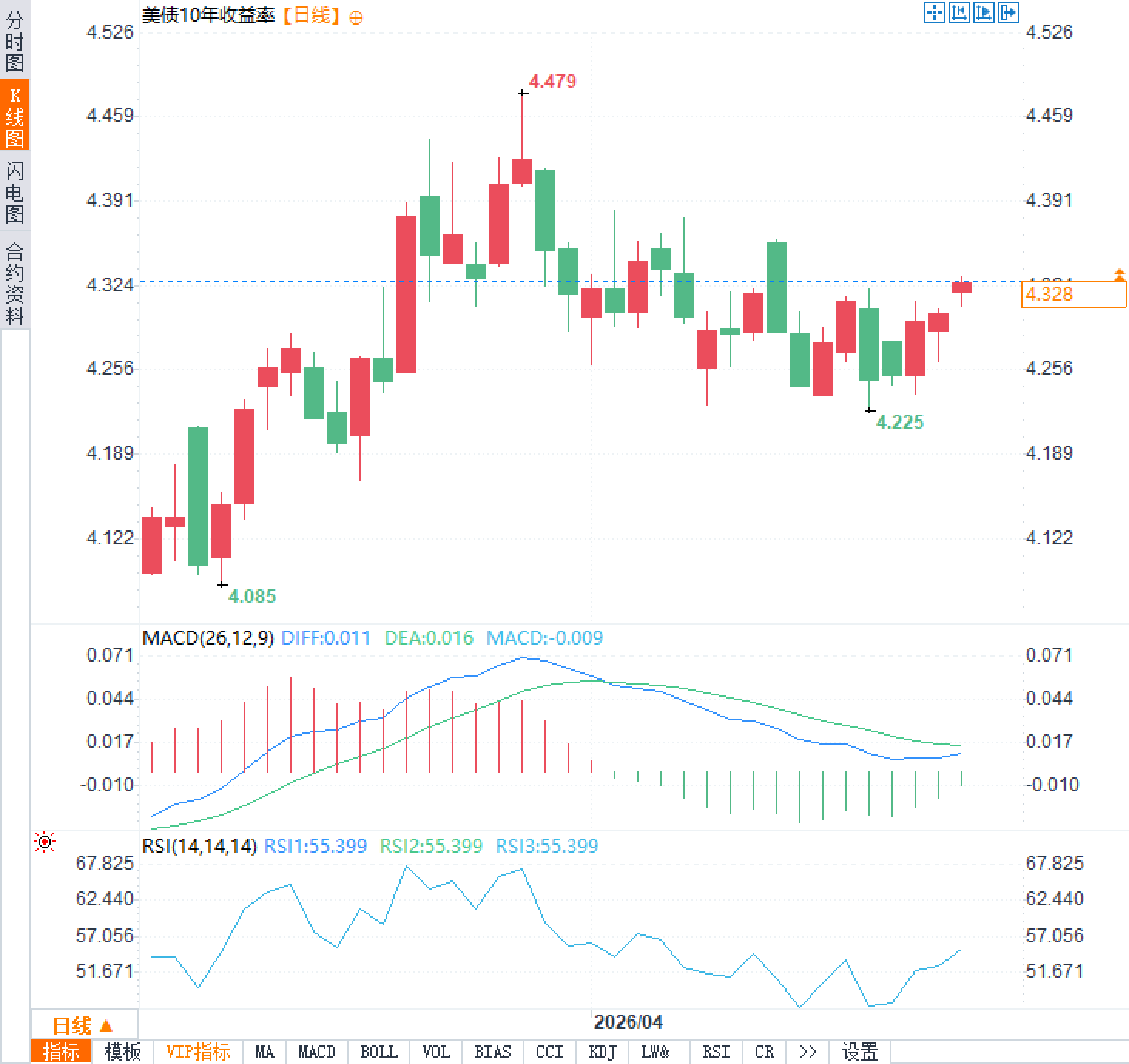
On Thursday, April 23, major U.S. stock indices rose, supported by recent easing of geopolitical tensions and strong corporate earnings. The S&P 500 closed at 7137.90, up 1.05%; the Dow Jones Industrial Average rose 0.69% to 49490.03; and the Nasdaq Composite rose 1.64% to 24657.57. The 10-year U.S. Treasury yield hovered around 4.32%. In this market environment, the U.S. Senate passed a non-binding budget resolution by a vote of 50 to 48, providing $70 billion in funding for Immigration and Customs Enforcement and the Border Patrol for operations over the next three years. This move aims to end the partial shutdown of the Department of Homeland Security that began in mid-February.

The Senate vote lasted nearly six hours, with Republicans leading the way with a majority to pass the resolution, although two Republican senators voted against it. The resolution paves the way for subsequent legislation, allowing congressional committees to detail the specific uses of the $70 billion, and ultimately requires the president's signature to take effect. The funding covers the entire term until January 2029, coinciding with the current executive term. Previously, most of the Department of Homeland Security's funding had been exhausted nine weeks ago, leading to operational constraints for some agencies. Democrats had demanded more restrictions on law enforcement actions, including requiring a court order to enter private residences, but negotiations stalled. The Senate had previously passed other Department of Homeland Security funding bills besides immigration enforcement, but these were stalled in the House due to partisan divisions. Last year, these agencies received approximately $130 billion in additional funding; this $70 billion represents a new round of incremental investment.
In the first six months of fiscal year 2026, the US federal deficit had already reached $1.2 trillion, and is projected to approach $1.9 trillion for the entire year. The $70 billion three-year funding, equivalent to approximately $23.3 billion annually, combined with the existing budget, will further increase spending pressure. Currently, the federal debt is enormous, and the additional funds will be raised through the issuance of Treasury bonds, potentially impacting bond supply dynamics. The following is a comparison of relevant financing:
While this amount represents a limited percentage of the annual deficit, the use of a settlement mechanism in the budget process, bypassing the usual 60-vote threshold and passing with a simple majority, has raised market concerns about long-term sustainability. Supporting provisions, such as a fiscal neutrality fund, have been approved, aiming to provide specific support for enforcement actions targeting immigrants with specific criminal records.
Increased spending could boost Treasury issuance, thus impacting the yield curve. Currently, the 10-year Treasury yield is fluctuating around 4.32%. If supply pressures increase, investors may demand a higher risk premium to absorb new debt. Traders are focused on subsequent legislative details from the committee; if the funds are used primarily for operations rather than capital expenditures, their direct impact on inflation expectations may be relatively mild. Similar special financing for security sectors has limited short-term contribution to bond market volatility, but coupled with the overall deficit trajectory, it could amplify uncertainty before the midterm elections. The US dollar index has recently been trading around 98.6, and fund flows will depend on the Fed's policy path and global interest rate differentials. Overall, this financing has a marginal impact on the macroeconomic interest rate environment, rather than being the dominant factor.
Strengthened immigration enforcement could alter the labor supply structure of specific industries. Increased border and enforcement actions could affect the influx of low-skilled labor, thereby pushing up wages in related sectors, particularly agriculture, construction, and services. On the other hand, funding injections could help stabilize the Department of Homeland Security's operations and prevent further shutdowns from impacting supply chains and disaster response capabilities. In the long term, fiscal sustainability remains a key variable: if the deficit continues to widen, the market may price in higher long-term interest rate risks.
The immediate background to the Senate funding resolution
The Senate vote lasted nearly six hours, with Republicans leading the way with a majority to pass the resolution, although two Republican senators voted against it. The resolution paves the way for subsequent legislation, allowing congressional committees to detail the specific uses of the $70 billion, and ultimately requires the president's signature to take effect. The funding covers the entire term until January 2029, coinciding with the current executive term. Previously, most of the Department of Homeland Security's funding had been exhausted nine weeks ago, leading to operational constraints for some agencies. Democrats had demanded more restrictions on law enforcement actions, including requiring a court order to enter private residences, but negotiations stalled. The Senate had previously passed other Department of Homeland Security funding bills besides immigration enforcement, but these were stalled in the House due to partisan divisions. Last year, these agencies received approximately $130 billion in additional funding; this $70 billion represents a new round of incremental investment.
The fiscal scale of $70 billion and the pressure of deficit
In the first six months of fiscal year 2026, the US federal deficit had already reached $1.2 trillion, and is projected to approach $1.9 trillion for the entire year. The $70 billion three-year funding, equivalent to approximately $23.3 billion annually, combined with the existing budget, will further increase spending pressure. Currently, the federal debt is enormous, and the additional funds will be raised through the issuance of Treasury bonds, potentially impacting bond supply dynamics. The following is a comparison of relevant financing:
| project | Amount (US$ billion) | Coverage period |
|---|---|---|
| Additional financing last year | 1300 | One year |
| This financing resolution | 700 | Three years |
| Average annual increase | 233 | — |
The transmission path to bond market and interest rate expectations
Increased spending could boost Treasury issuance, thus impacting the yield curve. Currently, the 10-year Treasury yield is fluctuating around 4.32%. If supply pressures increase, investors may demand a higher risk premium to absorb new debt. Traders are focused on subsequent legislative details from the committee; if the funds are used primarily for operations rather than capital expenditures, their direct impact on inflation expectations may be relatively mild. Similar special financing for security sectors has limited short-term contribution to bond market volatility, but coupled with the overall deficit trajectory, it could amplify uncertainty before the midterm elections. The US dollar index has recently been trading around 98.6, and fund flows will depend on the Fed's policy path and global interest rate differentials. Overall, this financing has a marginal impact on the macroeconomic interest rate environment, rather than being the dominant factor.
Potential effects of labor market and economic transmission
Strengthened immigration enforcement could alter the labor supply structure of specific industries. Increased border and enforcement actions could affect the influx of low-skilled labor, thereby pushing up wages in related sectors, particularly agriculture, construction, and services. On the other hand, funding injections could help stabilize the Department of Homeland Security's operations and prevent further shutdowns from impacting supply chains and disaster response capabilities. In the long term, fiscal sustainability remains a key variable: if the deficit continues to widen, the market may price in higher long-term interest rate risks.
Frequently Asked Questions
Question 1: What direct impact will the $70 billion financing have on the federal deficit and debt sustainability?
A: The $70 billion over three years equates to an average annual increase of approximately $23.3 billion, representing about 1.2% of the $1.9 trillion deficit in fiscal year 2026. While not the dominant variable, it will increase supply through government bond issuance, potentially pushing up yields marginally. The fiscal neutrality fund is designed to control the expansion of the net deficit; the market needs to observe the actual implementation of subsequent appropriations.
Question 2: How does the increased enforcement of financing affect the labor market and inflation expectations?
A: Increased enforcement or tightening of specific labor supplies could push up wage costs, particularly in industries reliant on immigration, thus impacting corporate profit margins and inflation dynamics. However, the overall scale is limited, with a relatively small direct contribution to the broad CPI. Traders need to assess the overall effect in conjunction with the Federal Reserve's interest rate path.
- Risk Warning and Disclaimer
- The market involves risk, and trading may not be suitable for all investors. This article is for reference only and does not constitute personal investment advice, nor does it take into account certain users’ specific investment objectives, financial situation, or other needs. Any investment decisions made based on this information are at your own risk.