Negotiations to extend the ceasefire failed to yield results, and dollar positions were quietly increased.
2026-04-23 20:11:24
On Thursday, April 23, geopolitical tensions in the Middle East escalated again, potentially pushing the US dollar index up for the first time this month. The seizure of ships in the Strait of Hormuz, coupled with disagreements between the US and Iran over a ceasefire, blockade, nuclear issues, and control of the strait, effectively closed the strategic waterway, causing oil prices to return above $100. This energy shock not only dampened global economic growth expectations but also reshaped risk appetite in the foreign exchange market, with the US dollar once again becoming a popular safe-haven asset.
The ongoing conflict in the Middle East has exacerbated tensions, with the seizure of ships further escalating the situation. While the ceasefire agreement has been extended, there are no signs of substantial progress in peace negotiations. This has effectively closed the Strait of Hormuz, a vital global oil shipping route, triggering a rise in energy prices. Brent crude oil prices have climbed to around $102 per barrel, significantly increasing market concerns about disruptions to global supply chains.
Against this backdrop, investors are beginning to reassess risk asset pricing, with the peace premium previously accumulated due to the potential for peace gradually fading. The US dollar index has rebounded from recent lows, and traders are inclined to slightly increase their dollar positions. G10 FX strategists point out that the path of least resistance in the current market path remains maintaining and slightly increasing dollar positions, a dynamic that reflects a resurgence in risk aversion. The dollar was a major beneficiary at the outset of the conflict, but earlier this month, the prospect of peace drove investors to shift towards more volatile currencies; now, the fluctuating situation has led to a renewed preference for the dollar.
High oil prices have not only fueled inflationary pressures but also eroded consumer confidence and virtually eliminated market expectations for interest rate cuts by major central banks this year. The global economy faces a direct impact from rising energy costs, while the US dollar has demonstrated strong stability in this uncertain environment.
The euro fell below 1.17 against the dollar, hitting its lowest level since April 13 in early trading. It is projected to decline 0.7% this week, potentially its first weekly drop in four weeks. The dollar hovered around 159.50 against the yen, near the 160 level considered a potential red line for official intervention. The Bank of Japan is expected to keep interest rates unchanged next week but has hinted at a possible rate hike in June. This has made the yen relatively restrained amid safe-haven demand, but it remains under pressure.
The US dollar index rose 0.17% to 98.75, with a cumulative gain of about 0.4% this week, potentially ending a four-week losing streak.
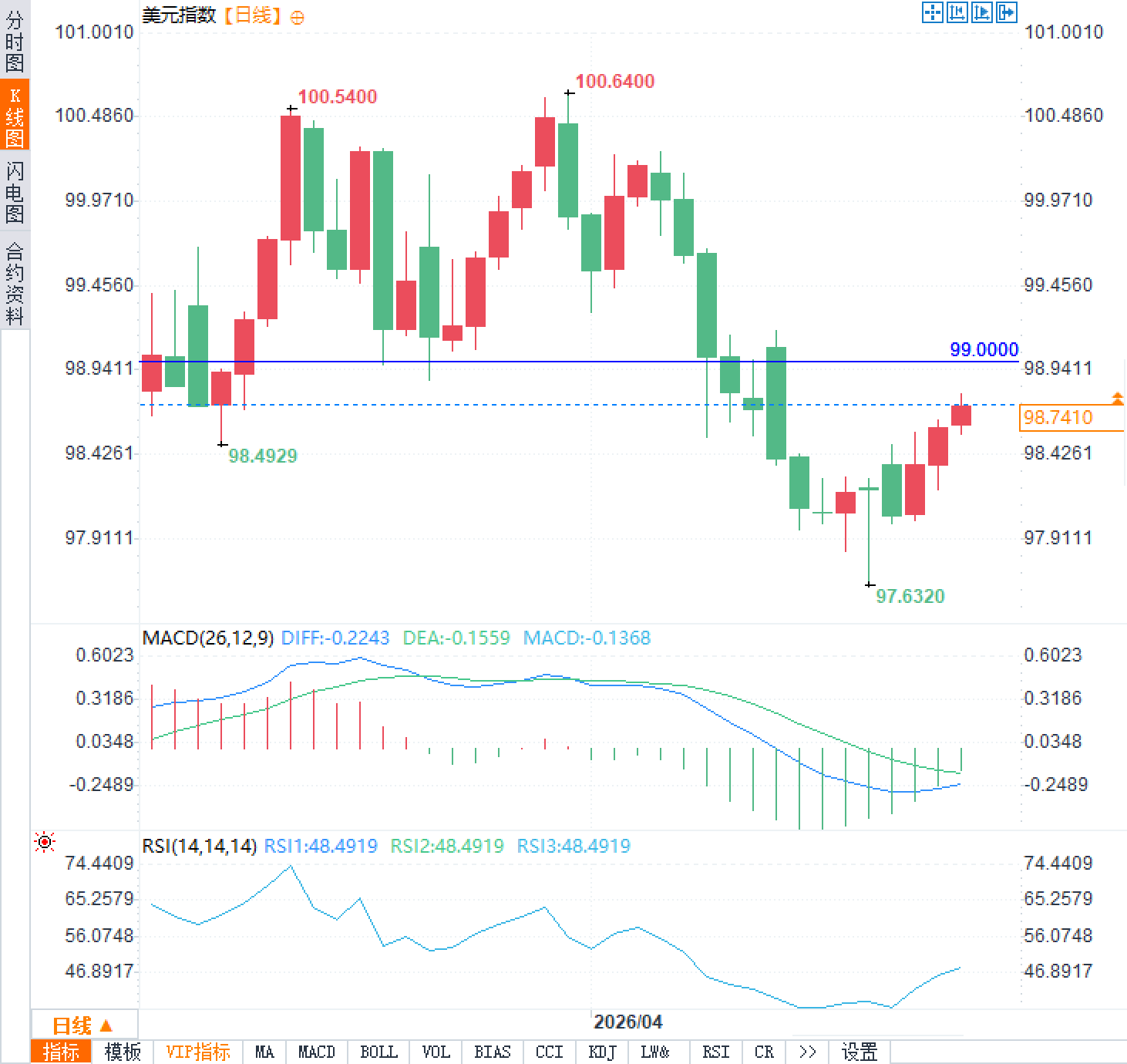
Interest rate market pricing indicates that traders believe there is approximately a 25% probability of a Federal Reserve rate cut this year, while the European Central Bank may face two rate hikes in 2026. However, market strategists believe the US is relatively well-positioned to address the current energy shock, and a dollar pullback is therefore seen as a potential opportunity, especially if the dollar index does not fall below 98.
With the Bank of Japan's interest rate decision meeting approaching, expectations of maintaining the current policy dominate, but potential action in June adds uncertainty to the yen's exchange rate. UK consumer data has already shown the early impact of rising energy prices on spending behavior, indicating that inflation transmission is underway.
The Middle East conflict has lasted for nearly two months, and soaring fuel prices are not only dampening consumer confidence but also potentially impacting broader economic activity through cost-push inflation. Furthermore, the US is reportedly considering a currency swap arrangement with the United Arab Emirates. This is seen as a precautionary measure to address potential credit and liquidity pressures.
Overall, the US dollar index is currently in a cautious upward trend, with geopolitical risks and policy factors jointly shaping its short-term trajectory. Traders are closely watching any developments in peace negotiations and the further impact of energy market dynamics on global growth expectations.
Geopolitical conflicts drive up demand for the US dollar as a safe haven
The ongoing conflict in the Middle East has exacerbated tensions, with the seizure of ships further escalating the situation. While the ceasefire agreement has been extended, there are no signs of substantial progress in peace negotiations. This has effectively closed the Strait of Hormuz, a vital global oil shipping route, triggering a rise in energy prices. Brent crude oil prices have climbed to around $102 per barrel, significantly increasing market concerns about disruptions to global supply chains.
Against this backdrop, investors are beginning to reassess risk asset pricing, with the peace premium previously accumulated due to the potential for peace gradually fading. The US dollar index has rebounded from recent lows, and traders are inclined to slightly increase their dollar positions. G10 FX strategists point out that the path of least resistance in the current market path remains maintaining and slightly increasing dollar positions, a dynamic that reflects a resurgence in risk aversion. The dollar was a major beneficiary at the outset of the conflict, but earlier this month, the prospect of peace drove investors to shift towards more volatile currencies; now, the fluctuating situation has led to a renewed preference for the dollar.
High oil prices have not only fueled inflationary pressures but also eroded consumer confidence and virtually eliminated market expectations for interest rate cuts by major central banks this year. The global economy faces a direct impact from rising energy costs, while the US dollar has demonstrated strong stability in this uncertain environment.
Major currency pairs showed divergent performance
The euro fell below 1.17 against the dollar, hitting its lowest level since April 13 in early trading. It is projected to decline 0.7% this week, potentially its first weekly drop in four weeks. The dollar hovered around 159.50 against the yen, near the 160 level considered a potential red line for official intervention. The Bank of Japan is expected to keep interest rates unchanged next week but has hinted at a possible rate hike in June. This has made the yen relatively restrained amid safe-haven demand, but it remains under pressure.
The US dollar index rose 0.17% to 98.75, with a cumulative gain of about 0.4% this week, potentially ending a four-week losing streak.
Central bank policy divergence intensifies market expectations
Interest rate market pricing indicates that traders believe there is approximately a 25% probability of a Federal Reserve rate cut this year, while the European Central Bank may face two rate hikes in 2026. However, market strategists believe the US is relatively well-positioned to address the current energy shock, and a dollar pullback is therefore seen as a potential opportunity, especially if the dollar index does not fall below 98.
With the Bank of Japan's interest rate decision meeting approaching, expectations of maintaining the current policy dominate, but potential action in June adds uncertainty to the yen's exchange rate. UK consumer data has already shown the early impact of rising energy prices on spending behavior, indicating that inflation transmission is underway.
Global liquidity considerations under energy shock
The Middle East conflict has lasted for nearly two months, and soaring fuel prices are not only dampening consumer confidence but also potentially impacting broader economic activity through cost-push inflation. Furthermore, the US is reportedly considering a currency swap arrangement with the United Arab Emirates. This is seen as a precautionary measure to address potential credit and liquidity pressures.
Overall, the US dollar index is currently in a cautious upward trend, with geopolitical risks and policy factors jointly shaping its short-term trajectory. Traders are closely watching any developments in peace negotiations and the further impact of energy market dynamics on global growth expectations.
Frequently Asked Questions
Question 1: How does the current tension in the Middle East directly affect the performance of the US dollar index?
A: The Middle East conflict has effectively closed the Strait of Hormuz, causing oil prices to break through $100, triggering a global energy crisis and a surge in risk aversion. Investors are shifting from risky assets to safe-haven assets such as the US dollar, gradually dissolving the previously established peace premium and pushing the US dollar index slightly higher to around 98.75.
Question 2: What are the transmission effects of high oil prices on the global economy and foreign exchange market?
A: High oil prices are pushing up inflation, weakening consumer confidence, and potentially delaying central bank easing. At the same time, it tests countries' liquidity management capabilities, such as considering currency swap arrangements. The US dollar benefits from this, but its long-term performance depends on progress in conflict resolution and economic data.
- Risk Warning and Disclaimer
- The market involves risk, and trading may not be suitable for all investors. This article is for reference only and does not constitute personal investment advice, nor does it take into account certain users’ specific investment objectives, financial situation, or other needs. Any investment decisions made based on this information are at your own risk.