Crude oil positions are being reshuffled? What are traders betting?
2026-04-24 20:51:03
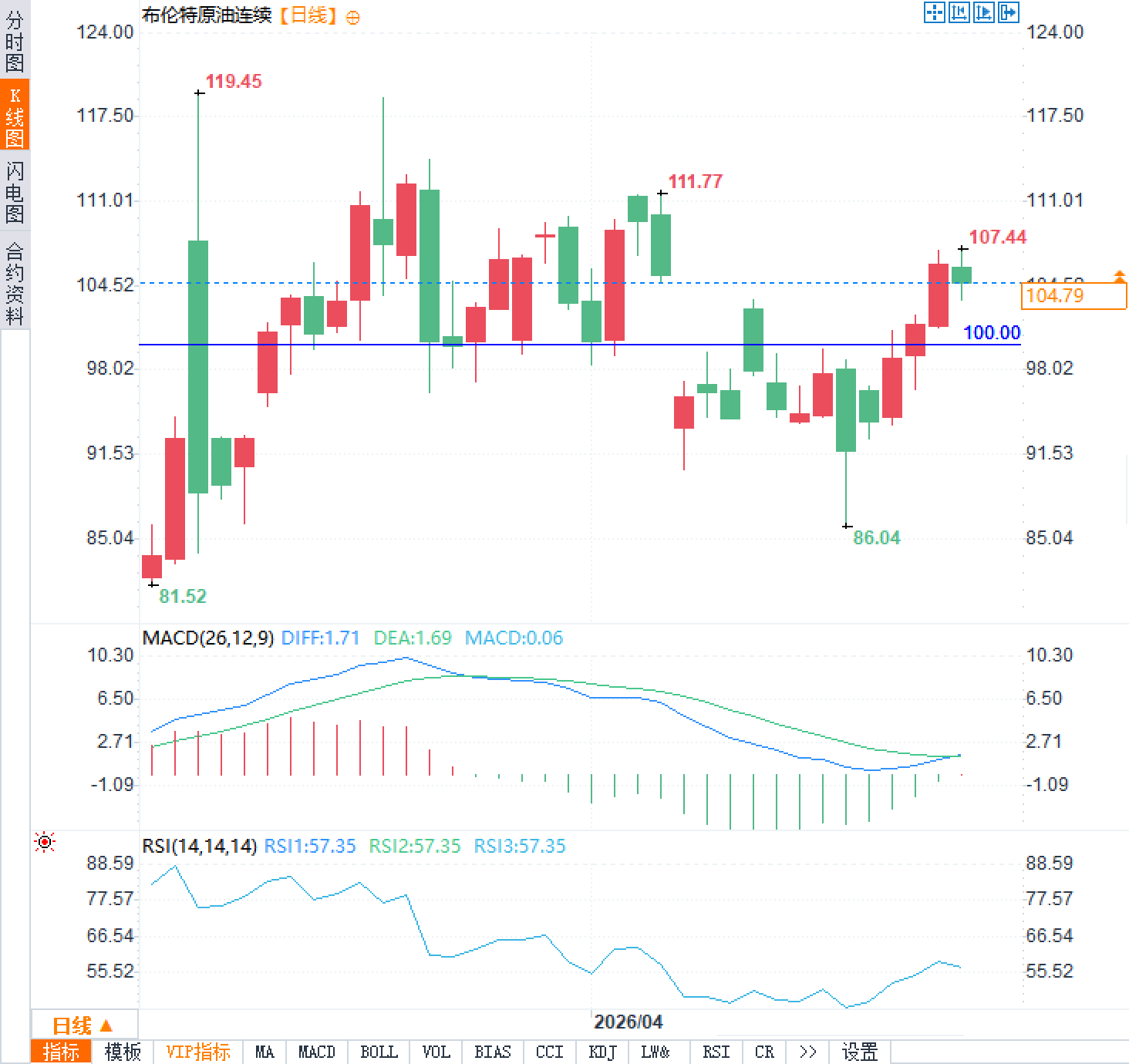
On Friday, April 24, crude oil prices initially rose by more than 2% in early trading, influenced by the seizure of a cargo ship in the Strait of Hormuz and the lack of progress in reopening the key waterway. Later, Pakistani government sources disclosed that Iranian Foreign Minister Abbas Araqchi was expected to arrive in Islamabad that evening with a small team, possibly to initiate peace talks with the United States. This diplomatic signal quickly caused oil prices to give up their gains and turn lower. Brent crude futures fell 1.1% to $104.36 per barrel, and US WTI crude futures fell 0.56% to $95.30 per barrel. This week, Brent crude rose 15% and WTI crude rose 13%, marking the second-largest weekly gain since the conflict began.
The Strait of Hormuz, a vital global oil shipping route, previously handled approximately one-fifth of global crude oil production. It remains effectively blocked. The recent seizure of two cargo ships further highlights the difficulty external forces face in controlling this waterway. This disruption directly hinders key Middle Eastern exports, making it difficult to alleviate the tight market supply situation in the short term. Even with diplomatic signals, shipping data shows daily traffic through the strait is near zero, with ship insurance costs and detour costs rising simultaneously. On the fundamental side, structural supply shortages support high oil prices but also amplify the impact of geopolitical events on prices. Analysts point out that the continued blockade will directly affect the raw material procurement costs of global refineries, thereby influencing the pricing logic of downstream chemical and transportation sectors. The uncertainty leading up to the weekend further prompted some positions to adjust to mitigate the risk of overnight price gaps due to potential unforeseen events.
The news of the Iranian Foreign Minister leading a delegation to Islamabad, coupled with the advance preparations by the US logistics and security team, constituted the core catalyst for a short-term market cooling. This followed US President Donald Trump's announcement of an indefinite extension of the ceasefire. Tamas Varga of oil brokerage PVM pointed out that although the fundamental background remains supportive, traders are liquidating long positions in preparation for the highly unpredictable situation over the weekend, and will readjust positions Sunday evening based on developments in Iran. The impact of such diplomatic developments on prices often exhibits a pulse-like characteristic: initial optimism leads to profit-taking, followed by a rapid rebuilding of risk premiums if negotiations stall. The current position rebalancing reflects market caution regarding the weekend window; in an environment of relatively thin liquidity, even small news items can trigger significant volatility.
The disruption of the Strait of Hormuz is not limited to crude oil itself, but also puts upward pressure on costs across a wide range of commodities. Susanna Street, chief investment strategist at Wealth Club, a UK-based investment services firm, stated that disruptions to transportation in key regions will bring a new round of financial pain points, with many commodities facing persistently high costs. Rising energy prices directly increase inputs in transportation, manufacturing, and logistics, which then spread globally through the supply chain. Traders need to closely monitor the correlation between crude oil and natural gas, chemicals, and even transportation indices when assessing cross-market correlations. In the current environment, supply-side bottlenecks combined with seasonal demand factors form the basis for an upward shift in commodity prices. In the long term, if diplomatic progress is delayed, energy security issues will further intensify the market's search for alternative supply sources, but filling the export gap from the Middle East will be difficult in the short term, and cost pressures may remain high for several quarters.
The continued blockade of the Strait of Hormuz continues to drive up supply risk premiums.
The Strait of Hormuz, a vital global oil shipping route, previously handled approximately one-fifth of global crude oil production. It remains effectively blocked. The recent seizure of two cargo ships further highlights the difficulty external forces face in controlling this waterway. This disruption directly hinders key Middle Eastern exports, making it difficult to alleviate the tight market supply situation in the short term. Even with diplomatic signals, shipping data shows daily traffic through the strait is near zero, with ship insurance costs and detour costs rising simultaneously. On the fundamental side, structural supply shortages support high oil prices but also amplify the impact of geopolitical events on prices. Analysts point out that the continued blockade will directly affect the raw material procurement costs of global refineries, thereby influencing the pricing logic of downstream chemical and transportation sectors. The uncertainty leading up to the weekend further prompted some positions to adjust to mitigate the risk of overnight price gaps due to potential unforeseen events.
Diplomatic mediation signals trigger trader position rebalancing
The news of the Iranian Foreign Minister leading a delegation to Islamabad, coupled with the advance preparations by the US logistics and security team, constituted the core catalyst for a short-term market cooling. This followed US President Donald Trump's announcement of an indefinite extension of the ceasefire. Tamas Varga of oil brokerage PVM pointed out that although the fundamental background remains supportive, traders are liquidating long positions in preparation for the highly unpredictable situation over the weekend, and will readjust positions Sunday evening based on developments in Iran. The impact of such diplomatic developments on prices often exhibits a pulse-like characteristic: initial optimism leads to profit-taking, followed by a rapid rebuilding of risk premiums if negotiations stall. The current position rebalancing reflects market caution regarding the weekend window; in an environment of relatively thin liquidity, even small news items can trigger significant volatility.
Global Commodity Market Chain Reaction and Cost Transmission Path
The disruption of the Strait of Hormuz is not limited to crude oil itself, but also puts upward pressure on costs across a wide range of commodities. Susanna Street, chief investment strategist at Wealth Club, a UK-based investment services firm, stated that disruptions to transportation in key regions will bring a new round of financial pain points, with many commodities facing persistently high costs. Rising energy prices directly increase inputs in transportation, manufacturing, and logistics, which then spread globally through the supply chain. Traders need to closely monitor the correlation between crude oil and natural gas, chemicals, and even transportation indices when assessing cross-market correlations. In the current environment, supply-side bottlenecks combined with seasonal demand factors form the basis for an upward shift in commodity prices. In the long term, if diplomatic progress is delayed, energy security issues will further intensify the market's search for alternative supply sources, but filling the export gap from the Middle East will be difficult in the short term, and cost pressures may remain high for several quarters.
Frequently Asked Questions
Question 1: Why did oil prices remain high after news of peace talks emerged?
A: Although diplomatic signals caused a short-term pullback, the actual supply disruptions caused by the Strait of Hormuz blockade have not yet been resolved, and fundamental support remains strong. Trader liquidation was mainly in response to weekend uncertainties, rather than a rejection of long-term risk premiums. The market expects substantial progress in negotiations to truly change the supply and demand landscape.
Question 2: If negotiations fail by the end of April, what is the potential trend of oil prices?
A: Some analysts believe that the resumption of hostilities will push prices to new highs for the year. Current position rebalancing is merely a tactical adjustment; tight fundamentals coupled with geopolitical uncertainty will continue to support the central level of oil prices. Traders are closely monitoring developments in Iran after the weekend to adjust their risk exposure.
- Risk Warning and Disclaimer
- The market involves risk, and trading may not be suitable for all investors. This article is for reference only and does not constitute personal investment advice, nor does it take into account certain users’ specific investment objectives, financial situation, or other needs. Any investment decisions made based on this information are at your own risk.