Between genuine and sham peace talks: Technical liquidation behind the oil price crash and the de facto eight-week blockade of the Strait of Hormuz.
2026-04-25 09:25:34
Oil prices fell on Friday, with WTI crude closing down more than 2% at $94.88 a barrel and Brent crude down 0.22% at $106.18 a barrel. The market was cautiously optimistic about renewed US-Iran negotiations ahead of the weekend. However, for the week, the two benchmark contracts recorded gains of about 16% and 13% respectively, highlighting the market's pricing in of earlier fears about a potential blockade of the Strait of Hormuz.
The core catalyst that caused oil prices to reverse course and fall during the session was multiple signals that US-Iran peace talks might resume. After Iranian Foreign Minister Araqchi arrived in Islamabad to discuss a peace proposal, crude oil futures gave back 2% of their earlier gains. Subsequently, CNN reported that Trump would send special envoys Witkov and Kushner to Pakistan to meet with Iranian officials, further pushing oil prices down. Trump himself revealed that "Iran is proposing a plan," which the market interpreted as an increased probability of a short-term ceasefire agreement, thus partially alleviating the supply disruption premium.
However, Tamas Varga of oil brokerage PVM pointed out that Friday's price action was more of a technical move by long positions to close out before the weekend—traders were unwilling to hold positions overnight in a highly uncertain situation, instead waiting to readjust their positions on Sunday night based on the latest developments. This cautious sentiment means that if there is no substantial breakthrough in the weekend talks, oil prices could jump again on Monday. Furthermore, the Brent-WTI spread widened to nearly $11, reflecting that global benchmarks are far more sensitive to Middle Eastern supply risks than those in the US.
Strait of Hormuz: The Reality of Blockade and the Global Energy Supply Crisis
Alongside rumors of peace talks, the Strait of Hormuz remains under a sustained and near-complete blockade. Shipping data shows that only five ships passed through the strait in the past 24 hours, compared to a pre-war daily average of approximately 130. Crucially, the vast majority of these five vessels were not large supertankers carrying crude oil—an Iranian product tanker was the only recorded transit point. This means that approximately 20% of global daily seaborne oil exports have effectively been cut off for eight weeks.
An Iranian Defense Ministry spokesman stated firmly on Friday: "The Strait of Hormuz remains under Iranian control and has become a lever of control for achieving Iran's national aspirations." This week, Iran also seized two giant cargo ships, demonstrating its blockade capability. The Trump administration's countermeasures—imposing a blockade on Iranian shipping—have so far failed to change the situation. While Trump himself claims the US "has the upper hand," he admits that "a way to reopen the Strait has not yet been found."
The scale of the supply disruption is historic. Even if the US and Iran reach a preliminary negotiation framework over the weekend, lifting the blockade will take time: Iran demands the US lift the blockade on Iranian shipping first, while the US insists Iran must open the Strait of Hormuz first. This stalemate of "who concedes first," coupled with the Iranian Islamic Revolutionary Guard Corps' de facto control of the Strait, means that even if political negotiations begin, the restoration of physical supplies could take weeks or even months. Energy consulting firms estimate that currently, global spare capacity is mainly concentrated in Saudi Arabia and the UAE, but alternative routes (such as around the Cape of Good Hope) will increase transportation costs and time delays by $5-8 per barrel.
Negotiation Maze: Multiple Red Lines and Ambiguous Signals
Although news of the talks initially pressured oil prices, a closer examination of the actual positions of all parties reveals that the prospects for negotiations are far less optimistic than the market anticipated. First, there are significant divisions within Iran. After Iranian Foreign Minister Araqchi arrived in Islamabad, Ibrahim Aziz, chairman of the Iranian parliament's National Security and Foreign Policy Committee, immediately clarified on social media that Araqchi "was not authorized to handle any matters related to the nuclear negotiations," and that the nuclear issue remains a red line for Iran. This directly contradicts White House spokesperson Levitt's claim that "some progress has been made on the Iranian side."
Secondly, hardliners within the United States are exerting strong pressure. Republican Senator Roger Wick, chairman of the Senate Armed Services Committee, publicly declared that "the era of negotiations with Iran is over," demanding that the Trump administration end negotiations and resume military strikes. Wick even called for "the complete destruction of Iran's conventional military forces and the eradication of all remaining facilities of its nuclear program." While this extreme hawkish stance may not form a majority in the Senate, it has put significant pressure on Trump's political decisions—any agreement perceived as "weak on Iran" could become a point of attack in the 2026 midterm elections.
Third, Pakistan's role as a mediator is limited. Two Pakistani government sources revealed that Araghchi's trip was brief, focusing solely on "explaining the proposal" to Pakistan, which would then relay it to Washington, rather than a direct meeting with US representatives. In fact, Pakistani sources explicitly stated that Araghchi did not arrange to meet with US negotiators in Islamabad. The US delegation (Witkov and Kushner) is scheduled to arrive on Saturday, but Iranian Parliament Speaker Ghalibaf—who previously led the Iranian delegation in the negotiations—did not accompany them. Although rumors of his resignation have been denied, the statement that "no new round of negotiations has been arranged" indicates that substantive contact remains a long way off.
In summary, the current signals of peace talks seem more like tentative moves by both sides to gain the upper hand in public opinion, rather than a genuine turning point towards a diplomatic solution. US Defense Secretary Hegsett's statement that "Iran still has an opportunity to make a wise choice at the negotiating table" sounds more like an ultimatum. The key point to watch in the coming week is whether Witkov and Kushner can achieve any level of direct contact with Iran in Islamabad—even an informal meeting. A potential converse risk is that if the US-Iran peace talks unexpectedly achieve a breakthrough, oil prices could quickly fall below $80.
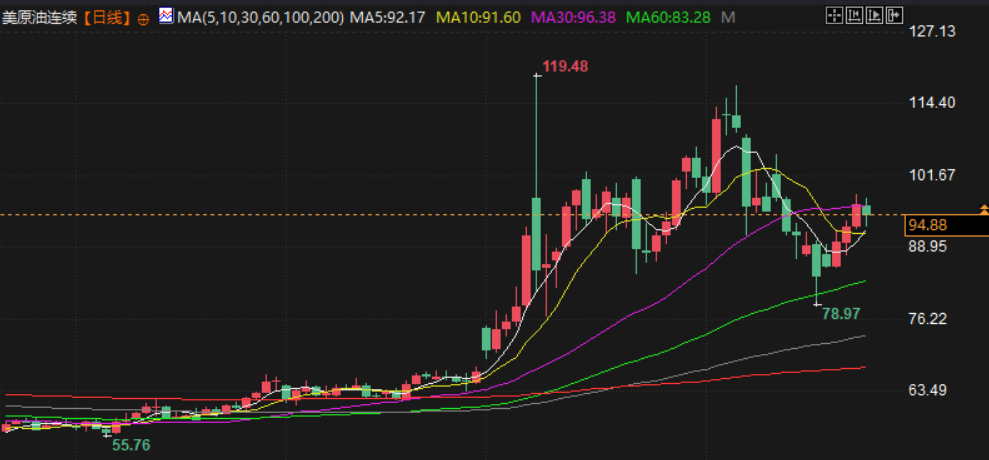
The core catalyst that caused oil prices to reverse course and fall during the session was multiple signals that US-Iran peace talks might resume. After Iranian Foreign Minister Araqchi arrived in Islamabad to discuss a peace proposal, crude oil futures gave back 2% of their earlier gains. Subsequently, CNN reported that Trump would send special envoys Witkov and Kushner to Pakistan to meet with Iranian officials, further pushing oil prices down. Trump himself revealed that "Iran is proposing a plan," which the market interpreted as an increased probability of a short-term ceasefire agreement, thus partially alleviating the supply disruption premium.
However, Tamas Varga of oil brokerage PVM pointed out that Friday's price action was more of a technical move by long positions to close out before the weekend—traders were unwilling to hold positions overnight in a highly uncertain situation, instead waiting to readjust their positions on Sunday night based on the latest developments. This cautious sentiment means that if there is no substantial breakthrough in the weekend talks, oil prices could jump again on Monday. Furthermore, the Brent-WTI spread widened to nearly $11, reflecting that global benchmarks are far more sensitive to Middle Eastern supply risks than those in the US.
Strait of Hormuz: The Reality of Blockade and the Global Energy Supply Crisis
Alongside rumors of peace talks, the Strait of Hormuz remains under a sustained and near-complete blockade. Shipping data shows that only five ships passed through the strait in the past 24 hours, compared to a pre-war daily average of approximately 130. Crucially, the vast majority of these five vessels were not large supertankers carrying crude oil—an Iranian product tanker was the only recorded transit point. This means that approximately 20% of global daily seaborne oil exports have effectively been cut off for eight weeks.
An Iranian Defense Ministry spokesman stated firmly on Friday: "The Strait of Hormuz remains under Iranian control and has become a lever of control for achieving Iran's national aspirations." This week, Iran also seized two giant cargo ships, demonstrating its blockade capability. The Trump administration's countermeasures—imposing a blockade on Iranian shipping—have so far failed to change the situation. While Trump himself claims the US "has the upper hand," he admits that "a way to reopen the Strait has not yet been found."
The scale of the supply disruption is historic. Even if the US and Iran reach a preliminary negotiation framework over the weekend, lifting the blockade will take time: Iran demands the US lift the blockade on Iranian shipping first, while the US insists Iran must open the Strait of Hormuz first. This stalemate of "who concedes first," coupled with the Iranian Islamic Revolutionary Guard Corps' de facto control of the Strait, means that even if political negotiations begin, the restoration of physical supplies could take weeks or even months. Energy consulting firms estimate that currently, global spare capacity is mainly concentrated in Saudi Arabia and the UAE, but alternative routes (such as around the Cape of Good Hope) will increase transportation costs and time delays by $5-8 per barrel.
Negotiation Maze: Multiple Red Lines and Ambiguous Signals
Although news of the talks initially pressured oil prices, a closer examination of the actual positions of all parties reveals that the prospects for negotiations are far less optimistic than the market anticipated. First, there are significant divisions within Iran. After Iranian Foreign Minister Araqchi arrived in Islamabad, Ibrahim Aziz, chairman of the Iranian parliament's National Security and Foreign Policy Committee, immediately clarified on social media that Araqchi "was not authorized to handle any matters related to the nuclear negotiations," and that the nuclear issue remains a red line for Iran. This directly contradicts White House spokesperson Levitt's claim that "some progress has been made on the Iranian side."
Secondly, hardliners within the United States are exerting strong pressure. Republican Senator Roger Wick, chairman of the Senate Armed Services Committee, publicly declared that "the era of negotiations with Iran is over," demanding that the Trump administration end negotiations and resume military strikes. Wick even called for "the complete destruction of Iran's conventional military forces and the eradication of all remaining facilities of its nuclear program." While this extreme hawkish stance may not form a majority in the Senate, it has put significant pressure on Trump's political decisions—any agreement perceived as "weak on Iran" could become a point of attack in the 2026 midterm elections.
Third, Pakistan's role as a mediator is limited. Two Pakistani government sources revealed that Araghchi's trip was brief, focusing solely on "explaining the proposal" to Pakistan, which would then relay it to Washington, rather than a direct meeting with US representatives. In fact, Pakistani sources explicitly stated that Araghchi did not arrange to meet with US negotiators in Islamabad. The US delegation (Witkov and Kushner) is scheduled to arrive on Saturday, but Iranian Parliament Speaker Ghalibaf—who previously led the Iranian delegation in the negotiations—did not accompany them. Although rumors of his resignation have been denied, the statement that "no new round of negotiations has been arranged" indicates that substantive contact remains a long way off.
In summary, the current signals of peace talks seem more like tentative moves by both sides to gain the upper hand in public opinion, rather than a genuine turning point towards a diplomatic solution. US Defense Secretary Hegsett's statement that "Iran still has an opportunity to make a wise choice at the negotiating table" sounds more like an ultimatum. The key point to watch in the coming week is whether Witkov and Kushner can achieve any level of direct contact with Iran in Islamabad—even an informal meeting. A potential converse risk is that if the US-Iran peace talks unexpectedly achieve a breakthrough, oil prices could quickly fall below $80.
- Risk Warning and Disclaimer
- The market involves risk, and trading may not be suitable for all investors. This article is for reference only and does not constitute personal investment advice, nor does it take into account certain users’ specific investment objectives, financial situation, or other needs. Any investment decisions made based on this information are at your own risk.