The Justice Department has let Powell off the hook, clearing the way for Warsh's nomination! With the Super Week countdown underway, the dollar has fallen sharply.
2026-04-25 09:04:41
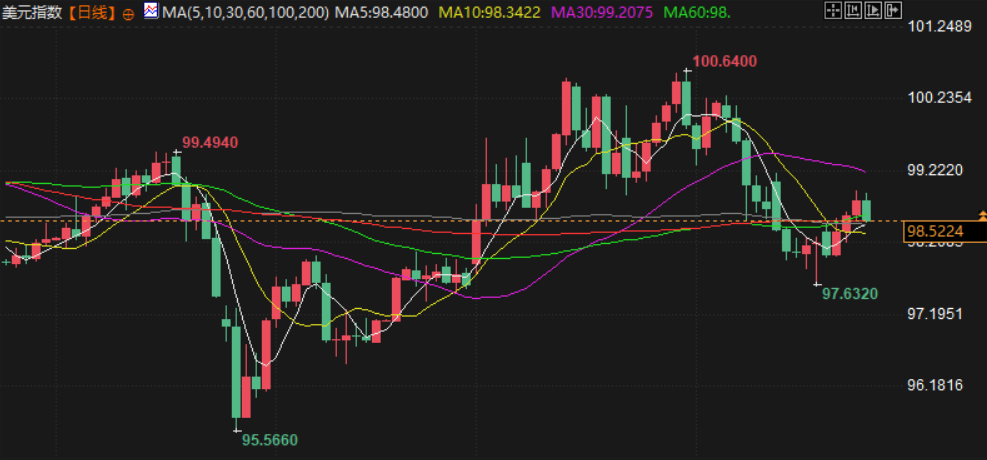
The dollar index fell significantly on Friday, driven by two main factors: the U.S. Department of Justice's decision to terminate its investigation into Federal Reserve Chairman Jerome Powell, and rising market optimism that peace talks between the U.S., Israel, and Iran might begin soon.
Justice Department prosecutor Jeanine Pirro instead requested the Federal Reserve's internal oversight body—the Office of the Inspector General—to review cost overruns in the renovation project at the Washington headquarters. The conclusion of this investigation directly removed a major obstacle to the confirmation of President Trump's nominee for Federal Reserve Chair, Kevin Warsh. The market quickly interpreted this news as having a slightly dovish bias.
Noah Buffam, head of strategy at CIBC Capital Markets, points out that Warsh prefers to use truncated mean and median inflation measures—which are typically lower than the core inflation data that Powell focuses on—which “could lead him to try to push for more rate cuts than Powell.”
As a result of this expectation, federal funds futures traders' forecast of a rate cut by the end of the year jumped from 23% to 38%. Consequently, the dollar index fell 0.31% to 98.52, and the euro rose 0.27% against the dollar to 1.1714.
Warsh's nomination and expectations of a Fed rate cut
Warsh's confirmation hearings have become the focus of the market. Republican Senator Thom Tillis had made it clear that he would delay Warsh's confirmation process unless the criminal investigation into Powell was dropped. Now, with the Justice Department making concessions, Warsh's nomination path is almost unimpeded. It is worth noting that Warsh himself publicly stated this week that he has not made any "commitments" to President Trump regarding interest rate cuts.
However, the market has already clearly anticipated his policy preferences: compared to Powell, Warsh is more likely to tolerate lower inflation readings and push for more aggressive rate cuts. A survey shows that among 103 economists surveyed, 56 expect the Fed to keep interest rates unchanged in the 3.50%-3.75% range until the end of September. This means that if the Fed doesn't cut rates by September, Trump may be disappointed, but the dollar will benefit—because higher interest rates support currency attractiveness. Currently, traders are betting on two possibilities: Warsh chairing the Fed meeting for the first time in June, or Powell continuing at the helm?
Central bank policies diverge: Fed rate cuts vs. global rate hikes
Traders are turning their attention to the upcoming "super week" of central bank announcements—the Federal Reserve, the Bank of Japan, the European Central Bank, and the Bank of England will all be announcing policy decisions. Buffam of CIBC has raised a new theme: central bank policy divergence—the Fed may continue cutting rates, while other central banks around the world will actually begin raising them.
As for the Federal Reserve, given the potential for a new round of inflationary risks from the Iran war and the resilience of US economic data, it is expected to maintain interest rates unchanged next week. This subtly contrasts with market expectations of Warsh's long-term dovish stance: no change in the short term, but an increased probability of rate cuts in the medium to long term.
Meanwhile, other central banks face drastically different pressures: the European Central Bank and the Bank of England may raise interest rates due to inflation caused by the energy shock; the Bank of Japan is also weighing the timing of exiting negative interest rates. This divergence means that the dollar may enjoy an interest rate advantage for some time (if other central banks raise rates, it could actually weaken their currencies? Note: interest rate hikes usually boost currencies, but the logic here is that the Fed cutting rates while other countries raise rates would depress the dollar—the dollar's decline is precisely due to market expectations of a more dovish Fed. Note: policy divergence could cause the dollar to weaken under expectations of rate cuts, while other currencies would strengthen under expectations of rate hikes. This is the current context of pressure on the dollar.
Bank of Japan: Signals of Inflation and Interest Rate Hikes
The Bank of Japan will conclude its two-day policy meeting next Tuesday, with the market widely expecting it to keep interest rates unchanged, but there is a high probability that it will signal tightening. Core consumer inflation fell below the 2% target for the second consecutive month in March, but analysts predict that price pressures will resurface as businesses pass on increased fuel costs due to the Middle East conflict to consumers.
Finance Minister Satsuki Katayama reiterated his warning against intervention, stating that the government is prepared to take "decisive" action against speculative activities.
Abhijit Surya of Capital Economics predicts that the Bank of Japan (BOJ) may raise interest rates as early as June, and may signal a tightening stance by raising its inflation forecast. Derek Halpenny of MUFG Bank warns that if the BOJ maintains its current interest rate and adopts a cautious approach, the yen will face the risk of further decline—the USD/JPY exchange rate could potentially break through 160. The market has already priced in a tightening expectation of approximately 18 basis points in June; the BOJ needs to signal a rate hike, otherwise, with the real policy rate still deeply negative, it will encourage a sell-off of the yen.
HSBC economists pointed out that "core-core inflation," excluding fresh food and energy, remains sticky. If the conflict in the Middle East continues, rising energy, fertilizer, and freight costs will push up food costs in Japan, thus forcing the central bank to act sooner.
A Look Ahead at the European Central Bank and the Bank of England
The European Central Bank (ECB) is expected to keep its deposit rate unchanged on April 30, but slightly more than half of the economists surveyed predict a rate hike in June, as policymakers seek to protect the eurozone economy from a war-induced energy shock. Mohit Kumar of Jefferies believes that the market's expectation of a nearly 65-basis-point rate hike by the ECB this year is "unreasonable"—a precautionary rate hike might be possible, but a series of rate hikes is highly unlikely given the slowing economic growth environment.
The Bank of England will hold a meeting next Thursday and is not expected to adjust interest rates, but the money market has already priced in a rate hike before the end of the year. TD Securities strategists say that if the Bank of England keeps rates unchanged and adopts a wait-and-see stance, the pound may strengthen moderately against the euro, as market pricing in a European Central Bank rate hike may converge towards the Bank of England's level. The recent pressure from British Prime Minister Keir Starmer's resignation has had little impact on the pound. Amid the unresolved situation in the Middle East and high oil prices, eurozone government bond yields have followed US Treasuries higher. The 10-year German bond yield rose 2.1 basis points to 3.028%.
Middle East situation and dollar fluctuations
Iranian Foreign Minister Araqchi arrived in Islamabad on Friday to discuss a proposal to restart peace talks with the United States, but Pakistani sources said he would not meet with US representatives there. Meanwhile, Trump plans to send special envoys Vitkov and Kushner to Islamabad to meet with Araqchi, with the specific timing undetermined. Throughout the conflict, the dollar has been pulled by multiple factors: it strengthens when the market is optimistic about a short-term agreement to end the war; it comes under pressure if a prolonged war leads to energy disruptions and damages the US economy. Lou Brien of Chicago-based DRW Trading stated, "You really can't make any judgments." Therefore, the market has largely remained range-bound, with many reluctant to establish large positions. The direction of the dollar will only become clearer as central bank decisions and geopolitical developments become more apparent.
Justice Department prosecutor Jeanine Pirro instead requested the Federal Reserve's internal oversight body—the Office of the Inspector General—to review cost overruns in the renovation project at the Washington headquarters. The conclusion of this investigation directly removed a major obstacle to the confirmation of President Trump's nominee for Federal Reserve Chair, Kevin Warsh. The market quickly interpreted this news as having a slightly dovish bias.
Noah Buffam, head of strategy at CIBC Capital Markets, points out that Warsh prefers to use truncated mean and median inflation measures—which are typically lower than the core inflation data that Powell focuses on—which “could lead him to try to push for more rate cuts than Powell.”
As a result of this expectation, federal funds futures traders' forecast of a rate cut by the end of the year jumped from 23% to 38%. Consequently, the dollar index fell 0.31% to 98.52, and the euro rose 0.27% against the dollar to 1.1714.
Warsh's nomination and expectations of a Fed rate cut
Warsh's confirmation hearings have become the focus of the market. Republican Senator Thom Tillis had made it clear that he would delay Warsh's confirmation process unless the criminal investigation into Powell was dropped. Now, with the Justice Department making concessions, Warsh's nomination path is almost unimpeded. It is worth noting that Warsh himself publicly stated this week that he has not made any "commitments" to President Trump regarding interest rate cuts.
However, the market has already clearly anticipated his policy preferences: compared to Powell, Warsh is more likely to tolerate lower inflation readings and push for more aggressive rate cuts. A survey shows that among 103 economists surveyed, 56 expect the Fed to keep interest rates unchanged in the 3.50%-3.75% range until the end of September. This means that if the Fed doesn't cut rates by September, Trump may be disappointed, but the dollar will benefit—because higher interest rates support currency attractiveness. Currently, traders are betting on two possibilities: Warsh chairing the Fed meeting for the first time in June, or Powell continuing at the helm?
Central bank policies diverge: Fed rate cuts vs. global rate hikes
Traders are turning their attention to the upcoming "super week" of central bank announcements—the Federal Reserve, the Bank of Japan, the European Central Bank, and the Bank of England will all be announcing policy decisions. Buffam of CIBC has raised a new theme: central bank policy divergence—the Fed may continue cutting rates, while other central banks around the world will actually begin raising them.
As for the Federal Reserve, given the potential for a new round of inflationary risks from the Iran war and the resilience of US economic data, it is expected to maintain interest rates unchanged next week. This subtly contrasts with market expectations of Warsh's long-term dovish stance: no change in the short term, but an increased probability of rate cuts in the medium to long term.
Meanwhile, other central banks face drastically different pressures: the European Central Bank and the Bank of England may raise interest rates due to inflation caused by the energy shock; the Bank of Japan is also weighing the timing of exiting negative interest rates. This divergence means that the dollar may enjoy an interest rate advantage for some time (if other central banks raise rates, it could actually weaken their currencies? Note: interest rate hikes usually boost currencies, but the logic here is that the Fed cutting rates while other countries raise rates would depress the dollar—the dollar's decline is precisely due to market expectations of a more dovish Fed. Note: policy divergence could cause the dollar to weaken under expectations of rate cuts, while other currencies would strengthen under expectations of rate hikes. This is the current context of pressure on the dollar.
Bank of Japan: Signals of Inflation and Interest Rate Hikes
The Bank of Japan will conclude its two-day policy meeting next Tuesday, with the market widely expecting it to keep interest rates unchanged, but there is a high probability that it will signal tightening. Core consumer inflation fell below the 2% target for the second consecutive month in March, but analysts predict that price pressures will resurface as businesses pass on increased fuel costs due to the Middle East conflict to consumers.
Finance Minister Satsuki Katayama reiterated his warning against intervention, stating that the government is prepared to take "decisive" action against speculative activities.
Abhijit Surya of Capital Economics predicts that the Bank of Japan (BOJ) may raise interest rates as early as June, and may signal a tightening stance by raising its inflation forecast. Derek Halpenny of MUFG Bank warns that if the BOJ maintains its current interest rate and adopts a cautious approach, the yen will face the risk of further decline—the USD/JPY exchange rate could potentially break through 160. The market has already priced in a tightening expectation of approximately 18 basis points in June; the BOJ needs to signal a rate hike, otherwise, with the real policy rate still deeply negative, it will encourage a sell-off of the yen.
HSBC economists pointed out that "core-core inflation," excluding fresh food and energy, remains sticky. If the conflict in the Middle East continues, rising energy, fertilizer, and freight costs will push up food costs in Japan, thus forcing the central bank to act sooner.
A Look Ahead at the European Central Bank and the Bank of England
The European Central Bank (ECB) is expected to keep its deposit rate unchanged on April 30, but slightly more than half of the economists surveyed predict a rate hike in June, as policymakers seek to protect the eurozone economy from a war-induced energy shock. Mohit Kumar of Jefferies believes that the market's expectation of a nearly 65-basis-point rate hike by the ECB this year is "unreasonable"—a precautionary rate hike might be possible, but a series of rate hikes is highly unlikely given the slowing economic growth environment.
The Bank of England will hold a meeting next Thursday and is not expected to adjust interest rates, but the money market has already priced in a rate hike before the end of the year. TD Securities strategists say that if the Bank of England keeps rates unchanged and adopts a wait-and-see stance, the pound may strengthen moderately against the euro, as market pricing in a European Central Bank rate hike may converge towards the Bank of England's level. The recent pressure from British Prime Minister Keir Starmer's resignation has had little impact on the pound. Amid the unresolved situation in the Middle East and high oil prices, eurozone government bond yields have followed US Treasuries higher. The 10-year German bond yield rose 2.1 basis points to 3.028%.
Middle East situation and dollar fluctuations
Iranian Foreign Minister Araqchi arrived in Islamabad on Friday to discuss a proposal to restart peace talks with the United States, but Pakistani sources said he would not meet with US representatives there. Meanwhile, Trump plans to send special envoys Vitkov and Kushner to Islamabad to meet with Araqchi, with the specific timing undetermined. Throughout the conflict, the dollar has been pulled by multiple factors: it strengthens when the market is optimistic about a short-term agreement to end the war; it comes under pressure if a prolonged war leads to energy disruptions and damages the US economy. Lou Brien of Chicago-based DRW Trading stated, "You really can't make any judgments." Therefore, the market has largely remained range-bound, with many reluctant to establish large positions. The direction of the dollar will only become clearer as central bank decisions and geopolitical developments become more apparent.
- Risk Warning and Disclaimer
- The market involves risk, and trading may not be suitable for all investors. This article is for reference only and does not constitute personal investment advice, nor does it take into account certain users’ specific investment objectives, financial situation, or other needs. Any investment decisions made based on this information are at your own risk.