Gold prices remained range-bound as inflation expectations rose and Federal Reserve policy uncertainty persisted.
2026-04-27 09:24:58
Gold prices fell to around $4,680 in early Asian trading on Monday before rebounding, continuing the previous correction. Despite ongoing tensions in the Middle East, gold failed to find significant support and instead declined under the influence of macroeconomic factors, indicating that the current market pricing logic has shifted from simple safe-haven demand to a rebalancing of interest rates and inflation expectations.

The United States has suspended related diplomatic visits, while Iran has made it clear that it will not negotiate under pressure or blockade, indicating that the situation is unlikely to ease in the short term. Meanwhile, Israel has intensified its military operations towards Lebanon, further escalating regional tensions. These events have driven volatility in the energy market, with crude oil prices remaining high and reinforcing market concerns about a rebound in inflation.
From a logical transmission perspective, rising oil prices often push up overall inflation through energy cost transmission , and rising inflation expectations directly affect the path of monetary policy. Currently, the market widely expects the Federal Reserve to keep interest rates unchanged at this week's meeting. This expectation of persistently high interest rates significantly weakens the attractiveness of gold as a non-interest-bearing asset . In a high-interest-rate environment, funds tend to flow into assets with yield attributes, thus putting downward pressure on gold.
Meanwhile, despite gold's safe-haven appeal, the market is currently more focused on the duration of high interest rates than geopolitical risks themselves. This means that even with heightened tensions, gold's upside potential remains limited. Investors are paying closer attention to the statements made by Federal Reserve officials at the post-meeting press conference, particularly how they assess the impact of rising energy prices on the inflation path and whether they will adjust future policy expectations.
Market sentiment is currently somewhat divided. On one hand, geopolitical risks provide a floor for gold; on the other hand, rising interest rate expectations create upward pressure, keeping gold prices in a generally weak and volatile pattern. Funds are repeatedly switching between these two logics, leading to increased price volatility but an unclear trend.
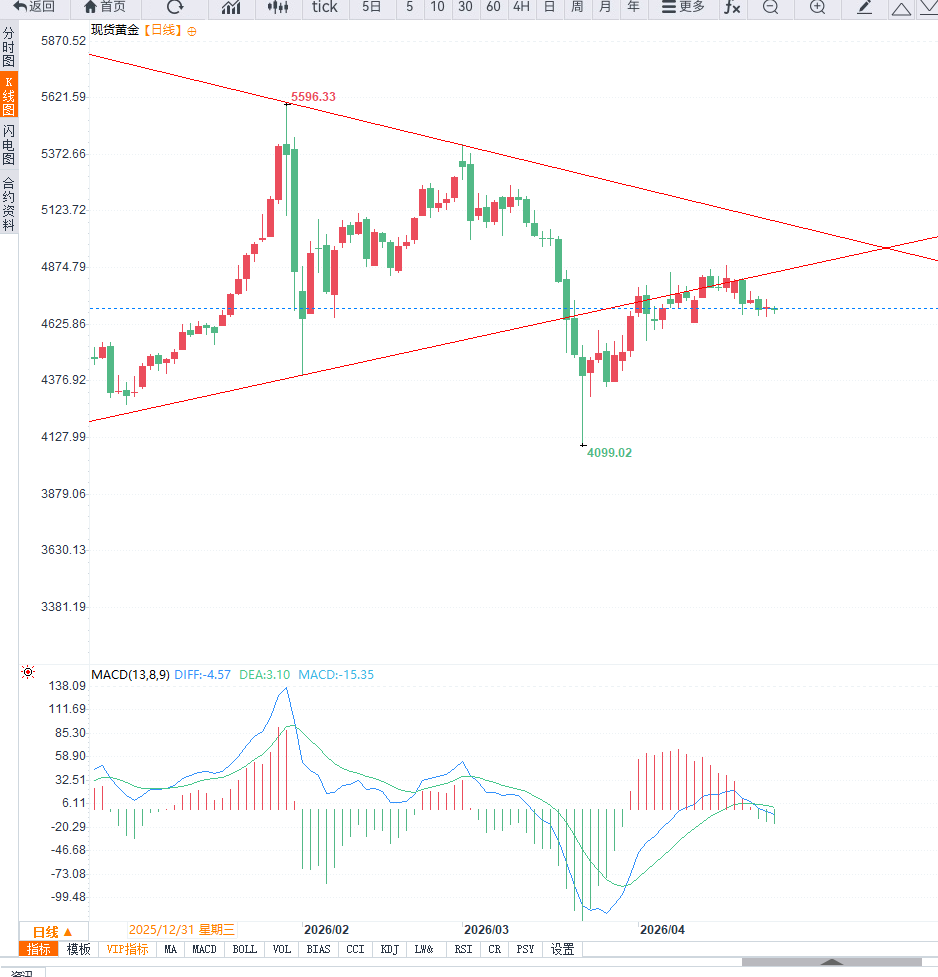
From a technical perspective, on the daily chart, gold prices have entered a consolidation phase after breaking below the short-term uptrend line, currently trading within a short-term range. Key support is around $4650 ; a break below this level could lead to a further test of the $4600 mark . Resistance is concentrated in the $4720-$4750 area . In terms of momentum, bearish forces are gradually strengthening, limiting the potential for short-term rebounds. The 4-hour chart shows a downward-trending structure with short-term moving averages diverging downwards, indicating a predominantly bearish sentiment. However, a sudden risk event could trigger a rapid short-term rebound.
Editor's Summary:
The core contradiction in the current gold market lies in the interplay between "safe-haven demand" and the "high-interest-rate environment." While the situation in the Middle East provides some support for gold, rising inflation expectations and persistently high interest rates significantly weaken its appeal, putting overall downward pressure on gold prices. In the short term, the Federal Reserve's policy signals will be the dominant factor. If it releases a hawkish signal, gold may weaken further; conversely, if it adopts a moderate stance on inflation risks, it may offer an opportunity for a phased rebound. The medium-term trend will still depend on the inflation path and the inflection point of interest rates.
The United States has suspended related diplomatic visits, while Iran has made it clear that it will not negotiate under pressure or blockade, indicating that the situation is unlikely to ease in the short term. Meanwhile, Israel has intensified its military operations towards Lebanon, further escalating regional tensions. These events have driven volatility in the energy market, with crude oil prices remaining high and reinforcing market concerns about a rebound in inflation.
From a logical transmission perspective, rising oil prices often push up overall inflation through energy cost transmission , and rising inflation expectations directly affect the path of monetary policy. Currently, the market widely expects the Federal Reserve to keep interest rates unchanged at this week's meeting. This expectation of persistently high interest rates significantly weakens the attractiveness of gold as a non-interest-bearing asset . In a high-interest-rate environment, funds tend to flow into assets with yield attributes, thus putting downward pressure on gold.
Meanwhile, despite gold's safe-haven appeal, the market is currently more focused on the duration of high interest rates than geopolitical risks themselves. This means that even with heightened tensions, gold's upside potential remains limited. Investors are paying closer attention to the statements made by Federal Reserve officials at the post-meeting press conference, particularly how they assess the impact of rising energy prices on the inflation path and whether they will adjust future policy expectations.
Market sentiment is currently somewhat divided. On one hand, geopolitical risks provide a floor for gold; on the other hand, rising interest rate expectations create upward pressure, keeping gold prices in a generally weak and volatile pattern. Funds are repeatedly switching between these two logics, leading to increased price volatility but an unclear trend.
From a technical perspective, on the daily chart, gold prices have entered a consolidation phase after breaking below the short-term uptrend line, currently trading within a short-term range. Key support is around $4650 ; a break below this level could lead to a further test of the $4600 mark . Resistance is concentrated in the $4720-$4750 area . In terms of momentum, bearish forces are gradually strengthening, limiting the potential for short-term rebounds. The 4-hour chart shows a downward-trending structure with short-term moving averages diverging downwards, indicating a predominantly bearish sentiment. However, a sudden risk event could trigger a rapid short-term rebound.
Editor's Summary:
The core contradiction in the current gold market lies in the interplay between "safe-haven demand" and the "high-interest-rate environment." While the situation in the Middle East provides some support for gold, rising inflation expectations and persistently high interest rates significantly weaken its appeal, putting overall downward pressure on gold prices. In the short term, the Federal Reserve's policy signals will be the dominant factor. If it releases a hawkish signal, gold may weaken further; conversely, if it adopts a moderate stance on inflation risks, it may offer an opportunity for a phased rebound. The medium-term trend will still depend on the inflation path and the inflection point of interest rates.
- Risk Warning and Disclaimer
- The market involves risk, and trading may not be suitable for all investors. This article is for reference only and does not constitute personal investment advice, nor does it take into account certain users’ specific investment objectives, financial situation, or other needs. Any investment decisions made based on this information are at your own risk.