Bearish options are capped at 60%, strongly signaling a weakening pound?
2026-04-27 17:56:48
On Monday, April 27, foreign exchange market traders were closely watching the latest developments in Middle East geopolitical tensions and the Bank of England's monetary policy meeting this week. Amid the ongoing conflict with Iran, market expectations for the potential reopening of the Strait of Hormuz have increased. The pound rose slightly by 0.12% against the dollar, trading around 1.3550, while falling 0.1% against the euro to 0.867. The dollar had previously strengthened due to safe-haven demand during the conflict, but with hopes for a deal emerging, some funds flowed back into risk assets, giving the pound a short-term respite.
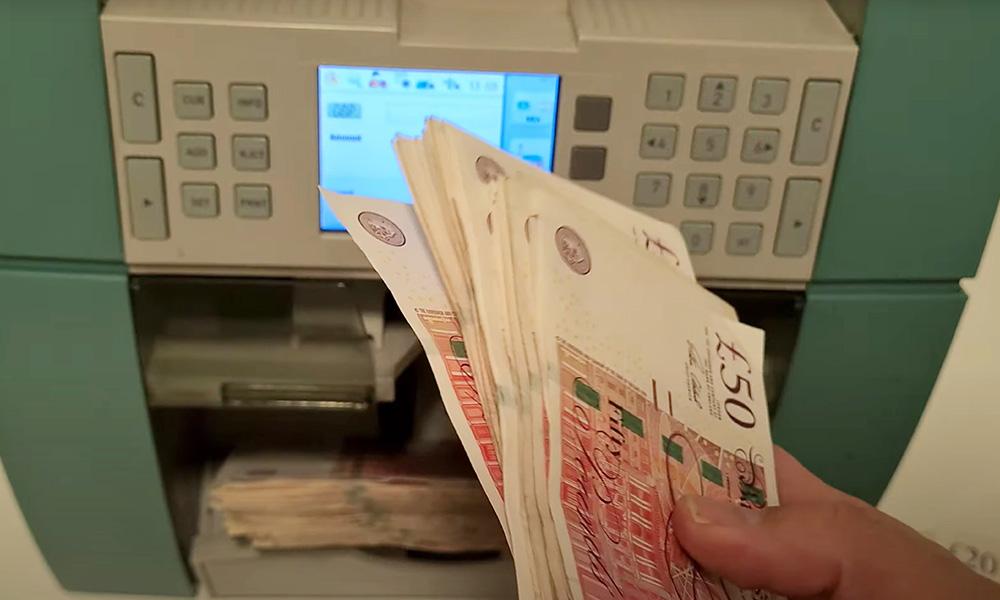
The conflict surrounding Iran has driven up global oil prices, putting significant imported inflationary pressure on the UK, a major net energy importer. Europe's high dependence on Middle Eastern oil means energy costs are quickly passed on to consumers. In contrast, the US, with its higher energy self-sufficiency rate, is more resilient to similar shocks. Traders are actively hedging downside risks to the pound in the options market, with bearish positions against the pound against the dollar accounting for nearly 60% this month and over 70% against the euro. Notably, war-related hedging is concentrated in long-term options, indicating the market views geopolitical factors as a persistent backdrop rather than a temporary event. Risk reversal indicators also show investors paying higher premiums for short pound positions across different expiry dates. This reflects traders' preference for protection over increasing pound positions amid multiple uncertainties. Energy price volatility not only directly increases import costs but may also amplify the vulnerability of the UK economy through supply chain transmission, thereby affecting the stability of exchange rate pricing.
The Bank of England's Monetary Policy Committee will meet this Thursday, with the market consensus expecting the benchmark interest rate to remain unchanged. Investors will focus on the divisions in the committee's vote and the overall tone of the central bank's communication. Strong UK economic growth data since the beginning of the year, coupled with persistently high underlying inflationary pressures, has driven a hawkish repricing of the Bank of England's interest rate path. One monetary economist noted that the pound has been supported by resilient demand-side data and relatively low exposure to energy shocks compared to the Eurozone. However, analysts warn that market expectations for the first two rate hikes in September can only be sustained if multiple policymakers express dissent in support of maintaining the current interest rate stance. Any subtle signals in the meeting minutes and the Monetary Policy Report could trigger significant volatility in the pound, with traders focusing on assessments of the continued impact of energy prices. This policy game directly relates to the dynamics of interest rate differentials and the relative attractiveness of the pound in global capital flows.
Data released last week showed that the UK's consumer price index (CPI) rose to 3.3% year-on-year in March, up from 3.0% in February. This rebound was partly due to the transmission effect on energy prices from the initial stages of the conflict with Iran. Transport costs rose by 4.7%, with motor vehicle fuel prices contributing significantly, and retail prices for petrol and diesel both showing a marked jump. Housing and household services costs were also affected by soaring heating oil prices. While core inflation indicators declined slightly, service price inflation remained sticky.
Comparison of UK inflation data:
Despite rising inflationary pressures, the UK economy has shown some resilience on the demand side, providing some downside protection for the pound. Traders are assessing the long-term impact of the energy shock on the monetary policy transmission mechanism and whether this will alter the Bank of England's path toward its inflation target. The coexistence of economic growth momentum and price pressures constitutes a core trade-off in the central bank's decision-making and directly shapes the pound's short- to medium-term pricing basis.
Domestic political developments in the UK are also noteworthy. Prime Minister Keir Starmer faces increasing scrutiny for appointing Labour veteran Peter Mandelson as ambassador to the US. The Labour Party could suffer significant losses in the May 7th local and regional elections due to the populist Reform Britain Party (led by Brexit veteran Nigel Farage). Research reports indicate that the pound's resilience to the impact of these events so far is largely attributed to robust economic data, but the risk of potentially more expansionary fiscal policy after the election remains, requiring caution. Options market data shows a significant increase in trading volume related to the election window, primarily driven by bearish sentiment. The Iran theme, however, shows a different picture, with the most concentrated premiums occurring after monetary policy and the election date, indicating traders are adopting longer-term protection against persistent risks. Overall positioning suggests the market is more inclined to hedge against downside risks to the pound than to chase upside potential.
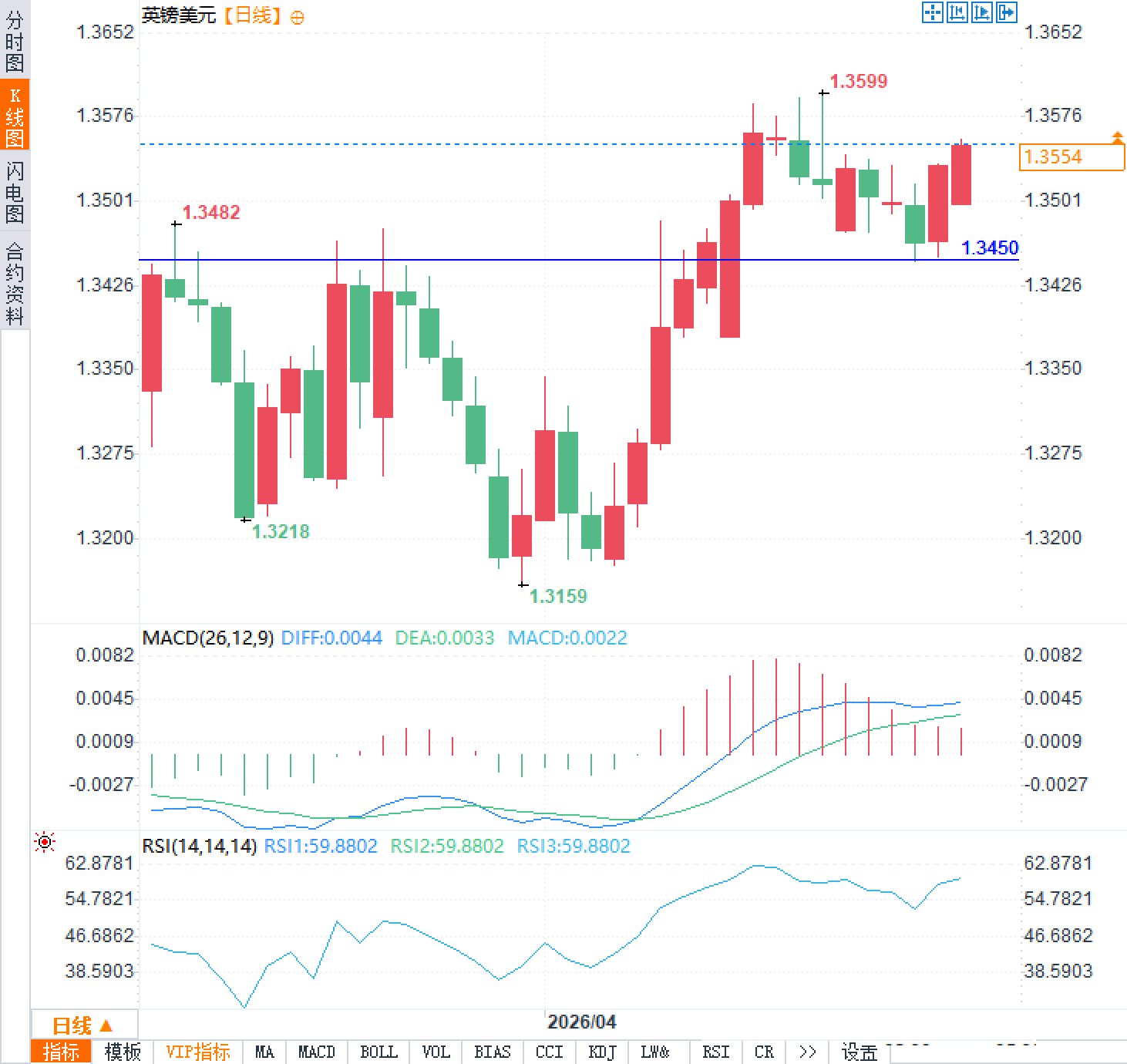
Geopolitical uncertainty is reshaping the safe-haven currency landscape.
The conflict surrounding Iran has driven up global oil prices, putting significant imported inflationary pressure on the UK, a major net energy importer. Europe's high dependence on Middle Eastern oil means energy costs are quickly passed on to consumers. In contrast, the US, with its higher energy self-sufficiency rate, is more resilient to similar shocks. Traders are actively hedging downside risks to the pound in the options market, with bearish positions against the pound against the dollar accounting for nearly 60% this month and over 70% against the euro. Notably, war-related hedging is concentrated in long-term options, indicating the market views geopolitical factors as a persistent backdrop rather than a temporary event. Risk reversal indicators also show investors paying higher premiums for short pound positions across different expiry dates. This reflects traders' preference for protection over increasing pound positions amid multiple uncertainties. Energy price volatility not only directly increases import costs but may also amplify the vulnerability of the UK economy through supply chain transmission, thereby affecting the stability of exchange rate pricing.
Bank of England's Interest Rate Decision Forecasting and Communication Strategy
The Bank of England's Monetary Policy Committee will meet this Thursday, with the market consensus expecting the benchmark interest rate to remain unchanged. Investors will focus on the divisions in the committee's vote and the overall tone of the central bank's communication. Strong UK economic growth data since the beginning of the year, coupled with persistently high underlying inflationary pressures, has driven a hawkish repricing of the Bank of England's interest rate path. One monetary economist noted that the pound has been supported by resilient demand-side data and relatively low exposure to energy shocks compared to the Eurozone. However, analysts warn that market expectations for the first two rate hikes in September can only be sustained if multiple policymakers express dissent in support of maintaining the current interest rate stance. Any subtle signals in the meeting minutes and the Monetary Policy Report could trigger significant volatility in the pound, with traders focusing on assessments of the continued impact of energy prices. This policy game directly relates to the dynamics of interest rate differentials and the relative attractiveness of the pound in global capital flows.
Rising Inflationary Pressures and Assessment of the UK Economy's Resilience
Data released last week showed that the UK's consumer price index (CPI) rose to 3.3% year-on-year in March, up from 3.0% in February. This rebound was partly due to the transmission effect on energy prices from the initial stages of the conflict with Iran. Transport costs rose by 4.7%, with motor vehicle fuel prices contributing significantly, and retail prices for petrol and diesel both showing a marked jump. Housing and household services costs were also affected by soaring heating oil prices. While core inflation indicators declined slightly, service price inflation remained sticky.
Comparison of UK inflation data:
| period | CPI annual rate (%) | Core CPI annual rate (%) |
|---|---|---|
| February | 3.0 | 3.2 |
| March | 3.3 | 3.1 |
Domestic political events combined with the defensive positioning of the options market
Domestic political developments in the UK are also noteworthy. Prime Minister Keir Starmer faces increasing scrutiny for appointing Labour veteran Peter Mandelson as ambassador to the US. The Labour Party could suffer significant losses in the May 7th local and regional elections due to the populist Reform Britain Party (led by Brexit veteran Nigel Farage). Research reports indicate that the pound's resilience to the impact of these events so far is largely attributed to robust economic data, but the risk of potentially more expansionary fiscal policy after the election remains, requiring caution. Options market data shows a significant increase in trading volume related to the election window, primarily driven by bearish sentiment. The Iran theme, however, shows a different picture, with the most concentrated premiums occurring after monetary policy and the election date, indicating traders are adopting longer-term protection against persistent risks. Overall positioning suggests the market is more inclined to hedge against downside risks to the pound than to chase upside potential.
- Risk Warning and Disclaimer
- The market involves risk, and trading may not be suitable for all investors. This article is for reference only and does not constitute personal investment advice, nor does it take into account certain users’ specific investment objectives, financial situation, or other needs. Any investment decisions made based on this information are at your own risk.