Rising inflation expectations in Australia, coupled with a rebounding US dollar, kept the Australian dollar in a narrow range against the US dollar.
2026-04-28 15:57:02
The Australian dollar traded in a narrow range against the US dollar during Tuesday's European trading session, hovering around 0.7180 . Overall, the Australian dollar showed mixed performance, performing stronger against the Swiss franc than against the US dollar, indicating a mixed market sentiment and unclear direction.
The market's core focus is on the upcoming release of Australia's first-quarter inflation data. As a key indicator of price levels, inflation data will directly impact expectations regarding the Reserve Bank of Australia's policy path. Market consensus predicts that the Australian Bureau of Statistics data will show quarterly inflation at 1.4% , a significant increase from the previous 0.6% ; the annual rate may rise to 4.1% , higher than the previous 3.6%. If this data materializes, it will further reinforce the market's assessment that inflation remains persistently high.
In its previous policy meeting, the Reserve Bank of Australia (RBA) raised the official cash rate to 4.1% , explicitly stating that domestic inflationary pressures were already evident before the energy price surge triggered by the Middle East situation. With oil prices remaining high, imported inflationary pressures have intensified, leading the market to widely expect the central bank to continue tightening measures. Market surveys indicate that the market currently anticipates an approximately 82% probability of another rate hike in May , an expectation that provides some support for the Australian dollar.
However, from an external perspective, the US dollar's performance has a significant impact on the Australian dollar. The US dollar index is currently fluctuating around 98.50 , having previously been influenced by changes in risk aversion. Uncertainty remains regarding the situation in the Middle East. Although the market initially anticipated a possible easing of the conflict, repeated developments have strengthened the safe-haven appeal of the US dollar, thus limiting the upside potential of the Australian dollar.
In addition, the market is also focused on the upcoming Federal Reserve interest rate decision. While rates are widely expected to remain unchanged, the policy statement and future guidance will have a key impact on the dollar's performance. If the Fed releases a hawkish signal, the dollar may strengthen further, putting pressure on the Australian dollar; conversely, if the policy stance becomes more dovish, it could provide an opportunity for the Australian dollar to rebound.
From an overall perspective, the current Australian dollar's performance is primarily influenced by the interplay between rising domestic inflation expectations and external US dollar volatility. On one hand, strengthened inflation data reinforces expectations of interest rate hikes, which enhances the Australian dollar's attractiveness; on the other hand, global risk sentiment and the US dollar's performance constrain its exchange rate.
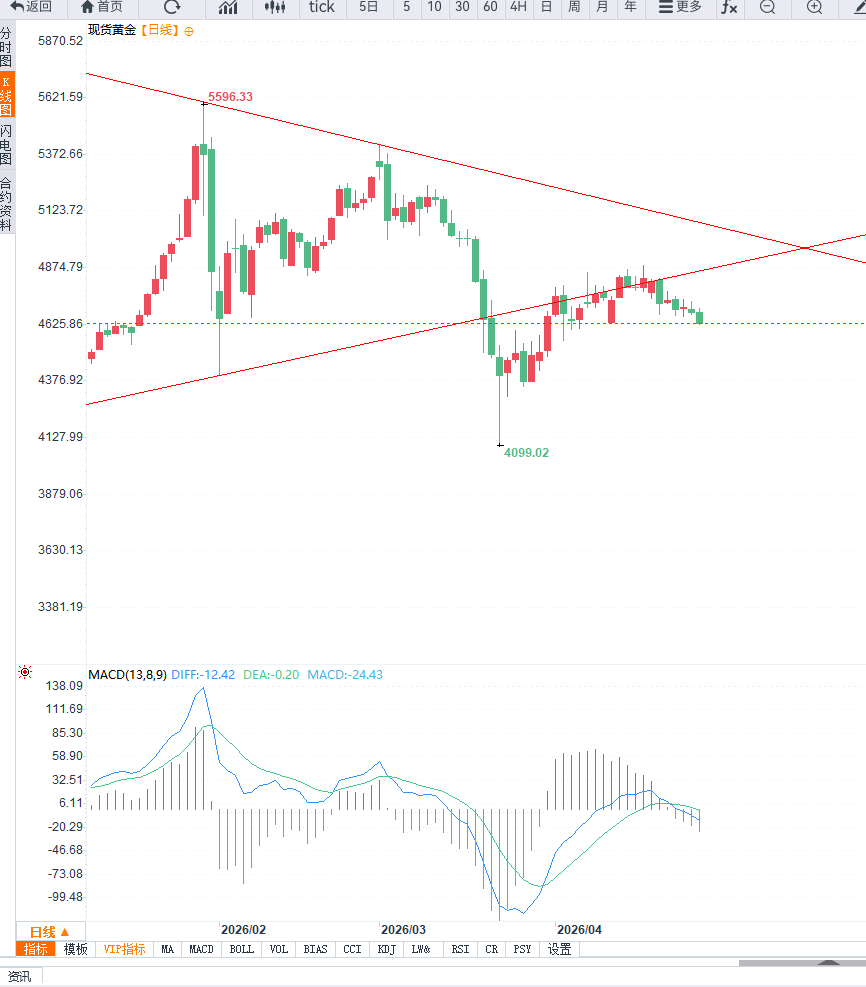
From a technical perspective, the daily chart shows that AUD/USD is maintaining a range-bound pattern, fluctuating around key moving averages without a clear trend. The current price is repeatedly testing the short-term moving averages, indicating a strong wait-and-see attitude in the market. The upside resistance level to watch is the 0.7220–0.7250 range ; a break above this area could open up further upside potential. Support is located around 0.7100 ; a break below this level could trigger a further pullback.
From the 4-hour chart, the short-term trend shows a sideways consolidation pattern, with the moving average system trending flat. In terms of momentum indicators, the Relative Strength Index (RSI) is fluctuating around 50, indicating a relatively balanced power between buyers and sellers; the MACD indicator is near the zero line, showing no clear directional signal. Overall, the market lacks clear drivers in the short term, and the exchange rate may continue to fluctuate within a range, awaiting fundamental catalysts.
Editor's Summary:
The Australian dollar market is currently at a crossroads, with key data and policy expectations converging. Australian inflation data will be the core driver of short-term price movements, while Federal Reserve policy will determine the direction of the US dollar. If inflation data exceeds expectations, coupled with rising expectations of interest rate hikes, the Australian dollar is likely to strengthen; however, if the US dollar continues to strengthen due to safe-haven demand or policy factors, it may suppress the Australian dollar's performance. Overall, short-term volatility will increase significantly, and the market needs to closely monitor changes in data and policy signals.
The market's core focus is on the upcoming release of Australia's first-quarter inflation data. As a key indicator of price levels, inflation data will directly impact expectations regarding the Reserve Bank of Australia's policy path. Market consensus predicts that the Australian Bureau of Statistics data will show quarterly inflation at 1.4% , a significant increase from the previous 0.6% ; the annual rate may rise to 4.1% , higher than the previous 3.6%. If this data materializes, it will further reinforce the market's assessment that inflation remains persistently high.
In its previous policy meeting, the Reserve Bank of Australia (RBA) raised the official cash rate to 4.1% , explicitly stating that domestic inflationary pressures were already evident before the energy price surge triggered by the Middle East situation. With oil prices remaining high, imported inflationary pressures have intensified, leading the market to widely expect the central bank to continue tightening measures. Market surveys indicate that the market currently anticipates an approximately 82% probability of another rate hike in May , an expectation that provides some support for the Australian dollar.
However, from an external perspective, the US dollar's performance has a significant impact on the Australian dollar. The US dollar index is currently fluctuating around 98.50 , having previously been influenced by changes in risk aversion. Uncertainty remains regarding the situation in the Middle East. Although the market initially anticipated a possible easing of the conflict, repeated developments have strengthened the safe-haven appeal of the US dollar, thus limiting the upside potential of the Australian dollar.
In addition, the market is also focused on the upcoming Federal Reserve interest rate decision. While rates are widely expected to remain unchanged, the policy statement and future guidance will have a key impact on the dollar's performance. If the Fed releases a hawkish signal, the dollar may strengthen further, putting pressure on the Australian dollar; conversely, if the policy stance becomes more dovish, it could provide an opportunity for the Australian dollar to rebound.
From an overall perspective, the current Australian dollar's performance is primarily influenced by the interplay between rising domestic inflation expectations and external US dollar volatility. On one hand, strengthened inflation data reinforces expectations of interest rate hikes, which enhances the Australian dollar's attractiveness; on the other hand, global risk sentiment and the US dollar's performance constrain its exchange rate.
From a technical perspective, the daily chart shows that AUD/USD is maintaining a range-bound pattern, fluctuating around key moving averages without a clear trend. The current price is repeatedly testing the short-term moving averages, indicating a strong wait-and-see attitude in the market. The upside resistance level to watch is the 0.7220–0.7250 range ; a break above this area could open up further upside potential. Support is located around 0.7100 ; a break below this level could trigger a further pullback.
From the 4-hour chart, the short-term trend shows a sideways consolidation pattern, with the moving average system trending flat. In terms of momentum indicators, the Relative Strength Index (RSI) is fluctuating around 50, indicating a relatively balanced power between buyers and sellers; the MACD indicator is near the zero line, showing no clear directional signal. Overall, the market lacks clear drivers in the short term, and the exchange rate may continue to fluctuate within a range, awaiting fundamental catalysts.
Editor's Summary:
The Australian dollar market is currently at a crossroads, with key data and policy expectations converging. Australian inflation data will be the core driver of short-term price movements, while Federal Reserve policy will determine the direction of the US dollar. If inflation data exceeds expectations, coupled with rising expectations of interest rate hikes, the Australian dollar is likely to strengthen; however, if the US dollar continues to strengthen due to safe-haven demand or policy factors, it may suppress the Australian dollar's performance. Overall, short-term volatility will increase significantly, and the market needs to closely monitor changes in data and policy signals.
- Risk Warning and Disclaimer
- The market involves risk, and trading may not be suitable for all investors. This article is for reference only and does not constitute personal investment advice, nor does it take into account certain users’ specific investment objectives, financial situation, or other needs. Any investment decisions made based on this information are at your own risk.