From lockdown to tentative reopening: What's next for oil prices?
2026-04-28 17:56:46
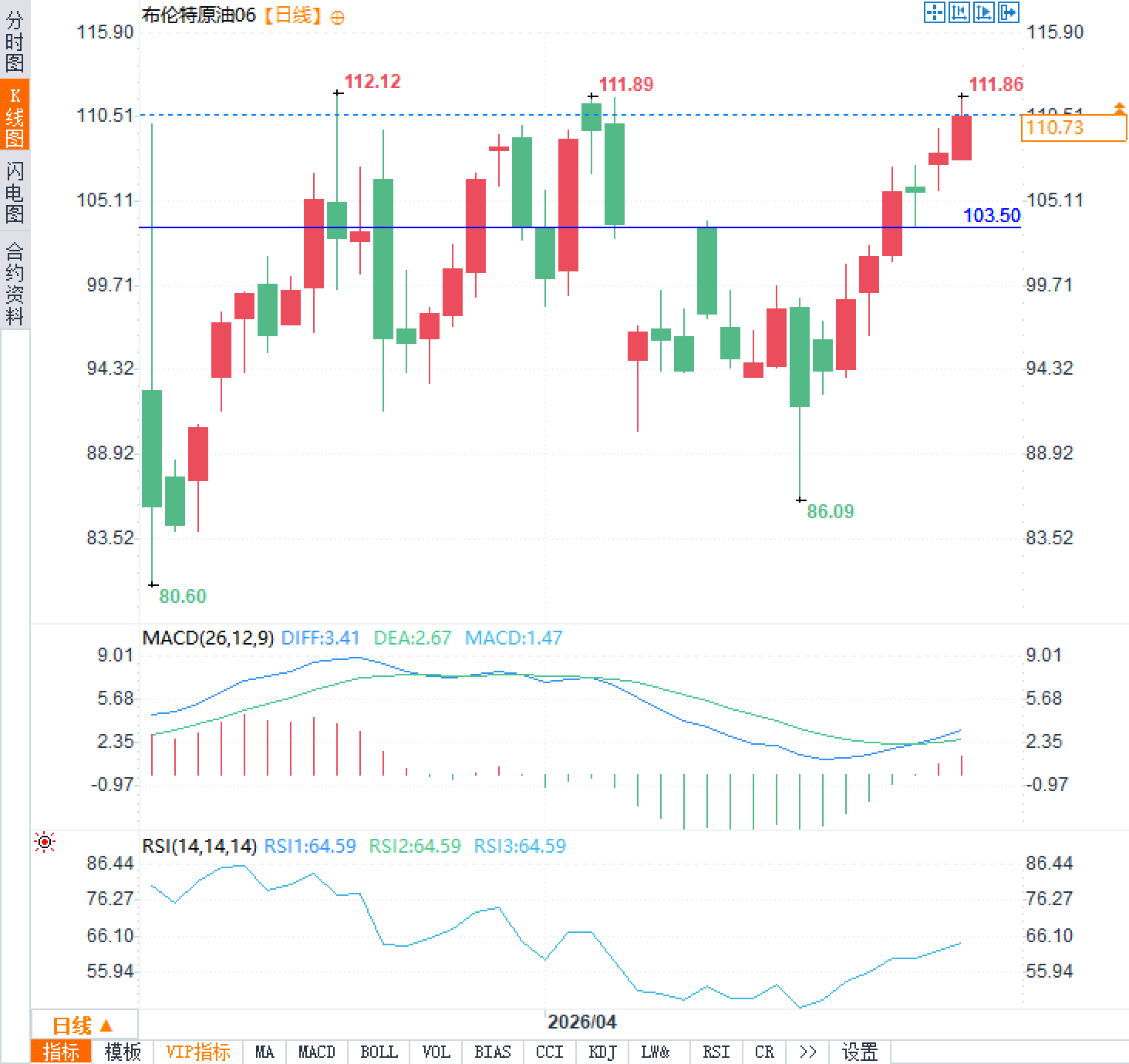
On Tuesday, April 28, the crude oil market continued to be driven by geopolitical tensions in the Middle East. Brent crude rose 2.5% to above $110 a barrel, nearing its monthly high. This followed Iran's proposal to temporarily open the Strait of Hormuz, to which the White House responded by maintaining its nuclear red line. Market risk premiums remained high, and signs of supply chain disruptions continued to dominate short-term pricing logic.

Iran's latest proposed transitional agreement focuses on reopening the Strait of Hormuz in exchange for the US ending its blockade of Iranian ports, while postponing nuclear negotiations to a more complex phase. This proposal reflects the view of some analysts and the government that prioritizing the easing of energy transport bottlenecks to alleviate market pressures, while leaving the nuclear issue for longer-term dialogue, is preferable. However, Iran's insistence on retaining partial control over shipping in the strait is expected to be unacceptable to Washington.
White House spokeswoman Carolyn Levitt said Monday that the president had convened his security team to review the proposal, emphasizing that his red lines regarding Iran were "very, very clear." The president himself recently reiterated that any agreement must completely resolve Iran's nuclear program, with sanctions remaining in place to exert pressure by blocking Iranian oil exports. Secretary of State Marco Rubio, in a media interview, commented that the proposal was "better than expected," but also questioned whether the submitter had sufficient authorization, suggesting internal divisions within the Iranian leadership regarding negotiating strategies.
During his meeting with President Putin in St. Petersburg, Russia, Iranian Foreign Minister Abbas Araqchi reiterated Tehran's commitment to strengthening bilateral partnership and hinted that nuclear negotiations could be appropriately postponed. German Chancellor Friedrich Merz, meanwhile, publicly expressed frustration, noting that the United States was facing a "humiliating" situation with Iran and that a clear strategic exit strategy was currently unclear. These statements highlight the complexity of the negotiation process: while short-term temporary arrangements may offer a respite, if core differences remain unresolved, market uncertainty will continue to push up the slope of the forward curve for crude oil futures.
The conflict, which began in late February, has entered its ninth week, leaving the Strait of Hormuz, a vital global energy chokepoint, virtually closed. Before the conflict, the strait handled approximately 20% of global oil and liquefied natural gas (LNG) shipments; the disruption has directly led to soaring logistics costs and supply shortages. Latest ship tracking data shows that the first LNG carrier to leave the Persian Gulf since the outbreak of the war, the Mubaraz, has passed through the southern part of the strait, heading towards the Indian Ocean. While this breakthrough provides a slight positive signal to the market, overall traffic volume remains far below normal levels.
Supply chain adjustments have begun. Alternative crude oil shipments from the US and West Africa are expected to arrive at their destinations starting in late April, while refineries in India and Southeast Asia have increased their purchases of Russian crude to fill the gap. Saudi Arabia has shifted its Arab Light crude oil exports to the Yanbu port on the Red Sea to avoid restricted access. These diversification measures have alleviated some immediate supply pressure, but have also exposed the risks of relying on a single route: rising freight rates, increased insurance premiums, and delivery delays are variables that energy traders must continuously monitor. In the long term, if the lockdown continues, global refineries will face greater challenges in inventory management, and the spread between spot and futures prices may widen further.
Dubai's cash premium over swap contracts fell to $9.17 a barrel on Monday, well below the record high of over $60 in March. So far in April, the premium has averaged $15.22 a barrel, only about half of the March average of $38.30 a barrel. Oman's cash premium moved in tandem with Dubai, reflecting cooling demand after the initial panic buying and the gradual availability of alternative sources.
Saudi Arabia may lower its official selling prices for June to address changing demand expectations from Asian buyers. According to industry surveys, the premium of its flagship Arab Light crude over the average prices in Dubai and Oman may fall to $7.50 to $14.50 per barrel in June, $5 to $12 per barrel lower than May levels. This significant adjustment reflects a shift in the market from concerns about supply disruptions to a rebalancing of supply and demand. Official selling prices for other grades of crude are also expected to decrease by $5 to $12 per barrel in June. Saudi official selling prices are typically announced around the 5th of each month. This anticipated reduction will provide a cost buffer for Asian refineries, but overall geopolitical premiums still support relatively high oil prices.
The above changes indicate that the spot market has eased from an extremely tense state, but the risk of a price rebound remains if a temporary agreement fails to be reached.
The core content of Iran's new proposal and the reactions from various parties
Iran's latest proposed transitional agreement focuses on reopening the Strait of Hormuz in exchange for the US ending its blockade of Iranian ports, while postponing nuclear negotiations to a more complex phase. This proposal reflects the view of some analysts and the government that prioritizing the easing of energy transport bottlenecks to alleviate market pressures, while leaving the nuclear issue for longer-term dialogue, is preferable. However, Iran's insistence on retaining partial control over shipping in the strait is expected to be unacceptable to Washington.
White House spokeswoman Carolyn Levitt said Monday that the president had convened his security team to review the proposal, emphasizing that his red lines regarding Iran were "very, very clear." The president himself recently reiterated that any agreement must completely resolve Iran's nuclear program, with sanctions remaining in place to exert pressure by blocking Iranian oil exports. Secretary of State Marco Rubio, in a media interview, commented that the proposal was "better than expected," but also questioned whether the submitter had sufficient authorization, suggesting internal divisions within the Iranian leadership regarding negotiating strategies.
During his meeting with President Putin in St. Petersburg, Russia, Iranian Foreign Minister Abbas Araqchi reiterated Tehran's commitment to strengthening bilateral partnership and hinted that nuclear negotiations could be appropriately postponed. German Chancellor Friedrich Merz, meanwhile, publicly expressed frustration, noting that the United States was facing a "humiliating" situation with Iran and that a clear strategic exit strategy was currently unclear. These statements highlight the complexity of the negotiation process: while short-term temporary arrangements may offer a respite, if core differences remain unresolved, market uncertainty will continue to push up the slope of the forward curve for crude oil futures.
The impact of a Strait of Hormuz blockade on the energy supply chain
The conflict, which began in late February, has entered its ninth week, leaving the Strait of Hormuz, a vital global energy chokepoint, virtually closed. Before the conflict, the strait handled approximately 20% of global oil and liquefied natural gas (LNG) shipments; the disruption has directly led to soaring logistics costs and supply shortages. Latest ship tracking data shows that the first LNG carrier to leave the Persian Gulf since the outbreak of the war, the Mubaraz, has passed through the southern part of the strait, heading towards the Indian Ocean. While this breakthrough provides a slight positive signal to the market, overall traffic volume remains far below normal levels.
Supply chain adjustments have begun. Alternative crude oil shipments from the US and West Africa are expected to arrive at their destinations starting in late April, while refineries in India and Southeast Asia have increased their purchases of Russian crude to fill the gap. Saudi Arabia has shifted its Arab Light crude oil exports to the Yanbu port on the Red Sea to avoid restricted access. These diversification measures have alleviated some immediate supply pressure, but have also exposed the risks of relying on a single route: rising freight rates, increased insurance premiums, and delivery delays are variables that energy traders must continuously monitor. In the long term, if the lockdown continues, global refineries will face greater challenges in inventory management, and the spread between spot and futures prices may widen further.
Changes in the crude oil spot market and adjustments to Saudi Arabia's OSP
Dubai's cash premium over swap contracts fell to $9.17 a barrel on Monday, well below the record high of over $60 in March. So far in April, the premium has averaged $15.22 a barrel, only about half of the March average of $38.30 a barrel. Oman's cash premium moved in tandem with Dubai, reflecting cooling demand after the initial panic buying and the gradual availability of alternative sources.
Saudi Arabia may lower its official selling prices for June to address changing demand expectations from Asian buyers. According to industry surveys, the premium of its flagship Arab Light crude over the average prices in Dubai and Oman may fall to $7.50 to $14.50 per barrel in June, $5 to $12 per barrel lower than May levels. This significant adjustment reflects a shift in the market from concerns about supply disruptions to a rebalancing of supply and demand. Official selling prices for other grades of crude are also expected to decrease by $5 to $12 per barrel in June. Saudi official selling prices are typically announced around the 5th of each month. This anticipated reduction will provide a cost buffer for Asian refineries, but overall geopolitical premiums still support relatively high oil prices.
| index | March average (USD/barrel) | April average (USD/barrel) | Latest value (Monday, USD/barrel) |
|---|---|---|---|
| Dubai spot premium | 38.30 | 15.22 | 9.17 |
| June OSP Expectations Adjustment | 5 to 12 lower than in May | ||
Frequently Asked Questions
Question 1: Can the transitional agreement proposed by Iran effectively alleviate the current upward pressure on oil prices?
A: From a market supply and demand perspective, if the agreement is reached and implemented, the resumption of navigation across the Taiwan Strait will directly increase the global flow of crude oil and liquefied natural gas, which is expected to alleviate spot market tightness and lower risk premiums in the short term. However, the US insistence on resolving the nuclear issue and Iran's insistence on controlling shipping introduce uncertainty into the agreement's implementation. Currently, oil prices have already reflected some optimistic expectations, and traders are focusing on actual ship traffic data and the progress of subsequent negotiations to determine whether the premium can sustainably decline.
Question 2: What changes in market demand are reflected in the Saudi Arabian government's official price reduction?
A: The significant decrease in the OSP in June compared to May was mainly due to the rapid decline in the spot premium from its extreme high in March. Asian buyers' demand cooled after initial panic buying, while alternative supplies from the US and West Africa gradually arrived. This adjustment reflects the market's transition from supply shortage concerns to a more balanced state. However, the risk of geopolitical disruptions has not been completely eliminated, and oil prices remain above $110. In the long term, the official pricing strategy helps stabilize buyer expectations and prevent excessive inventory accumulation.
- Risk Warning and Disclaimer
- The market involves risk, and trading may not be suitable for all investors. This article is for reference only and does not constitute personal investment advice, nor does it take into account certain users’ specific investment objectives, financial situation, or other needs. Any investment decisions made based on this information are at your own risk.