Institutions: Precious metals are under short-term pressure, gold shows resilience, while silver harbors multiple downside risks.
2026-04-29 12:06:04
Ole Hansen, head of commodities strategy at Saxo Bank, said the core reason for the current short-term weakness in precious metals is not geopolitical instability, but rather the inflation risk fueled by rising oil prices. Gold's current decline is a cyclical adjustment, and its long-term structural trend remains unchanged. Silver, on the other hand, is more vulnerable due to its reliance on industrial demand and the instability of investment funds, making it significantly less resilient to risk.
Hansen's analysis suggests that rising energy prices, a stronger dollar, and rising inflation expectations, coupled with widespread market expectations that high US interest rates will persist for an extended period, have collectively pressured non-interest-bearing assets, directly pushing gold prices to a three-week low. Currently, Brent crude oil prices have broken through $100 per barrel, with market attention highly focused on the cascading inflationary effects of rising energy prices. The investment dynamism driven by artificial intelligence continues to solidify the US economy, also diminishing the Federal Reserve's short-term incentive to cut interest rates. Furthermore, the simultaneous release of earnings reports from major technology companies and the upcoming interest rate meeting further amplifies short-term market uncertainty.
Hansen pointed out that the current overall trend of precious metals is completely following the rhythm of the energy market. The resumption of key shipping routes and the decline in oil prices will become the core catalysts for a short-term rebound in precious metals.
The continued rise in crude oil prices and inflation data are further consolidating the strength of the US dollar and delaying the global interest rate cut cycle.
Geopolitical conflicts will only exert short-term downward pressure on precious metals and cannot overturn the long-term upward trend. The core drivers supporting gold's strength over the past two years remain robust , and some favorable conditions are even strengthening. The risk of global stagflation persists, the energy crisis continues to impact price levels and economic performance, and global fiscal debt continues to expand. With the dollar's reserve status gradually weakening, many central banks are continuing to diversify their reserve asset portfolios, and gold, as a high-quality safe-haven asset, continues to enhance its long-term investment value.
From a technical perspective, the key support for gold is clear and well-defined. The 200-day moving average around $4,250 per ounce is an important line of defense for the long-term trend. As long as this support holds effectively, the long-term upward trend of gold will not be broken.
Compared to the more stable gold market, the silver market environment is more complex. Hansen believes that silver is deeply tied to industrial demand; a downturn in the economic cycle, high inflation, and a slowing economy will directly drag down demand for silver in manufacturing, electronics, and consumer goods industries. At the same time, the investment funds that maintain the supply-demand balance of silver are highly uncertain. Even subtle changes in market trends and the macroeconomic environment can trigger rapid inflows and outflows of funds, making silver a highly volatile and elastic precious metal. While its upside potential is greater, its downside risks are also amplified.
With geopolitical conflicts gradually easing and energy supply chains returning to stability, gold is poised for a renewed rally, supported by multiple positive factors including central bank gold purchases, reserve allocations, and geopolitical risks. Its weak cyclical nature will effectively mitigate the impact of shrinking demand and fluctuating sentiment. While silver's fundamentals remain positive, its price action is highly dependent on the strength of industrial demand recovery and the activity of investment funds; therefore, its price action is likely to remain within a wide range of fluctuations.
Considering the gold-silver ratio, the current value is close to 62. Compared with the long-term average of 70, silver's valuation is already high. If it wants to continue to strengthen, it will need new positive catalysts such as supply contraction and demand recovery.
In summary , the precious metals bull market is only undergoing a temporary pause and has not completely ended. Gold is suitable for long-term strategic investment, with a stable trend and resistance to volatility; silver is more suitable for short-term tactical trading, offering both high returns and high risks, and investors should be wary of the risks brought about by sharp market fluctuations.
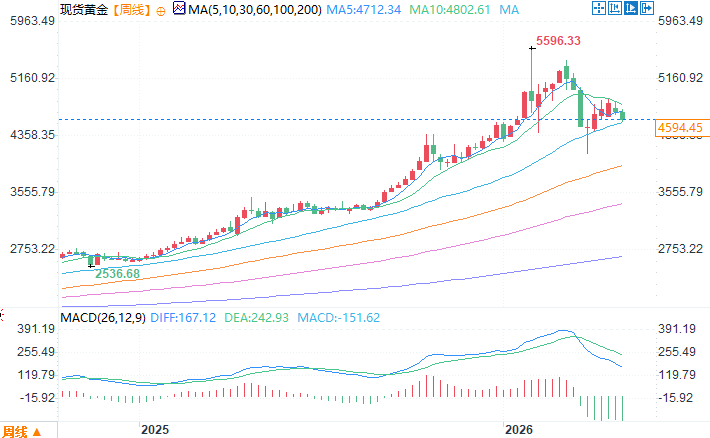
Spot gold weekly chart source: EasyForex
At 12:05 Beijing time on April 29, spot gold was trading at $4597.45 per ounce.
Hansen's analysis suggests that rising energy prices, a stronger dollar, and rising inflation expectations, coupled with widespread market expectations that high US interest rates will persist for an extended period, have collectively pressured non-interest-bearing assets, directly pushing gold prices to a three-week low. Currently, Brent crude oil prices have broken through $100 per barrel, with market attention highly focused on the cascading inflationary effects of rising energy prices. The investment dynamism driven by artificial intelligence continues to solidify the US economy, also diminishing the Federal Reserve's short-term incentive to cut interest rates. Furthermore, the simultaneous release of earnings reports from major technology companies and the upcoming interest rate meeting further amplifies short-term market uncertainty.
Macroeconomic Outlook: Short-term Pressure Does Not Change Long-term Foundation
Hansen pointed out that the current overall trend of precious metals is completely following the rhythm of the energy market. The resumption of key shipping routes and the decline in oil prices will become the core catalysts for a short-term rebound in precious metals.
The continued rise in crude oil prices and inflation data are further consolidating the strength of the US dollar and delaying the global interest rate cut cycle.
Geopolitical conflicts will only exert short-term downward pressure on precious metals and cannot overturn the long-term upward trend. The core drivers supporting gold's strength over the past two years remain robust , and some favorable conditions are even strengthening. The risk of global stagflation persists, the energy crisis continues to impact price levels and economic performance, and global fiscal debt continues to expand. With the dollar's reserve status gradually weakening, many central banks are continuing to diversify their reserve asset portfolios, and gold, as a high-quality safe-haven asset, continues to enhance its long-term investment value.
Different commodities show divergent trends: Gold finds solid support, while silver faces numerous risks.
From a technical perspective, the key support for gold is clear and well-defined. The 200-day moving average around $4,250 per ounce is an important line of defense for the long-term trend. As long as this support holds effectively, the long-term upward trend of gold will not be broken.
Compared to the more stable gold market, the silver market environment is more complex. Hansen believes that silver is deeply tied to industrial demand; a downturn in the economic cycle, high inflation, and a slowing economy will directly drag down demand for silver in manufacturing, electronics, and consumer goods industries. At the same time, the investment funds that maintain the supply-demand balance of silver are highly uncertain. Even subtle changes in market trends and the macroeconomic environment can trigger rapid inflows and outflows of funds, making silver a highly volatile and elastic precious metal. While its upside potential is greater, its downside risks are also amplified.
Analysis of Allocation Value: Gold and Silver Market Misalignment Leads to Diverging Investment Strategies
With geopolitical conflicts gradually easing and energy supply chains returning to stability, gold is poised for a renewed rally, supported by multiple positive factors including central bank gold purchases, reserve allocations, and geopolitical risks. Its weak cyclical nature will effectively mitigate the impact of shrinking demand and fluctuating sentiment. While silver's fundamentals remain positive, its price action is highly dependent on the strength of industrial demand recovery and the activity of investment funds; therefore, its price action is likely to remain within a wide range of fluctuations.
Considering the gold-silver ratio, the current value is close to 62. Compared with the long-term average of 70, silver's valuation is already high. If it wants to continue to strengthen, it will need new positive catalysts such as supply contraction and demand recovery.
In summary , the precious metals bull market is only undergoing a temporary pause and has not completely ended. Gold is suitable for long-term strategic investment, with a stable trend and resistance to volatility; silver is more suitable for short-term tactical trading, offering both high returns and high risks, and investors should be wary of the risks brought about by sharp market fluctuations.
Spot gold weekly chart source: EasyForex
At 12:05 Beijing time on April 29, spot gold was trading at $4597.45 per ounce.
- Risk Warning and Disclaimer
- The market involves risk, and trading may not be suitable for all investors. This article is for reference only and does not constitute personal investment advice, nor does it take into account certain users’ specific investment objectives, financial situation, or other needs. Any investment decisions made based on this information are at your own risk.