The Bank of England's decision and the US PCE data will be released within 90 minutes. Which will dominate the pound's movement against the dollar?
2026-04-30 15:21:59
The pound sterling set a volatility trap against the dollar this week, struggling to hold the 1.3550 level earlier in the week before quickly retreating. On Wednesday (April 29), it gradually declined from the European open, accelerating its fall during the New York session and briefly touching an intraday low of around 1.3460 before recovering slightly to close at 1.3474.
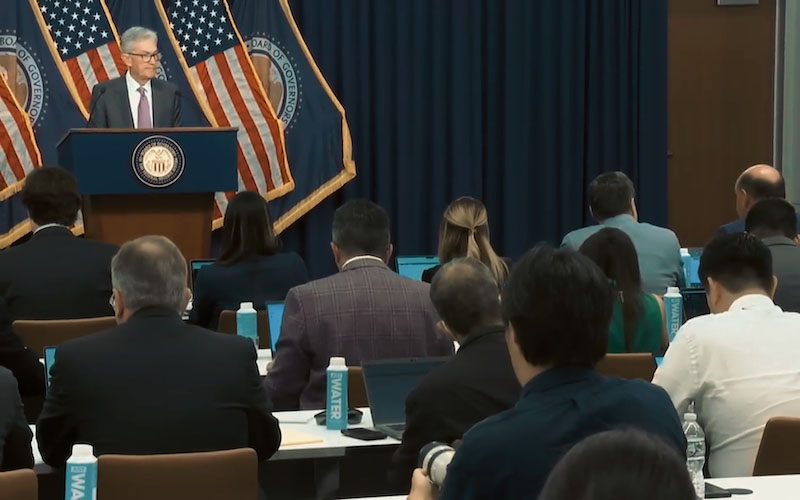
Three main factors led to the sharp weakening of the pound: First, President Trump's "not-so-nice-go-lucky" tweet on Truth Social on Wednesday pushed Brent crude oil above $110 per barrel and provided new safe-haven buying for the dollar; second, the Federal Reserve kept the federal funds rate unchanged at 3.50%-3.75%, a decision that, while in line with market expectations, saw an 8-4 split in the Federal Open Market Committee (FOMC) vote, the most divisive since 1992; and finally, Fed Chairman Powell's hawkish signals at his final press conference pushed the yield on 10-year US Treasury bonds above 4.4%. The pound was clearly under pressure against the dollar on Thursday.
Thursday's calendar is a nightmare. The Bank of England (BoE) will simultaneously announce its interest rate decision, meeting minutes, monetary policy report, monetary policy summary, and Monetary Policy Committee (MPC) voting details at 11:00 GMT (19:00 Beijing time). BoE Governor Andrew Bailey will then speak at 11:30 GMT (19:30 Beijing time).
Just 60 minutes later, at 12:30 GMT (20:30 Beijing time), the US will release the March Personal Consumption Expenditures Price Index (PCE), the preliminary Q1 GDP figure, the Q1 Employment Cost Index, and weekly initial jobless claims all at once. Following this, the Chicago Purchasing Managers Index (PMI) will be released at 13:45 (21:45 Beijing time). With two major central banks and two sets of inflation data simultaneously impacting the same currency pair within a single day, the pound/dollar exchange rate could experience two sharp fluctuations.
The market widely expects the Bank of England to maintain its interest rate at 3.75% by an 8-1 vote at its current meeting, with only one member supporting a rate hike. The market has already priced in a cumulative rate hike of approximately 60 basis points by the end of this year, which is the source of market pressure.
HSBC warned this week that the Bank of England's decision to raise interest rates could face more dissenting voices than expected, but even if this happens, the pound's upside potential is quite limited, as the market has already priced in a significant amount of tightening expectations. A more crucial question is how the Bank of England will articulate the risk of "stagflation." A survey last week showed that 17 out of 22 economists considered the risk of stagflation in the UK to be "high" or "very high." Robert Mutkin of BMO pointed out that the energy shock has further exacerbated this trend.
If Bailey emphasizes inflation risks in his speech, the pound is likely to find support; if he leans more towards highlighting weak economic growth and downplaying the voices of the interest rate hike camp, the pound is likely to retest the low of 1.3460 against the dollar.
US data will be the core driver of the second wave of market movements that day. The market expects the March PCE annualized rate to be 3.5% (previous value 2.8%), and the core PCE annualized rate to be 3.2% (previous value 3.0%); the annualized GDP growth rate for the first quarter is expected to be 2.3% (previous value 0.5%), and the employment cost index is expected to be 0.8%, which will further reinforce the narrative of wage stickiness.
If PCE or GDP data shows a stronger-than-expected rise, the stance of the three Fed members who dissented on Wednesday against maintaining an accommodative stance will appear more predictable than eccentric. This would further strengthen dollar buying, and the pound/dollar pair could break below 1.3460, testing the monthly resistance zone near 1.34. If the data significantly disappoints, the pound/dollar pair may have a chance to retest the 1.3500 area, but the backdrop of the Iranian conflict will limit the height and sustainability of any rebound.
Friday's calendar is relatively light, but not entirely calm. The US Institute for Supply Management (ISM) Manufacturing PMI will be released at 20:00 Beijing time, with the market expecting 53, while the prices paid sub-index is expected to reach 80. If the actual data is as high as expected, it will strongly indicate sticky inflation. Bank of England Chief Economist Huw Pill will also speak. Given that Pill has historically been more hawkish than Bailey on inflation expectations, his speech will be closely watched. If Friday's data continues to align with Thursday's, the range-bound trading pattern of the pound against the dollar will begin to loosen.
Leaving aside specific data calendars, from a longer-term perspective, the Bank of England and the Federal Reserve are facing the same problem from both sides of the Atlantic: the energy and supply shocks triggered by the conflict with Iran are pushing up short-term inflation while doing almost nothing to help economic growth.
Earlier this month, ING noted that the pound/dollar pair was likely to trade in a range of 1.33-1.36 ahead of the Bank of England's June meeting, primarily driven by the situation in the Middle East. The daily chart largely supports this view: the pound/dollar pair bottomed out near 1.316 in early April, rebounded to above 1.357 in mid-April, and is currently testing the lower end of that range. As long as the Strait of Hormuz blockade continues to push up oil prices, and both central banks maintain their policy freezes, this range-bound trading is likely to continue.
By 21:00 Beijing time on Thursday, traders will need to clarify three things: whether there are more hawkish dissenters than expected at the Bank of England, whether US inflation is accelerating again, and whether these signals are enough to break the pound against the dollar out of its 1.34-1.36 range.
Judging from the current situation, the path of least resistance on Thursday remains downward, with momentum continuing into the new day's candlestick, and the macroeconomic backdrop clearly favoring the US dollar. However, since the beginning of this month, every time the pound/dollar pair has attempted a clean break below 1.3460, the bulls have successfully defended it. Whether Thursday will be the day that truly changes the trend depends almost entirely on which central bank policymakers "blink" first.
On the 15-minute chart, GBP/USD is currently trading at 1.3481, below the day's opening price of 1.3526, maintaining a mild intraday bearish bias. Any rebound is currently capped at the opening price. The Stochastic Relative Strength Index (StSI) is in positive territory and near recent overbought levels, suggesting room for further upward attempts in the short term, but may face selling pressure before breaking above the opening price.
The primary resistance level is the opening price of 1.3526. Only a decisive break above this level can alleviate the current downward pressure and initiate a more sustainable rebound. Given the lack of clear guidance from moving averages or other structural support levels for the day, the price action around 1.3481 will determine the next direction. Failure to recover 1.3526 will likely lead to further consolidation or a continued downward move.
On the daily chart, the pound is also trading at 1.3481 against the dollar. Despite recent consolidation, the pair remains above the 50-day exponential moving average (1.3441) and the 200-day exponential moving average (1.3384), indicating that the medium-term uptrend remains intact. The Stochastic Relative Strength Index (SRSI) is currently reading around 55, having retreated from previous overbought levels, suggesting a slowdown in upward momentum, but no reversal signal has yet appeared.
Initial support is located near the 50-day moving average at 1.3441. If the decline extends, the 200-day moving average at 1.3384 will become a more significant structural support. As long as the price holds above these two moving averages, the pullback can still be seen as a correction within the overall uptrend. However, if the daily closing price falls below the 200-day moving average, the current neutral-to-bullish technical pattern will be weakened.
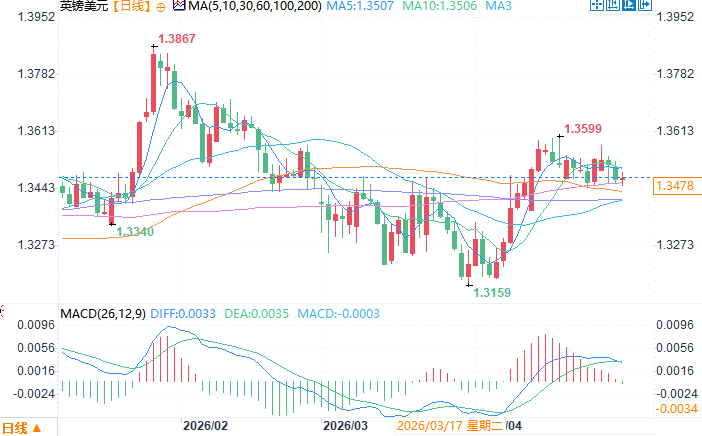
GBP/USD daily chart source: FX678
At 15:21 Beijing time on April 30, the British pound was trading at 1.3482/83 against the US dollar.
Three main factors led to the sharp weakening of the pound: First, President Trump's "not-so-nice-go-lucky" tweet on Truth Social on Wednesday pushed Brent crude oil above $110 per barrel and provided new safe-haven buying for the dollar; second, the Federal Reserve kept the federal funds rate unchanged at 3.50%-3.75%, a decision that, while in line with market expectations, saw an 8-4 split in the Federal Open Market Committee (FOMC) vote, the most divisive since 1992; and finally, Fed Chairman Powell's hawkish signals at his final press conference pushed the yield on 10-year US Treasury bonds above 4.4%. The pound was clearly under pressure against the dollar on Thursday.
Thursday is packed with data: 90 minutes will determine the day's trend.
Thursday's calendar is a nightmare. The Bank of England (BoE) will simultaneously announce its interest rate decision, meeting minutes, monetary policy report, monetary policy summary, and Monetary Policy Committee (MPC) voting details at 11:00 GMT (19:00 Beijing time). BoE Governor Andrew Bailey will then speak at 11:30 GMT (19:30 Beijing time).
Just 60 minutes later, at 12:30 GMT (20:30 Beijing time), the US will release the March Personal Consumption Expenditures Price Index (PCE), the preliminary Q1 GDP figure, the Q1 Employment Cost Index, and weekly initial jobless claims all at once. Following this, the Chicago Purchasing Managers Index (PMI) will be released at 13:45 (21:45 Beijing time). With two major central banks and two sets of inflation data simultaneously impacting the same currency pair within a single day, the pound/dollar exchange rate could experience two sharp fluctuations.
How hawkish does the Bank of England need to be to support the pound?
The market widely expects the Bank of England to maintain its interest rate at 3.75% by an 8-1 vote at its current meeting, with only one member supporting a rate hike. The market has already priced in a cumulative rate hike of approximately 60 basis points by the end of this year, which is the source of market pressure.
HSBC warned this week that the Bank of England's decision to raise interest rates could face more dissenting voices than expected, but even if this happens, the pound's upside potential is quite limited, as the market has already priced in a significant amount of tightening expectations. A more crucial question is how the Bank of England will articulate the risk of "stagflation." A survey last week showed that 17 out of 22 economists considered the risk of stagflation in the UK to be "high" or "very high." Robert Mutkin of BMO pointed out that the energy shock has further exacerbated this trend.
If Bailey emphasizes inflation risks in his speech, the pound is likely to find support; if he leans more towards highlighting weak economic growth and downplaying the voices of the interest rate hike camp, the pound is likely to retest the low of 1.3460 against the dollar.
US PCE data may be the final deciding factor.
US data will be the core driver of the second wave of market movements that day. The market expects the March PCE annualized rate to be 3.5% (previous value 2.8%), and the core PCE annualized rate to be 3.2% (previous value 3.0%); the annualized GDP growth rate for the first quarter is expected to be 2.3% (previous value 0.5%), and the employment cost index is expected to be 0.8%, which will further reinforce the narrative of wage stickiness.
If PCE or GDP data shows a stronger-than-expected rise, the stance of the three Fed members who dissented on Wednesday against maintaining an accommodative stance will appear more predictable than eccentric. This would further strengthen dollar buying, and the pound/dollar pair could break below 1.3460, testing the monthly resistance zone near 1.34. If the data significantly disappoints, the pound/dollar pair may have a chance to retest the 1.3500 area, but the backdrop of the Iranian conflict will limit the height and sustainability of any rebound.
Friday's data was relatively light, but uncertainties remain.
Friday's calendar is relatively light, but not entirely calm. The US Institute for Supply Management (ISM) Manufacturing PMI will be released at 20:00 Beijing time, with the market expecting 53, while the prices paid sub-index is expected to reach 80. If the actual data is as high as expected, it will strongly indicate sticky inflation. Bank of England Chief Economist Huw Pill will also speak. Given that Pill has historically been more hawkish than Bailey on inflation expectations, his speech will be closely watched. If Friday's data continues to align with Thursday's, the range-bound trading pattern of the pound against the dollar will begin to loosen.
The Bank of England and the Bank of America are facing the same dilemma.
Leaving aside specific data calendars, from a longer-term perspective, the Bank of England and the Federal Reserve are facing the same problem from both sides of the Atlantic: the energy and supply shocks triggered by the conflict with Iran are pushing up short-term inflation while doing almost nothing to help economic growth.
Earlier this month, ING noted that the pound/dollar pair was likely to trade in a range of 1.33-1.36 ahead of the Bank of England's June meeting, primarily driven by the situation in the Middle East. The daily chart largely supports this view: the pound/dollar pair bottomed out near 1.316 in early April, rebounded to above 1.357 in mid-April, and is currently testing the lower end of that range. As long as the Strait of Hormuz blockade continues to push up oil prices, and both central banks maintain their policy freezes, this range-bound trading is likely to continue.
The key answer will be given on Thursday.
By 21:00 Beijing time on Thursday, traders will need to clarify three things: whether there are more hawkish dissenters than expected at the Bank of England, whether US inflation is accelerating again, and whether these signals are enough to break the pound against the dollar out of its 1.34-1.36 range.
Judging from the current situation, the path of least resistance on Thursday remains downward, with momentum continuing into the new day's candlestick, and the macroeconomic backdrop clearly favoring the US dollar. However, since the beginning of this month, every time the pound/dollar pair has attempted a clean break below 1.3460, the bulls have successfully defended it. Whether Thursday will be the day that truly changes the trend depends almost entirely on which central bank policymakers "blink" first.
Technical Analysis
On the 15-minute chart, GBP/USD is currently trading at 1.3481, below the day's opening price of 1.3526, maintaining a mild intraday bearish bias. Any rebound is currently capped at the opening price. The Stochastic Relative Strength Index (StSI) is in positive territory and near recent overbought levels, suggesting room for further upward attempts in the short term, but may face selling pressure before breaking above the opening price.
The primary resistance level is the opening price of 1.3526. Only a decisive break above this level can alleviate the current downward pressure and initiate a more sustainable rebound. Given the lack of clear guidance from moving averages or other structural support levels for the day, the price action around 1.3481 will determine the next direction. Failure to recover 1.3526 will likely lead to further consolidation or a continued downward move.
On the daily chart, the pound is also trading at 1.3481 against the dollar. Despite recent consolidation, the pair remains above the 50-day exponential moving average (1.3441) and the 200-day exponential moving average (1.3384), indicating that the medium-term uptrend remains intact. The Stochastic Relative Strength Index (SRSI) is currently reading around 55, having retreated from previous overbought levels, suggesting a slowdown in upward momentum, but no reversal signal has yet appeared.
Initial support is located near the 50-day moving average at 1.3441. If the decline extends, the 200-day moving average at 1.3384 will become a more significant structural support. As long as the price holds above these two moving averages, the pullback can still be seen as a correction within the overall uptrend. However, if the daily closing price falls below the 200-day moving average, the current neutral-to-bullish technical pattern will be weakened.
GBP/USD daily chart source: FX678
At 15:21 Beijing time on April 30, the British pound was trading at 1.3482/83 against the US dollar.
- Risk Warning and Disclaimer
- The market involves risk, and trading may not be suitable for all investors. This article is for reference only and does not constitute personal investment advice, nor does it take into account certain users’ specific investment objectives, financial situation, or other needs. Any investment decisions made based on this information are at your own risk.