













TD Securities: Gold prices are expected to break through the $5,000 mark by the end of 2026.
2026-05-01 02:16:52
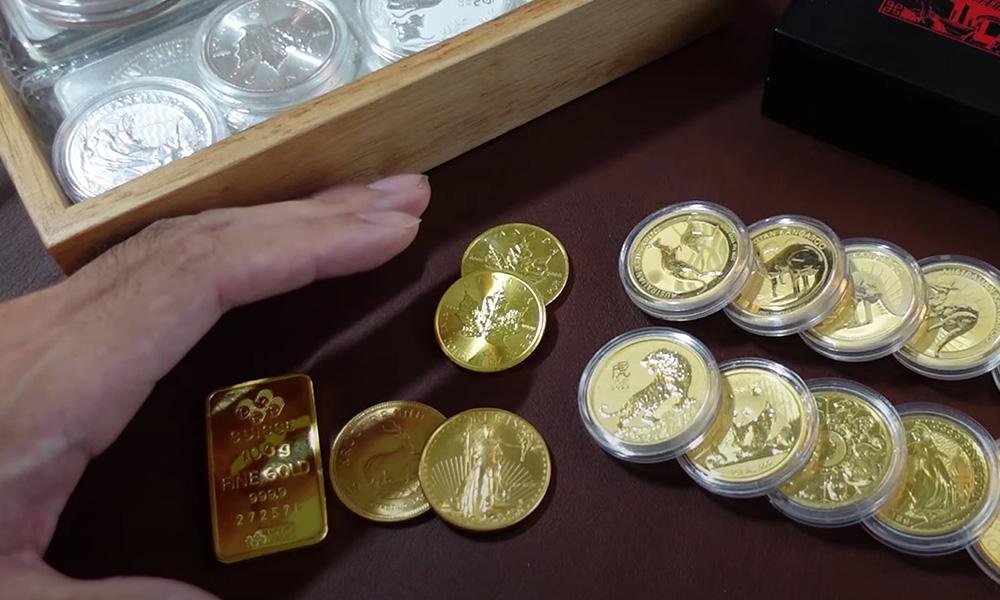
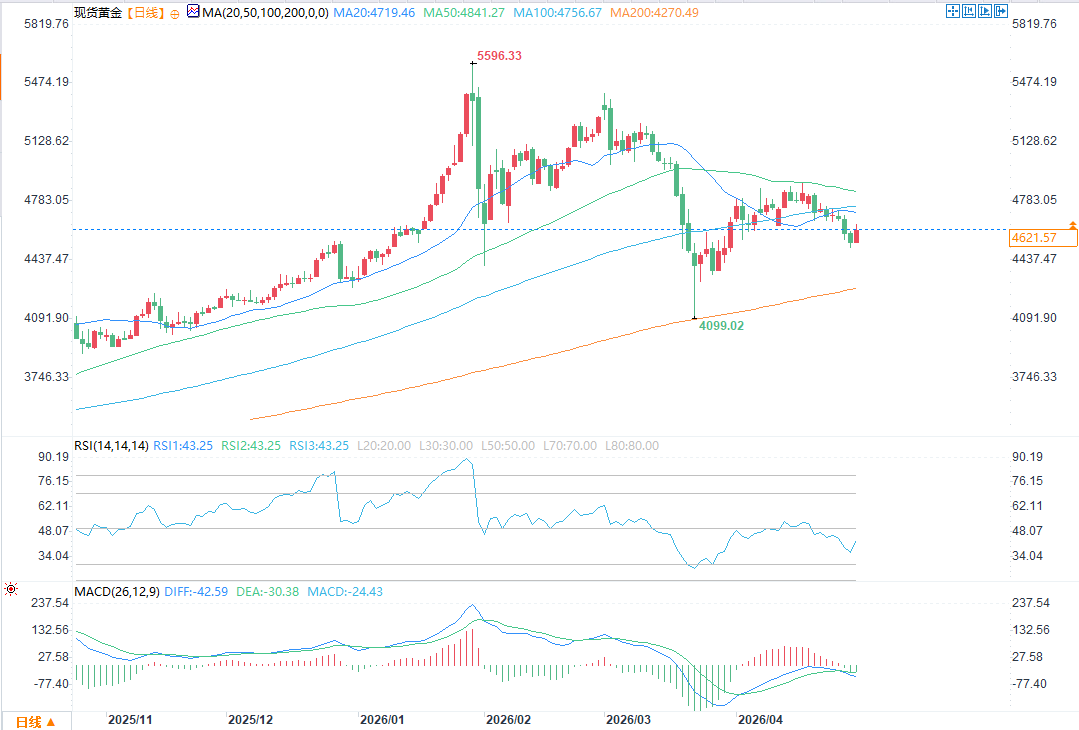
On Thursday (April 30), during the US trading session, international spot gold prices hovered around $4,550-$4,620 per ounce, a significant pullback from the historical high of approximately $5,595-$5,600 at the beginning of the year, but still up about 39% year-on-year. Gold prices have recently exhibited a high-level consolidation pattern, briefly touching a one-month low in late April.
Although gold prices have found short-term support above $4,600 per ounce, TD Securities says that while the long-term outlook for gold remains bullish, its movement is still significantly constrained by oil price volatility.
Oil prices fuel inflation concerns
In his latest precious metals report, Bart Melek, head of commodities strategy at TD Securities, pointed out that gold is currently in a consolidation phase. The main reason is that the ongoing oil supply shocks triggered by conflicts in the Middle East are fueling market concerns about inflation, thus forcing major central banks around the world to maintain a relatively hawkish monetary policy stance.
Against the backdrop of high real interest rates, the opportunity cost of holding gold has increased significantly, which has directly led to a sustained period of weakness in gold demand from institutional investors, exchange-traded funds (ETFs), and central banks since the outbreak of the Middle East conflict.
Technical support still exists
(Spot gold daily chart source: FX678)
Despite facing numerous headwinds such as high inflation and tight monetary policy, the gold market has demonstrated resilience. Currently, gold prices have successfully held above the key support level of the 200-day moving average, which is currently around $4258 per ounce. Spot gold was trading at $4619.90 per ounce during the session, up 1.6% on the day.
Melek emphasized that as long as the key support level of $4,258 per ounce is not effectively broken, the long-term upward trend of gold will not be interrupted. However, he also warned that the ever-rising oil price remains the biggest downside risk facing gold at present. If oil prices surge to $150 per barrel, gold prices may fall back to near the 200-day moving average.
Optimistic long-term outlook
Melek remains optimistic about the long-term outlook for gold and reiterated his forecast that gold prices could break through the $5,000 per ounce mark by the end of 2026.
He analyzed that once the oil market gradually stabilizes and inflationary pressures subside, gold prices are expected to rebound to around $5,200 per ounce by the end of this year. At that time, the Federal Reserve's policy focus may shift to its core mission of achieving full employment, and multiple factors such as high global debt levels, the progress of de-dollarization, and a weakening dollar will once again drive gold, as a traditional safe-haven asset, to rise.
In addition, Melek also stated that the silver market is facing similar risks and opportunities as gold. High oil prices will suppress global economic activity in the short term, thereby reducing industrial demand for silver and putting downward pressure on silver prices; however, once the energy crisis is alleviated, the recovery in industrial demand will provide strong support for silver prices.
Although gold prices have found short-term support above $4,600 per ounce, TD Securities says that while the long-term outlook for gold remains bullish, its movement is still significantly constrained by oil price volatility.
Oil prices fuel inflation concerns
In his latest precious metals report, Bart Melek, head of commodities strategy at TD Securities, pointed out that gold is currently in a consolidation phase. The main reason is that the ongoing oil supply shocks triggered by conflicts in the Middle East are fueling market concerns about inflation, thus forcing major central banks around the world to maintain a relatively hawkish monetary policy stance.
Against the backdrop of high real interest rates, the opportunity cost of holding gold has increased significantly, which has directly led to a sustained period of weakness in gold demand from institutional investors, exchange-traded funds (ETFs), and central banks since the outbreak of the Middle East conflict.
Technical support still exists
(Spot gold daily chart source: FX678)
Despite facing numerous headwinds such as high inflation and tight monetary policy, the gold market has demonstrated resilience. Currently, gold prices have successfully held above the key support level of the 200-day moving average, which is currently around $4258 per ounce. Spot gold was trading at $4619.90 per ounce during the session, up 1.6% on the day.
Melek emphasized that as long as the key support level of $4,258 per ounce is not effectively broken, the long-term upward trend of gold will not be interrupted. However, he also warned that the ever-rising oil price remains the biggest downside risk facing gold at present. If oil prices surge to $150 per barrel, gold prices may fall back to near the 200-day moving average.
Optimistic long-term outlook
Melek remains optimistic about the long-term outlook for gold and reiterated his forecast that gold prices could break through the $5,000 per ounce mark by the end of 2026.
He analyzed that once the oil market gradually stabilizes and inflationary pressures subside, gold prices are expected to rebound to around $5,200 per ounce by the end of this year. At that time, the Federal Reserve's policy focus may shift to its core mission of achieving full employment, and multiple factors such as high global debt levels, the progress of de-dollarization, and a weakening dollar will once again drive gold, as a traditional safe-haven asset, to rise.
In addition, Melek also stated that the silver market is facing similar risks and opportunities as gold. High oil prices will suppress global economic activity in the short term, thereby reducing industrial demand for silver and putting downward pressure on silver prices; however, once the energy crisis is alleviated, the recovery in industrial demand will provide strong support for silver prices.
- Risk Warning and Disclaimer
- The market involves risk, and trading may not be suitable for all investors. This article is for reference only and does not constitute personal investment advice, nor does it take into account certain users’ specific investment objectives, financial situation, or other needs. Any investment decisions made based on this information are at your own risk.

