US blockade forces 41 Iranian oil tankers to retreat, carrying 69 million barrels of crude oil; Tehran faces internal and external difficulties.
2026-05-01 15:11:40
For nearly 50 years, the Islamic Republic of Iran has repeatedly circumvented the US financial blockade through oil trade with China and countered US military pressure with guerrilla tactics using its "shadow fleet." However, analysts point out that with the US Navy's comprehensive blockade of shipping in the Persian Gulf, Iran's former strategic trump card is losing its effectiveness.
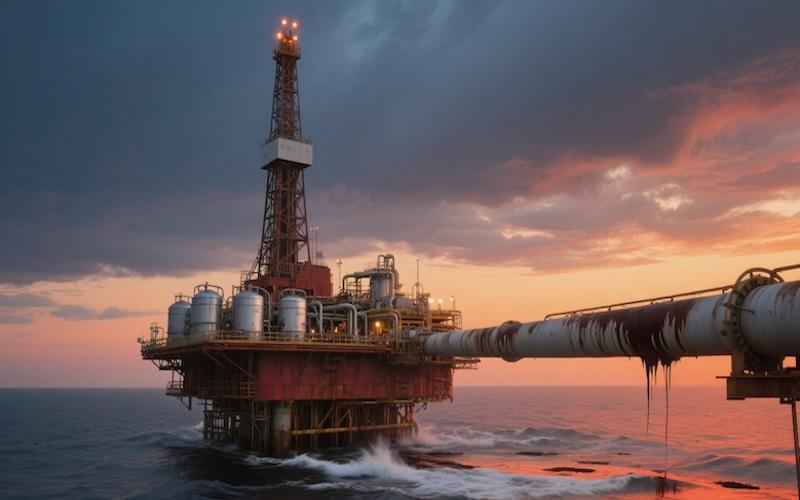
Since April 13, 2026, the U.S. Navy has established a comprehensive blockade around major Iranian ports, prohibiting any oil tankers from leaving. Data released by the U.S. Central Command on April 30 showed that 41 Iranian oil tankers had been forced back to Iranian ports, carrying 69 million barrels of crude oil with a total estimated value of $6 billion. Tracking data from commodities data company Kpler also confirms the effectiveness of this blockade—there is no evidence that any Iranian oil cargoes have successfully broken through the blockade and reached buyers, including those in China.
The U.S. Navy also conducted an interception operation in the Arabian Sea. On April 26, the U.S. military intercepted a shadow convoy oil tanker named "Cervan," which, along with 18 other vessels, had been sanctioned by the U.S. Treasury Department on April 24. Under military escort, the "Cervan" was forced to turn back to Iranian waters.
As a result, Iran's crude oil exports have plummeted. Kpler data shows that Iran's daily crude oil shipments have fallen from an average of 1.85 million barrels per day in March to approximately 567,000 barrels per day, a drop of nearly 70%. Unable to be shipped out, oil is piling up rapidly—since the blockade was implemented, Iran's onshore oil inventories have increased by 4.6 million barrels, reaching a total of 49 million barrels. Kpler estimates that Iran's remaining storage capacity can only last for another 12 to 22 days, and it is expected that by mid-May, Iran will be forced to further reduce its daily oil production by 1.5 million barrels.
With maritime exports completely blocked, Tehran is desperately seeking alternative trade routes. A spokesperson for the Iranian Oil, Gas and Petrochemical Exporters Union revealed that Tehran is attempting to transport some oil to China by rail. While rail transport between Iran and Xi'an, China, is faster than sea freight, its costs are far higher, raising questions about its economic viability.
From a road perspective, Iran is attempting to import food from the Caucasus region and Pakistan to alleviate domestic shortages. However, Fars News Agency, which is linked to Iran's security services, cited an assessment by the Iranian Shipping Association indicating that only 30-40% of Iran's trade can be diverted from the blocked ports to other channels, while the remaining 60-70% will be completely disrupted.
Meanwhile, the actual effectiveness of alternative routes has been widely questioned. Researchers at Columbia University's Center for Global Energy Policy point out that the cost of transporting Iranian oil to China by rail is far higher than by sea, and it remains to be seen whether Chinese refineries, operating on thin margins, are willing to pay the premium.
As the blockade stalemate deepens, cracks are widening within Iran's political system. President Pezechzian, a representative of the moderates, advocates for a ceasefire and the initiation of negotiations with the US government. Moderates believe that Trump is eager to extricate himself from this chaotic war and that the blockade will not last. An Iran scholar at the University of Tennessee's Chattanooga warns that further destruction would be tantamount to "political suicide."
The hardliners hold a completely different position. Conservatives, represented by presidential candidate Saeed Jalili, believe that the U.S.-imposed maritime blockade goes beyond previous sanctions and essentially constitutes an act of war, requiring a military response. The hardliner camp is increasingly inclined to push up oil prices and increase pressure on the United States by reigniting a genuine military conflict.
On April 28, the U.S. Treasury Department announced new sanctions against Iran's shadow banking system, affecting 35 entities and individuals. The sanctions accuse these entities of assisting Iran in circumventing sanctions through shell company accounts in foreign banks. Since February 2025, the U.S. Office of Foreign Assets Control has imposed sanctions on approximately 1,000 individuals, vessels, and aircraft linked to Iran.
The costs of war are impacting all levels of Iranian society at a visible pace. Nearly one million Iranians have directly lost their jobs, with the number of indirectly unemployed approaching one million. The total cost of post-war reconstruction is estimated at $270 billion, equivalent to nearly 80% of Iran's annual GDP of $341 billion.
The loss of national wealth is clearly reflected in exchange rate data. The Iranian rial has fallen to a historic low against the US dollar—breaking the 1.81 million rials per dollar mark as of April 29. On February 25, the last working day before the outbreak of war, the exchange rate was 1.65 million rials. In just two months, the rial has depreciated by nearly 10%, with a single-day drop of up to 8%.
Faced with the continued depreciation of their currency, Iranians are converting their remaining savings into gold. The benchmark gold coin, the "Emami," rose by approximately 6.5% in a single day, reaching a price of 2.08 billion rials. The economic crisis is further squeezing the livelihoods of ordinary people, forcing some families to eat only one meal a day, and soaring drug prices are making basic treatment unaffordable for patients.
Tehran has been escalating its rhetoric. On April 29, a senior Iranian security official warned that if the United States continues its maritime blockade of the Strait of Hormuz, Iran will retaliate with "concrete and unprecedented military action." The speaker of the Iranian parliament and the foreign minister also sent similar signals, emphasizing that they will continue to maintain control over the key waterway.
Supreme Leader Mujtaba Khamenei issued a new threat to the United States in a written statement on the same day: "Foreigners who commit evil should sink into the abyss." Mujtaba Khamenei has not appeared in public since succeeding his father, Ali Khamenei, who was killed in an Israeli attack on February 28.
In terms of military deployments, the situation is becoming increasingly tense. The USS Mason destroyer has joined the USS Bush carrier strike group. According to informed sources, the US Central Command has developed a new "short and intense" air strike plan against Iran, with targets potentially including infrastructure.
It is believed that approximately 90% of Iran's conventional naval force was destroyed in the US airstrikes. Iran had previously attempted to use oil revenues as a shield against US economic exploitation. However, under the dual pressure of military and economic sanctions, the outcome of this game is gradually becoming clear—whether Iran's economic and social system will collapse first, or whether global consumers will succumb to the pain of soaring oil prices first, the Trump administration is betting on the former.
The comprehensive naval blockade of Iranian ports by the United States has produced substantial strategic effects. Since the blockade was implemented on April 13, 41 oil tankers have been forced to turn back, 69 million barrels of crude oil have been stranded in ports, and daily oil exports have plummeted from 1.85 million barrels to below 570,000 barrels—these figures all point to a clear fact: Iran's long-reliant "shadow fleet" tactics have been significantly weakened in the face of a comprehensive blockade by the U.S. Navy.
However, the Trump administration also faces its own dilemmas. Global oil prices continue to rise due to tensions in the Middle East, with Brent crude once hitting $126 per barrel, pushing up inflationary pressures in various countries. The longer the blockade lasts, the higher the political and economic costs for the United States will be—diplomatic efforts by allies are frequently thwarted, and the longer international shipping is disrupted, the more difficult it will be to reverse the structural damage to the global supply chain. The United States is betting that Iran will come to the negotiating table due to economic collapse; Tehran, on the other hand, is betting that the global markets will force the United States to make concessions first due to the high cost of the blockade. The blockade is a two-way test of endurance, and neither side has yet shown any signs of yielding.
Internal divisions within Iran are a key variable determining the course of this stalemate. The unprecedented military response signaled by the top security official indicates the rising influence of the hardline camp. If Iran were to escalate the conflict again using unconventional means such as submarines, mines, or even jamming undersea communication cables, the situation would slide from a state of "blockade" into a full-blown war. For the international community, the window of opportunity for diplomatic channels is narrowing.
Q1: What is the economic impact of the forced return of 41 oil tankers carrying 69 million barrels of crude oil?
This shipment of 69 million barrels of crude oil is valued at approximately $6 billion, roughly equivalent to Iran's total oil export revenue for the 52 days prior to the war. The direct consequence of the blockade—a reduction in daily oil exports from 1.85 million barrels to less than 570,000 barrels—means Iran loses approximately $130 million in foreign exchange earnings every day. If the blockade continues for the entire year, the annual economic loss from oil exports alone will approach $50 billion, a figure equivalent to about 15% of Iran's total economy. The significance of the blockade lies not only in cutting off current income but also in fundamentally weakening the operational capacity of Iran's economic system.
Q2: Why did Iran's "shadow fleet" tactic fail in this blockade?
The core principle of the "shadow fleet" tactic is to conceal the origin and destination of oil tankers and circumvent US sanctions by disabling their Automatic Identification System (AIS) on the high seas, conducting illegal ship-to-ship transfers en route, and using shell companies to create false shipowner identities. However, this tactic relies on sanctions being primarily executive orders, depending on intelligence analysis and administrative accountability, rather than military blockades. In this conflict, the US military employed a physical blockade—directly deploying warships to establish physical interception lines in key waterways and sending naval forces to intercept and escort oil tankers back in the Arabian Sea. When sanctions escalate to physical interception, the "shadow" operation has nowhere to hide.
Q3: How did Iran manage to generate 40% more revenue than before the war despite the blockade?
This seemingly paradoxical phenomenon hinges on the timing of the blockade. After the outbreak of war in late February, global oil prices surged from around $75 per barrel to between $90 and $100, sometimes exceeding $100. Against this backdrop, Iran sold its 127 million barrels of crude oil stockpiled at sea at high prices—stockpiles accumulated before the war. Daily oil revenue thus rose from approximately $115 million before the war to approximately $165 million. This short-term gain relied on the depletion of early stockpiles; as the stockpiles dwindled, exports fell below 570,000 barrels per day, and daily revenue was less than a third of what it was before the blockade began. In fact, the prolonged blockade has entered its next phase—the inability to transport oil becomes a burden.
Q4: What is the core of the disagreement between hardliners and moderates? Which approach is more conducive to breaking the deadlock?
Moderates advocate for a ceasefire and negotiations to persuade the US to lift the blockade, focusing on a long-term political solution; hardliners, on the other hand, view the blockade as tantamount to an act of war and advocate for an immediate military response, including threatening US warships, attacking undersea communication cables, and closing the Strait of Hormuz. Currently, the hardline narrative is increasingly gaining dominance. From a rational decision-making perspective, the moderate negotiating approach is more likely to break the blockade at a lower cost, but this depends on the US accepting some of Iran's demands—namely, lifting the blockade before negotiating the nuclear issue. The Trump administration has explicitly rejected this sequence, plunging the moderate policy line into a substantial predicament.
Q5: What were the limitations behind the Trump administration's window of opportunity for implementing lockdowns?
Under the U.S. War Powers Act, the president's authority to conduct military action without congressional authorization is valid for 60 days. This period is calculated from the start of the military action (the strikes against Iran in late February) and is expected to expire around May 1st. This means that in early May, the Trump administration must face a crucial decision: whether to seek congressional authorization. If the blockade evolves into a more comprehensive military conflict during this process, the president will face serious legal and political challenges from Congress. Experts at the Middle East Global Affairs Council assess that this time limit constitutes a significant constraint on the Trump administration's blockade strategy and may force the U.S. to make diplomatic adjustments in the near future.
Blockade in effect: 41 oil tankers forced to turn back
Since April 13, 2026, the U.S. Navy has established a comprehensive blockade around major Iranian ports, prohibiting any oil tankers from leaving. Data released by the U.S. Central Command on April 30 showed that 41 Iranian oil tankers had been forced back to Iranian ports, carrying 69 million barrels of crude oil with a total estimated value of $6 billion. Tracking data from commodities data company Kpler also confirms the effectiveness of this blockade—there is no evidence that any Iranian oil cargoes have successfully broken through the blockade and reached buyers, including those in China.
The U.S. Navy also conducted an interception operation in the Arabian Sea. On April 26, the U.S. military intercepted a shadow convoy oil tanker named "Cervan," which, along with 18 other vessels, had been sanctioned by the U.S. Treasury Department on April 24. Under military escort, the "Cervan" was forced to turn back to Iranian waters.
As a result, Iran's crude oil exports have plummeted. Kpler data shows that Iran's daily crude oil shipments have fallen from an average of 1.85 million barrels per day in March to approximately 567,000 barrels per day, a drop of nearly 70%. Unable to be shipped out, oil is piling up rapidly—since the blockade was implemented, Iran's onshore oil inventories have increased by 4.6 million barrels, reaching a total of 49 million barrels. Kpler estimates that Iran's remaining storage capacity can only last for another 12 to 22 days, and it is expected that by mid-May, Iran will be forced to further reduce its daily oil production by 1.5 million barrels.
Alternative routes are in short supply
With maritime exports completely blocked, Tehran is desperately seeking alternative trade routes. A spokesperson for the Iranian Oil, Gas and Petrochemical Exporters Union revealed that Tehran is attempting to transport some oil to China by rail. While rail transport between Iran and Xi'an, China, is faster than sea freight, its costs are far higher, raising questions about its economic viability.
From a road perspective, Iran is attempting to import food from the Caucasus region and Pakistan to alleviate domestic shortages. However, Fars News Agency, which is linked to Iran's security services, cited an assessment by the Iranian Shipping Association indicating that only 30-40% of Iran's trade can be diverted from the blocked ports to other channels, while the remaining 60-70% will be completely disrupted.
Meanwhile, the actual effectiveness of alternative routes has been widely questioned. Researchers at Columbia University's Center for Global Energy Policy point out that the cost of transporting Iranian oil to China by rail is far higher than by sea, and it remains to be seen whether Chinese refineries, operating on thin margins, are willing to pay the premium.
Internal power struggles intensify
As the blockade stalemate deepens, cracks are widening within Iran's political system. President Pezechzian, a representative of the moderates, advocates for a ceasefire and the initiation of negotiations with the US government. Moderates believe that Trump is eager to extricate himself from this chaotic war and that the blockade will not last. An Iran scholar at the University of Tennessee's Chattanooga warns that further destruction would be tantamount to "political suicide."
The hardliners hold a completely different position. Conservatives, represented by presidential candidate Saeed Jalili, believe that the U.S.-imposed maritime blockade goes beyond previous sanctions and essentially constitutes an act of war, requiring a military response. The hardliner camp is increasingly inclined to push up oil prices and increase pressure on the United States by reigniting a genuine military conflict.
On April 28, the U.S. Treasury Department announced new sanctions against Iran's shadow banking system, affecting 35 entities and individuals. The sanctions accuse these entities of assisting Iran in circumventing sanctions through shell company accounts in foreign banks. Since February 2025, the U.S. Office of Foreign Assets Control has imposed sanctions on approximately 1,000 individuals, vessels, and aircraft linked to Iran.
The economic lifeline is shrinking rapidly.
The costs of war are impacting all levels of Iranian society at a visible pace. Nearly one million Iranians have directly lost their jobs, with the number of indirectly unemployed approaching one million. The total cost of post-war reconstruction is estimated at $270 billion, equivalent to nearly 80% of Iran's annual GDP of $341 billion.
The loss of national wealth is clearly reflected in exchange rate data. The Iranian rial has fallen to a historic low against the US dollar—breaking the 1.81 million rials per dollar mark as of April 29. On February 25, the last working day before the outbreak of war, the exchange rate was 1.65 million rials. In just two months, the rial has depreciated by nearly 10%, with a single-day drop of up to 8%.
Faced with the continued depreciation of their currency, Iranians are converting their remaining savings into gold. The benchmark gold coin, the "Emami," rose by approximately 6.5% in a single day, reaching a price of 2.08 billion rials. The economic crisis is further squeezing the livelihoods of ordinary people, forcing some families to eat only one meal a day, and soaring drug prices are making basic treatment unaffordable for patients.
Military standoff intensifies
Tehran has been escalating its rhetoric. On April 29, a senior Iranian security official warned that if the United States continues its maritime blockade of the Strait of Hormuz, Iran will retaliate with "concrete and unprecedented military action." The speaker of the Iranian parliament and the foreign minister also sent similar signals, emphasizing that they will continue to maintain control over the key waterway.
Supreme Leader Mujtaba Khamenei issued a new threat to the United States in a written statement on the same day: "Foreigners who commit evil should sink into the abyss." Mujtaba Khamenei has not appeared in public since succeeding his father, Ali Khamenei, who was killed in an Israeli attack on February 28.
In terms of military deployments, the situation is becoming increasingly tense. The USS Mason destroyer has joined the USS Bush carrier strike group. According to informed sources, the US Central Command has developed a new "short and intense" air strike plan against Iran, with targets potentially including infrastructure.
It is believed that approximately 90% of Iran's conventional naval force was destroyed in the US airstrikes. Iran had previously attempted to use oil revenues as a shield against US economic exploitation. However, under the dual pressure of military and economic sanctions, the outcome of this game is gradually becoming clear—whether Iran's economic and social system will collapse first, or whether global consumers will succumb to the pain of soaring oil prices first, the Trump administration is betting on the former.
Editor's Summary
The comprehensive naval blockade of Iranian ports by the United States has produced substantial strategic effects. Since the blockade was implemented on April 13, 41 oil tankers have been forced to turn back, 69 million barrels of crude oil have been stranded in ports, and daily oil exports have plummeted from 1.85 million barrels to below 570,000 barrels—these figures all point to a clear fact: Iran's long-reliant "shadow fleet" tactics have been significantly weakened in the face of a comprehensive blockade by the U.S. Navy.
However, the Trump administration also faces its own dilemmas. Global oil prices continue to rise due to tensions in the Middle East, with Brent crude once hitting $126 per barrel, pushing up inflationary pressures in various countries. The longer the blockade lasts, the higher the political and economic costs for the United States will be—diplomatic efforts by allies are frequently thwarted, and the longer international shipping is disrupted, the more difficult it will be to reverse the structural damage to the global supply chain. The United States is betting that Iran will come to the negotiating table due to economic collapse; Tehran, on the other hand, is betting that the global markets will force the United States to make concessions first due to the high cost of the blockade. The blockade is a two-way test of endurance, and neither side has yet shown any signs of yielding.
Internal divisions within Iran are a key variable determining the course of this stalemate. The unprecedented military response signaled by the top security official indicates the rising influence of the hardline camp. If Iran were to escalate the conflict again using unconventional means such as submarines, mines, or even jamming undersea communication cables, the situation would slide from a state of "blockade" into a full-blown war. For the international community, the window of opportunity for diplomatic channels is narrowing.
Frequently Asked Questions
Q1: What is the economic impact of the forced return of 41 oil tankers carrying 69 million barrels of crude oil?
This shipment of 69 million barrels of crude oil is valued at approximately $6 billion, roughly equivalent to Iran's total oil export revenue for the 52 days prior to the war. The direct consequence of the blockade—a reduction in daily oil exports from 1.85 million barrels to less than 570,000 barrels—means Iran loses approximately $130 million in foreign exchange earnings every day. If the blockade continues for the entire year, the annual economic loss from oil exports alone will approach $50 billion, a figure equivalent to about 15% of Iran's total economy. The significance of the blockade lies not only in cutting off current income but also in fundamentally weakening the operational capacity of Iran's economic system.
Q2: Why did Iran's "shadow fleet" tactic fail in this blockade?
The core principle of the "shadow fleet" tactic is to conceal the origin and destination of oil tankers and circumvent US sanctions by disabling their Automatic Identification System (AIS) on the high seas, conducting illegal ship-to-ship transfers en route, and using shell companies to create false shipowner identities. However, this tactic relies on sanctions being primarily executive orders, depending on intelligence analysis and administrative accountability, rather than military blockades. In this conflict, the US military employed a physical blockade—directly deploying warships to establish physical interception lines in key waterways and sending naval forces to intercept and escort oil tankers back in the Arabian Sea. When sanctions escalate to physical interception, the "shadow" operation has nowhere to hide.
Q3: How did Iran manage to generate 40% more revenue than before the war despite the blockade?
This seemingly paradoxical phenomenon hinges on the timing of the blockade. After the outbreak of war in late February, global oil prices surged from around $75 per barrel to between $90 and $100, sometimes exceeding $100. Against this backdrop, Iran sold its 127 million barrels of crude oil stockpiled at sea at high prices—stockpiles accumulated before the war. Daily oil revenue thus rose from approximately $115 million before the war to approximately $165 million. This short-term gain relied on the depletion of early stockpiles; as the stockpiles dwindled, exports fell below 570,000 barrels per day, and daily revenue was less than a third of what it was before the blockade began. In fact, the prolonged blockade has entered its next phase—the inability to transport oil becomes a burden.
Q4: What is the core of the disagreement between hardliners and moderates? Which approach is more conducive to breaking the deadlock?
Moderates advocate for a ceasefire and negotiations to persuade the US to lift the blockade, focusing on a long-term political solution; hardliners, on the other hand, view the blockade as tantamount to an act of war and advocate for an immediate military response, including threatening US warships, attacking undersea communication cables, and closing the Strait of Hormuz. Currently, the hardline narrative is increasingly gaining dominance. From a rational decision-making perspective, the moderate negotiating approach is more likely to break the blockade at a lower cost, but this depends on the US accepting some of Iran's demands—namely, lifting the blockade before negotiating the nuclear issue. The Trump administration has explicitly rejected this sequence, plunging the moderate policy line into a substantial predicament.
Q5: What were the limitations behind the Trump administration's window of opportunity for implementing lockdowns?
Under the U.S. War Powers Act, the president's authority to conduct military action without congressional authorization is valid for 60 days. This period is calculated from the start of the military action (the strikes against Iran in late February) and is expected to expire around May 1st. This means that in early May, the Trump administration must face a crucial decision: whether to seek congressional authorization. If the blockade evolves into a more comprehensive military conflict during this process, the president will face serious legal and political challenges from Congress. Experts at the Middle East Global Affairs Council assess that this time limit constitutes a significant constraint on the Trump administration's blockade strategy and may force the U.S. to make diplomatic adjustments in the near future.
- Risk Warning and Disclaimer
- The market involves risk, and trading may not be suitable for all investors. This article is for reference only and does not constitute personal investment advice, nor does it take into account certain users’ specific investment objectives, financial situation, or other needs. Any investment decisions made based on this information are at your own risk.