Negotiations stall, the struggle for control of the Taiwan Strait escalates, and oil prices return to key support levels.
2026-05-04 16:19:29
On Monday (May 4), international oil prices rebounded after hitting a low during the Asian and European sessions. The positive news over the weekend caused oil prices to continue to decline, but the differences in the negotiation content have not yet been resolved. At the same time, the United States took new specific actions against the Taiwan Strait, creating a major uncertainty factor for the market. Currently, oil prices have begun to rebound rapidly.
On May 1, the US-Iran peace talks released positive signals, global risk appetite rebounded, and international oil prices fell sharply in response.
This week brought more positive news, but the differences between the two sides on core terms remain difficult to bridge, negotiations have stalled, and market sentiment has wavered again.
According to CCTV, on May 2, the US side reported that, based on the latest negotiation proposal put forward by Iran, Iran no longer demands that the US lift its blockade of the Strait of Hormuz before face-to-face negotiations between the two countries' representatives . This is a clear positive development. However, Ibrahim Aziz, chairman of the National Security and Foreign Policy Committee of the Iranian Islamic Parliament, stated that any US interference in the "new maritime management regime" of the Strait of Hormuz would be considered a violation of the ceasefire agreement.
Meanwhile, the latest statement from the Iranian Foreign Ministry spokesperson released multiple key signals, emphasizing that the United States still has the inertia to make unreasonable demands and is unlikely to abandon its hardline stance of "maximum pressure." The current Iran-US negotiations are only focused on "ending the war" and do not involve speculative issues such as uranium enrichment.
The root cause of the tensions in the Strait of Hormuz is the aggressive actions of the United States. Iran's relevant measures are fully in accordance with international law , and it is currently consulting with Oman on a protocol for the safe passage of ships in the strait and maintaining consultations with Russia.
Although Iran had previously shown some flexibility by no longer insisting on the premise of "lifting the blockade before negotiations," the core differences between the two sides remained unresolved. Coupled with the US's official launch of the "Freedom Initiative" that day, pushing for the opening of the Strait of Hormuz, which created significant uncertainty in the market, international oil prices subsequently rebounded.
In other words, you can block my oil tankers, but I must pay a fee. In short, Iran's overall negotiating attitude has shown signs of softening, but its actual demands for interests have not loosened significantly.

Previously, Iran, through its mediator Pakistan, submitted a 14-point plan to the United States to end the war, as a response to the US's 9-point proposal.
Iran has abandoned its precondition of "lifting the blockade of the Strait of Hormuz before negotiations" and agreed to proceed with a second round of direct talks, which initially boosted market expectations for reconciliation and pushed oil prices lower.
However, the US has clearly expressed its dissatisfaction with the Iran plan. The core differences between the two sides are as follows:
The US demands (9-point proposal): Iran must halt uranium enrichment, limit its missile program, and cease supporting regional proxies; a two-month ceasefire is required, with Iran fulfilling its obligations before partial lifting of sanctions.
Iran's position (14-point plan): It emphasizes a comprehensive solution to all issues within 30 days, rather than extending the ceasefire; it demands the withdrawal of US troops from the vicinity of Iran, the complete lifting of sanctions, the unfreezing of frozen assets, and the payment of compensation; and it insists on establishing a new Iranian-led management mechanism for the Strait of Hormuz.
Trump announced that the United States will officially launch Project Freedom on Monday (May 4th) local time.
The U.S. military will safely guide stranded vessels out of the restricted waters of the Strait of Hormuz, ensuring the freedom of navigation for global merchant ships. The operation involves destroyers, over 100 military aircraft, and approximately 15,000 military personnel, making it a significant operation.
This move is seen by Iran as a direct interference in its control of the Straits of Hormuz, a key point of contention. If some of the trapped ships can be successfully freed, it will be conducive to a recovery in risk appetite.
The chairman of the Iranian parliament's National Security Committee explicitly warned that any US intervention would violate the ceasefire agreement. Iran simultaneously strengthened its stance, announcing the introduction of the "Strait of Hormuz Management Law," which would strictly control the passage of Israeli and "hostile" vessels.
Currently, the US and Iran remain deadlocked on key issues such as the ceasefire period, the lifting of sanctions, the withdrawal of US troops, and control of the Strait of Hormuz, with limited progress in negotiations.
Iran firmly maintains its right to dominate navigation rules in the Strait of Hormuz, which is fundamentally opposed to the US's "unconditional passage" claim.
Since the Strait of Hormuz handles approximately 20% of global crude oil shipments, any tension directly impacts supply expectations. As negotiations intensified, market concerns about supply disruptions resurfaced, causing international oil prices to rebound and return to a high-level consolidation pattern.
From a technical perspective, Brent crude oil prices have rebounded back to the key support level of 108.6 and above the 5-day moving average. This price level is a turning point for oil prices, and as long as the price remains above this level, the outlook for oil prices remains bullish.
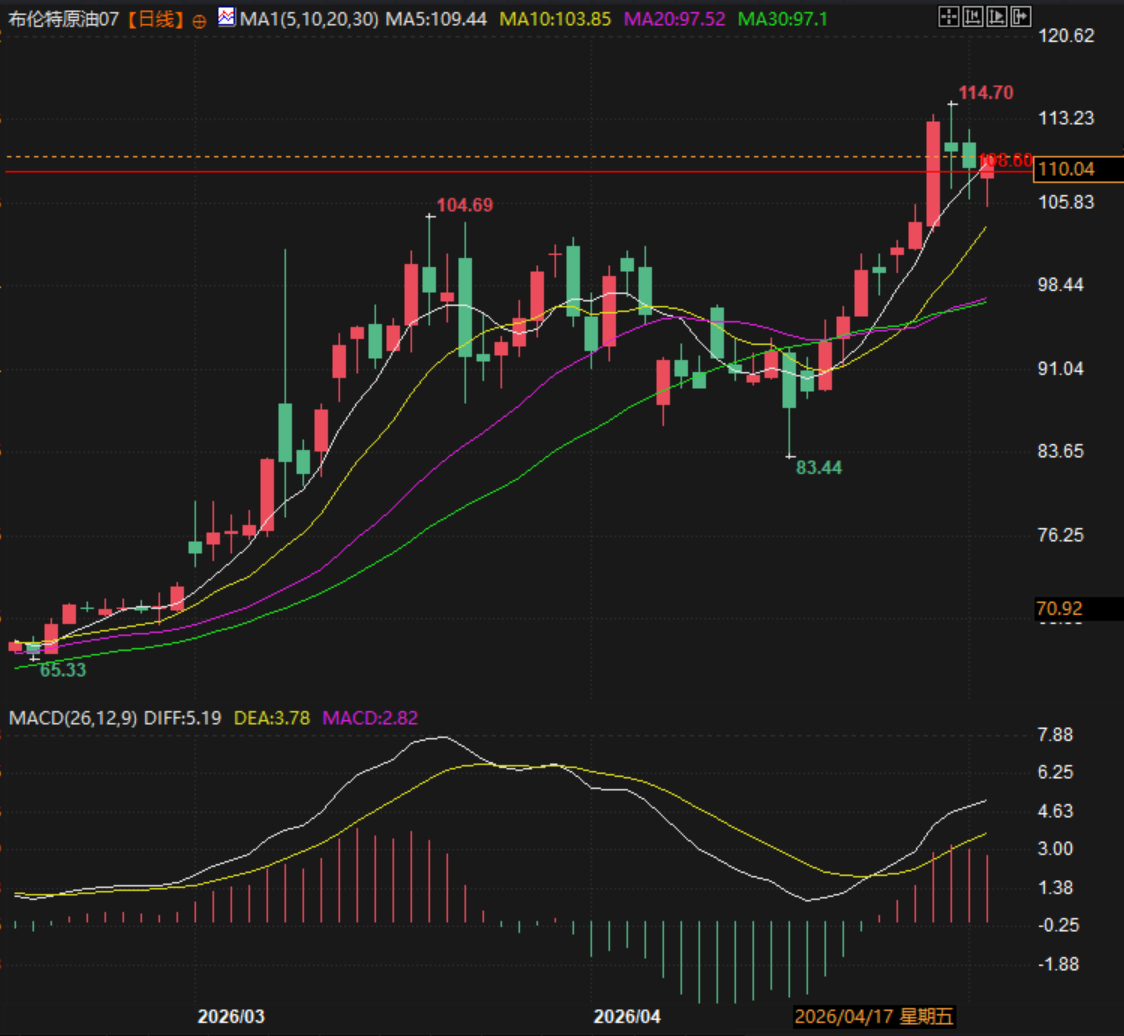
(Brent crude oil July contract daily chart, source: EasyForex)
At 16:16 Beijing time, Brent crude oil is currently trading at $110.43 per barrel.
On May 1, the US-Iran peace talks released positive signals, global risk appetite rebounded, and international oil prices fell sharply in response.
This week brought more positive news, but the differences between the two sides on core terms remain difficult to bridge, negotiations have stalled, and market sentiment has wavered again.
According to CCTV, on May 2, the US side reported that, based on the latest negotiation proposal put forward by Iran, Iran no longer demands that the US lift its blockade of the Strait of Hormuz before face-to-face negotiations between the two countries' representatives . This is a clear positive development. However, Ibrahim Aziz, chairman of the National Security and Foreign Policy Committee of the Iranian Islamic Parliament, stated that any US interference in the "new maritime management regime" of the Strait of Hormuz would be considered a violation of the ceasefire agreement.
Meanwhile, the latest statement from the Iranian Foreign Ministry spokesperson released multiple key signals, emphasizing that the United States still has the inertia to make unreasonable demands and is unlikely to abandon its hardline stance of "maximum pressure." The current Iran-US negotiations are only focused on "ending the war" and do not involve speculative issues such as uranium enrichment.
The root cause of the tensions in the Strait of Hormuz is the aggressive actions of the United States. Iran's relevant measures are fully in accordance with international law , and it is currently consulting with Oman on a protocol for the safe passage of ships in the strait and maintaining consultations with Russia.
Although Iran had previously shown some flexibility by no longer insisting on the premise of "lifting the blockade before negotiations," the core differences between the two sides remained unresolved. Coupled with the US's official launch of the "Freedom Initiative" that day, pushing for the opening of the Strait of Hormuz, which created significant uncertainty in the market, international oil prices subsequently rebounded.
In other words, you can block my oil tankers, but I must pay a fee. In short, Iran's overall negotiating attitude has shown signs of softening, but its actual demands for interests have not loosened significantly.
Negotiation Progress: From Optimistic Expectations to Emerging Differences
Previously, Iran, through its mediator Pakistan, submitted a 14-point plan to the United States to end the war, as a response to the US's 9-point proposal.
Iran has abandoned its precondition of "lifting the blockade of the Strait of Hormuz before negotiations" and agreed to proceed with a second round of direct talks, which initially boosted market expectations for reconciliation and pushed oil prices lower.
However, the US has clearly expressed its dissatisfaction with the Iran plan. The core differences between the two sides are as follows:
The US demands (9-point proposal): Iran must halt uranium enrichment, limit its missile program, and cease supporting regional proxies; a two-month ceasefire is required, with Iran fulfilling its obligations before partial lifting of sanctions.
Iran's position (14-point plan): It emphasizes a comprehensive solution to all issues within 30 days, rather than extending the ceasefire; it demands the withdrawal of US troops from the vicinity of Iran, the complete lifting of sanctions, the unfreezing of frozen assets, and the payment of compensation; and it insists on establishing a new Iranian-led management mechanism for the Strait of Hormuz.
The US "Freedom Project": Pushing for Flights, Challenging Iranian Control
Trump announced that the United States will officially launch Project Freedom on Monday (May 4th) local time.
The U.S. military will safely guide stranded vessels out of the restricted waters of the Strait of Hormuz, ensuring the freedom of navigation for global merchant ships. The operation involves destroyers, over 100 military aircraft, and approximately 15,000 military personnel, making it a significant operation.
This move is seen by Iran as a direct interference in its control of the Straits of Hormuz, a key point of contention. If some of the trapped ships can be successfully freed, it will be conducive to a recovery in risk appetite.
The chairman of the Iranian parliament's National Security Committee explicitly warned that any US intervention would violate the ceasefire agreement. Iran simultaneously strengthened its stance, announcing the introduction of the "Strait of Hormuz Management Law," which would strictly control the passage of Israeli and "hostile" vessels.
Summary and Technical Analysis:
Currently, the US and Iran remain deadlocked on key issues such as the ceasefire period, the lifting of sanctions, the withdrawal of US troops, and control of the Strait of Hormuz, with limited progress in negotiations.
Iran firmly maintains its right to dominate navigation rules in the Strait of Hormuz, which is fundamentally opposed to the US's "unconditional passage" claim.
Since the Strait of Hormuz handles approximately 20% of global crude oil shipments, any tension directly impacts supply expectations. As negotiations intensified, market concerns about supply disruptions resurfaced, causing international oil prices to rebound and return to a high-level consolidation pattern.
From a technical perspective, Brent crude oil prices have rebounded back to the key support level of 108.6 and above the 5-day moving average. This price level is a turning point for oil prices, and as long as the price remains above this level, the outlook for oil prices remains bullish.
(Brent crude oil July contract daily chart, source: EasyForex)
At 16:16 Beijing time, Brent crude oil is currently trading at $110.43 per barrel.
- Risk Warning and Disclaimer
- The market involves risk, and trading may not be suitable for all investors. This article is for reference only and does not constitute personal investment advice, nor does it take into account certain users’ specific investment objectives, financial situation, or other needs. Any investment decisions made based on this information are at your own risk.