How will Warsh's leadership of the Federal Reserve reshape the global market landscape?
2026-05-06 01:34:58
Once Kevin Warsh takes over as Chairman of the Federal Reserve, the Fed will experience far more than just a personnel change; its policy tone, governing logic, and external communication methods will all undergo a profound reshaping. The new leader may redefine the implementation and communication of monetary policy, and will fundamentally change the capital market's prediction and reaction logic to the Fed's policy moves.
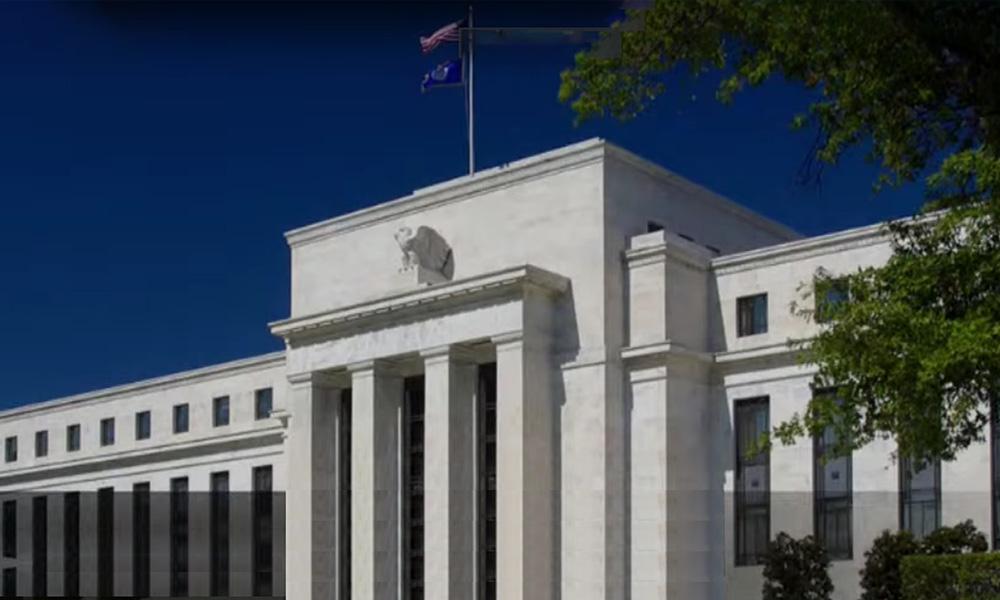
From the perspective of policy core, the Federal Reserve under Warsh's leadership will generally adhere to policy discipline more strictly, reduce emotional and reactive regulation, and have a higher tolerance for market downturns and periods of pressure.
This shift is of great significance to capital markets. For a long time, global investors have held a fixed expectation: whenever financial markets face downward pressure and risk sentiment cools, the Federal Reserve always intervenes to support the market and offset tensions in the financial system. However, under Warsh's governing philosophy, the long-standing market reliance on the "Federal Reserve bailout" logic may gradually be broken and fade away.
The policy focus has shifted to public credibility, no longer solely prioritizing short-term stability.
The most distinctive feature of the Federal Reserve during the Warsh era was that it prioritized long-term policy credibility over short-term economic stabilization, and no longer arbitrarily adjusted the pace of policy to cater to market sentiment.
This core orientation will be reflected in three aspects: when economic growth just shows signs of weakness, we will not rashly start a cycle of interest rate cuts; in the face of downward economic pressure, we are more inclined to maintain the tightening policy for a longer period of time; even when we enter the end of the economic cycle, we will still prioritize the risk of inflation rebound and firmly adhere to the bottom line of fighting inflation.
In practical policy implementation, the Federal Reserve's response mechanism will undergo a significant shift. The entry threshold for policy easing will be raised significantly, and its tolerance for a tighter financial environment will continue to increase, with it no longer easily loosening monetary policy to accommodate short-term market fluctuations.
Balance sheets have become a core policy tool.
Under Warsh's reform ideas, the positioning and use of the Federal Reserve's balance sheet may undergo a disruptive change, becoming a core tool for monetary policy regulation.
Following the outbreak of the COVID-19 pandemic in 2020, then-Chairman Powell significantly expanded the balance sheet and intensified regulation to offset the impact of the pandemic, successively launching emergency lending mechanisms and large-scale asset purchase programs to solidify liquidity support for the financial markets.
For the past few years, the Federal Reserve's asset holdings have been regarded as a secondary tool, with far less influence than interest rate adjustments. Operations such as balance sheet reduction and reinvestment have mostly been carried out quietly behind the scenes. However, after Warsh took office, this hierarchy of policy tools will be restructured, and the balance sheet will move from the background to the forefront, becoming a core policy tool for proactive regulation and transparent implementation.
Specifically, the Federal Reserve will firmly maintain its pace of reducing excess liquidity in the market over the long term; it will reduce its reliance on rapid balance sheet expansion to address short-term market volatility; and it will clearly define the functional boundaries between monetary policy regulation and market stabilization to avoid confusion and abuse of policy functions.
From the perspective of capital markets, this change has far-reaching implications. For the past decade, market liquidity has been the core driver influencing the price trends of various assets. If the Federal Reserve adopts a more prudent and restrained approach to balance sheet management, maintaining a tighter stance, even without aggressive interest rate hikes, it will continue to tighten the financial environment, exerting long-term upward pressure on stocks and currencies highly sensitive to money supply.
A significant shift in communication style: less emphasis on emotional reassurance, and increased market uncertainty.
Adjustments at the policy communication level will be the second most significant change under Warsh's leadership of the Federal Reserve.
In the future, the Federal Reserve will reduce the issuance of forward policy guidance and will no longer release clear expectations to the market in advance; it will deliberately avoid straightforward and rigid policy path signals to retain flexible adjustment space for subsequent regulation; at the same time, it will no longer cater to the market's psychological expectation of a predictable interest rate cut cycle.
This means that policy expectations, which have served as a benchmark for capital markets for many years, will gradually become ineffective. This doesn't mean the Federal Reserve will indefinitely maintain its tightening policy, but rather that the predictability of its policy direction will be significantly reduced. This ambiguity in expectations alone is enough to indirectly tighten the financial environment and cause the market to frequently encounter unexpected policy changes.
The myth of "Fed put options" may be coming to an end.
The most profound impact of this policy shift is the gradual dissipation of the "Fed put option" effect, which the market has always regarded as gospel. This does not mean that the Fed is ignoring market trends, but rather that it will no longer intervene immediately to stabilize the market as it has in the past when the stock market plunges or volatility soars.
Under Warsh's policy framework, a deep stock market correction is unlikely to trigger immediate policy support; reasonable fluctuations in the financial market will be regarded as a normal part of the monetary transmission mechanism; the prices of various assets will return to market-based pricing, and the risks of two-way rises and falls will be further amplified, no longer enjoying the protection of implicit policies.
Consistent and unwavering principles: The market needs to understand Walsh's underlying logic.
Throughout his years of public statements, Warsh's monetary policy philosophy has remained highly consistent, and his core views are worth studying in depth and planning ahead for global investors.
He consistently maintained that: prolonged excessive easing of monetary policy can easily breed long-term economic risks, and the central bank must avoid excessively lenient market policies; blindly expanding the balance sheet is by no means a neutral operation, as it will distort market pricing logic and interfere with real price signals; policy credibility is hard-won but extremely easy to damage, and once inflation forms an upward momentum, the subsequent repair costs are extremely high; in the face of various sudden market disturbances, monetary policy should not become a panacea.
Overall, Walsh advocated a restrained and prudent governance framework that minimized proactive intervention, placing particular emphasis on the long-term potential side effects of policies and rejecting short-sighted, utilitarian regulatory thinking.
Reshaping the Foreign Exchange Landscape: The US Dollar Receives Support for Medium- to Long-Term Strengthening
Looking at the foreign exchange market, the logic behind the Fed's style shift is clear. A more disciplined and less reactive policy style will continue to support US real yields, consolidate the dollar's policy premium advantage in the global monetary system, and significantly reduce the likelihood of the Fed initiating large-scale easing and interest rate cuts.
Against this backdrop, the dollar's trajectory is no longer solely driven by short-term interest rate differentials, but rather relies more on the credibility of the Federal Reserve's policies and the misalignment of global policies. This market environment typically provides a solid fundamental basis for a stronger dollar, especially compared to low-interest, weaker currencies and those highly dependent on global liquidity, further highlighting the dollar's dominant position.
Conclusion
Warsh's appointment as head of the Federal Reserve does not mean that the world will fall into a permanent tightening cycle. But what is certain is that the Fed will completely abandon its past style: policy trends will be difficult for the market to predict, there will be no more deliberate attempts to appease sentiment, and long-term policy credibility will take precedence over short-term market stability.
More importantly, the balance sheet has officially become a core policy lever, no longer a marginal auxiliary tool. For capital markets that have long been accustomed to ample liquidity and reliance on clear policy guidance, this means that the original trading logic has been completely rewritten, and a new era of market operation has begun.
From the perspective of policy core, the Federal Reserve under Warsh's leadership will generally adhere to policy discipline more strictly, reduce emotional and reactive regulation, and have a higher tolerance for market downturns and periods of pressure.
This shift is of great significance to capital markets. For a long time, global investors have held a fixed expectation: whenever financial markets face downward pressure and risk sentiment cools, the Federal Reserve always intervenes to support the market and offset tensions in the financial system. However, under Warsh's governing philosophy, the long-standing market reliance on the "Federal Reserve bailout" logic may gradually be broken and fade away.
The policy focus has shifted to public credibility, no longer solely prioritizing short-term stability.
The most distinctive feature of the Federal Reserve during the Warsh era was that it prioritized long-term policy credibility over short-term economic stabilization, and no longer arbitrarily adjusted the pace of policy to cater to market sentiment.
This core orientation will be reflected in three aspects: when economic growth just shows signs of weakness, we will not rashly start a cycle of interest rate cuts; in the face of downward economic pressure, we are more inclined to maintain the tightening policy for a longer period of time; even when we enter the end of the economic cycle, we will still prioritize the risk of inflation rebound and firmly adhere to the bottom line of fighting inflation.
In practical policy implementation, the Federal Reserve's response mechanism will undergo a significant shift. The entry threshold for policy easing will be raised significantly, and its tolerance for a tighter financial environment will continue to increase, with it no longer easily loosening monetary policy to accommodate short-term market fluctuations.
Balance sheets have become a core policy tool.
Under Warsh's reform ideas, the positioning and use of the Federal Reserve's balance sheet may undergo a disruptive change, becoming a core tool for monetary policy regulation.
Following the outbreak of the COVID-19 pandemic in 2020, then-Chairman Powell significantly expanded the balance sheet and intensified regulation to offset the impact of the pandemic, successively launching emergency lending mechanisms and large-scale asset purchase programs to solidify liquidity support for the financial markets.
For the past few years, the Federal Reserve's asset holdings have been regarded as a secondary tool, with far less influence than interest rate adjustments. Operations such as balance sheet reduction and reinvestment have mostly been carried out quietly behind the scenes. However, after Warsh took office, this hierarchy of policy tools will be restructured, and the balance sheet will move from the background to the forefront, becoming a core policy tool for proactive regulation and transparent implementation.
Specifically, the Federal Reserve will firmly maintain its pace of reducing excess liquidity in the market over the long term; it will reduce its reliance on rapid balance sheet expansion to address short-term market volatility; and it will clearly define the functional boundaries between monetary policy regulation and market stabilization to avoid confusion and abuse of policy functions.
From the perspective of capital markets, this change has far-reaching implications. For the past decade, market liquidity has been the core driver influencing the price trends of various assets. If the Federal Reserve adopts a more prudent and restrained approach to balance sheet management, maintaining a tighter stance, even without aggressive interest rate hikes, it will continue to tighten the financial environment, exerting long-term upward pressure on stocks and currencies highly sensitive to money supply.
A significant shift in communication style: less emphasis on emotional reassurance, and increased market uncertainty.
Adjustments at the policy communication level will be the second most significant change under Warsh's leadership of the Federal Reserve.
In the future, the Federal Reserve will reduce the issuance of forward policy guidance and will no longer release clear expectations to the market in advance; it will deliberately avoid straightforward and rigid policy path signals to retain flexible adjustment space for subsequent regulation; at the same time, it will no longer cater to the market's psychological expectation of a predictable interest rate cut cycle.
This means that policy expectations, which have served as a benchmark for capital markets for many years, will gradually become ineffective. This doesn't mean the Federal Reserve will indefinitely maintain its tightening policy, but rather that the predictability of its policy direction will be significantly reduced. This ambiguity in expectations alone is enough to indirectly tighten the financial environment and cause the market to frequently encounter unexpected policy changes.
The myth of "Fed put options" may be coming to an end.
The most profound impact of this policy shift is the gradual dissipation of the "Fed put option" effect, which the market has always regarded as gospel. This does not mean that the Fed is ignoring market trends, but rather that it will no longer intervene immediately to stabilize the market as it has in the past when the stock market plunges or volatility soars.
Under Warsh's policy framework, a deep stock market correction is unlikely to trigger immediate policy support; reasonable fluctuations in the financial market will be regarded as a normal part of the monetary transmission mechanism; the prices of various assets will return to market-based pricing, and the risks of two-way rises and falls will be further amplified, no longer enjoying the protection of implicit policies.
Consistent and unwavering principles: The market needs to understand Walsh's underlying logic.
Throughout his years of public statements, Warsh's monetary policy philosophy has remained highly consistent, and his core views are worth studying in depth and planning ahead for global investors.
He consistently maintained that: prolonged excessive easing of monetary policy can easily breed long-term economic risks, and the central bank must avoid excessively lenient market policies; blindly expanding the balance sheet is by no means a neutral operation, as it will distort market pricing logic and interfere with real price signals; policy credibility is hard-won but extremely easy to damage, and once inflation forms an upward momentum, the subsequent repair costs are extremely high; in the face of various sudden market disturbances, monetary policy should not become a panacea.
Overall, Walsh advocated a restrained and prudent governance framework that minimized proactive intervention, placing particular emphasis on the long-term potential side effects of policies and rejecting short-sighted, utilitarian regulatory thinking.
Reshaping the Foreign Exchange Landscape: The US Dollar Receives Support for Medium- to Long-Term Strengthening
Looking at the foreign exchange market, the logic behind the Fed's style shift is clear. A more disciplined and less reactive policy style will continue to support US real yields, consolidate the dollar's policy premium advantage in the global monetary system, and significantly reduce the likelihood of the Fed initiating large-scale easing and interest rate cuts.
Against this backdrop, the dollar's trajectory is no longer solely driven by short-term interest rate differentials, but rather relies more on the credibility of the Federal Reserve's policies and the misalignment of global policies. This market environment typically provides a solid fundamental basis for a stronger dollar, especially compared to low-interest, weaker currencies and those highly dependent on global liquidity, further highlighting the dollar's dominant position.
Conclusion
Warsh's appointment as head of the Federal Reserve does not mean that the world will fall into a permanent tightening cycle. But what is certain is that the Fed will completely abandon its past style: policy trends will be difficult for the market to predict, there will be no more deliberate attempts to appease sentiment, and long-term policy credibility will take precedence over short-term market stability.
More importantly, the balance sheet has officially become a core policy lever, no longer a marginal auxiliary tool. For capital markets that have long been accustomed to ample liquidity and reliance on clear policy guidance, this means that the original trading logic has been completely rewritten, and a new era of market operation has begun.
- Risk Warning and Disclaimer
- The market involves risk, and trading may not be suitable for all investors. This article is for reference only and does not constitute personal investment advice, nor does it take into account certain users’ specific investment objectives, financial situation, or other needs. Any investment decisions made based on this information are at your own risk.