World Gold Council: Sovereign sectors became net suppliers of gold in March, but central bank demand remained relatively robust.
2026-05-06 14:30:30
According to the latest data released by the World Gold Council, in the last month of the first quarter of 2026, sovereign entities unexpectedly turned into net suppliers, a key stabilizing force that has supported the sustained rise in gold prices for many years . This change has attracted widespread attention in the market.
Marissa Salim, senior research director for Asia Pacific at the World Gold Council, said on Tuesday (May 5): “Central banks sold a net 30 tonnes of gold in March, with Turkey selling 60 tonnes and Russia selling 16 tonnes, offsetting purchases from other regions.” She added: “First-quarter data from the Azerbaijan State Oil Fund (SOFAZ) shows that the fund sold a net 22 tonnes of gold in the first quarter of 2026.”
On the buying side, the main demand still comes from countries that have steadily increased their gold reserves in recent years. Marissa Salim pointed out: "The largest buyer in March was the National Bank of Poland, which purchased 11 tons, followed by the Central Bank of Uzbekistan with 9 tons and the National Bank of Kazakhstan with 6 tons. Central banks of major Asian countries have increased their gold reserves for 17 consecutive months, with purchases accelerating to 5 tons in March. In addition, Guatemala and the Czech Republic also made net purchases of 2 tons each in the month."
Throughout the first quarter, Poland remained the largest buyer, purchasing 31 tons of gold, followed by Uzbekistan with 25 tons, Kazakhstan with 13 tons, and the Asian giant with 7 tons. The Czech Republic, Malaysia, Guatemala, Kyrgyzstan, Cambodia, Indonesia, and Serbia also made net purchases of 1 ton or more of gold each.
Salim stated, "The largest gold seller in the first quarter was Turkey, whose official sector gold holdings decreased by 79 tons, according to published data. Most of this occurred in March, with the central bank adding an additional 80 tons through gold swaps."
The Central Bank of Turkey is gradually unwinding some of its dollar-for-gold swap positions, which were in place during the peak of market stress, in order to rebuild its gold reserves. According to the latest data, as of April 17, its physical gold holdings had rebounded to approximately 730 tons. The latest data from the Turkish government shows that the central bank increased its gold reserves by 30.7 tons in the past week and a cumulative increase of 36.4 tons over the past two weeks, gradually reversing the sharp decline in reserves caused by previous liquidity operations.
In March, the Turkish government opened approximately 73 tons of gold swap positions, while the central bank also sold some physical gold, resulting in a significant decrease in reserves. These swap operations were primarily used to provide dollar liquidity to address accelerating capital outflows and domestic and international foreign exchange demand, while also supporting the stability of the Turkish lira exchange rate.
Before the conflict with Iran, the Central Bank of Turkey held nearly 830 tons of gold. By the end of March, this figure had decreased by 127 tons to 693 tons. Following the ceasefire reached between the United States and Iran, market conditions stabilized, easing pressure on Turkish assets and allowing the central bank to begin rebuilding its gold reserves. This is reportedly the largest decline in Turkey's gold reserves since 2013.
Central bank gold demand continues to play a significant role in the precious metals market, but sovereign sector performance has become more volatile and complex as some central banks have been forced to monetize their gold reserves to protect their economies affected by the conflict with Iran. The Central Bank of Turkey, one of the most transparent institutions in disclosing official reserve data, saw its gold holdings decrease by more than 118 tons in March.
The ongoing conflict in the Middle East is significantly impacting global economic activity. Disruptions to global supply chains, particularly in the energy market, are fueling inflationary pressures, indirectly affecting central bank monetary policies and gold trading strategies.
While retail investment demand has been dampened by inflation concerns stemming from high oil prices, gold demand from central banks has remained relatively robust. Looking ahead, the evolving role of sovereign wealth funds in the gold market will continue to significantly impact global precious metal price trends and reserve asset allocation.
Overall , the gold market in the first quarter of 2026 presented a complex picture: on the one hand, traditional buyers such as Poland and major Asian countries continued to increase their holdings, supporting gold demand; on the other hand, countries like Turkey sold off large amounts of gold in response to the crisis, causing sovereign sectors to become net suppliers. This change reflects both the profound impact of geopolitical conflicts on the economic policies of various countries and foreshadows greater volatility and uncertainty in the global gold market in the future.
Investors and market observers need to closely monitor the subsequent gold trading activities of central banks in major economies.
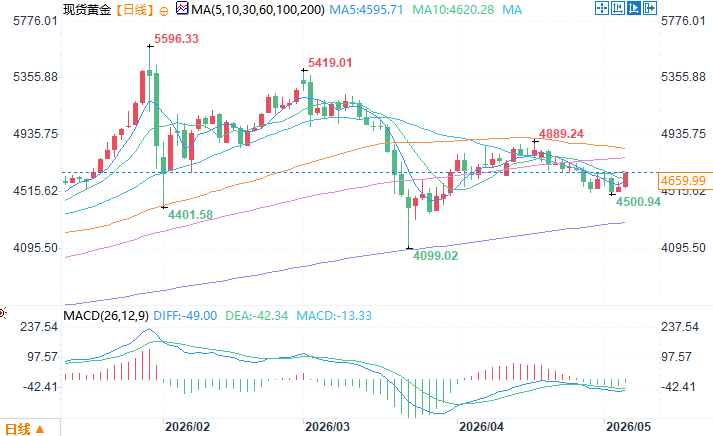
Spot gold daily chart source: EasyForex
At 14:29 Beijing time on May 6, spot gold was trading at $4665.99 per ounce.
Marissa Salim, senior research director for Asia Pacific at the World Gold Council, said on Tuesday (May 5): “Central banks sold a net 30 tonnes of gold in March, with Turkey selling 60 tonnes and Russia selling 16 tonnes, offsetting purchases from other regions.” She added: “First-quarter data from the Azerbaijan State Oil Fund (SOFAZ) shows that the fund sold a net 22 tonnes of gold in the first quarter of 2026.”
Major buying countries continue to increase their holdings; Poland leads the pack among major Asian nations in gold purchases.
On the buying side, the main demand still comes from countries that have steadily increased their gold reserves in recent years. Marissa Salim pointed out: "The largest buyer in March was the National Bank of Poland, which purchased 11 tons, followed by the Central Bank of Uzbekistan with 9 tons and the National Bank of Kazakhstan with 6 tons. Central banks of major Asian countries have increased their gold reserves for 17 consecutive months, with purchases accelerating to 5 tons in March. In addition, Guatemala and the Czech Republic also made net purchases of 2 tons each in the month."
Throughout the first quarter, Poland remained the largest buyer, purchasing 31 tons of gold, followed by Uzbekistan with 25 tons, Kazakhstan with 13 tons, and the Asian giant with 7 tons. The Czech Republic, Malaysia, Guatemala, Kyrgyzstan, Cambodia, Indonesia, and Serbia also made net purchases of 1 ton or more of gold each.
Türkiye becomes the largest seller as reserves decline sharply in response to liquidity pressures.
Salim stated, "The largest gold seller in the first quarter was Turkey, whose official sector gold holdings decreased by 79 tons, according to published data. Most of this occurred in March, with the central bank adding an additional 80 tons through gold swaps."
The Central Bank of Turkey is gradually unwinding some of its dollar-for-gold swap positions, which were in place during the peak of market stress, in order to rebuild its gold reserves. According to the latest data, as of April 17, its physical gold holdings had rebounded to approximately 730 tons. The latest data from the Turkish government shows that the central bank increased its gold reserves by 30.7 tons in the past week and a cumulative increase of 36.4 tons over the past two weeks, gradually reversing the sharp decline in reserves caused by previous liquidity operations.
In March, the Turkish government opened approximately 73 tons of gold swap positions, while the central bank also sold some physical gold, resulting in a significant decrease in reserves. These swap operations were primarily used to provide dollar liquidity to address accelerating capital outflows and domestic and international foreign exchange demand, while also supporting the stability of the Turkish lira exchange rate.
Before the conflict with Iran, the Central Bank of Turkey held nearly 830 tons of gold. By the end of March, this figure had decreased by 127 tons to 693 tons. Following the ceasefire reached between the United States and Iran, market conditions stabilized, easing pressure on Turkish assets and allowing the central bank to begin rebuilding its gold reserves. This is reportedly the largest decline in Turkey's gold reserves since 2013.
Volatility in sovereign gold purchases exacerbates the ongoing impact of Middle East conflicts.
Central bank gold demand continues to play a significant role in the precious metals market, but sovereign sector performance has become more volatile and complex as some central banks have been forced to monetize their gold reserves to protect their economies affected by the conflict with Iran. The Central Bank of Turkey, one of the most transparent institutions in disclosing official reserve data, saw its gold holdings decrease by more than 118 tons in March.
The ongoing conflict in the Middle East is significantly impacting global economic activity. Disruptions to global supply chains, particularly in the energy market, are fueling inflationary pressures, indirectly affecting central bank monetary policies and gold trading strategies.
While retail investment demand has been dampened by inflation concerns stemming from high oil prices, gold demand from central banks has remained relatively robust. Looking ahead, the evolving role of sovereign wealth funds in the gold market will continue to significantly impact global precious metal price trends and reserve asset allocation.
Overall , the gold market in the first quarter of 2026 presented a complex picture: on the one hand, traditional buyers such as Poland and major Asian countries continued to increase their holdings, supporting gold demand; on the other hand, countries like Turkey sold off large amounts of gold in response to the crisis, causing sovereign sectors to become net suppliers. This change reflects both the profound impact of geopolitical conflicts on the economic policies of various countries and foreshadows greater volatility and uncertainty in the global gold market in the future.
Investors and market observers need to closely monitor the subsequent gold trading activities of central banks in major economies.
Spot gold daily chart source: EasyForex
At 14:29 Beijing time on May 6, spot gold was trading at $4665.99 per ounce.
- Risk Warning and Disclaimer
- The market involves risk, and trading may not be suitable for all investors. This article is for reference only and does not constitute personal investment advice, nor does it take into account certain users’ specific investment objectives, financial situation, or other needs. Any investment decisions made based on this information are at your own risk.