Maritime blockade and diplomatic stalemate: The US assembles over 20 warships to pressure Iran; Trump denounces the response to peace talks as "completely unacceptable."
2026-05-11 07:49:45
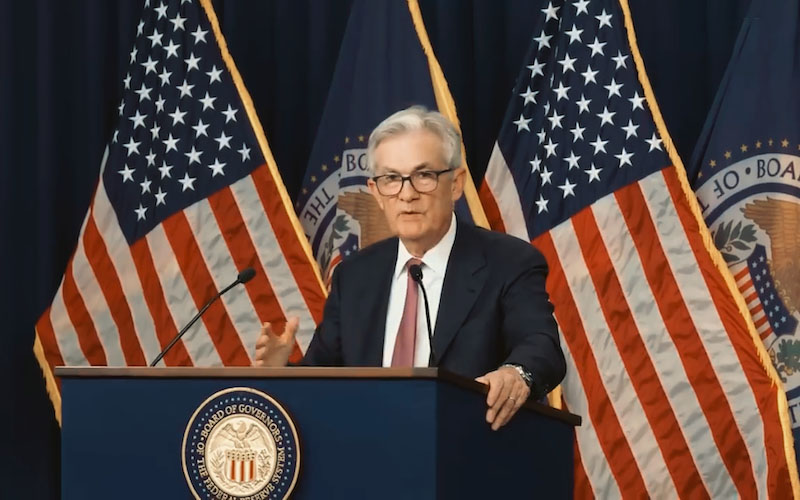
In mid-May 2026, tensions in the Persian Gulf region escalated sharply. On May 10, the U.S. Central Command officially announced that more than 20 U.S. warships were conducting a naval blockade against Iran, marking a new phase in the U.S.-Iran confrontation. Simultaneously, U.S. President Trump publicly rejected Iran's formal response to the U.S. peace talks proposal, calling it "completely unacceptable."
As mutual trust between the two sides broke down at the negotiating table, the international community's optimistic expectations for an imminent end to the war with Iran quickly dissipated, causing turmoil in the global oil market, with oil prices surging by as much as $3 per barrel after the news was announced. The following will provide a detailed analysis of the core threads of this event from multiple perspectives, including military blockade, diplomatic maneuvering, regional shipping security, and international mediation.
According to information released by the U.S. Central Command on social media, more than 20 U.S. warships are involved in this blockade operation, and these ships have been deployed in the waters surrounding the Persian Gulf and the Strait of Hormuz. The U.S. has not only constructed a maritime blockade with military force but has also taken more direct intervention measures—requiring 61 passing merchant ships to change their original routes and disabling four vessels to ensure their compliance with the blockade regulations.
Although the U.S. military did not elaborate on the specific methods of "loss of navigation capability," this statement indicates that the U.S. had taken coercive measures in implementing the blockade, further exacerbating concerns in the international shipping community.
Faced with the pressure of a US military blockade, Iran quickly issued a strong statement. According to Iran's Tasnim News Agency on May 11, an informed source stated explicitly that Iran "will not formulate plans to please the US," and all its decisions will revolve around the core principle of "protecting the rights and interests of the Iranian people." The source further pointed out that when US President Trump is dissatisfied with something, "it's usually better," and criticized Trump for "not wanting to face reality," saying this is precisely why he has repeatedly lost to Iran. This unusually strong statement reflects Iran's firm stance in psychological and information warfare.
More substantial progress has been made at the level of the peace agreement. Iran, through Pakistani mediators, has formally submitted a written response to the United States to its latest proposal aimed at ending the war.
According to Iranian state media reports, the response focused on two core issues: first, ending the war on all fronts, especially the conflict in Lebanon; and second, ensuring maritime security in the Persian Gulf and the Strait of Hormuz.
However, the specific conditions proposed by Iran were considered "excessive" by the United States. These included: demanding that the United States pay war reparations, explicitly confirm Iran's sovereignty over the Strait of Hormuz, end sanctions against Iran, unfreeze Iran's frozen overseas assets, and a guarantee from the United States that it would not launch any further attacks against Iran.
Iran's Press TV stated bluntly that accepting the US proposal would mean Iran succumbing to Trump's excessive demands, and therefore Tehran has clearly rejected it.
On May 10, US President Trump posted on his self-created social media platform Truth Social, expressing extreme dissatisfaction with Iran's response. He wrote, "I don't like it. Absolutely not."
Although Trump did not elaborate on which specific terms were intolerable to him, the preconditions imposed by Iran, such as reparations, lifting of sanctions, and confirmation of sovereignty, were clearly beyond the U.S.'s expectations, given the previously proposed negotiation framework—namely, achieving a ceasefire before discussing more sensitive issues such as the nuclear program.
Trump's refusal has directly led to a stalemate in the widely anticipated peace talks. Notably, in an interview broadcast on Sunday, Trump addressed the question of whether the war against Iran was over, stating, "They've been defeated, but that doesn't mean they're finished." This ambiguous statement seems to leave room for further military action.
Despite the intense military standoff and diplomatic maneuvering, shipping through the Strait of Hormuz has not been completely disrupted. According to data from shipping analytics firm Kpler, the liquefied natural gas tanker "Al Kharaitiyat," operated by Qatar Energy, has safely passed through the Strait of Hormuz and is en route to the port of Qasim in Pakistan.
This marks the first transit of the strait by a Qatari vessel carrying liquefied natural gas since the joint military operation launched by the United States and Israel on February 28. Sources indicate that the passage was approved by Iran and is intended to build trust with Pakistan and Qatar.
Previously, the power outages caused by the disruption of natural gas imports had plunged Pakistan into a severe crisis, and the successful arrival of this oil tanker has undoubtedly brought some relief to the country.
Furthermore, Tasnim News Agency reported that a Panamanian-flagged bulk carrier originally bound for Brazil attempted to transit the strait on May 4th, ultimately succeeding by following a route designated by the Iranian armed forces. These examples demonstrate that while maintaining its blockade deterrence, Iran is also selectively allowing passage for certain vessels to serve its geopolitical objectives.
Against the backdrop of the US-Iran standoff, the security situation in several Gulf states continues to deteriorate. On May 10, hostile drone activity was still detected over several countries.
The UAE announced it had intercepted two drones from Iran; Qatar said a cargo ship departing from Abu Dhabi was attacked in its territorial waters; and Kuwait said its air defense system had successfully repelled a hostile drone that had intruded into its airspace.
Meanwhile, despite the US-brokered ceasefire agreement announced on April 16, the conflict between Israel and the Iranian-backed Hezbollah in southern Lebanon continues and has not truly subsided. A new round of negotiations between Israel and Lebanon is scheduled to begin in Washington on May 14, but the current tensions have cast a shadow over the prospects for these talks.
Of particular note is that US President Trump is scheduled to visit China this week, a trip that has brought immense political pressure on the US to end the war with Iran.
International opinion generally believes that Trump hopes to demonstrate his ability to promote peace in the Middle East before his visit to China, and the protracted Iranian issue may affect his diplomatic agenda.
However, Trump's firm rejection of Iran's response has made the hope of reaching an agreement in the short term slim. Pakistan, as a mediator, has made every effort to forward Iran's written response to the US, but the differences between the two sides on fundamental issues such as reparations, sanctions, and sovereignty remain significant.
In summary, US-Iran relations are currently at a highly dangerous critical juncture. The blockade by more than 20 US warships has already had a substantial impact on international shipping, while Iran, while rejecting the US proposal, has also subtly signaled its willingness to negotiate by allowing some ships to pass. Although Trump's strong veto has temporarily closed the door to peace talks, the diplomatic window is not completely closed, given his upcoming visit to China and the mediation efforts of the international community. In the coming weeks, whether the two sides can find room for compromise on core disputes such as reparations, sanctions, and sovereignty over the Strait of Hormuz will directly determine whether the Persian Gulf will see a renewed war or move towards a fragile peace.
Question 1: What is the international legal basis for the US military's deployment of more than 20 warships to impose a maritime blockade on Iran?
A: The US blockade operation was not explicitly authorized by the UN Security Council. Under international law, a maritime blockade is generally considered an act of war and is only legal in self-defense or with Security Council authorization. The US may have invoked the right to self-defense under Article 51 of the UN Charter, or based its unilateral assessment that Iran threatens international shipping and regional security. However, Iran considers the Strait of Hormuz to be part of its sovereign waters, and the US blockade constitutes illegal aggression. Due to the lack of endorsement from a multilateral international organization, the legal validity of this blockade operation is highly controversial within the international legal community.
Question 2: Does Iran's demand for war reparations from the United States and confirmation of its sovereignty over the Strait of Hormuz have historical and legal basis?
A: Iran's claim to sovereignty over the Strait of Hormuz is based on its territorial waters and the status of its littoral states. According to the United Nations Convention on the Law of the Sea, littoral states have sovereignty over the strait but must guarantee the transit rights of other countries. Iran has long emphasized its right to manage navigational safety in the strait; therefore, its demand for "confirmation of sovereignty" from the US is essentially a request for US recognition of Iran's leading role in strait affairs. Regarding compensation, Iran believes that the US-initiated military actions and sanctions have caused enormous damage to its national economy and infrastructure, and according to international practice, the defeated or aggressor must bear the responsibility for compensation. However, the US clearly does not consider itself the aggressor, making this demand the biggest obstacle to negotiations.
Question 3: Why did Trump abruptly reject Iran's response just before his upcoming visit to China? What is the connection between this and his diplomatic agenda?
A: Trump's rejection of Iran's response stemmed from three main considerations. First, Iran's demands (lifting sanctions, compensation, and recognition of sovereignty) far exceeded the scope of what the US was willing to accept; accepting them would be seen as a capitulation to Iran. Second, Trump wanted to visit China as a "victor," rather than with a peace agreement full of concessions, which could damage his diplomatic image. Third, Trump may have judged that by further applying military pressure, he could force Iran to lower its demands in the future. However, this approach also carries the risk of renewed escalation of the war, contradicting his desire to end it.
Question 4: The successful passage of a Qatari LNG tanker and a Panamanian-flagged bulk carrier through the Strait of Hormuz suggests that Iran's blockade policy is being selectively implemented.
A: That's true. Iran claims control of the Strait of Hormuz, but has not implemented an indiscriminate blockade. Allowing Qatari oil tankers to pass is primarily due to Qatar's mediating role in the conflict with Pakistan and Pakistan's energy crisis. This move sends a signal to the international community that Iran remains willing to maintain communication channels and is not completely isolated. At the same time, Iran's decision to allow Panamanian-flagged bulk carriers passage through designated routes demonstrates its actual control over the strait. This "selective passage" strategy maintains the deterrent effect of a blockade while avoiding a wider international backlash from a complete cessation of navigation.
Question 5: Besides the direct confrontation between the US and Iran, how do other conflicts in the region (such as the ongoing fighting between Israel and Hezbollah in Lebanon) affect the overall situation?
A: The conflict between Israel and Hezbollah, backed by Iran, in southern Lebanon is a "proxy battlefield" in the US-Iran confrontation. Even with the US-announced ceasefire, the conflict has not stopped, demonstrating Iran's ability to indirectly constrain the US and its allies. Conversely, Hezbollah's continued fighting provides Iran with leverage in negotiations—Tehran can escalate military pressure on Lebanon if the US does not accept Iran's conditions. Therefore, the standoff in the Strait of Hormuz and the fighting in southern Lebanon are actually two sides of the same larger game, and escalation in either could trigger a chain reaction.
As mutual trust between the two sides broke down at the negotiating table, the international community's optimistic expectations for an imminent end to the war with Iran quickly dissipated, causing turmoil in the global oil market, with oil prices surging by as much as $3 per barrel after the news was announced. The following will provide a detailed analysis of the core threads of this event from multiple perspectives, including military blockade, diplomatic maneuvering, regional shipping security, and international mediation.
US military operation: Large-scale naval blockade officially launched
According to information released by the U.S. Central Command on social media, more than 20 U.S. warships are involved in this blockade operation, and these ships have been deployed in the waters surrounding the Persian Gulf and the Strait of Hormuz. The U.S. has not only constructed a maritime blockade with military force but has also taken more direct intervention measures—requiring 61 passing merchant ships to change their original routes and disabling four vessels to ensure their compliance with the blockade regulations.
Although the U.S. military did not elaborate on the specific methods of "loss of navigation capability," this statement indicates that the U.S. had taken coercive measures in implementing the blockade, further exacerbating concerns in the international shipping community.
Iran responds firmly: refusing to succumb to excessive US demands, emphasizing sovereignty and reparations.
Faced with the pressure of a US military blockade, Iran quickly issued a strong statement. According to Iran's Tasnim News Agency on May 11, an informed source stated explicitly that Iran "will not formulate plans to please the US," and all its decisions will revolve around the core principle of "protecting the rights and interests of the Iranian people." The source further pointed out that when US President Trump is dissatisfied with something, "it's usually better," and criticized Trump for "not wanting to face reality," saying this is precisely why he has repeatedly lost to Iran. This unusually strong statement reflects Iran's firm stance in psychological and information warfare.
More substantial progress has been made at the level of the peace agreement. Iran, through Pakistani mediators, has formally submitted a written response to the United States to its latest proposal aimed at ending the war.
According to Iranian state media reports, the response focused on two core issues: first, ending the war on all fronts, especially the conflict in Lebanon; and second, ensuring maritime security in the Persian Gulf and the Strait of Hormuz.
However, the specific conditions proposed by Iran were considered "excessive" by the United States. These included: demanding that the United States pay war reparations, explicitly confirm Iran's sovereignty over the Strait of Hormuz, end sanctions against Iran, unfreeze Iran's frozen overseas assets, and a guarantee from the United States that it would not launch any further attacks against Iran.
Iran's Press TV stated bluntly that accepting the US proposal would mean Iran succumbing to Trump's excessive demands, and therefore Tehran has clearly rejected it.
Trump strongly vetoes talks: Hopes for peace talks dashed, diplomatic deadlock re-emerges.
On May 10, US President Trump posted on his self-created social media platform Truth Social, expressing extreme dissatisfaction with Iran's response. He wrote, "I don't like it. Absolutely not."
Although Trump did not elaborate on which specific terms were intolerable to him, the preconditions imposed by Iran, such as reparations, lifting of sanctions, and confirmation of sovereignty, were clearly beyond the U.S.'s expectations, given the previously proposed negotiation framework—namely, achieving a ceasefire before discussing more sensitive issues such as the nuclear program.
Trump's refusal has directly led to a stalemate in the widely anticipated peace talks. Notably, in an interview broadcast on Sunday, Trump addressed the question of whether the war against Iran was over, stating, "They've been defeated, but that doesn't mean they're finished." This ambiguous statement seems to leave room for further military action.
Shipping through the Strait of Hormuz: Qatari tankers and bulk carriers successfully pass through, sending a subtle signal.
Despite the intense military standoff and diplomatic maneuvering, shipping through the Strait of Hormuz has not been completely disrupted. According to data from shipping analytics firm Kpler, the liquefied natural gas tanker "Al Kharaitiyat," operated by Qatar Energy, has safely passed through the Strait of Hormuz and is en route to the port of Qasim in Pakistan.
This marks the first transit of the strait by a Qatari vessel carrying liquefied natural gas since the joint military operation launched by the United States and Israel on February 28. Sources indicate that the passage was approved by Iran and is intended to build trust with Pakistan and Qatar.
Previously, the power outages caused by the disruption of natural gas imports had plunged Pakistan into a severe crisis, and the successful arrival of this oil tanker has undoubtedly brought some relief to the country.
Furthermore, Tasnim News Agency reported that a Panamanian-flagged bulk carrier originally bound for Brazil attempted to transit the strait on May 4th, ultimately succeeding by following a route designated by the Iranian armed forces. These examples demonstrate that while maintaining its blockade deterrence, Iran is also selectively allowing passage for certain vessels to serve its geopolitical objectives.
Deteriorating regional security situation: frequent drone intrusions and maritime attacks
Against the backdrop of the US-Iran standoff, the security situation in several Gulf states continues to deteriorate. On May 10, hostile drone activity was still detected over several countries.
The UAE announced it had intercepted two drones from Iran; Qatar said a cargo ship departing from Abu Dhabi was attacked in its territorial waters; and Kuwait said its air defense system had successfully repelled a hostile drone that had intruded into its airspace.
Meanwhile, despite the US-brokered ceasefire agreement announced on April 16, the conflict between Israel and the Iranian-backed Hezbollah in southern Lebanon continues and has not truly subsided. A new round of negotiations between Israel and Lebanon is scheduled to begin in Washington on May 14, but the current tensions have cast a shadow over the prospects for these talks.
Trump's visit to China is approaching: Political pressure to end the war is increasing daily.
Of particular note is that US President Trump is scheduled to visit China this week, a trip that has brought immense political pressure on the US to end the war with Iran.
International opinion generally believes that Trump hopes to demonstrate his ability to promote peace in the Middle East before his visit to China, and the protracted Iranian issue may affect his diplomatic agenda.
However, Trump's firm rejection of Iran's response has made the hope of reaching an agreement in the short term slim. Pakistan, as a mediator, has made every effort to forward Iran's written response to the US, but the differences between the two sides on fundamental issues such as reparations, sanctions, and sovereignty remain significant.
Summary and Outlook: The confrontation may be protracted, and the diplomatic window has not yet completely closed.
In summary, US-Iran relations are currently at a highly dangerous critical juncture. The blockade by more than 20 US warships has already had a substantial impact on international shipping, while Iran, while rejecting the US proposal, has also subtly signaled its willingness to negotiate by allowing some ships to pass. Although Trump's strong veto has temporarily closed the door to peace talks, the diplomatic window is not completely closed, given his upcoming visit to China and the mediation efforts of the international community. In the coming weeks, whether the two sides can find room for compromise on core disputes such as reparations, sanctions, and sovereignty over the Strait of Hormuz will directly determine whether the Persian Gulf will see a renewed war or move towards a fragile peace.
Frequently Asked Questions
Question 1: What is the international legal basis for the US military's deployment of more than 20 warships to impose a maritime blockade on Iran?
A: The US blockade operation was not explicitly authorized by the UN Security Council. Under international law, a maritime blockade is generally considered an act of war and is only legal in self-defense or with Security Council authorization. The US may have invoked the right to self-defense under Article 51 of the UN Charter, or based its unilateral assessment that Iran threatens international shipping and regional security. However, Iran considers the Strait of Hormuz to be part of its sovereign waters, and the US blockade constitutes illegal aggression. Due to the lack of endorsement from a multilateral international organization, the legal validity of this blockade operation is highly controversial within the international legal community.
Question 2: Does Iran's demand for war reparations from the United States and confirmation of its sovereignty over the Strait of Hormuz have historical and legal basis?
A: Iran's claim to sovereignty over the Strait of Hormuz is based on its territorial waters and the status of its littoral states. According to the United Nations Convention on the Law of the Sea, littoral states have sovereignty over the strait but must guarantee the transit rights of other countries. Iran has long emphasized its right to manage navigational safety in the strait; therefore, its demand for "confirmation of sovereignty" from the US is essentially a request for US recognition of Iran's leading role in strait affairs. Regarding compensation, Iran believes that the US-initiated military actions and sanctions have caused enormous damage to its national economy and infrastructure, and according to international practice, the defeated or aggressor must bear the responsibility for compensation. However, the US clearly does not consider itself the aggressor, making this demand the biggest obstacle to negotiations.
Question 3: Why did Trump abruptly reject Iran's response just before his upcoming visit to China? What is the connection between this and his diplomatic agenda?
A: Trump's rejection of Iran's response stemmed from three main considerations. First, Iran's demands (lifting sanctions, compensation, and recognition of sovereignty) far exceeded the scope of what the US was willing to accept; accepting them would be seen as a capitulation to Iran. Second, Trump wanted to visit China as a "victor," rather than with a peace agreement full of concessions, which could damage his diplomatic image. Third, Trump may have judged that by further applying military pressure, he could force Iran to lower its demands in the future. However, this approach also carries the risk of renewed escalation of the war, contradicting his desire to end it.
Question 4: The successful passage of a Qatari LNG tanker and a Panamanian-flagged bulk carrier through the Strait of Hormuz suggests that Iran's blockade policy is being selectively implemented.
A: That's true. Iran claims control of the Strait of Hormuz, but has not implemented an indiscriminate blockade. Allowing Qatari oil tankers to pass is primarily due to Qatar's mediating role in the conflict with Pakistan and Pakistan's energy crisis. This move sends a signal to the international community that Iran remains willing to maintain communication channels and is not completely isolated. At the same time, Iran's decision to allow Panamanian-flagged bulk carriers passage through designated routes demonstrates its actual control over the strait. This "selective passage" strategy maintains the deterrent effect of a blockade while avoiding a wider international backlash from a complete cessation of navigation.
Question 5: Besides the direct confrontation between the US and Iran, how do other conflicts in the region (such as the ongoing fighting between Israel and Hezbollah in Lebanon) affect the overall situation?
A: The conflict between Israel and Hezbollah, backed by Iran, in southern Lebanon is a "proxy battlefield" in the US-Iran confrontation. Even with the US-announced ceasefire, the conflict has not stopped, demonstrating Iran's ability to indirectly constrain the US and its allies. Conversely, Hezbollah's continued fighting provides Iran with leverage in negotiations—Tehran can escalate military pressure on Lebanon if the US does not accept Iran's conditions. Therefore, the standoff in the Strait of Hormuz and the fighting in southern Lebanon are actually two sides of the same larger game, and escalation in either could trigger a chain reaction.
- Risk Warning and Disclaimer
- The market involves risk, and trading may not be suitable for all investors. This article is for reference only and does not constitute personal investment advice, nor does it take into account certain users’ specific investment objectives, financial situation, or other needs. Any investment decisions made based on this information are at your own risk.