Geopolitical tensions and weak US non-farm payroll data pressured gold prices, leading to a correction; prices are expected to remain range-bound in the short term.
2026-05-11 09:47:44
International gold prices fell during Asian trading hours on Monday, with spot gold (XAU/USD) briefly dropping to around $4,690 . While Middle East geopolitical risks remain high, growing concerns about a prolonged period of high US interest rates led to short-term profit-taking in gold.

The core contradiction in the market has gradually shifted from a simple risk-averse logic to the repricing of "inflation risk" and "interest rate expectations." US President Trump formally rejected Iran's latest ceasefire proposal, describing Iran's response as "completely unacceptable." Meanwhile, Iran stated that the US needs to pay compensation for the losses caused by the war and rejected what it called "excessive demands." Market analysts point out that the simultaneous rejection of each other's proposals by both Iran and the US means that the situation in the Middle East is unlikely to truly ease in the short term.
However, unlike previous gold price increases driven by geopolitical conflicts, this round of market activity is more focused on the potential inflationary risks from rising energy prices. International crude oil prices remain high due to ongoing disruptions to shipping through the Strait of Hormuz. Rising energy costs are fueling global concerns about imported inflation, which could force the Federal Reserve to maintain high interest rates for an extended period. Market participants believe the gold market is currently facing a classic "two-way game": on the one hand, escalating tensions in the Middle East continue to support safe-haven flows; on the other hand, strong US economic data and persistently high interest rates limit further upside potential for gold.
Last week's US non-farm payroll data for April became a significant turning point for market sentiment. The data showed that the US added 115,000 jobs in April, significantly higher than the market expectation of 62,000. Although this was a slowdown from the revised 185,000 in March, the overall performance was still better than the market had previously worried. Meanwhile, the US unemployment rate remained at 4.3% in April, in line with market expectations. Some institutions believe that although the US job market is gradually cooling, its overall resilience remains stronger than the market had previously judged. After the data release, market expectations for a rapid interest rate cut by the Federal Reserve this year cooled significantly, US Treasury yields rebounded, and the US dollar index received support.
From a capital flow perspective, the gold market is currently experiencing a phase of divergence. Some safe-haven funds are still flowing into gold ETFs and the physical gold market, while short-term speculative funds are gradually reducing their long positions at higher levels. Furthermore, global central bank gold purchases continue to provide significant long-term support for the gold market. Central banks in some Asian countries and emerging market economies are continuing to increase their gold reserves to mitigate the volatility risk of dollar-denominated assets.
However, in the short term, the market is more focused on the Federal Reserve's subsequent policy path and changes in US economic data. If US inflation rebounds in the future, the Federal Reserve may be forced to maintain high interest rates, which will put downward pressure on gold in the short term; conversely, if the US economy slows down significantly, the safe-haven appeal and interest rate cut logic for gold may regain dominance.
From a technical perspective, gold is currently maintaining a high-level consolidation structure on the daily chart. The overall bullish trend has not been completely broken, but some short-term downward pressure has emerged. The $4700 level is currently a key psychological level, while the $4650 area below forms a temporary support level. A break below this level could lead to a further test of the $4600 area.
Looking at the upside, the $4750-$4780 area still presents significant technical resistance. If the situation in the Middle East escalates further, or the US dollar weakens again, gold could retest its historical highs. On the 4-hour chart, short-term moving averages are flattening, and the MACD histogram is shortening, indicating a slowdown in bullish momentum. The RSI indicator has also retreated from its highs, reflecting a cooling of short-term buying interest. However, gold prices are currently still trading within a major upward channel. As long as the key support level of $4650 is not effectively broken, the medium- to long-term bullish structure of gold remains intact.
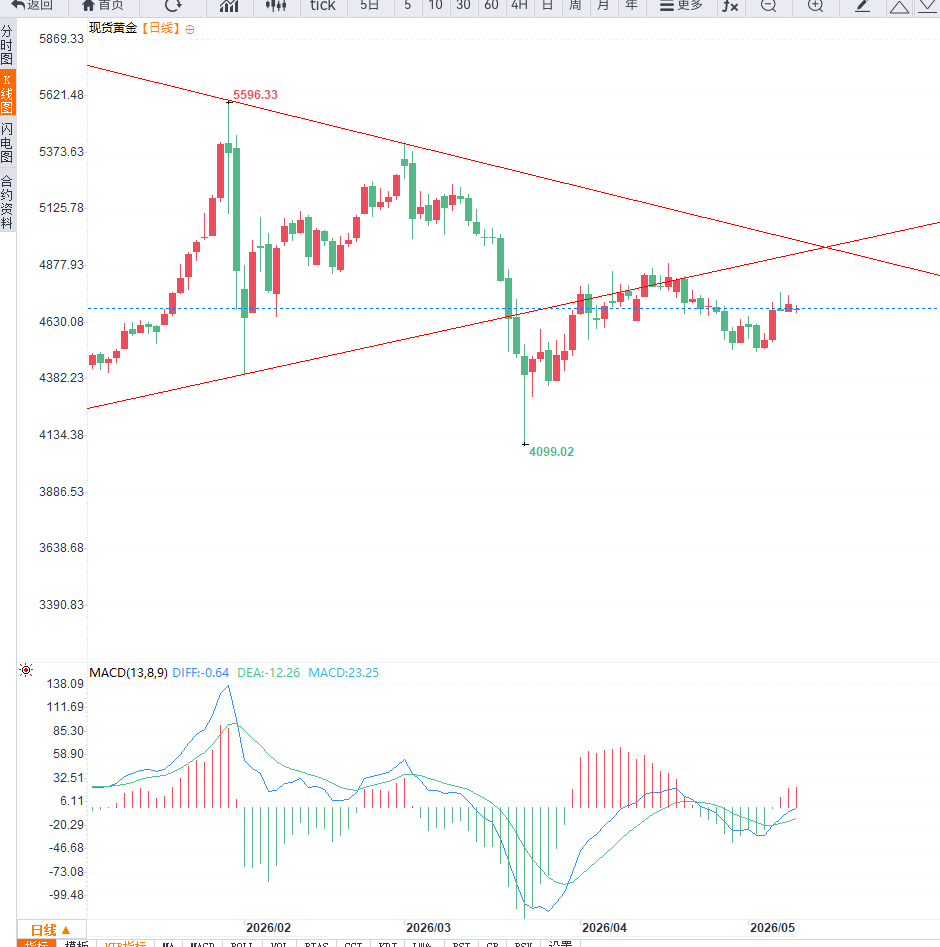
Some institutions point out that the biggest variables in the current gold market remain the situation in the Middle East and the Federal Reserve's policy path. If energy prices continue to rise and push up global inflation, gold may continue to fluctuate between "safe-haven demand" and "high interest rate pressure."
Editor's Summary : The current international gold market is in a phase where "geopolitical risk" and "interest rate logic" intertwine. While the ongoing conflict in the Middle East continues to provide safe-haven demand, better-than-expected US employment data and market concerns about the prolonged period of high interest rates are limiting further gains in gold. In the medium to long term, global geopolitical uncertainty, central bank gold purchases, and the credit risk of the US dollar remain important supporting factors for gold. However, short-term market volatility may intensify significantly, especially given the constantly changing expectations for Federal Reserve policy; gold prices may maintain a high-level, wide-range fluctuation pattern. The market needs to focus on three key areas in the future: first, changes in US inflation and employment data; second, whether the situation in the Middle East will escalate further; and third, whether the pace of Federal Reserve interest rate cuts will continue to be delayed. These factors will directly determine the direction of gold's next stage of movement.
The core contradiction in the market has gradually shifted from a simple risk-averse logic to the repricing of "inflation risk" and "interest rate expectations." US President Trump formally rejected Iran's latest ceasefire proposal, describing Iran's response as "completely unacceptable." Meanwhile, Iran stated that the US needs to pay compensation for the losses caused by the war and rejected what it called "excessive demands." Market analysts point out that the simultaneous rejection of each other's proposals by both Iran and the US means that the situation in the Middle East is unlikely to truly ease in the short term.
However, unlike previous gold price increases driven by geopolitical conflicts, this round of market activity is more focused on the potential inflationary risks from rising energy prices. International crude oil prices remain high due to ongoing disruptions to shipping through the Strait of Hormuz. Rising energy costs are fueling global concerns about imported inflation, which could force the Federal Reserve to maintain high interest rates for an extended period. Market participants believe the gold market is currently facing a classic "two-way game": on the one hand, escalating tensions in the Middle East continue to support safe-haven flows; on the other hand, strong US economic data and persistently high interest rates limit further upside potential for gold.
Last week's US non-farm payroll data for April became a significant turning point for market sentiment. The data showed that the US added 115,000 jobs in April, significantly higher than the market expectation of 62,000. Although this was a slowdown from the revised 185,000 in March, the overall performance was still better than the market had previously worried. Meanwhile, the US unemployment rate remained at 4.3% in April, in line with market expectations. Some institutions believe that although the US job market is gradually cooling, its overall resilience remains stronger than the market had previously judged. After the data release, market expectations for a rapid interest rate cut by the Federal Reserve this year cooled significantly, US Treasury yields rebounded, and the US dollar index received support.
From a capital flow perspective, the gold market is currently experiencing a phase of divergence. Some safe-haven funds are still flowing into gold ETFs and the physical gold market, while short-term speculative funds are gradually reducing their long positions at higher levels. Furthermore, global central bank gold purchases continue to provide significant long-term support for the gold market. Central banks in some Asian countries and emerging market economies are continuing to increase their gold reserves to mitigate the volatility risk of dollar-denominated assets.
However, in the short term, the market is more focused on the Federal Reserve's subsequent policy path and changes in US economic data. If US inflation rebounds in the future, the Federal Reserve may be forced to maintain high interest rates, which will put downward pressure on gold in the short term; conversely, if the US economy slows down significantly, the safe-haven appeal and interest rate cut logic for gold may regain dominance.
From a technical perspective, gold is currently maintaining a high-level consolidation structure on the daily chart. The overall bullish trend has not been completely broken, but some short-term downward pressure has emerged. The $4700 level is currently a key psychological level, while the $4650 area below forms a temporary support level. A break below this level could lead to a further test of the $4600 area.
Looking at the upside, the $4750-$4780 area still presents significant technical resistance. If the situation in the Middle East escalates further, or the US dollar weakens again, gold could retest its historical highs. On the 4-hour chart, short-term moving averages are flattening, and the MACD histogram is shortening, indicating a slowdown in bullish momentum. The RSI indicator has also retreated from its highs, reflecting a cooling of short-term buying interest. However, gold prices are currently still trading within a major upward channel. As long as the key support level of $4650 is not effectively broken, the medium- to long-term bullish structure of gold remains intact.
Some institutions point out that the biggest variables in the current gold market remain the situation in the Middle East and the Federal Reserve's policy path. If energy prices continue to rise and push up global inflation, gold may continue to fluctuate between "safe-haven demand" and "high interest rate pressure."
Editor's Summary : The current international gold market is in a phase where "geopolitical risk" and "interest rate logic" intertwine. While the ongoing conflict in the Middle East continues to provide safe-haven demand, better-than-expected US employment data and market concerns about the prolonged period of high interest rates are limiting further gains in gold. In the medium to long term, global geopolitical uncertainty, central bank gold purchases, and the credit risk of the US dollar remain important supporting factors for gold. However, short-term market volatility may intensify significantly, especially given the constantly changing expectations for Federal Reserve policy; gold prices may maintain a high-level, wide-range fluctuation pattern. The market needs to focus on three key areas in the future: first, changes in US inflation and employment data; second, whether the situation in the Middle East will escalate further; and third, whether the pace of Federal Reserve interest rate cuts will continue to be delayed. These factors will directly determine the direction of gold's next stage of movement.
- Risk Warning and Disclaimer
- The market involves risk, and trading may not be suitable for all investors. This article is for reference only and does not constitute personal investment advice, nor does it take into account certain users’ specific investment objectives, financial situation, or other needs. Any investment decisions made based on this information are at your own risk.