April's non-farm payroll data dashed hopes, and the window for a Fed rate cut may be completely closed.
2026-05-11 10:04:13
If the Federal Reserve still has reasons to cut interest rates in the near future, those reasons are becoming increasingly difficult to find.
The April non-farm payrolls report released last Friday provided new evidence that the Federal Reserve's primary concern is not a weakening labor market, but rather the increasingly unaffordable cost of living for ordinary Americans. The report indicates that the employment situation has stabilized, further reducing the urgency for the Fed to cut interest rates.
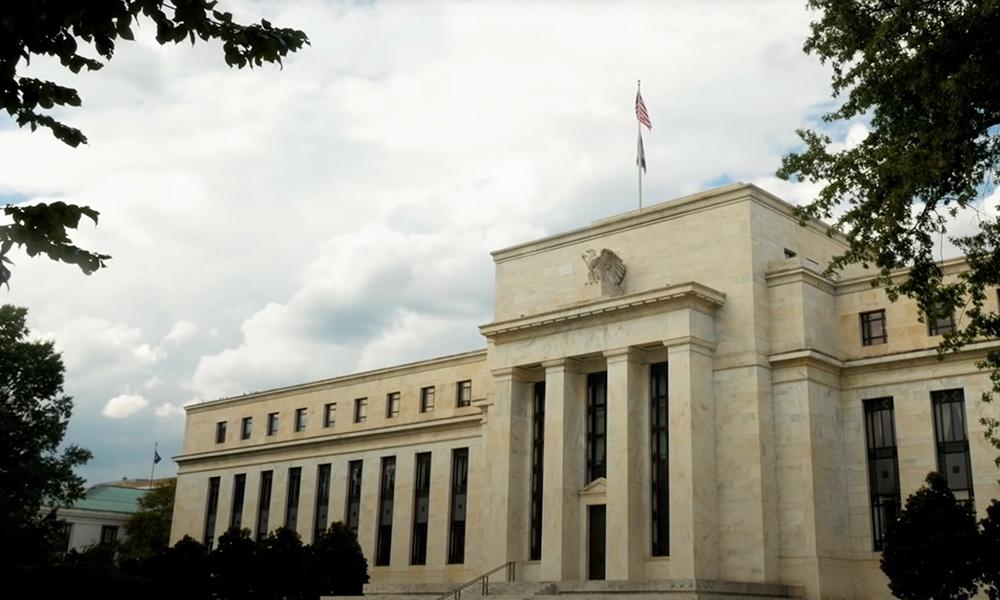
Nonfarm payrolls increased by 115,000 last month. While this figure isn't particularly strong, it clearly indicates that the job market has largely stabilized, easing concerns about an economic downturn. In contrast, the inflation situation shows no signs of improvement, which could very well push the Federal Open Market Committee (FOMC) to adopt a more hawkish policy stance, with officials inclined to maintain current interest rates for a longer period.
Lindsay Rosner, head of fixed income at Goldman Sachs Asset Management, said that with the labor market back on track, the Federal Reserve will shift its focus to controlling upside risks to inflation. The FOMC is likely to remove its dovish bias in its statement following the June meeting, meaning that hawkish opinions are temporarily in control.
At last week's FOMC meeting, three regional Federal Reserve presidents voted against the post-meeting statement. They did not oppose the decision to keep interest rates unchanged, but rather the forward guidance wording in the statement, which was widely interpreted as hinting at a possible rate cut.
Chicago Federal Reserve President Austan Goolsbee said last Friday that he has never been one to particularly influence policy decisions with words. He added that he is concerned about the current inflation trend: "We've been above the Fed's 2% target for five years, we stopped making progress last year, and in the last three months, inflation has not only not fallen, it has risen. We have to watch this very closely because if everyone starts assuming that inflation will return to levels seen a few years ago, we, as a central bank, will be in trouble."
Goolsby further points out that inflationary pressures are not only coming from gasoline and tariffs, but are increasingly reflected in service costs. The March Consumer Price Index showed that the US inflation rate reached 3.3%, well above the Federal Reserve's 2% target.
Faced with high inflation and a stable labor market, traditional monetary policy typically does not support interest rate cuts. Recent data trends also support the Federal Reserve maintaining current interest rates while retaining policy options including rate hikes.
Scott Clemons, chief investment strategist at Brown Brothers Harriman, said this gives the Federal Reserve ample patience, as there are no economic factors requiring them to lower interest rates further.
Based on federal funds futures pricing, the market has largely ruled out the possibility of a rate cut before April 2031, and the yield curve actually suggests a higher probability of rate hikes in the coming years.
Dan North, senior economist at Allianz North America, pointed out that recent data makes it easier for the Federal Reserve to keep interest rates unchanged, and may even shift its policy stance in another direction next year.
However, this situation presents a particularly challenging challenge for incoming Federal Reserve Chairman Kevin Warsh. President Trump appointed Warsh with the expectation that he would push for lower interest rates. Warsh has previously publicly stated his preference for a lower federal funds rate, arguing that the Fed can effectively control inflation while easing policy, and advocating for a greater focus on the Fed's current $6.7 trillion balance sheet rather than the current overnight funds rate.
North stated that Warsh would face significant challenges in pushing for rate cuts given the current inflation rate of over 3%, especially considering the committee's overall bias. "Warsh may have expected some occasional internal discussions when he took office, but this is likely not what he anticipated."
Overall , the April employment data and persistent inflationary pressures suggest that the likelihood of a Federal Reserve rate cut in the near term has further decreased. Future policy direction will depend not only on economic data but also on the wisdom of the new leadership in balancing growth and inflation control.
The April non-farm payrolls report released last Friday provided new evidence that the Federal Reserve's primary concern is not a weakening labor market, but rather the increasingly unaffordable cost of living for ordinary Americans. The report indicates that the employment situation has stabilized, further reducing the urgency for the Fed to cut interest rates.
Stable employment eases pressure to cut interest rates
Nonfarm payrolls increased by 115,000 last month. While this figure isn't particularly strong, it clearly indicates that the job market has largely stabilized, easing concerns about an economic downturn. In contrast, the inflation situation shows no signs of improvement, which could very well push the Federal Open Market Committee (FOMC) to adopt a more hawkish policy stance, with officials inclined to maintain current interest rates for a longer period.
Lindsay Rosner, head of fixed income at Goldman Sachs Asset Management, said that with the labor market back on track, the Federal Reserve will shift its focus to controlling upside risks to inflation. The FOMC is likely to remove its dovish bias in its statement following the June meeting, meaning that hawkish opinions are temporarily in control.
At last week's FOMC meeting, three regional Federal Reserve presidents voted against the post-meeting statement. They did not oppose the decision to keep interest rates unchanged, but rather the forward guidance wording in the statement, which was widely interpreted as hinting at a possible rate cut.
Inflationary pressures continue to rise
Chicago Federal Reserve President Austan Goolsbee said last Friday that he has never been one to particularly influence policy decisions with words. He added that he is concerned about the current inflation trend: "We've been above the Fed's 2% target for five years, we stopped making progress last year, and in the last three months, inflation has not only not fallen, it has risen. We have to watch this very closely because if everyone starts assuming that inflation will return to levels seen a few years ago, we, as a central bank, will be in trouble."
Goolsby further points out that inflationary pressures are not only coming from gasoline and tariffs, but are increasingly reflected in service costs. The March Consumer Price Index showed that the US inflation rate reached 3.3%, well above the Federal Reserve's 2% target.
Faced with high inflation and a stable labor market, traditional monetary policy typically does not support interest rate cuts. Recent data trends also support the Federal Reserve maintaining current interest rates while retaining policy options including rate hikes.
Scott Clemons, chief investment strategist at Brown Brothers Harriman, said this gives the Federal Reserve ample patience, as there are no economic factors requiring them to lower interest rates further.
The new chairman faces a test.
Based on federal funds futures pricing, the market has largely ruled out the possibility of a rate cut before April 2031, and the yield curve actually suggests a higher probability of rate hikes in the coming years.
Dan North, senior economist at Allianz North America, pointed out that recent data makes it easier for the Federal Reserve to keep interest rates unchanged, and may even shift its policy stance in another direction next year.
However, this situation presents a particularly challenging challenge for incoming Federal Reserve Chairman Kevin Warsh. President Trump appointed Warsh with the expectation that he would push for lower interest rates. Warsh has previously publicly stated his preference for a lower federal funds rate, arguing that the Fed can effectively control inflation while easing policy, and advocating for a greater focus on the Fed's current $6.7 trillion balance sheet rather than the current overnight funds rate.
North stated that Warsh would face significant challenges in pushing for rate cuts given the current inflation rate of over 3%, especially considering the committee's overall bias. "Warsh may have expected some occasional internal discussions when he took office, but this is likely not what he anticipated."
Overall , the April employment data and persistent inflationary pressures suggest that the likelihood of a Federal Reserve rate cut in the near term has further decreased. Future policy direction will depend not only on economic data but also on the wisdom of the new leadership in balancing growth and inflation control.
- Risk Warning and Disclaimer
- The market involves risk, and trading may not be suitable for all investors. This article is for reference only and does not constitute personal investment advice, nor does it take into account certain users’ specific investment objectives, financial situation, or other needs. Any investment decisions made based on this information are at your own risk.