On the eve of April CPI: Inflation rises to 3.7%, who will prevail between oil bulls and dollar bears?
2026-05-11 21:58:34
On Monday, May 11, in early US trading, the US dollar index traded below the 98 level, continuing its weakness following Friday's non-farm payrolls report. Although April's non-farm payrolls added 115,000 jobs, far exceeding the market consensus of around 55,000, investors quickly shifted their focus to deeper signals in the labor market: part-time employment saw its largest increase in 14 months due to economic reasons, household employment declined for the fourth consecutive month, and average hourly earnings rose only 3.6% year-on-year, lower than the expected 3.8%. The unemployment rate remained stable at 4.3%, mainly due to a decline in the labor force participation rate rather than improved employment.
Traders are closely awaiting Tuesday's release of the April Consumer Price Index (CPI) data, with the market expecting the overall CPI year-on-year rate to rise to 3.7% and the core CPI to rise to 2.7%. Geopolitical uncertainty continues to escalate, with US President Trump calling Iran's response to peace proposals "completely unacceptable," and the potential risk of disruption in the Strait of Hormuz pushing up energy costs, further churning inflation expectations and policy pricing.
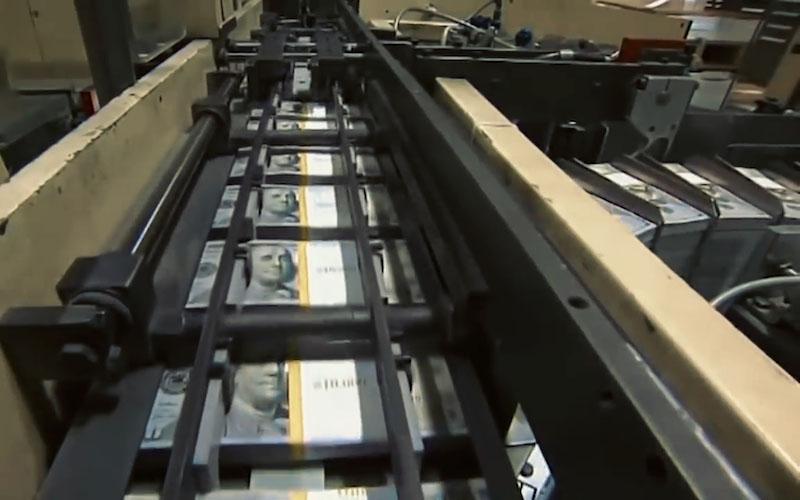
Nonfarm payrolls increased by 115,000 in April, with the private sector contributing 123,000, exceeding expectations. However, this data was far from the "strong" picture initially interpreted by the market. Healthcare, transportation and warehousing, and retail trade contributed the majority of the increase, while federal government employment continued to contract. The key lies in the details: part-time jobs added for economic reasons increased by 445,000 to 4.9 million, the largest monthly increase in 14 months, reflecting cautious hiring by businesses that prefer to extend part-time hours rather than add full-time positions. The household employment survey showed a fourth consecutive month of decline, with the labor force participation rate falling slightly to 61.8% and the employment-to-population ratio at 59.1%. These indicators collectively point to the labor market not having fully recovered from its trough, with surface data masking structural weakness.
Average hourly earnings rose only 0.2% month-over-month to $37.41, and increased 3.6% year-over-year, below the expected 3.8%, indicating that wage pressures have not accelerated. This explains why the report failed to significantly boost the dollar. Traders are focused on the impact of this mixed signal on Federal Reserve policy: the labor market is resilient enough to avoid an immediate rate cut, but not strong enough to force a rate hike. The following is a comparison of key data.
These data suggest that job growth is primarily driven by specific sectors, and that quality is less important than quantity. Traders should be wary of potential corrections in subsequent months.
Trump made it clear that Iran's demands for sanctions waivers, limited nuclear activities, and the removal of US naval forces near the Strait of Hormuz were "completely unacceptable," making a breakthrough in negotiations unlikely in the short term. Market concerns about the risk of disruption to shipping through the Strait of Hormuz have intensified again; WTI crude oil futures once approached $100 per barrel, while Brent crude remained around $103 per barrel. The continued rise in the annual rate of oil price changes has directly pushed up overall inflation expectations.
Rising energy costs will be transmitted to core inflation through production, transportation, and consumption, especially as global supply chains are still recovering. A $10 increase per barrel in oil prices could push up the overall US CPI by about 0.4-0.6 percentage points over the next 6-12 months. This will not only change the Federal Reserve's assessment of the inflation path but also reshape the pricing of risk assets. In the current environment, long positions in crude oil have increased, and energy-related stocks have performed strongly, but this has also exacerbated market concerns about "sticky inflation."
Following the non-farm payroll report, the market's probability of a 25 basis point rate hike by the Federal Reserve in 2026 rose from 14% to 21%, while the probability of a rate cut fell from 12% to 6%. If the April CPI rises to 3.7% as expected, this probability could be revised upwards further. High oil prices coupled with geopolitical uncertainties make it difficult for the Fed to quickly shift to an easing stance. Traders are currently pricing in a scenario where interest rates remain within the current range in 2026, with a possible small rate hike in 2027 depending on the extent of inflation decline, a probability that has reached approximately 45%.
While the US dollar index has been dragged down by improved risk appetite, its safe-haven appeal may still provide support should the situation escalate. The performance of major currencies such as the euro and yen against the dollar will depend more on the policy divergence between the European Central Bank and the Bank of Japan than on US data alone.
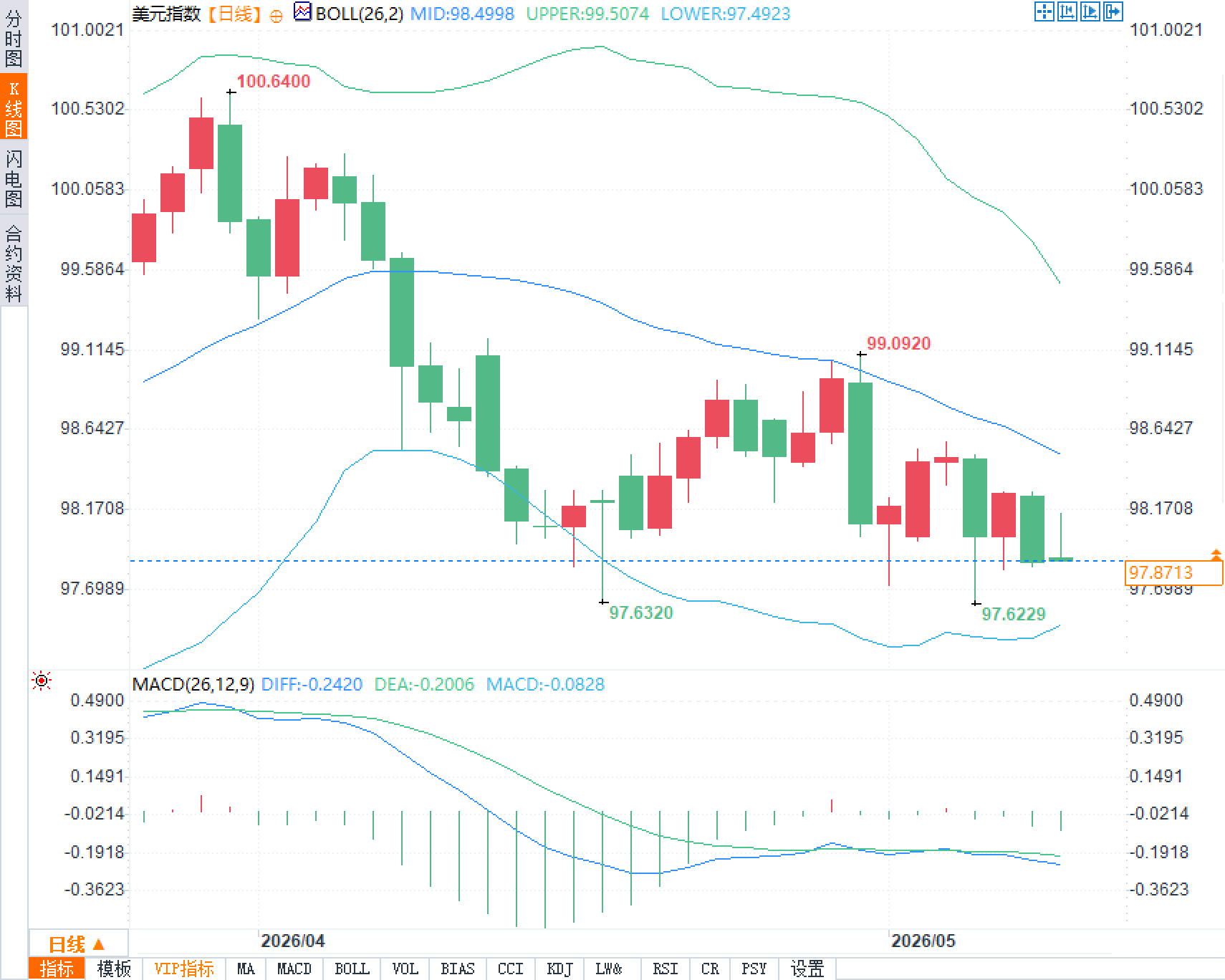
The US April CPI data, to be released on Tuesday, will be the focus this week. The market consensus expects the overall annual rate to rise to 3.7%, a significant rebound from March's 3.3%, with the core annual rate rising to 2.7%. The transmission effect of oil prices is the main driving factor, with traders focusing on the food, energy, and services sub-categories. If the overall data exceeds expectations, the dollar may receive temporary support, but if the core data is moderate, risk assets will remain resilient. Overall, the market is currently in a "Goldilocks" balance: economic growth is slowing but not in recession, risk appetite has not completely subsided, and the dollar is unlikely to see a one-sided trend in the short term.
Traders are closely awaiting Tuesday's release of the April Consumer Price Index (CPI) data, with the market expecting the overall CPI year-on-year rate to rise to 3.7% and the core CPI to rise to 2.7%. Geopolitical uncertainty continues to escalate, with US President Trump calling Iran's response to peace proposals "completely unacceptable," and the potential risk of disruption in the Strait of Hormuz pushing up energy costs, further churning inflation expectations and policy pricing.
April Non-Farm Payrolls Report: Labor Market Signals Behind the Seemingly Strong Performance
Nonfarm payrolls increased by 115,000 in April, with the private sector contributing 123,000, exceeding expectations. However, this data was far from the "strong" picture initially interpreted by the market. Healthcare, transportation and warehousing, and retail trade contributed the majority of the increase, while federal government employment continued to contract. The key lies in the details: part-time jobs added for economic reasons increased by 445,000 to 4.9 million, the largest monthly increase in 14 months, reflecting cautious hiring by businesses that prefer to extend part-time hours rather than add full-time positions. The household employment survey showed a fourth consecutive month of decline, with the labor force participation rate falling slightly to 61.8% and the employment-to-population ratio at 59.1%. These indicators collectively point to the labor market not having fully recovered from its trough, with surface data masking structural weakness.
Average hourly earnings rose only 0.2% month-over-month to $37.41, and increased 3.6% year-over-year, below the expected 3.8%, indicating that wage pressures have not accelerated. This explains why the report failed to significantly boost the dollar. Traders are focused on the impact of this mixed signal on Federal Reserve policy: the labor market is resilient enough to avoid an immediate rate cut, but not strong enough to force a rate hike. The following is a comparison of key data.
| index | April actual | Market expectations | March revised figures |
|---|---|---|---|
| Non-farm payrolls (in ten thousands) | 11.5 | 5.5 | 18.5 |
| unemployment rate(%) | 4.3 | 4.3 | 4.3 |
| Average hourly wage year-on-year (%) | 3.6 | 3.8 | 3.4 |
| Increase in the number of people working part-time (in ten thousands) due to economic reasons | 44.5 | - | - |
Escalating geopolitical risks in the Middle East: the transmission effect of oil prices and inflation
Trump made it clear that Iran's demands for sanctions waivers, limited nuclear activities, and the removal of US naval forces near the Strait of Hormuz were "completely unacceptable," making a breakthrough in negotiations unlikely in the short term. Market concerns about the risk of disruption to shipping through the Strait of Hormuz have intensified again; WTI crude oil futures once approached $100 per barrel, while Brent crude remained around $103 per barrel. The continued rise in the annual rate of oil price changes has directly pushed up overall inflation expectations.
Rising energy costs will be transmitted to core inflation through production, transportation, and consumption, especially as global supply chains are still recovering. A $10 increase per barrel in oil prices could push up the overall US CPI by about 0.4-0.6 percentage points over the next 6-12 months. This will not only change the Federal Reserve's assessment of the inflation path but also reshape the pricing of risk assets. In the current environment, long positions in crude oil have increased, and energy-related stocks have performed strongly, but this has also exacerbated market concerns about "sticky inflation."
Adjustment of Federal Reserve policy expectations: The logic behind the increased probability of a rate hike in 2027
Following the non-farm payroll report, the market's probability of a 25 basis point rate hike by the Federal Reserve in 2026 rose from 14% to 21%, while the probability of a rate cut fell from 12% to 6%. If the April CPI rises to 3.7% as expected, this probability could be revised upwards further. High oil prices coupled with geopolitical uncertainties make it difficult for the Fed to quickly shift to an easing stance. Traders are currently pricing in a scenario where interest rates remain within the current range in 2026, with a possible small rate hike in 2027 depending on the extent of inflation decline, a probability that has reached approximately 45%.
While the US dollar index has been dragged down by improved risk appetite, its safe-haven appeal may still provide support should the situation escalate. The performance of major currencies such as the euro and yen against the dollar will depend more on the policy divergence between the European Central Bank and the Bank of Japan than on US data alone.
April CPI Preview: Key Focus for Traders
The US April CPI data, to be released on Tuesday, will be the focus this week. The market consensus expects the overall annual rate to rise to 3.7%, a significant rebound from March's 3.3%, with the core annual rate rising to 2.7%. The transmission effect of oil prices is the main driving factor, with traders focusing on the food, energy, and services sub-categories. If the overall data exceeds expectations, the dollar may receive temporary support, but if the core data is moderate, risk assets will remain resilient. Overall, the market is currently in a "Goldilocks" balance: economic growth is slowing but not in recession, risk appetite has not completely subsided, and the dollar is unlikely to see a one-sided trend in the short term.
- Risk Warning and Disclaimer
- The market involves risk, and trading may not be suitable for all investors. This article is for reference only and does not constitute personal investment advice, nor does it take into account certain users’ specific investment objectives, financial situation, or other needs. Any investment decisions made based on this information are at your own risk.