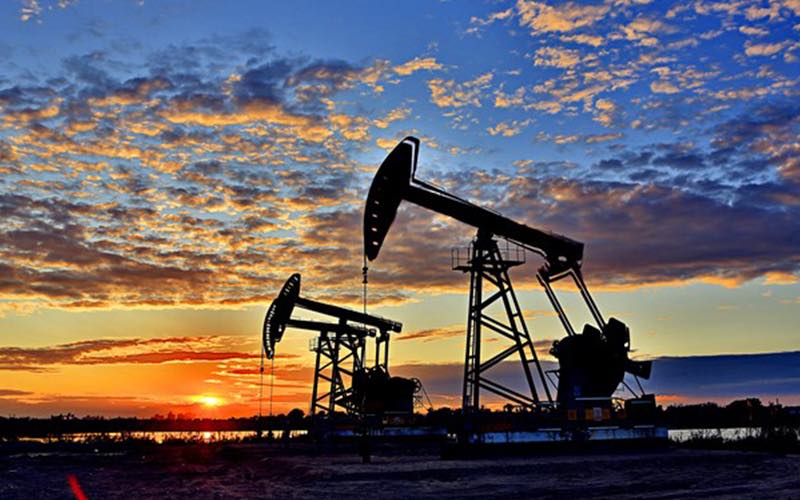
Crude oil trading alert: Stalemate in US-Iran negotiations fuels supply concerns, causing US crude oil prices to stall at the $100 mark.
2026-05-12 09:28:20
International crude oil prices continued their volatile trend on Tuesday, with concerns about escalating tensions in the Middle East and limited global oil supply intensifying. As negotiations between the US and Iran stalled, coupled with significant uncertainty surrounding the resumption of shipping through the Strait of Hormuz, funds flowed back into the energy sector, driving a continuous rebound in international oil prices.
WTI crude oil continued to approach the $100 mark during the Asian trading session, trading around $98.50. Meanwhile, gold prices rose in tandem with safe-haven demand, while copper prices continued their previous upward trend, indicating that market concerns about global supply chain security and resource shortages are still brewing.
US President Trump stated on Monday that the current ceasefire between the US and Iran is "entirely sustained by life support systems," sparking market concerns about a further deterioration of the situation. Trump discussed the next phase of action in the Middle East with his national security team that day, including the option of resuming some military operations. The market generally believes this means that regional tensions are unlikely to ease quickly in the short term.
Meanwhile, Trump also mentioned the possibility of reviving the so-called "Freedom Initiative," which the market interpreted as a sign that the US is not optimistic about Iran restoring normal navigation in the Strait of Hormuz in the short term. The Strait of Hormuz handles approximately 20% of global seaborne crude oil transport and is also a crucial route for global liquefied natural gas exports. The current disruption to shipping in this region is already having a substantial impact on the global energy market.
Amid escalating energy supply risks, gasoline prices in the United States have risen in tandem. On Monday, Trump publicly expressed his support for gasoline tax cuts for the first time, hoping to alleviate the pressure on consumer spending caused by rising energy prices. The market believes this indicates that high oil prices have begun to transmit to US inflation and the consumer market.
The stalled negotiations have significantly dampened market optimism regarding a diplomatic solution. Emily Ashford, head of energy research at Standard Chartered Bank, stated that the market had initially hoped for more positive outcomes through diplomatic channels, but the current situation remains deadlocked, and every day of delay means a further increase in global oil supply risks.
Global market reactions indicate that funds are currently reassessing the global energy supply gap. Due to the slow recovery of crude oil exports from the Middle East, coupled with limited spare capacity from OPEC+, the market is beginning to worry that global inventories may decline further in the second half of the year. If shipping through the Strait of Hormuz remains restricted, the world could face the risk of disruptions to the transport of more than 15 million barrels of crude oil per day.
Meanwhile, the gold market was also driven by safe-haven demand. As the situation in the Middle East fluctuated, investors began to increase their allocation to safe-haven assets such as gold. Although the US dollar index remained strong overall, safe-haven buying driven by geopolitical risks continued to support gold prices at high levels.
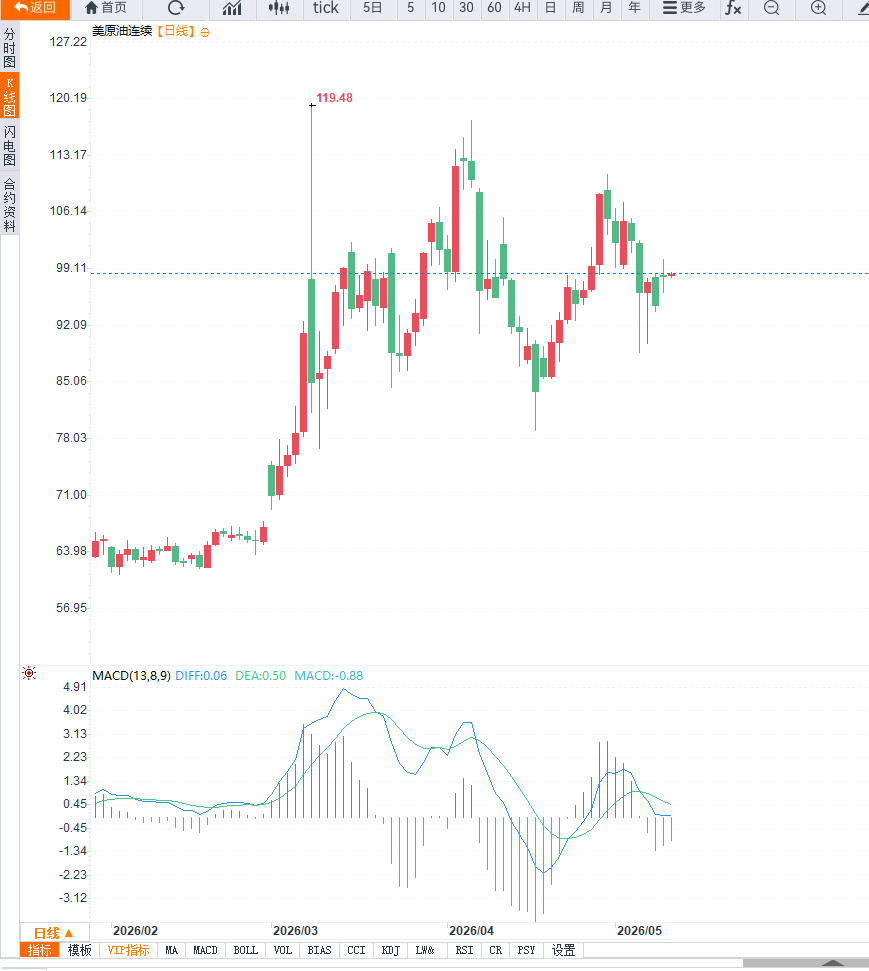
From a technical perspective, WTI crude oil is currently maintaining a consolidation pattern, but the medium-term moving average system continues to diverge upwards, indicating that the overall market trend remains bullish. On the daily chart, oil prices are currently fluctuating between $95 and $100, with the MACD indicator remaining above the zero line, suggesting that the bullish trend has not yet completely ended. If WTI crude oil effectively breaks through the $100 mark, it is expected to further open up upward potential and test the $105 to $108 area.
However, in the short term, the 4-hour chart shows signs of high-level consolidation, with the RSI indicator entering a relatively high zone, indicating a cooling of short-term buying sentiment. Due to continued uncertainty regarding the outcome of the US-Iran negotiations, oil prices may continue to fluctuate at high levels in the short term. The key support level is currently around $92; a break below this level could trigger profit-taking and accelerate the decline to the $88 area.
Overall, the core logic of the international crude oil market remains focused on the situation in the Middle East and the recovery of supply. Until there is a significant improvement on the supply side, the global energy market will continue to maintain a high-risk premium, and geopolitical risks, transportation security, and inventory changes will continue to be key factors determining the direction of oil prices.
Editor's Summary : The international energy market has re-entered a phase dominated by geopolitical risks. Stagnant US-Iran negotiations, disruptions to shipping through the Strait of Hormuz, and declining global inventories have collectively fueled concerns about supply shortages. In the short term, oil prices may remain volatile at high levels, but the medium- to long-term trend remains bullish, especially as market risk premiums are unlikely to dissipate quickly until the situation in the Middle East shows significant signs of easing. Meanwhile, high oil prices have begun to transmit to global inflation, manufacturing costs, and consumer markets, meaning that future global central bank policy paths may again be influenced by energy prices. For investors, the key factors to watch are the resumption of shipping through the Strait of Hormuz, the progress of US-Iran negotiations, and changes in OPEC+ production policy, as these will determine the next phase of the crude oil market's direction.
WTI crude oil continued to approach the $100 mark during the Asian trading session, trading around $98.50. Meanwhile, gold prices rose in tandem with safe-haven demand, while copper prices continued their previous upward trend, indicating that market concerns about global supply chain security and resource shortages are still brewing.
US President Trump stated on Monday that the current ceasefire between the US and Iran is "entirely sustained by life support systems," sparking market concerns about a further deterioration of the situation. Trump discussed the next phase of action in the Middle East with his national security team that day, including the option of resuming some military operations. The market generally believes this means that regional tensions are unlikely to ease quickly in the short term.
Meanwhile, Trump also mentioned the possibility of reviving the so-called "Freedom Initiative," which the market interpreted as a sign that the US is not optimistic about Iran restoring normal navigation in the Strait of Hormuz in the short term. The Strait of Hormuz handles approximately 20% of global seaborne crude oil transport and is also a crucial route for global liquefied natural gas exports. The current disruption to shipping in this region is already having a substantial impact on the global energy market.
Amid escalating energy supply risks, gasoline prices in the United States have risen in tandem. On Monday, Trump publicly expressed his support for gasoline tax cuts for the first time, hoping to alleviate the pressure on consumer spending caused by rising energy prices. The market believes this indicates that high oil prices have begun to transmit to US inflation and the consumer market.
The stalled negotiations have significantly dampened market optimism regarding a diplomatic solution. Emily Ashford, head of energy research at Standard Chartered Bank, stated that the market had initially hoped for more positive outcomes through diplomatic channels, but the current situation remains deadlocked, and every day of delay means a further increase in global oil supply risks.
Global market reactions indicate that funds are currently reassessing the global energy supply gap. Due to the slow recovery of crude oil exports from the Middle East, coupled with limited spare capacity from OPEC+, the market is beginning to worry that global inventories may decline further in the second half of the year. If shipping through the Strait of Hormuz remains restricted, the world could face the risk of disruptions to the transport of more than 15 million barrels of crude oil per day.
Meanwhile, the gold market was also driven by safe-haven demand. As the situation in the Middle East fluctuated, investors began to increase their allocation to safe-haven assets such as gold. Although the US dollar index remained strong overall, safe-haven buying driven by geopolitical risks continued to support gold prices at high levels.
From a technical perspective, WTI crude oil is currently maintaining a consolidation pattern, but the medium-term moving average system continues to diverge upwards, indicating that the overall market trend remains bullish. On the daily chart, oil prices are currently fluctuating between $95 and $100, with the MACD indicator remaining above the zero line, suggesting that the bullish trend has not yet completely ended. If WTI crude oil effectively breaks through the $100 mark, it is expected to further open up upward potential and test the $105 to $108 area.
However, in the short term, the 4-hour chart shows signs of high-level consolidation, with the RSI indicator entering a relatively high zone, indicating a cooling of short-term buying sentiment. Due to continued uncertainty regarding the outcome of the US-Iran negotiations, oil prices may continue to fluctuate at high levels in the short term. The key support level is currently around $92; a break below this level could trigger profit-taking and accelerate the decline to the $88 area.
Overall, the core logic of the international crude oil market remains focused on the situation in the Middle East and the recovery of supply. Until there is a significant improvement on the supply side, the global energy market will continue to maintain a high-risk premium, and geopolitical risks, transportation security, and inventory changes will continue to be key factors determining the direction of oil prices.
Editor's Summary : The international energy market has re-entered a phase dominated by geopolitical risks. Stagnant US-Iran negotiations, disruptions to shipping through the Strait of Hormuz, and declining global inventories have collectively fueled concerns about supply shortages. In the short term, oil prices may remain volatile at high levels, but the medium- to long-term trend remains bullish, especially as market risk premiums are unlikely to dissipate quickly until the situation in the Middle East shows significant signs of easing. Meanwhile, high oil prices have begun to transmit to global inflation, manufacturing costs, and consumer markets, meaning that future global central bank policy paths may again be influenced by energy prices. For investors, the key factors to watch are the resumption of shipping through the Strait of Hormuz, the progress of US-Iran negotiations, and changes in OPEC+ production policy, as these will determine the next phase of the crude oil market's direction.
- Risk Warning and Disclaimer
- The market involves risk, and trading may not be suitable for all investors. This article is for reference only and does not constitute personal investment advice, nor does it take into account certain users’ specific investment objectives, financial situation, or other needs. Any investment decisions made based on this information are at your own risk.