Tensions between the US and Iran, coupled with rising US inflation expectations, have kept gold prices in a strong, volatile range.
2026-05-12 09:53:40
The international gold market maintained a slightly stronger trend during Tuesday's Asian trading session, with spot gold (XAU/USD) prices remaining stable around $4,750. As the market reassessed safe-haven demand stemming from escalating tensions between the US and Iran, and awaited the release of the US April Consumer Price Index (CPI) data later in the day, overall sentiment in the gold market remained cautiously bullish.

Previously, US President Trump publicly rejected Iran's latest peace proposal, describing it as "completely unacceptable," significantly cooling market expectations for a de-escalation of tensions in the Middle East. Trump subsequently reiterated that the current ceasefire between the US and Iran was in a "life support" phase, further exacerbating market concerns about a continued escalation of the regional conflict.
As a result, international crude oil prices remained volatile at high levels, with Brent crude continuing to trade around $104. The continued rise in energy prices is pushing up global inflationary pressures again and has become one of the most critical risk variables in the current financial markets. Since gold is generally considered a safe-haven asset and an inflation hedge, funds continue to flow into the precious metals market against the backdrop of rising geopolitical risks and inflation concerns.
Meanwhile, market focus has shifted to the upcoming US April CPI data. The market expects the overall US CPI to rise to 3.7% year-on-year in April, higher than the previous 3.3%; core CPI is expected to rise 2.7% year-on-year, slightly higher than the previous 2.6%. The market generally believes that the recent surge in international oil prices is a major reason for the renewed rise in inflation expectations.
If US inflation data continues to exceed market expectations, the Federal Reserve may extend its high-interest-rate policy further. The market has already significantly reduced its expectations for rate cuts this year, and some institutions are even beginning to discuss whether the Fed should maintain a hawkish stance to curb the risk of second-growth inflation driven by energy prices.
For the gold market, a high-interest-rate environment typically limits the upside potential of gold prices, as higher interest rates increase the attractiveness of dollar-denominated assets and boost the dollar index. However, the current market is unique in that safe-haven demand and inflation risks are simultaneously supporting gold, keeping its prices strong overall.
Jim Wykoff, a market analyst at the U.S. Gold Exchange, said there is currently some bargain hunting in the market, while investors are also positioning themselves for this week's U.S. inflation data. Overall market sentiment is relatively cautious, but safe-haven funds continue to flow into the gold market.
From a global market perspective, investors are currently readjusting their asset allocation structures. On the one hand, uncertainty in the Middle East is fueling risk aversion in the market; on the other hand, rising oil prices may reignite global inflationary pressures, causing renewed concerns about the path of global central bank monetary policy. The gold market has gradually shifted from a purely "interest rate cut trade" to one driven by a dual logic of "geopolitical risk + inflation hedging."
Furthermore, global central bank demand for gold continues to provide long-term support. Some emerging market central banks continue to increase their gold reserves to mitigate the volatility risk of dollar assets. Against the backdrop of rising global geopolitical risks, the strategic allocation value of gold is further enhanced.
From a technical perspective, gold is currently maintaining a strong upward trend on the daily chart, with prices consistently trading above major moving averages. The MACD indicator remains at a high level, indicating that the medium-term uptrend has not yet ended. If gold prices effectively break through the $4780 area, they are expected to further open up upward potential and test $4800 or even $4850.
However, in the short term, the 4-hour chart shows some signs of high-level consolidation. The RSI indicator is approaching overbought territory, indicating that short-term buying interest has slowed. If the US CPI data tonight is significantly higher than expected, the US dollar index may strengthen again, thus putting some pressure on gold.
The key support level is currently around $4,680. A break below this area could trigger profit-taking by some long positions, leading to a further pullback to the $4,600 psychological level. However, until geopolitical risks significantly ease, gold is expected to maintain an overall bullish structure.
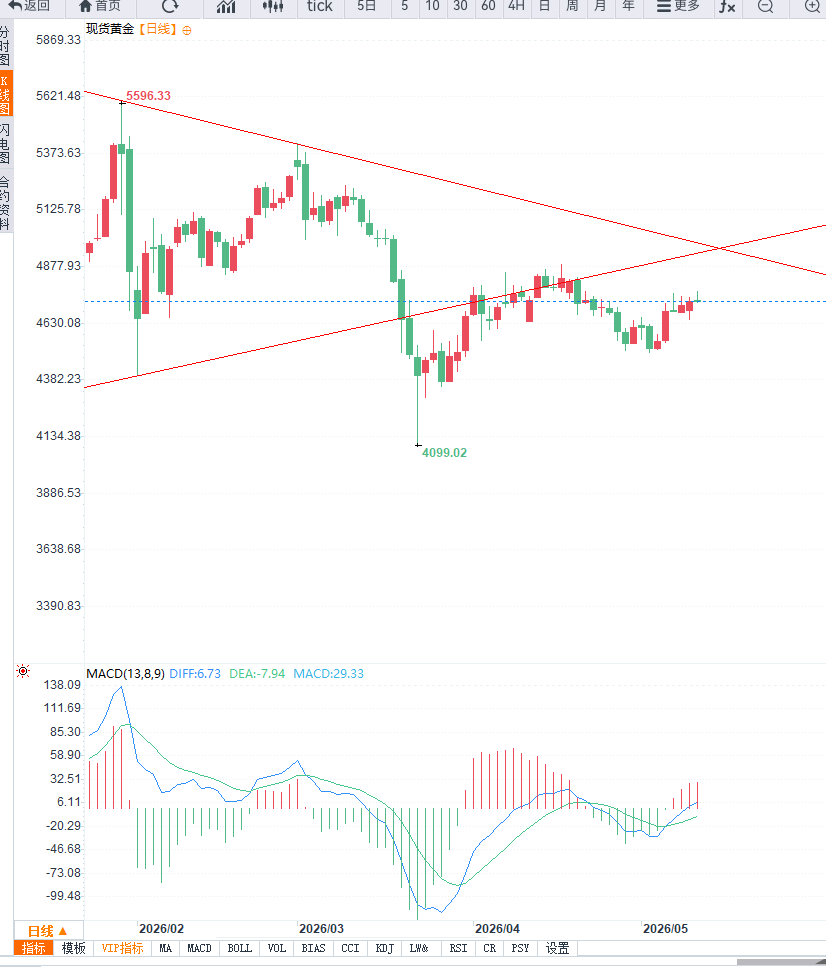
Overall, the current gold market is simultaneously trading on both "safe-haven" and "inflation" logics. The situation in the Middle East, US inflation data, and expectations regarding Federal Reserve policy will jointly determine the next direction of gold's price movement.
Editor's Summary : The international gold market has entered a period of high volatility. Continued tensions between the US and Iran, coupled with high international oil prices, have reignited global inflation expectations, altering market perceptions of the Federal Reserve's future policy path. While high interest rates theoretically put downward pressure on gold, geopolitical risks and safe-haven inflows are offsetting some of the negative impact. In the medium to long term, as long as uncertainty persists in the Middle East and global energy prices remain high, the gold market will continue to have strong support. Going forward, investors should focus on US inflation data, the Federal Reserve's interest rate path, and changes in international oil prices, as these factors will continue to dominate the gold market's volatility.
Previously, US President Trump publicly rejected Iran's latest peace proposal, describing it as "completely unacceptable," significantly cooling market expectations for a de-escalation of tensions in the Middle East. Trump subsequently reiterated that the current ceasefire between the US and Iran was in a "life support" phase, further exacerbating market concerns about a continued escalation of the regional conflict.
As a result, international crude oil prices remained volatile at high levels, with Brent crude continuing to trade around $104. The continued rise in energy prices is pushing up global inflationary pressures again and has become one of the most critical risk variables in the current financial markets. Since gold is generally considered a safe-haven asset and an inflation hedge, funds continue to flow into the precious metals market against the backdrop of rising geopolitical risks and inflation concerns.
Meanwhile, market focus has shifted to the upcoming US April CPI data. The market expects the overall US CPI to rise to 3.7% year-on-year in April, higher than the previous 3.3%; core CPI is expected to rise 2.7% year-on-year, slightly higher than the previous 2.6%. The market generally believes that the recent surge in international oil prices is a major reason for the renewed rise in inflation expectations.
If US inflation data continues to exceed market expectations, the Federal Reserve may extend its high-interest-rate policy further. The market has already significantly reduced its expectations for rate cuts this year, and some institutions are even beginning to discuss whether the Fed should maintain a hawkish stance to curb the risk of second-growth inflation driven by energy prices.
For the gold market, a high-interest-rate environment typically limits the upside potential of gold prices, as higher interest rates increase the attractiveness of dollar-denominated assets and boost the dollar index. However, the current market is unique in that safe-haven demand and inflation risks are simultaneously supporting gold, keeping its prices strong overall.
Jim Wykoff, a market analyst at the U.S. Gold Exchange, said there is currently some bargain hunting in the market, while investors are also positioning themselves for this week's U.S. inflation data. Overall market sentiment is relatively cautious, but safe-haven funds continue to flow into the gold market.
From a global market perspective, investors are currently readjusting their asset allocation structures. On the one hand, uncertainty in the Middle East is fueling risk aversion in the market; on the other hand, rising oil prices may reignite global inflationary pressures, causing renewed concerns about the path of global central bank monetary policy. The gold market has gradually shifted from a purely "interest rate cut trade" to one driven by a dual logic of "geopolitical risk + inflation hedging."
Furthermore, global central bank demand for gold continues to provide long-term support. Some emerging market central banks continue to increase their gold reserves to mitigate the volatility risk of dollar assets. Against the backdrop of rising global geopolitical risks, the strategic allocation value of gold is further enhanced.
From a technical perspective, gold is currently maintaining a strong upward trend on the daily chart, with prices consistently trading above major moving averages. The MACD indicator remains at a high level, indicating that the medium-term uptrend has not yet ended. If gold prices effectively break through the $4780 area, they are expected to further open up upward potential and test $4800 or even $4850.
However, in the short term, the 4-hour chart shows some signs of high-level consolidation. The RSI indicator is approaching overbought territory, indicating that short-term buying interest has slowed. If the US CPI data tonight is significantly higher than expected, the US dollar index may strengthen again, thus putting some pressure on gold.
The key support level is currently around $4,680. A break below this area could trigger profit-taking by some long positions, leading to a further pullback to the $4,600 psychological level. However, until geopolitical risks significantly ease, gold is expected to maintain an overall bullish structure.
Overall, the current gold market is simultaneously trading on both "safe-haven" and "inflation" logics. The situation in the Middle East, US inflation data, and expectations regarding Federal Reserve policy will jointly determine the next direction of gold's price movement.
Editor's Summary : The international gold market has entered a period of high volatility. Continued tensions between the US and Iran, coupled with high international oil prices, have reignited global inflation expectations, altering market perceptions of the Federal Reserve's future policy path. While high interest rates theoretically put downward pressure on gold, geopolitical risks and safe-haven inflows are offsetting some of the negative impact. In the medium to long term, as long as uncertainty persists in the Middle East and global energy prices remain high, the gold market will continue to have strong support. Going forward, investors should focus on US inflation data, the Federal Reserve's interest rate path, and changes in international oil prices, as these factors will continue to dominate the gold market's volatility.
- Risk Warning and Disclaimer
- The market involves risk, and trading may not be suitable for all investors. This article is for reference only and does not constitute personal investment advice, nor does it take into account certain users’ specific investment objectives, financial situation, or other needs. Any investment decisions made based on this information are at your own risk.