The logic of artificial intelligence in combating inflation is questionable; Warsh may have misled the Federal Reserve into cutting interest rates prematurely.
2026-05-12 10:08:00
Kevin Warsh, Trump's nominee for Federal Reserve chairman, cited artificial intelligence's ability to boost productivity and naturally suppress inflation as the core reason for interest rate cuts, believing that AI will open up space for the Fed's easing policies.
However, industry insiders generally question the significant uncertainty surrounding AI's impact on productivity and inflation, with vastly different estimates suggesting a short-term bias towards demand-driven growth rather than price reductions. Prematurely cutting interest rates based solely on optimistic predictions not only lacks a solid logical foundation but could also repeat past mistakes in inflation forecasting, damaging the Federal Reserve's credibility. Only by relying on a rules-based monetary policy framework can the economic changes brought about by AI be addressed smoothly.
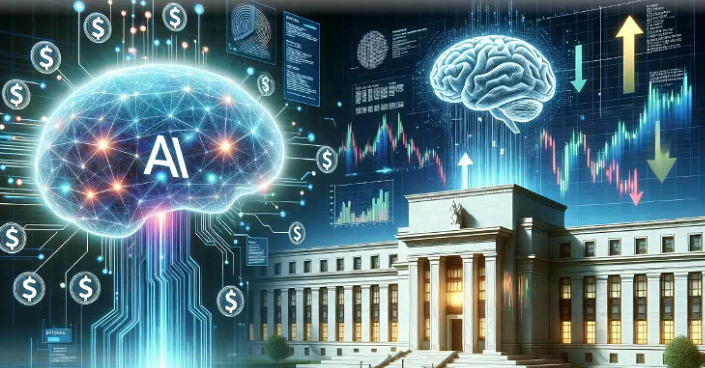
In his public commentary, Warsh argued that artificial intelligence would become a significant force against inflation, and that productivity gains from technological advancements would provide the Federal Reserve with ample policy space to lower interest rates. While this view garnered attention at his Senate nomination hearing last month, it was not thoroughly examined and is insufficient to serve as a core support for monetary policy adjustments.
Objectively speaking, many of Warsh's financial reform proposals are reasonable, including shrinking the excessively expanded central bank balance sheets during the crisis, weakening the policy rigidity caused by forward guidance, and allowing the Federal Reserve to return to its two core functions of price stability and full employment. However, his view that the productivity dividend of AI should support short-term interest rate cuts has a significant logical flaw. Essentially, it packages subjective predictions as a policy framework, assuming that AI will inevitably boost efficiency and suppress inflation on schedule, while deliberately ignoring the huge differences in industry forecasts and the uncertainty of timing.
Industry authorities and scholars have vastly different estimates regarding the extent to which AI can boost productivity, with significant differences in magnitude.
Economist Daron Acemoglu estimates that total factor productivity growth will be limited over the next decade, with a very small annual increase; Philippe Aghion and Simon Bunel offer moderate estimates based on past general technological change patterns; Goldman Sachs gives a more optimistic annual growth forecast, while industry insiders have even more aggressive expectations.
Federal Reserve Vice Chairman Philip Jefferson stated that the short-term impact of AI on prices is not a one-way downward trend. Currently, artificial intelligence is primarily driving a surge in capital expenditures on data centers and power infrastructure, creating a demand-side shock. It will take a considerable period for this to translate into an increase in the supply of goods and services, truly demonstrating its anti-inflationary effect. Even acknowledging the long-term logic of productivity improvement, the timing of policy implementation is difficult to pinpoint precisely.
If AI productivity improvements fail to materialize as expected, not only will Warsh's logic for interest rate cuts fail, but it will also severely undermine the Federal Reserve's policy credibility.
In 2021, the Federal Reserve misjudged inflation as a temporary fluctuation and implemented an easing policy based on subjective predictions, ultimately leading to high inflation and its aftereffects. The public continues to bear the burden of high living costs, and the central bank's credibility has been severely damaged. If the new Federal Reserve chairman were to again rashly cut interest rates based on unfulfilled economic predictions, history would be repeated.
From the perspective of the Federal Reserve's internal decision-making mechanism, it is difficult for a single chairman's view to completely dominate the direction of interest rates; committee members will form checks and balances. However, Warsh's binding of policy stance to a single optimistic expectation is in stark contrast to his advocacy of disciplined and standardized reforms, which is highly likely to attract external criticism.
Compared to relying on subjective judgments to bet on AI dividends, establishing a rules-based monetary policy framework is a more prudent approach. Linking interest rate targets with core macroeconomic indicators such as inflation and employment through a formula ensures that if AI truly drives economic efficiency improvements, market mechanisms will automatically guide interest rates downward; if the technological benefits fall short of expectations, interest rates will remain stable, eliminating the need for policymakers to anticipate and manipulate the market. This aligns with Warsh's long-term reform goals and avoids the risks associated with short-term, emotionally driven rate cuts.
Overall, artificial intelligence (AI) has the long-term potential to boost productivity and ease inflation, but its short-term effects are unclear and predictions vary significantly, making it unreliable as a basis for the Federal Reserve to cut interest rates immediately. Kevin Warsh's overly optimistic assertion that AI can suppress inflation is a subjective policy decision, which could easily lead to policy misjudgments and undermine the central bank's credibility. The Federal Reserve should adhere to a rules-based regulatory logic, anchoring its decisions to actual economic data, rather than rashly adjusting interest rates based on technological predictions.
However, industry insiders generally question the significant uncertainty surrounding AI's impact on productivity and inflation, with vastly different estimates suggesting a short-term bias towards demand-driven growth rather than price reductions. Prematurely cutting interest rates based solely on optimistic predictions not only lacks a solid logical foundation but could also repeat past mistakes in inflation forecasting, damaging the Federal Reserve's credibility. Only by relying on a rules-based monetary policy framework can the economic changes brought about by AI be addressed smoothly.
Walsh anchored the AI dividend as the core basis for interest rate cuts.
In his public commentary, Warsh argued that artificial intelligence would become a significant force against inflation, and that productivity gains from technological advancements would provide the Federal Reserve with ample policy space to lower interest rates. While this view garnered attention at his Senate nomination hearing last month, it was not thoroughly examined and is insufficient to serve as a core support for monetary policy adjustments.
Objectively speaking, many of Warsh's financial reform proposals are reasonable, including shrinking the excessively expanded central bank balance sheets during the crisis, weakening the policy rigidity caused by forward guidance, and allowing the Federal Reserve to return to its two core functions of price stability and full employment. However, his view that the productivity dividend of AI should support short-term interest rate cuts has a significant logical flaw. Essentially, it packages subjective predictions as a policy framework, assuming that AI will inevitably boost efficiency and suppress inflation on schedule, while deliberately ignoring the huge differences in industry forecasts and the uncertainty of timing.
The economic effects of AI are highly debated, and it is unlikely to have a stable, inflation-suppressing effect in the short term.
Industry authorities and scholars have vastly different estimates regarding the extent to which AI can boost productivity, with significant differences in magnitude.
Economist Daron Acemoglu estimates that total factor productivity growth will be limited over the next decade, with a very small annual increase; Philippe Aghion and Simon Bunel offer moderate estimates based on past general technological change patterns; Goldman Sachs gives a more optimistic annual growth forecast, while industry insiders have even more aggressive expectations.
Federal Reserve Vice Chairman Philip Jefferson stated that the short-term impact of AI on prices is not a one-way downward trend. Currently, artificial intelligence is primarily driving a surge in capital expenditures on data centers and power infrastructure, creating a demand-side shock. It will take a considerable period for this to translate into an increase in the supply of goods and services, truly demonstrating its anti-inflationary effect. Even acknowledging the long-term logic of productivity improvement, the timing of policy implementation is difficult to pinpoint precisely.
The risks of subjective policy discretion are becoming increasingly apparent, potentially leading to a repeat of historical misjudgments.
If AI productivity improvements fail to materialize as expected, not only will Warsh's logic for interest rate cuts fail, but it will also severely undermine the Federal Reserve's policy credibility.
In 2021, the Federal Reserve misjudged inflation as a temporary fluctuation and implemented an easing policy based on subjective predictions, ultimately leading to high inflation and its aftereffects. The public continues to bear the burden of high living costs, and the central bank's credibility has been severely damaged. If the new Federal Reserve chairman were to again rashly cut interest rates based on unfulfilled economic predictions, history would be repeated.
From the perspective of the Federal Reserve's internal decision-making mechanism, it is difficult for a single chairman's view to completely dominate the direction of interest rates; committee members will form checks and balances. However, Warsh's binding of policy stance to a single optimistic expectation is in stark contrast to his advocacy of disciplined and standardized reforms, which is highly likely to attract external criticism.
Returning to a rule-based framework and abandoning subjective, predictive regulation
Compared to relying on subjective judgments to bet on AI dividends, establishing a rules-based monetary policy framework is a more prudent approach. Linking interest rate targets with core macroeconomic indicators such as inflation and employment through a formula ensures that if AI truly drives economic efficiency improvements, market mechanisms will automatically guide interest rates downward; if the technological benefits fall short of expectations, interest rates will remain stable, eliminating the need for policymakers to anticipate and manipulate the market. This aligns with Warsh's long-term reform goals and avoids the risks associated with short-term, emotionally driven rate cuts.
Summarize
Overall, artificial intelligence (AI) has the long-term potential to boost productivity and ease inflation, but its short-term effects are unclear and predictions vary significantly, making it unreliable as a basis for the Federal Reserve to cut interest rates immediately. Kevin Warsh's overly optimistic assertion that AI can suppress inflation is a subjective policy decision, which could easily lead to policy misjudgments and undermine the central bank's credibility. The Federal Reserve should adhere to a rules-based regulatory logic, anchoring its decisions to actual economic data, rather than rashly adjusting interest rates based on technological predictions.
- Risk Warning and Disclaimer
- The market involves risk, and trading may not be suitable for all investors. This article is for reference only and does not constitute personal investment advice, nor does it take into account certain users’ specific investment objectives, financial situation, or other needs. Any investment decisions made based on this information are at your own risk.