Gold plunges to $4,531! Fed rate hike bomb detonates, probability surges 39% before year-end?
2026-05-15 17:57:08
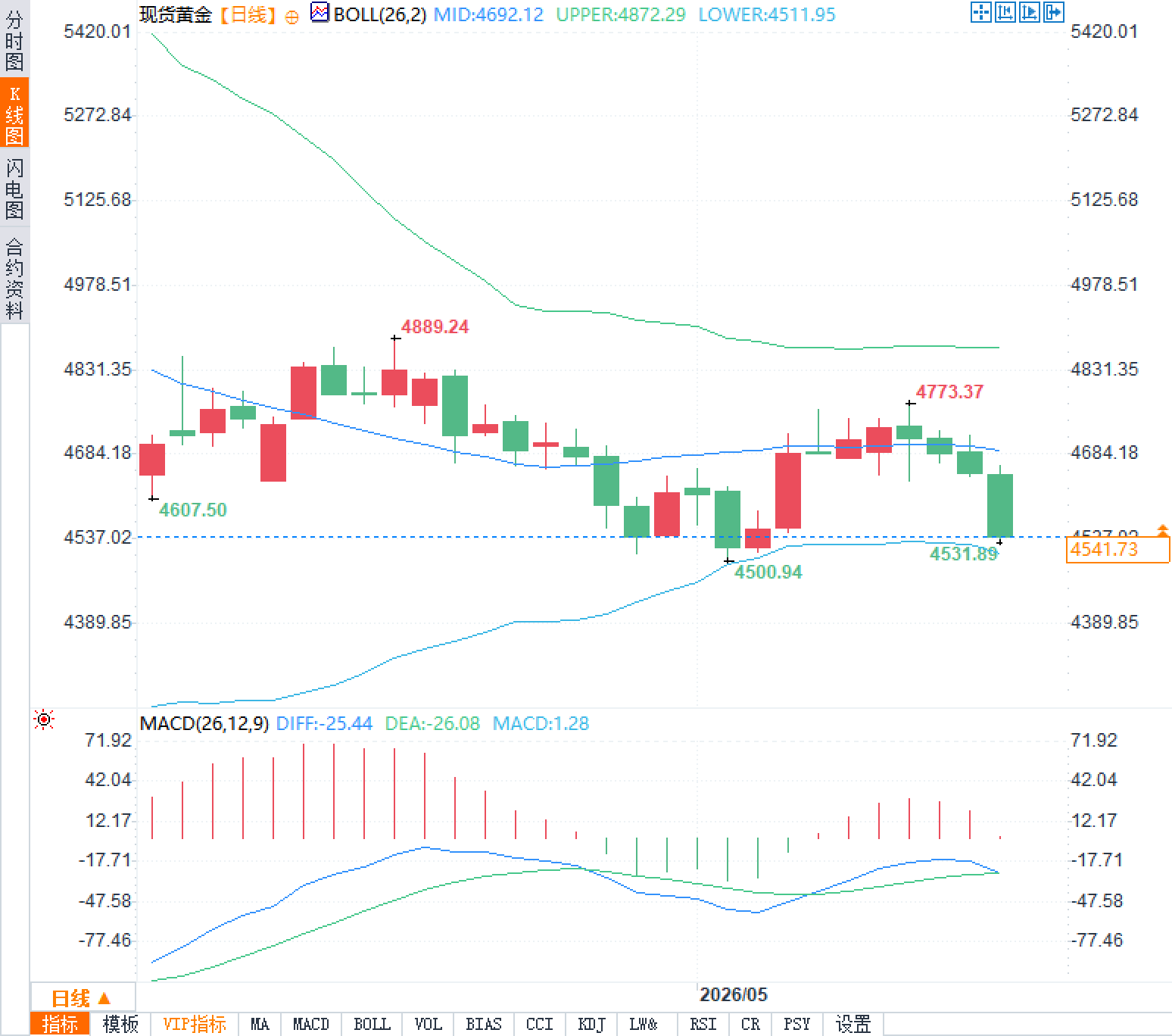
On Friday, May 15th, spot gold continued its decline for the fourth consecutive trading day, touching a one-week low near $4531 per ounce. High oil prices pushed up inflation expectations, US Treasury yields rose to near a one-year high, and a stronger dollar collectively pressured non-yielding assets. The market has largely priced in a Fed rate cut in 2026, with some traders even beginning to account for the possibility of a rate hike before the end of the year.
This week's U.S. Producer Price Index (PPI) showed that manufacturing inflation rose at its fastest pace since 2022 in April, while the Consumer Price Index (CPI) recorded its largest increase since 2023. Energy prices were the main driver, with Brent crude rising approximately 6.6% this week and currently hovering above $108 per barrel. The ongoing conflict in the Middle East continues to impact shipping safety in the Strait of Hormuz, posing a risk of disruption to the global energy supply chain, and cost pressures are being passed on to a wider range of goods and services.
High energy costs have directly boosted overall price levels, diminishing market expectations for further central bank easing. Traders are closely watching whether subsequent inflation data will further reinforce this trend. If energy prices remain within their current range, core inflation indicators will face significantly greater difficulty in falling, posing a direct challenge to assets reliant on a low-interest-rate environment.
The benchmark 10-year U.S. Treasury yield rose to near a one-year high, increasing the opportunity cost of holding gold. The dollar index has risen more than 1% this week, making dollar-denominated gold more expensive for holders of other currencies.
Markets have significantly reduced their expectations for a Federal Reserve rate cut this year, with relevant tools indicating a roughly 39% probability of a rate hike before December. The Fed faces a dilemma: maintaining higher interest rates to curb inflation could slow economic activity; easing too early could lead to a renewed acceleration of risk inflation. Current pricing reflects traders' greater weighting of a restrained policy stance.
In this environment, gold's appeal as a non-yielding asset diminishes. Historical data shows that during periods of rapid yield increases, gold often faces periodic downward pressure unless there is a significant compensation for geopolitical risk premiums.
The ongoing conflict in the Middle East has resulted in no easing of tensions in the energy market, with disruptions to shipping in the Strait of Hormuz directly pushing up global oil prices. Rising energy costs not only affect inflation but may also impact corporate profit expectations through the production chain. Although gold is traditionally considered an inflation hedge, in a high-interest-rate environment, its performance is more driven by real yields than simply nominal inflation.
Analysts believe gold is under pressure from multiple sources: rising oil prices have reignited inflation concerns, pushing yields and the dollar stronger, making gold a direct victim of changes in interest rate expectations. Gold has fallen more than 13% since the escalation of related conflicts at the end of February, indicating a market repricing of safe-haven assets under the current macroeconomic conditions.
Traders need to pay attention to whether energy prices stabilize at their current high levels and whether there are signs of diplomatic easing in the conflict. These factors will directly affect the inflation path and, consequently, determine the timing of a shift in monetary policy.
Higher-than-expected inflation data highlights the risk of energy cost spillover.
This week's U.S. Producer Price Index (PPI) showed that manufacturing inflation rose at its fastest pace since 2022 in April, while the Consumer Price Index (CPI) recorded its largest increase since 2023. Energy prices were the main driver, with Brent crude rising approximately 6.6% this week and currently hovering above $108 per barrel. The ongoing conflict in the Middle East continues to impact shipping safety in the Strait of Hormuz, posing a risk of disruption to the global energy supply chain, and cost pressures are being passed on to a wider range of goods and services.
High energy costs have directly boosted overall price levels, diminishing market expectations for further central bank easing. Traders are closely watching whether subsequent inflation data will further reinforce this trend. If energy prices remain within their current range, core inflation indicators will face significantly greater difficulty in falling, posing a direct challenge to assets reliant on a low-interest-rate environment.
The Fed's policy path adjustment is putting pressure on yields and the dollar.
The benchmark 10-year U.S. Treasury yield rose to near a one-year high, increasing the opportunity cost of holding gold. The dollar index has risen more than 1% this week, making dollar-denominated gold more expensive for holders of other currencies.
Markets have significantly reduced their expectations for a Federal Reserve rate cut this year, with relevant tools indicating a roughly 39% probability of a rate hike before December. The Fed faces a dilemma: maintaining higher interest rates to curb inflation could slow economic activity; easing too early could lead to a renewed acceleration of risk inflation. Current pricing reflects traders' greater weighting of a restrained policy stance.
In this environment, gold's appeal as a non-yielding asset diminishes. Historical data shows that during periods of rapid yield increases, gold often faces periodic downward pressure unless there is a significant compensation for geopolitical risk premiums.
Geopolitical factors and supply disruptions are putting gold's safe-haven status to the test.
The ongoing conflict in the Middle East has resulted in no easing of tensions in the energy market, with disruptions to shipping in the Strait of Hormuz directly pushing up global oil prices. Rising energy costs not only affect inflation but may also impact corporate profit expectations through the production chain. Although gold is traditionally considered an inflation hedge, in a high-interest-rate environment, its performance is more driven by real yields than simply nominal inflation.
Analysts believe gold is under pressure from multiple sources: rising oil prices have reignited inflation concerns, pushing yields and the dollar stronger, making gold a direct victim of changes in interest rate expectations. Gold has fallen more than 13% since the escalation of related conflicts at the end of February, indicating a market repricing of safe-haven assets under the current macroeconomic conditions.
Traders need to pay attention to whether energy prices stabilize at their current high levels and whether there are signs of diplomatic easing in the conflict. These factors will directly affect the inflation path and, consequently, determine the timing of a shift in monetary policy.
Frequently Asked Questions
Question 1: Why is rising oil prices a major drag on gold prices?
A: The sharp rise in oil prices directly boosted inflation expectations, leading the market to believe that the Federal Reserve would maintain higher interest rates or even consider raising them. Higher interest rates increased the opportunity cost of holding non-interest-bearing gold, while also pushing up the dollar exchange rate; these two factors combined suppressed gold prices. Although gold is often seen as an inflation hedge, its price actually comes under pressure when inflation is driven by supply shocks and accompanied by tightening policies.
Question 2: What is the current market pricing logic for the Fed's 2026 policy?
A: Following this week's stronger-than-expected inflation data, traders have largely ruled out a rate cut this year, with some even pricing in a rate hike by the end of the year. The Federal Reserve needs to balance inflation control and economic growth, and high energy costs increase the necessity for a restrictive policy stance. The yield curve and the dollar's performance have already reflected this shift in expectations.
Question 3: What are the key variables that will determine the future trend of gold?
A: Key variables include energy price trends, inflation data evolution, US Treasury yield levels, and the progress of geopolitical conflicts. If energy supply disruptions ease and inflationary pressures reduce, expectations of interest rate cuts may rise, supporting gold prices; conversely, a persistently high interest rate environment will continue to exert downward pressure.
- Risk Warning and Disclaimer
- The market involves risk, and trading may not be suitable for all investors. This article is for reference only and does not constitute personal investment advice, nor does it take into account certain users’ specific investment objectives, financial situation, or other needs. Any investment decisions made based on this information are at your own risk.