The question of whether the British Prime Minister will remain in office has not yet triggered a leadership change, and the pound has rebounded to around 1.3350.
2026-05-18 15:16:15
During Monday's European trading session, British Deputy Prime Minister David Lammy stated that Prime Minister Keir Starmer would not announce a timetable for leaving Downing Street, emphasizing that no leadership transition process had been triggered. Lammy said he had spoken with Starmer twice on Sunday and made it clear that "there is no timetable for leaving office." This statement was seen by the market as a significant signal that the British government was attempting to stabilize the political situation.
The British government's denial of an imminent leadership change has temporarily eased market concerns. Recently, discussions surrounding the stability of the British political system have intensified significantly. Some investors worry that a change in the British government's leadership could further increase uncertainty regarding UK fiscal and economic policies.
However, judging from the current performance of the UK financial markets, investor sentiment remains relatively stable. The yield on 10-year UK government bonds is currently hovering around 5.18%, indicating that while the market remains cautious about the UK's fiscal outlook, there has been no significant panic.
Typically, high government bond yields indicate that the market is still demanding higher risk compensation, and also reflect investor concerns about future UK inflation and fiscal pressures. The continued high yields on UK government bonds reflect the market's cautious outlook on the UK's economic and fiscal prospects.
Meanwhile, the GBP/USD exchange rate rebounded significantly, rising back to around 1.3350. However, the current rise in the pound is more due to a short-term pullback in the dollar than to a significant improvement in the UK's fundamentals.
The US dollar index experienced a technical pullback after its previous consecutive rise, leading to a short-term rebound in major non-US currencies. Meanwhile, market bets on further aggressive interest rate hikes by the Federal Reserve have temporarily cooled, easing pressure on the dollar's strength. From the perspective of the UK economy, the UK still faces multiple challenges, including high interest rates, weak economic growth, and energy cost pressures. With international oil prices remaining high, the risk of imported inflation in the UK remains. Given the UK's high dependence on energy imports, rising energy prices may continue to compress household consumption and corporate profit margins.
Energy costs and high financing rates remain major sources of pressure on the UK economy. Meanwhile, significant disagreements persist within the Bank of England regarding future policy direction. Some officials favor maintaining high interest rates to control inflation, while others worry that high rates could further drag down economic growth.
The market generally believes that the Bank of England will maintain a tight monetary policy in the short term, but whether it will continue to raise interest rates in the future depends on changes in inflation and employment data.
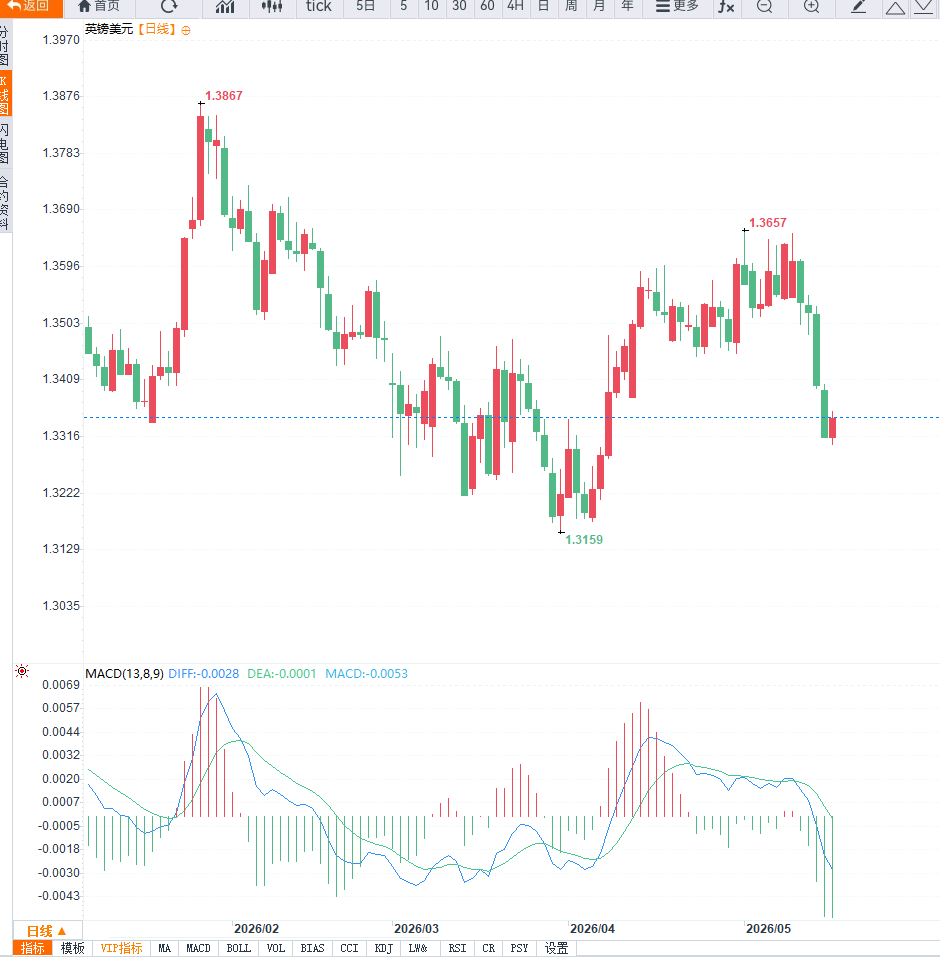
From a technical perspective, the GBP/USD pair has maintained a range-bound pattern on the daily chart recently. The exchange rate previously broke below 1.3300, but rebounded to around 1.3350 as the dollar corrected. Currently, the 1.3400 area has become a key short-term resistance level. A successful break above this level could open up further upside potential, testing the 1.3450 to 1.3500 area.
From the 4-hour chart, the GBP/USD pair has shown signs of a short-term technical correction. The MACD indicator is gradually rising towards the zero line, while the RSI indicator has returned to around 50, indicating that short-term bearish pressure has eased. However, the exchange rate has not yet completely broken free from its previous downward structure. If it subsequently falls below 1.3300 again, it may retest the support area around 1.3250. The short-term trend of the US dollar remains the core variable influencing the direction of the pound.
Overall, while the UK political landscape has temporarily shown signs of stability, market concerns remain regarding UK economic growth, fiscal pressures, and the high-interest-rate environment. Therefore, the pound's short-term performance is likely to continue to be driven by global risk sentiment and changes in the US dollar.
Editor's Summary:
The UK government has clearly stated it will not initiate a leadership transition process, which helps alleviate market concerns about political stability in the short term. However, the UK economy still faces multiple challenges, including high inflation, high interest rates, and energy cost pressures. The recent rebound in the pound has been driven more by a dollar correction than by a significant improvement in UK fundamentals. From a technical perspective, the pound/dollar exchange rate has a short-term need for correction, but overall it remains in a highly volatile and volatile phase. Going forward, the market will focus on UK fiscal policy, changes in Federal Reserve policy, and global energy price trends.
The British government's denial of an imminent leadership change has temporarily eased market concerns. Recently, discussions surrounding the stability of the British political system have intensified significantly. Some investors worry that a change in the British government's leadership could further increase uncertainty regarding UK fiscal and economic policies.
However, judging from the current performance of the UK financial markets, investor sentiment remains relatively stable. The yield on 10-year UK government bonds is currently hovering around 5.18%, indicating that while the market remains cautious about the UK's fiscal outlook, there has been no significant panic.
Typically, high government bond yields indicate that the market is still demanding higher risk compensation, and also reflect investor concerns about future UK inflation and fiscal pressures. The continued high yields on UK government bonds reflect the market's cautious outlook on the UK's economic and fiscal prospects.
Meanwhile, the GBP/USD exchange rate rebounded significantly, rising back to around 1.3350. However, the current rise in the pound is more due to a short-term pullback in the dollar than to a significant improvement in the UK's fundamentals.
The US dollar index experienced a technical pullback after its previous consecutive rise, leading to a short-term rebound in major non-US currencies. Meanwhile, market bets on further aggressive interest rate hikes by the Federal Reserve have temporarily cooled, easing pressure on the dollar's strength. From the perspective of the UK economy, the UK still faces multiple challenges, including high interest rates, weak economic growth, and energy cost pressures. With international oil prices remaining high, the risk of imported inflation in the UK remains. Given the UK's high dependence on energy imports, rising energy prices may continue to compress household consumption and corporate profit margins.
Energy costs and high financing rates remain major sources of pressure on the UK economy. Meanwhile, significant disagreements persist within the Bank of England regarding future policy direction. Some officials favor maintaining high interest rates to control inflation, while others worry that high rates could further drag down economic growth.
The market generally believes that the Bank of England will maintain a tight monetary policy in the short term, but whether it will continue to raise interest rates in the future depends on changes in inflation and employment data.
From a technical perspective, the GBP/USD pair has maintained a range-bound pattern on the daily chart recently. The exchange rate previously broke below 1.3300, but rebounded to around 1.3350 as the dollar corrected. Currently, the 1.3400 area has become a key short-term resistance level. A successful break above this level could open up further upside potential, testing the 1.3450 to 1.3500 area.
From the 4-hour chart, the GBP/USD pair has shown signs of a short-term technical correction. The MACD indicator is gradually rising towards the zero line, while the RSI indicator has returned to around 50, indicating that short-term bearish pressure has eased. However, the exchange rate has not yet completely broken free from its previous downward structure. If it subsequently falls below 1.3300 again, it may retest the support area around 1.3250. The short-term trend of the US dollar remains the core variable influencing the direction of the pound.
Overall, while the UK political landscape has temporarily shown signs of stability, market concerns remain regarding UK economic growth, fiscal pressures, and the high-interest-rate environment. Therefore, the pound's short-term performance is likely to continue to be driven by global risk sentiment and changes in the US dollar.
Editor's Summary:
The UK government has clearly stated it will not initiate a leadership transition process, which helps alleviate market concerns about political stability in the short term. However, the UK economy still faces multiple challenges, including high inflation, high interest rates, and energy cost pressures. The recent rebound in the pound has been driven more by a dollar correction than by a significant improvement in UK fundamentals. From a technical perspective, the pound/dollar exchange rate has a short-term need for correction, but overall it remains in a highly volatile and volatile phase. Going forward, the market will focus on UK fiscal policy, changes in Federal Reserve policy, and global energy price trends.
- Risk Warning and Disclaimer
- The market involves risk, and trading may not be suitable for all investors. This article is for reference only and does not constitute personal investment advice, nor does it take into account certain users’ specific investment objectives, financial situation, or other needs. Any investment decisions made based on this information are at your own risk.