The Federal Reserve enters the "Worsh era": core inflation rises to 3.2%, bond market raises interest rates ahead of schedule, and the $6.7 trillion balance sheet needs to be slimmed down.
2026-05-19 09:11:07
The Federal Reserve is about to officially enter a new phase. Former Governor Kevin Warsh will be sworn in on May 22 by President Trump, officially succeeding Jerome Powell as the 17th Chairman of the Federal Reserve. The U.S. Senate confirmed his nomination on May 13 with a vote of 54 to 45. Powell's term as chairman expired on May 15, and he is currently serving as interim chairman until Warsh completes the handover.
However, Warsh did not inherit a smooth situation. With persistent inflationary pressures, pre-pricing in the bond market, unresolved structural disputes in the labor market, and a balance sheet exceeding $6.7 trillion, the challenges facing the new chairman have been fully unfolding since his inauguration.
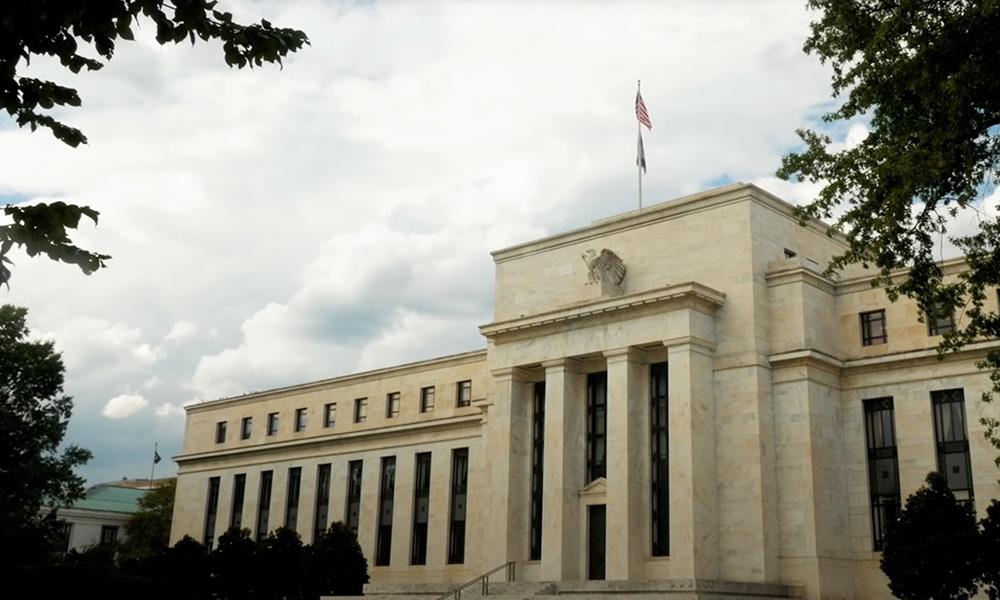
Trump promised that prices would fall after he took office, but the latest data presents a completely different picture. Data released by the U.S. Commerce Department on April 30 showed that the core personal consumption expenditures (PCE) price index—the Federal Reserve's preferred inflation gauge—rose 3.2% year-on-year in March, the highest level since November 2023; the overall PCE rose even more sharply, by 3.5% year-on-year. The previously released April Consumer Price Index (CPI) had already climbed further, approaching the 4% mark, making the Fed's 2% inflation target increasingly distant.
The resurgence of inflation is the result of a confluence of factors. The cumulative effect of import tariffs continues to push up commodity prices, while the US-Israel conflict over Iran has triggered a surge in global oil prices, with the average price of gasoline in the US now exceeding $4.53 per gallon. Several Federal Reserve governors have explicitly expressed concern about the escalating price pressures, and calls for a policy tightening are growing louder.
Even before Warsh has officially taken office, the market has already reacted. The US Treasury market, with a size of approximately $30 trillion, has recently sounded alarms across the board. The 2-year Treasury yield has broken through 4%, reaching the upper limit of the Federal Reserve's policy rate target range of 3.50% to 3.75%; the benchmark 10-year Treasury yield has risen above the 4.5% mark; and the 30-year Treasury yield has even touched a multi-year high of 5.1%.
This trend sends a clear signal. The 2-year Treasury yield typically doesn't exceed the Federal Reserve's short-term interest rate target range, and the current unusual spread suggests that investors believe current policy rates are insufficient to curb inflation, forcing the Fed to tighten monetary policy sooner rather than later. The CME FedWatch tool shows that the probability of a Fed rate hike in early December is close to 40%, while the probability of a rate cut is less than 2%.
Another statutory mandate of the Federal Reserve is to maintain full employment, a goal that sometimes inherently conflicts with controlling inflation. Data released by the U.S. Bureau of Labor Statistics on May 8 showed that the unemployment rate remained stable at 4.3% in April, with 115,000 new non-farm payroll jobs added, far exceeding market expectations of 55,000. By historical standards, this unemployment rate remains relatively low.
However, proponents of interest rate cuts argue that the true state of the labor market is weaker than the surface data suggests. The labor force participation rate hovers near a 50-year low of 61.8%, and the broad unemployment rate (U-6, which includes part-time work for economic reasons and marginal workers) has risen to 8.2%. These indicators reflect deep vulnerabilities in the job market, but in the current policy discussions dominated by inflationary pressures, concerns about the labor force participation rate have not yet become a core issue for the FOMC. Policymakers' focus has clearly shifted more towards inflation recently.
The Federal Reserve's balance sheet is one of its most unique policy tools, encompassing the nation's gold reserves and reflecting the size of dollar liquidity in the banking system. As of mid-May, the Fed's balance sheet had grown to approximately $6.73 trillion, down from its peak of approximately $9 trillion in 2022, but its size has continued to grow slowly recently to maintain ample bank reserves.
The balance sheet essentially records the total amount of money the Federal Reserve injects into the economy through bond purchases. Warsh is expected to explore various reforms to gradually reduce this massive asset size, but he criticized the central bank's lack of clear guidance on expanding its balance sheet during crises more than a decade ago when he served as a Federal Reserve governor.
The prospect of balance sheet reduction faces multiple constraints. On the one hand, long-term interest rates in the United States are already rising, and a contraction of the balance sheet could further push up borrowing costs. On the other hand, the Congressional Budget Office projects a federal fiscal deficit of 5.8% in 2026, and the government's massive demand for debt issuance will directly offset Warsh's intention to reduce the balance sheet. Former Federal Reserve officials have pointed out that whether the balance sheet can be significantly reduced ultimately depends on external factors such as the liquidity needs of the banking system and the pace of Treasury debt issuance.
The Federal Reserve has kept interest rates unchanged since December 2025. At its April 30 meeting, the FOMC voted 8-4 to maintain the target range for the federal funds rate at 3.50% to 3.75%, marking the third consecutive time it has held rates steady. The four dissenting votes represent the largest number since 1992, reflecting a rapidly widening divide among policymakers.
Warsh's first policy meeting since taking office is scheduled for June 16-17. He will then need to strike a balance between the growing hawkish camp and the Trump administration's demands for interest rate cuts. Some Fed officials have reached their limit of tolerance for high inflation and hope to signal a possible rate hike rather than a rate cut in the policy statement—a tendency that differs significantly from the White House's expectations.
Investors currently expect Warsh to have to consider raising interest rates as early as January 2027. Regardless of the path ultimately chosen, the policy debates of the Warsh era will be a broad and time-consuming process, also covering the impact of artificial intelligence on employment and productivity, as well as structural changes in the labor market against the backdrop of an aging population and a sharp decline in immigration.
Kevin Warsh took over the Federal Reserve amid a complex landscape of high inflation, a tightening bond market, and escalating internal policy disagreements. Core PCE inflation has risen to 3.2% and continues to climb; the 2-year Treasury yield has broken through the upper limit of the policy rate range, indicating that the market is already pricing in a rate hike; and while the unemployment rate of 4.3% is low, concerns about the labor force participation rate remain. Warsh faces the inherent conflict of controlling inflation, stabilizing employment, and reducing the balance sheet, while a tug-of-war exists between the Trump administration's demands for rate cuts and the calls for rate hikes from hawkish factions within the Fed. The June policy meeting will be the first key juncture for observing the policy direction of the Warsh era.
Question 1: Why is the bond market already reflecting expectations of a rate hike even though the Federal Reserve has not yet raised interest rates?
The 2-year U.S. Treasury yield is generally considered a leading indicator of monetary policy expectations. When the 2-year Treasury yield is above the upper limit of the Federal Reserve's target range for the federal funds rate, it means that investors believe the current policy rate is insufficient to curb inflation. Currently, the 2-year Treasury yield has broken through 4%, exceeding the 3.75% upper limit of the policy rate, indicating that the market is "forcing a rate hike"—that is, the bond market has proactively tightened financial conditions before the Fed officially takes action. This phenomenon is known as the return of the "modern bond vigilante," where investors push up the yield curve to deprive the Fed of policy flexibility.
Question 2: How does the Federal Reserve balance inflation and employment?
The Federal Reserve has a legally mandated dual mandate: price stability and full employment. These two goals sometimes conflict—curbing inflation requires tightening monetary policy (raising interest rates or reducing the balance sheet), which can stifle economic growth and employment; while stimulating employment requires easing policy (lowering interest rates), which could lead to overheating and increased inflation. Currently, the Fed faces an asymmetric dilemma: the inflation rate (core PCE 3.2%) is well above its 2% target, but the unemployment rate (4.3%) remains historically low. This means the Fed can prioritize addressing inflation without immediately worrying about a sharp rise in the unemployment rate. However, deeper indicators such as persistently low labor force participation and a broad unemployment rate rising to 8.2% remain potential risks.
Question 3: What will be the first policy test for Walsh after taking office?
Warsh's first major test will be the inaugural FOMC meeting he chairs on June 16-17. At this meeting, he must address the widening divisions within the FOMC—the April 30 meeting saw an 8-4 vote, the most since 1992, reflecting some officials' desire for a more hawkish signal or even a direct rate hike. Simultaneously, he must contend with a tightening financial environment in the bond market (2-year Treasury yields exceeding 4%) and political pressure from the Trump administration to cut rates. How he builds consensus and establishes policy direction will directly impact market confidence in Warsh's monetary policy.
Question 4: What does the Fed's balance sheet reduction mean for the economy and financial markets?
The Federal Reserve's balance sheet currently stands at approximately $6.73 trillion, largely comprised of U.S. Treasury securities and mortgage-backed securities. Reducing the balance sheet essentially involves withdrawing liquidity from the economy, which will have multiple transmission effects: First, long-term interest rates may rise further, increasing borrowing costs for businesses and households; second, the housing market may face pressure; third, against the backdrop of a high federal fiscal deficit (5.8%), balance sheet reduction directly conflicts with the U.S. Treasury's large-scale debt issuance, potentially triggering an imbalance between supply and demand in the Treasury market; finally, the pace of balance sheet reduction must also be coordinated with the reserve requirements of the banking system, as excessively rapid reduction could trigger liquidity shortages. This is a complex undertaking with far-reaching consequences.
Question 5: How much influence did the Trump administration have over Warsh's monetary policy?
Trump launched a fierce critique of the Federal Reserve's interest rate hikes just months after Powell took office in 2016, and the current president wants to see rate cuts to align with the economic agenda. However, the Federal Reserve is highly independent in its institutional design, and the terms of the chairman and governors are not synchronized with the presidential election cycle. Although Warsh was nominated by Trump, once in office, his policy decisions will be legally free from White House interference. The current inflation situation has created a rift between the political pressure for rate cuts and policy realities—core PCE has risen to 3.2%, and the bond market has already priced in rate hikes. If Trump insists on rate cuts, Warsh will face the risk of going against economic principles. This deep tension will be a recurring theme throughout Warsh's term.
However, Warsh did not inherit a smooth situation. With persistent inflationary pressures, pre-pricing in the bond market, unresolved structural disputes in the labor market, and a balance sheet exceeding $6.7 trillion, the challenges facing the new chairman have been fully unfolding since his inauguration.
Inflation reignites
Trump promised that prices would fall after he took office, but the latest data presents a completely different picture. Data released by the U.S. Commerce Department on April 30 showed that the core personal consumption expenditures (PCE) price index—the Federal Reserve's preferred inflation gauge—rose 3.2% year-on-year in March, the highest level since November 2023; the overall PCE rose even more sharply, by 3.5% year-on-year. The previously released April Consumer Price Index (CPI) had already climbed further, approaching the 4% mark, making the Fed's 2% inflation target increasingly distant.
The resurgence of inflation is the result of a confluence of factors. The cumulative effect of import tariffs continues to push up commodity prices, while the US-Israel conflict over Iran has triggered a surge in global oil prices, with the average price of gasoline in the US now exceeding $4.53 per gallon. Several Federal Reserve governors have explicitly expressed concern about the escalating price pressures, and calls for a policy tightening are growing louder.
"Forced interest rate hikes" in the bond market
Even before Warsh has officially taken office, the market has already reacted. The US Treasury market, with a size of approximately $30 trillion, has recently sounded alarms across the board. The 2-year Treasury yield has broken through 4%, reaching the upper limit of the Federal Reserve's policy rate target range of 3.50% to 3.75%; the benchmark 10-year Treasury yield has risen above the 4.5% mark; and the 30-year Treasury yield has even touched a multi-year high of 5.1%.
This trend sends a clear signal. The 2-year Treasury yield typically doesn't exceed the Federal Reserve's short-term interest rate target range, and the current unusual spread suggests that investors believe current policy rates are insufficient to curb inflation, forcing the Fed to tighten monetary policy sooner rather than later. The CME FedWatch tool shows that the probability of a Fed rate hike in early December is close to 40%, while the probability of a rate cut is less than 2%.
Labor Market: Undercurrents Beneath a Stable Appearance
Another statutory mandate of the Federal Reserve is to maintain full employment, a goal that sometimes inherently conflicts with controlling inflation. Data released by the U.S. Bureau of Labor Statistics on May 8 showed that the unemployment rate remained stable at 4.3% in April, with 115,000 new non-farm payroll jobs added, far exceeding market expectations of 55,000. By historical standards, this unemployment rate remains relatively low.
However, proponents of interest rate cuts argue that the true state of the labor market is weaker than the surface data suggests. The labor force participation rate hovers near a 50-year low of 61.8%, and the broad unemployment rate (U-6, which includes part-time work for economic reasons and marginal workers) has risen to 8.2%. These indicators reflect deep vulnerabilities in the job market, but in the current policy discussions dominated by inflationary pressures, concerns about the labor force participation rate have not yet become a core issue for the FOMC. Policymakers' focus has clearly shifted more towards inflation recently.
The challenge of slimming down a $6.7 trillion balance sheet
The Federal Reserve's balance sheet is one of its most unique policy tools, encompassing the nation's gold reserves and reflecting the size of dollar liquidity in the banking system. As of mid-May, the Fed's balance sheet had grown to approximately $6.73 trillion, down from its peak of approximately $9 trillion in 2022, but its size has continued to grow slowly recently to maintain ample bank reserves.
The balance sheet essentially records the total amount of money the Federal Reserve injects into the economy through bond purchases. Warsh is expected to explore various reforms to gradually reduce this massive asset size, but he criticized the central bank's lack of clear guidance on expanding its balance sheet during crises more than a decade ago when he served as a Federal Reserve governor.
The prospect of balance sheet reduction faces multiple constraints. On the one hand, long-term interest rates in the United States are already rising, and a contraction of the balance sheet could further push up borrowing costs. On the other hand, the Congressional Budget Office projects a federal fiscal deficit of 5.8% in 2026, and the government's massive demand for debt issuance will directly offset Warsh's intention to reduce the balance sheet. Former Federal Reserve officials have pointed out that whether the balance sheet can be significantly reduced ultimately depends on external factors such as the liquidity needs of the banking system and the pace of Treasury debt issuance.
Interest Rate Path: Rate Hike, Rate Cut, or No Change?
The Federal Reserve has kept interest rates unchanged since December 2025. At its April 30 meeting, the FOMC voted 8-4 to maintain the target range for the federal funds rate at 3.50% to 3.75%, marking the third consecutive time it has held rates steady. The four dissenting votes represent the largest number since 1992, reflecting a rapidly widening divide among policymakers.
Warsh's first policy meeting since taking office is scheduled for June 16-17. He will then need to strike a balance between the growing hawkish camp and the Trump administration's demands for interest rate cuts. Some Fed officials have reached their limit of tolerance for high inflation and hope to signal a possible rate hike rather than a rate cut in the policy statement—a tendency that differs significantly from the White House's expectations.
Investors currently expect Warsh to have to consider raising interest rates as early as January 2027. Regardless of the path ultimately chosen, the policy debates of the Warsh era will be a broad and time-consuming process, also covering the impact of artificial intelligence on employment and productivity, as well as structural changes in the labor market against the backdrop of an aging population and a sharp decline in immigration.
Editor's Summary
Kevin Warsh took over the Federal Reserve amid a complex landscape of high inflation, a tightening bond market, and escalating internal policy disagreements. Core PCE inflation has risen to 3.2% and continues to climb; the 2-year Treasury yield has broken through the upper limit of the policy rate range, indicating that the market is already pricing in a rate hike; and while the unemployment rate of 4.3% is low, concerns about the labor force participation rate remain. Warsh faces the inherent conflict of controlling inflation, stabilizing employment, and reducing the balance sheet, while a tug-of-war exists between the Trump administration's demands for rate cuts and the calls for rate hikes from hawkish factions within the Fed. The June policy meeting will be the first key juncture for observing the policy direction of the Warsh era.
Frequently Asked Questions
Question 1: Why is the bond market already reflecting expectations of a rate hike even though the Federal Reserve has not yet raised interest rates?
The 2-year U.S. Treasury yield is generally considered a leading indicator of monetary policy expectations. When the 2-year Treasury yield is above the upper limit of the Federal Reserve's target range for the federal funds rate, it means that investors believe the current policy rate is insufficient to curb inflation. Currently, the 2-year Treasury yield has broken through 4%, exceeding the 3.75% upper limit of the policy rate, indicating that the market is "forcing a rate hike"—that is, the bond market has proactively tightened financial conditions before the Fed officially takes action. This phenomenon is known as the return of the "modern bond vigilante," where investors push up the yield curve to deprive the Fed of policy flexibility.
Question 2: How does the Federal Reserve balance inflation and employment?
The Federal Reserve has a legally mandated dual mandate: price stability and full employment. These two goals sometimes conflict—curbing inflation requires tightening monetary policy (raising interest rates or reducing the balance sheet), which can stifle economic growth and employment; while stimulating employment requires easing policy (lowering interest rates), which could lead to overheating and increased inflation. Currently, the Fed faces an asymmetric dilemma: the inflation rate (core PCE 3.2%) is well above its 2% target, but the unemployment rate (4.3%) remains historically low. This means the Fed can prioritize addressing inflation without immediately worrying about a sharp rise in the unemployment rate. However, deeper indicators such as persistently low labor force participation and a broad unemployment rate rising to 8.2% remain potential risks.
Question 3: What will be the first policy test for Walsh after taking office?
Warsh's first major test will be the inaugural FOMC meeting he chairs on June 16-17. At this meeting, he must address the widening divisions within the FOMC—the April 30 meeting saw an 8-4 vote, the most since 1992, reflecting some officials' desire for a more hawkish signal or even a direct rate hike. Simultaneously, he must contend with a tightening financial environment in the bond market (2-year Treasury yields exceeding 4%) and political pressure from the Trump administration to cut rates. How he builds consensus and establishes policy direction will directly impact market confidence in Warsh's monetary policy.
Question 4: What does the Fed's balance sheet reduction mean for the economy and financial markets?
The Federal Reserve's balance sheet currently stands at approximately $6.73 trillion, largely comprised of U.S. Treasury securities and mortgage-backed securities. Reducing the balance sheet essentially involves withdrawing liquidity from the economy, which will have multiple transmission effects: First, long-term interest rates may rise further, increasing borrowing costs for businesses and households; second, the housing market may face pressure; third, against the backdrop of a high federal fiscal deficit (5.8%), balance sheet reduction directly conflicts with the U.S. Treasury's large-scale debt issuance, potentially triggering an imbalance between supply and demand in the Treasury market; finally, the pace of balance sheet reduction must also be coordinated with the reserve requirements of the banking system, as excessively rapid reduction could trigger liquidity shortages. This is a complex undertaking with far-reaching consequences.
Question 5: How much influence did the Trump administration have over Warsh's monetary policy?
Trump launched a fierce critique of the Federal Reserve's interest rate hikes just months after Powell took office in 2016, and the current president wants to see rate cuts to align with the economic agenda. However, the Federal Reserve is highly independent in its institutional design, and the terms of the chairman and governors are not synchronized with the presidential election cycle. Although Warsh was nominated by Trump, once in office, his policy decisions will be legally free from White House interference. The current inflation situation has created a rift between the political pressure for rate cuts and policy realities—core PCE has risen to 3.2%, and the bond market has already priced in rate hikes. If Trump insists on rate cuts, Warsh will face the risk of going against economic principles. This deep tension will be a recurring theme throughout Warsh's term.
- Risk Warning and Disclaimer
- The market involves risk, and trading may not be suitable for all investors. This article is for reference only and does not constitute personal investment advice, nor does it take into account certain users’ specific investment objectives, financial situation, or other needs. Any investment decisions made based on this information are at your own risk.