Increased risk aversion pushed the dollar index higher, while the dollar/yen pair remained range-bound at high levels.
2026-05-20 09:59:24
The USD/JPY pair remained range-bound in Asian trading on Wednesday, fluctuating narrowly around 159.05. While continued tensions in the Middle East kept the dollar strong, concerns about potential further foreign exchange intervention by the Japanese government significantly limited USD/JPY's push towards the 160 level.

The market's focus remains on the escalating geopolitical risks between the United States and Iran. US President Trump stated on Tuesday that the US might resume strikes against Iran "within the next two to three days" to push for an agreement. Previously, Trump had stated that the US had suspended planned military operations and that Iran had proposed a new ceasefire, but his subsequent hardline stance has again altered market expectations for a de-escalation of the situation.
Iran, meanwhile, continued to issue a strong response. Iranian officials stated that any large-scale military action by the United States would be met with a "resolute response," and emphasized that Iran was prepared to face any military aggression. This implies that the situation in the Middle East remains highly uncertain in the short term. Against this backdrop, demand for safe-haven assets in international markets has clearly increased. As the US dollar remains a core safe-haven currency in global financial markets, funds continue to flow into dollar assets, pushing the dollar index to remain high. Especially given the continued rise in international oil prices, the market has begun to worry again about a possible resurgence of global inflationary pressures, further reinforcing expectations that the Federal Reserve will maintain high interest rates.
For USD/JPY, the biggest supporting factor remains the significantly widening interest rate differential between the US and Japan. US long-term Treasury yields have been rising steadily recently, with the 10-year yield remaining above 4.6%, while Japanese government bond yields remain well below US levels. This large interest rate differential continues to attract carry trader funds to buy US dollars and sell yen. However, market concerns about Japanese government intervention in the exchange rate are clearly limiting the upside potential of USD/JPY. As the exchange rate approaches the 160 level again, the Japanese Ministry of Finance and the Bank of Japan have begun to strengthen verbal warnings.
Japanese Finance Minister Katayama stated on Monday that the Japanese government is prepared to respond to excessive foreign exchange volatility, while emphasizing that any intervention will be implemented to avoid pushing up US Treasury yields. The market generally believes that the Japanese government is currently on "high alert." In recent years, the Japanese government has repeatedly intervened directly in the market during periods of rapid appreciation of the US dollar against the yen. Especially when the exchange rate approaches or breaks through the 160 level, Japan typically significantly increases its intervention. Therefore, some bullish investors in the market are currently becoming more cautious.
In addition, some positive signals emerged from Japanese economic data. Japan's first-quarter GDP figures exceeded market expectations, indicating that the Japanese economy still possesses a certain degree of resilience. However, the market's overall reaction was relatively limited. Norihiro Yamaguchi, chief economist for Japan at Oxford Economics, stated that although Japan's first-quarter GDP growth reached 0.5%, the market is more concerned about the drag on the Japanese economy from future high energy costs. Given Japan's heavy reliance on energy imports, rising international oil prices will significantly increase cost pressures on businesses and households, which is a key reason for the market's cautious outlook on the yen's medium- to long-term trend.
The upcoming national Consumer Price Index (CPI) data in Japan will be a crucial variable affecting the yen. If Japanese inflation continues to exceed market expectations, the market may increase its bets on the Bank of Japan further exiting its ultra-loose monetary policy, thus providing support for the yen.
From a technical perspective, the USD/JPY pair maintains a clear upward trend on the daily chart. The exchange rate is currently trading above both the 50-day and 200-day exponential moving averages, indicating that the medium- to long-term bullish structure remains intact. In particular, after finding support around the 157 area, the market has resumed its upward momentum. The daily stochastic oscillator is currently hovering near high levels, showing some short-term overbought signs, but no clear top reversal signal has yet formed, suggesting that bullish momentum remains strong.
Looking at the upside, the 160 level remains the most significant psychological resistance. If the situation in the Middle East continues to escalate, and US Treasury yields rise further, USD/JPY could test 160 or even higher. However, downside risks are also worth noting. Due to the significantly increased risk of Japanese government intervention, the market is generally wary of the 160 area. If the Japanese Ministry of Finance takes substantial intervention action, USD/JPY could quickly fall back to the 157 or even 155 area.
From a 4-hour chart perspective, USD/JPY is currently in a high-level consolidation phase. The exchange rate remains above the short-term moving average system, but short-term momentum has slowed. The Stochastic RSI indicator has begun to decline from its highs, indicating a weakening of short-term buying interest. Furthermore, the 4-hour chart shows significant short-term resistance in the 159.20-159.50 area, while a temporary support level forms around 158.30. If the exchange rate fails to break through 159.50 effectively, the market may enter a short-term consolidation phase.
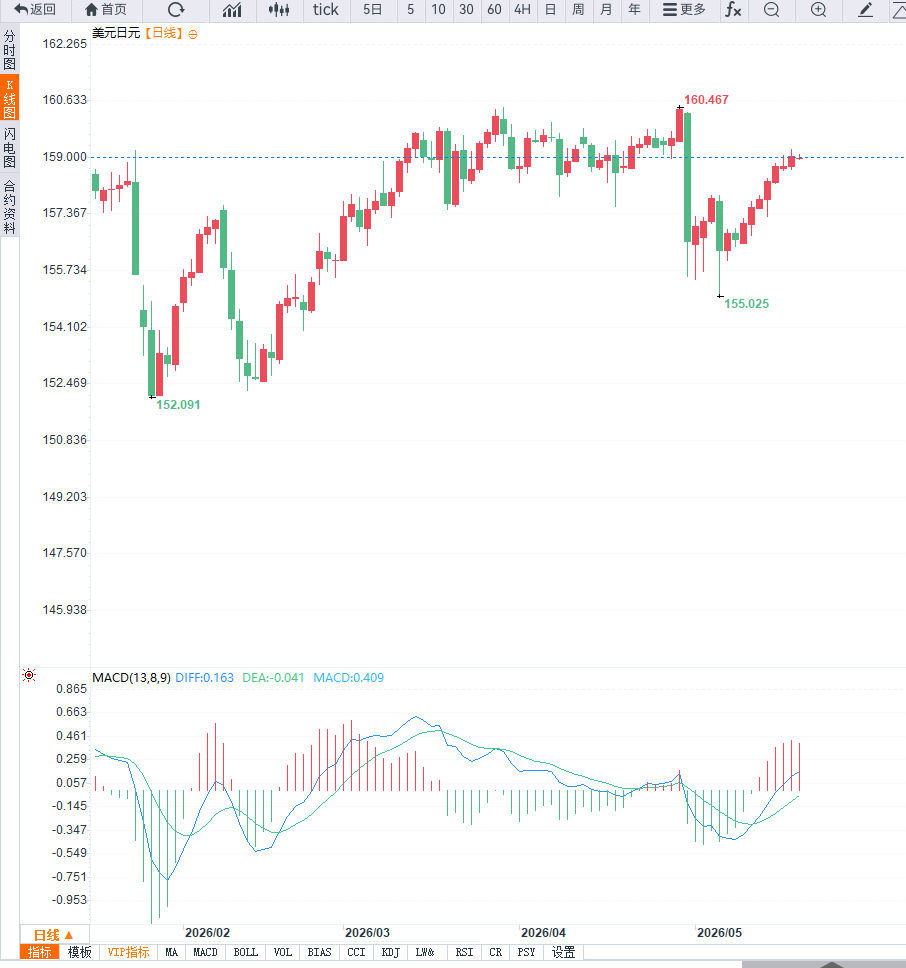
Overall, the USD/JPY market is currently influenced by two main factors: "demand for the safe-haven dollar" and "risk of Japanese intervention." As long as US yields remain high and tensions in the Middle East persist, the dollar will generally remain supported. However, as USD/JPY approaches the key 160 level, expectations of official Japanese intervention will continue to limit further upside potential.
Editor's Summary : The USD/JPY exchange rate has entered a typical "high-level sensitive phase." On the one hand, escalating tensions in the Middle East, rising international oil prices, and the high-interest-rate environment in the US continue to drive the dollar's strength. On the other hand, the Japanese government's increased vigilance regarding exchange rate fluctuations has made the 160 level a significant psychological dividing line for the market. In the short term, as long as global risk aversion remains high, USD/JPY is generally biased towards an upward trend. However, due to the possibility of verbal or even actual intervention by the Japanese government, market volatility may increase significantly. In the coming days, Japanese inflation data, changes in US Treasury yields, and developments in the Middle East will be the core variables determining the next direction of the USD/JPY exchange rate.
The market's focus remains on the escalating geopolitical risks between the United States and Iran. US President Trump stated on Tuesday that the US might resume strikes against Iran "within the next two to three days" to push for an agreement. Previously, Trump had stated that the US had suspended planned military operations and that Iran had proposed a new ceasefire, but his subsequent hardline stance has again altered market expectations for a de-escalation of the situation.
Iran, meanwhile, continued to issue a strong response. Iranian officials stated that any large-scale military action by the United States would be met with a "resolute response," and emphasized that Iran was prepared to face any military aggression. This implies that the situation in the Middle East remains highly uncertain in the short term. Against this backdrop, demand for safe-haven assets in international markets has clearly increased. As the US dollar remains a core safe-haven currency in global financial markets, funds continue to flow into dollar assets, pushing the dollar index to remain high. Especially given the continued rise in international oil prices, the market has begun to worry again about a possible resurgence of global inflationary pressures, further reinforcing expectations that the Federal Reserve will maintain high interest rates.
For USD/JPY, the biggest supporting factor remains the significantly widening interest rate differential between the US and Japan. US long-term Treasury yields have been rising steadily recently, with the 10-year yield remaining above 4.6%, while Japanese government bond yields remain well below US levels. This large interest rate differential continues to attract carry trader funds to buy US dollars and sell yen. However, market concerns about Japanese government intervention in the exchange rate are clearly limiting the upside potential of USD/JPY. As the exchange rate approaches the 160 level again, the Japanese Ministry of Finance and the Bank of Japan have begun to strengthen verbal warnings.
Japanese Finance Minister Katayama stated on Monday that the Japanese government is prepared to respond to excessive foreign exchange volatility, while emphasizing that any intervention will be implemented to avoid pushing up US Treasury yields. The market generally believes that the Japanese government is currently on "high alert." In recent years, the Japanese government has repeatedly intervened directly in the market during periods of rapid appreciation of the US dollar against the yen. Especially when the exchange rate approaches or breaks through the 160 level, Japan typically significantly increases its intervention. Therefore, some bullish investors in the market are currently becoming more cautious.
In addition, some positive signals emerged from Japanese economic data. Japan's first-quarter GDP figures exceeded market expectations, indicating that the Japanese economy still possesses a certain degree of resilience. However, the market's overall reaction was relatively limited. Norihiro Yamaguchi, chief economist for Japan at Oxford Economics, stated that although Japan's first-quarter GDP growth reached 0.5%, the market is more concerned about the drag on the Japanese economy from future high energy costs. Given Japan's heavy reliance on energy imports, rising international oil prices will significantly increase cost pressures on businesses and households, which is a key reason for the market's cautious outlook on the yen's medium- to long-term trend.
The upcoming national Consumer Price Index (CPI) data in Japan will be a crucial variable affecting the yen. If Japanese inflation continues to exceed market expectations, the market may increase its bets on the Bank of Japan further exiting its ultra-loose monetary policy, thus providing support for the yen.
From a technical perspective, the USD/JPY pair maintains a clear upward trend on the daily chart. The exchange rate is currently trading above both the 50-day and 200-day exponential moving averages, indicating that the medium- to long-term bullish structure remains intact. In particular, after finding support around the 157 area, the market has resumed its upward momentum. The daily stochastic oscillator is currently hovering near high levels, showing some short-term overbought signs, but no clear top reversal signal has yet formed, suggesting that bullish momentum remains strong.
Looking at the upside, the 160 level remains the most significant psychological resistance. If the situation in the Middle East continues to escalate, and US Treasury yields rise further, USD/JPY could test 160 or even higher. However, downside risks are also worth noting. Due to the significantly increased risk of Japanese government intervention, the market is generally wary of the 160 area. If the Japanese Ministry of Finance takes substantial intervention action, USD/JPY could quickly fall back to the 157 or even 155 area.
From a 4-hour chart perspective, USD/JPY is currently in a high-level consolidation phase. The exchange rate remains above the short-term moving average system, but short-term momentum has slowed. The Stochastic RSI indicator has begun to decline from its highs, indicating a weakening of short-term buying interest. Furthermore, the 4-hour chart shows significant short-term resistance in the 159.20-159.50 area, while a temporary support level forms around 158.30. If the exchange rate fails to break through 159.50 effectively, the market may enter a short-term consolidation phase.
Overall, the USD/JPY market is currently influenced by two main factors: "demand for the safe-haven dollar" and "risk of Japanese intervention." As long as US yields remain high and tensions in the Middle East persist, the dollar will generally remain supported. However, as USD/JPY approaches the key 160 level, expectations of official Japanese intervention will continue to limit further upside potential.
Editor's Summary : The USD/JPY exchange rate has entered a typical "high-level sensitive phase." On the one hand, escalating tensions in the Middle East, rising international oil prices, and the high-interest-rate environment in the US continue to drive the dollar's strength. On the other hand, the Japanese government's increased vigilance regarding exchange rate fluctuations has made the 160 level a significant psychological dividing line for the market. In the short term, as long as global risk aversion remains high, USD/JPY is generally biased towards an upward trend. However, due to the possibility of verbal or even actual intervention by the Japanese government, market volatility may increase significantly. In the coming days, Japanese inflation data, changes in US Treasury yields, and developments in the Middle East will be the core variables determining the next direction of the USD/JPY exchange rate.
- Risk Warning and Disclaimer
- The market involves risk, and trading may not be suitable for all investors. This article is for reference only and does not constitute personal investment advice, nor does it take into account certain users’ specific investment objectives, financial situation, or other needs. Any investment decisions made based on this information are at your own risk.