Gold prices rebounded, driven by a combination of factors including falling US Treasury yields, lower oil prices, and easing geopolitical expectations.
2026-05-20 23:58:43
On Wednesday (May 20), during the US trading session, US Treasury yields fell significantly. The 10-year Treasury yield dropped about 6.7 basis points to a daily low below 4.6% (around 4.58%-4.60% during the session), the 2-year yield fell more than 5.5 basis points to below 4.06%, and the 30-year yield also fell more than 5 basis points to below 5.13%. This movement coincided with the decline in oil prices, becoming a significant catalyst for the rebound in gold prices from recent lows.

Spot gold (XAU/USD) rose about 1%, touching around $4,525-$4,535 per ounce, recovering from a more than seven-week low. US gold futures also rose in tandem. Other precious metals, such as silver, also performed strongly.
Lower yields reduce the opportunity cost of holding gold
Rising government bond yields directly increase the opportunity cost of holding non-yielding assets such as gold, as investors can obtain higher risk-free returns from bonds. Previously, the Middle East conflict pushed oil prices above $100 per barrel, exacerbating inflation concerns and driving yields up rapidly (the 10-year yield once approached its recent high of 4.68%-4.69%). High yields and a strong dollar together suppressed gold's performance.
With oil prices falling (Brent crude and WTI down about 4%), inflationary pressures have eased in the short term, leading to a decline in US Treasury yields. This change immediately reduced pressure on gold. Analysts noted, "The trend of continuously rising yields has eased, so we are seeing gold prices rebound from recent lows." A lower yield environment is conducive to the renewed attractiveness of safe-haven assets such as gold.
Falling oil prices and expectations of easing geopolitical tensions
The sharp drop in oil prices was the key trigger for this market movement. Market expectations that the Strait of Hormuz might reopen soon reduced the risk of supply disruptions. Trump's reiteration that the war with Iran would end "soon" further strengthened the prospects for peace negotiations.
Despite a significant drop in U.S. crude oil inventories last week (an actual decrease of 7.9 million barrels, far exceeding expectations), geopolitical optimism dominated the market. The decline in energy prices directly eased inflation concerns, reducing pressure on the Federal Reserve to maintain high interest rates or raise rates. Lower fuel costs help control overall price levels, whereas previously, soaring oil prices had forced the market to price in a nearly 50% probability of a Fed rate hike in December.
Federal Reserve Policy Outlook and Meeting Minutes
Investors are focused today on the minutes of the Federal Reserve's April FOMC meeting, looking for clues about interest rate hikes or an assessment of their impact on energy prices. The market currently expects a high probability of interest rates remaining unchanged in June, with a 40-48% probability of a rate hike in December. If the minutes show the Fed is more optimistic about the inflation path (thanks to the decline in oil prices), it will further benefit gold.
In the long run, high bond yields put pressure on US fiscal policy (leading to a significant increase in interest payments). If investor confidence in the bond market wavers, gold's appeal as a safe-haven asset will increase. Analysts believe that market sentiment could shift rapidly when yields reach a critical level.
Other influencing factors and risks
Dollar Performance: The dollar index weakened (down about 0.3%) as yields and oil prices fell, which provided direct support for dollar-denominated gold.
Central bank gold purchases: Global central bank demand continues to provide underlying support, although it is suppressed in the short term by interest rates and the dollar.
Short-term caution: Some institutions (such as Citigroup) remain cautious about gold in the short term, with a target price around $4,300. However, the long-term fundamentals are solid, especially if fiscal concerns or new growth risks outweigh inflation concerns.
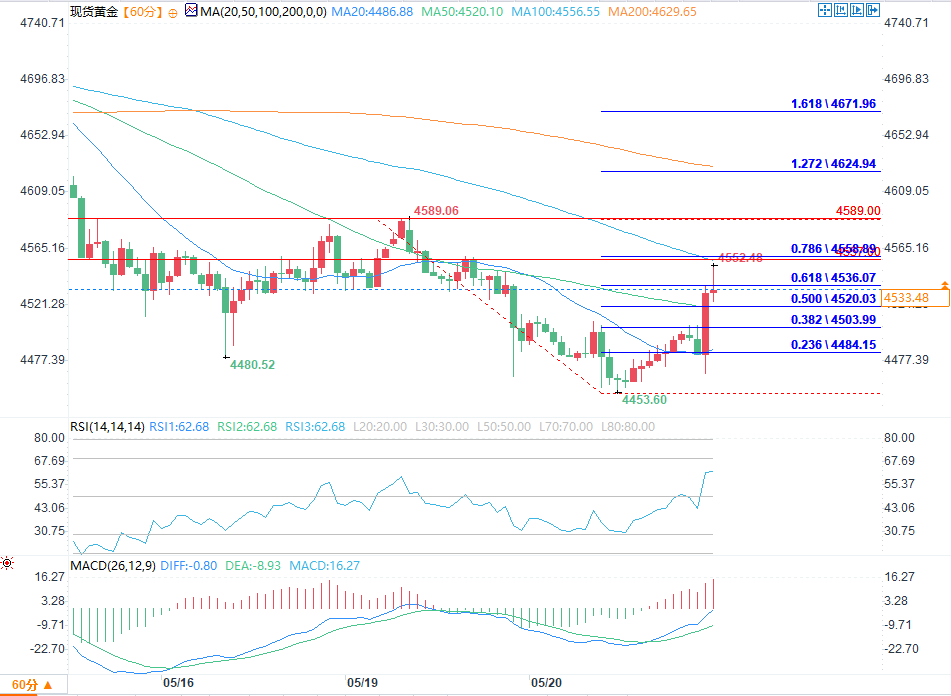
(Spot gold 1-hour chart source: EasyForex)
Summarize
This recent gold price surge is the result of a confluence of factors: falling oil prices eased inflationary and yield pressures, geopolitical tensions reduced risk premiums, and a weaker dollar provided technical support. In the short term, the market will focus on the Fed minutes and progress in Middle East negotiations. If the Strait of Hormuz truly opens or peace signals strengthen, gold may face profit-taking; however, if yields continue to fluctuate at high levels or fiscal concerns intensify, gold's role as a hedging tool will once again become prominent. Currently, gold prices are stabilizing above $4,500; the focus is on whether they can effectively break through recent resistance and hold above that level.
Investors need to closely monitor geopolitical developments and the results of the US Treasury auction (20-year Treasury bonds are being auctioned today), as these will determine the sustainability of the rebound. Gold market sentiment is shifting from defensive to cautiously optimistic.
At 23:47 Beijing time, spot gold was trading at $4,536.83 per ounce, up 1.23%.
Spot gold (XAU/USD) rose about 1%, touching around $4,525-$4,535 per ounce, recovering from a more than seven-week low. US gold futures also rose in tandem. Other precious metals, such as silver, also performed strongly.
Lower yields reduce the opportunity cost of holding gold
Rising government bond yields directly increase the opportunity cost of holding non-yielding assets such as gold, as investors can obtain higher risk-free returns from bonds. Previously, the Middle East conflict pushed oil prices above $100 per barrel, exacerbating inflation concerns and driving yields up rapidly (the 10-year yield once approached its recent high of 4.68%-4.69%). High yields and a strong dollar together suppressed gold's performance.
With oil prices falling (Brent crude and WTI down about 4%), inflationary pressures have eased in the short term, leading to a decline in US Treasury yields. This change immediately reduced pressure on gold. Analysts noted, "The trend of continuously rising yields has eased, so we are seeing gold prices rebound from recent lows." A lower yield environment is conducive to the renewed attractiveness of safe-haven assets such as gold.
Falling oil prices and expectations of easing geopolitical tensions
The sharp drop in oil prices was the key trigger for this market movement. Market expectations that the Strait of Hormuz might reopen soon reduced the risk of supply disruptions. Trump's reiteration that the war with Iran would end "soon" further strengthened the prospects for peace negotiations.
Despite a significant drop in U.S. crude oil inventories last week (an actual decrease of 7.9 million barrels, far exceeding expectations), geopolitical optimism dominated the market. The decline in energy prices directly eased inflation concerns, reducing pressure on the Federal Reserve to maintain high interest rates or raise rates. Lower fuel costs help control overall price levels, whereas previously, soaring oil prices had forced the market to price in a nearly 50% probability of a Fed rate hike in December.
Federal Reserve Policy Outlook and Meeting Minutes
Investors are focused today on the minutes of the Federal Reserve's April FOMC meeting, looking for clues about interest rate hikes or an assessment of their impact on energy prices. The market currently expects a high probability of interest rates remaining unchanged in June, with a 40-48% probability of a rate hike in December. If the minutes show the Fed is more optimistic about the inflation path (thanks to the decline in oil prices), it will further benefit gold.
In the long run, high bond yields put pressure on US fiscal policy (leading to a significant increase in interest payments). If investor confidence in the bond market wavers, gold's appeal as a safe-haven asset will increase. Analysts believe that market sentiment could shift rapidly when yields reach a critical level.
Other influencing factors and risks
Dollar Performance: The dollar index weakened (down about 0.3%) as yields and oil prices fell, which provided direct support for dollar-denominated gold.
Central bank gold purchases: Global central bank demand continues to provide underlying support, although it is suppressed in the short term by interest rates and the dollar.
Short-term caution: Some institutions (such as Citigroup) remain cautious about gold in the short term, with a target price around $4,300. However, the long-term fundamentals are solid, especially if fiscal concerns or new growth risks outweigh inflation concerns.
(Spot gold 1-hour chart source: EasyForex)
Summarize
This recent gold price surge is the result of a confluence of factors: falling oil prices eased inflationary and yield pressures, geopolitical tensions reduced risk premiums, and a weaker dollar provided technical support. In the short term, the market will focus on the Fed minutes and progress in Middle East negotiations. If the Strait of Hormuz truly opens or peace signals strengthen, gold may face profit-taking; however, if yields continue to fluctuate at high levels or fiscal concerns intensify, gold's role as a hedging tool will once again become prominent. Currently, gold prices are stabilizing above $4,500; the focus is on whether they can effectively break through recent resistance and hold above that level.
Investors need to closely monitor geopolitical developments and the results of the US Treasury auction (20-year Treasury bonds are being auctioned today), as these will determine the sustainability of the rebound. Gold market sentiment is shifting from defensive to cautiously optimistic.
At 23:47 Beijing time, spot gold was trading at $4,536.83 per ounce, up 1.23%.
- Risk Warning and Disclaimer
- The market involves risk, and trading may not be suitable for all investors. This article is for reference only and does not constitute personal investment advice, nor does it take into account certain users’ specific investment objectives, financial situation, or other needs. Any investment decisions made based on this information are at your own risk.