Improved German economic data failed to reverse the euro's decline, and the euro remained in a low-level range against the pound.
2026-05-22 15:43:46
The euro continued its downward pressure against the pound sterling (EUR/GBP) in Friday's European foreign exchange trading session, falling to a near 11-day low and declining by nearly 0.85% for the week. Overall market performance indicates that investors' confidence in the resilience of the UK economy is significantly higher than that of the Eurozone. Although the latest German economic data was generally better than market expectations, it failed to effectively boost the euro. Data showed that Germany's first-quarter GDP growth rate remained at 0.3%, consistent with the preliminary estimate.

Meanwhile, Germany's annualized GDP growth rate was revised upward from the previous estimate of 0.3% to 0.4% , indicating that Europe's largest economy is still maintaining a moderate recovery. Furthermore, Germany's GfK consumer confidence index also improved. The June consumer confidence index rose to -29.8, better than the market expectation of -34 and higher than the previously revised -33.1.
Although the data remains in negative territory, the market believes that German consumer confidence is gradually approaching pre-Middle East escalation levels. However, the euro's reaction has been relatively limited. Market analysts point out that while German economic data has shown marginal improvement, the overall economic outlook for the Eurozone still faces significant pressure.
The market is more concerned about the slowdown in Eurozone economic growth and the risk of stagflation than about short-term improvements in individual data . Previously released Eurozone PMI data showed a significant slowdown in business activity, while service sector and energy costs continued to rise. This combination of slowing growth and high inflation is reinforcing market concerns about the risk of stagflation in Europe.
At the same time, the market remains cautious about the future policy path of the European Central Bank. Investors worry that if the ECB continues to maintain high interest rates, it could further drag down already weak economic growth.
On the other hand, despite weak retail sales data released by the UK, the pound remained relatively strong overall. Data from the UK Office for National Statistics showed that UK retail sales fell 1.3% month-on-month in April, significantly worse than the market expectation of a 0.6% decline. Core retail sales, excluding fuel, fell 0.4% month-on-month, also slightly weaker than market expectations.
Normally, weak consumer data would weigh on the pound. However, the market reaction this time was relatively limited, mainly because investors were more focused on the overall resilience of the UK economy. Previously released UK PMI data showed that overall business activity in the UK was significantly better than in the Eurozone. This led the market to believe that the UK economy is currently more resilient to risks.
The resilience of UK economic activity compared to the Eurozone has been a key factor supporting the pound recently . Furthermore, market concerns about UK political stability have eased somewhat. Previously, leadership pressures on the UK Prime Minister had weighed on the pound, but recent improvements in market risk sentiment have led to a return of funds to pound-denominated assets.
From a global market perspective, the strength of the US dollar also indirectly affects the performance of the euro. As the market anticipates that the Federal Reserve may maintain high interest rates for an extended period, global funds continue to flow into dollar-denominated assets. At the same time, the situation in the Middle East remains complex, and energy prices remain generally high, further increasing the pressure on the Eurozone economy.
The Eurozone is highly dependent on energy imports, so high energy prices typically drag down its economy . This is especially true given the current weak manufacturing and consumer demand in Europe; high energy costs further increase the pressure on businesses and households.
From a technical perspective, the euro/pound pair has recently formed a clear downward structure. The daily chart shows that EUR/GBP continues to trade below major moving averages, with short-term moving averages beginning to align in a bearish formation, indicating an overall bearish market trend. The daily MACD indicator has formed a death cross below the zero line, and the green histogram bars are expanding, suggesting increasing bearish momentum. The RSI indicator has fallen to around 45, indicating significantly weak market sentiment, but it has not yet entered extreme oversold territory. The key support level is currently around 0.8460; a break below this level could lead to further tests of 0.8420 and 0.8380.
The main resistance levels are located at 0.8520 and 0.8560. If the pair fails to regain and hold above these levels, the overall weakness of the euro against the pound may continue. Overall, the euro/pound pair currently maintains a clearly bearish structure on both the daily and 4-hour charts, and the market is more inclined to continue to favor the pound's relative performance in the short term.
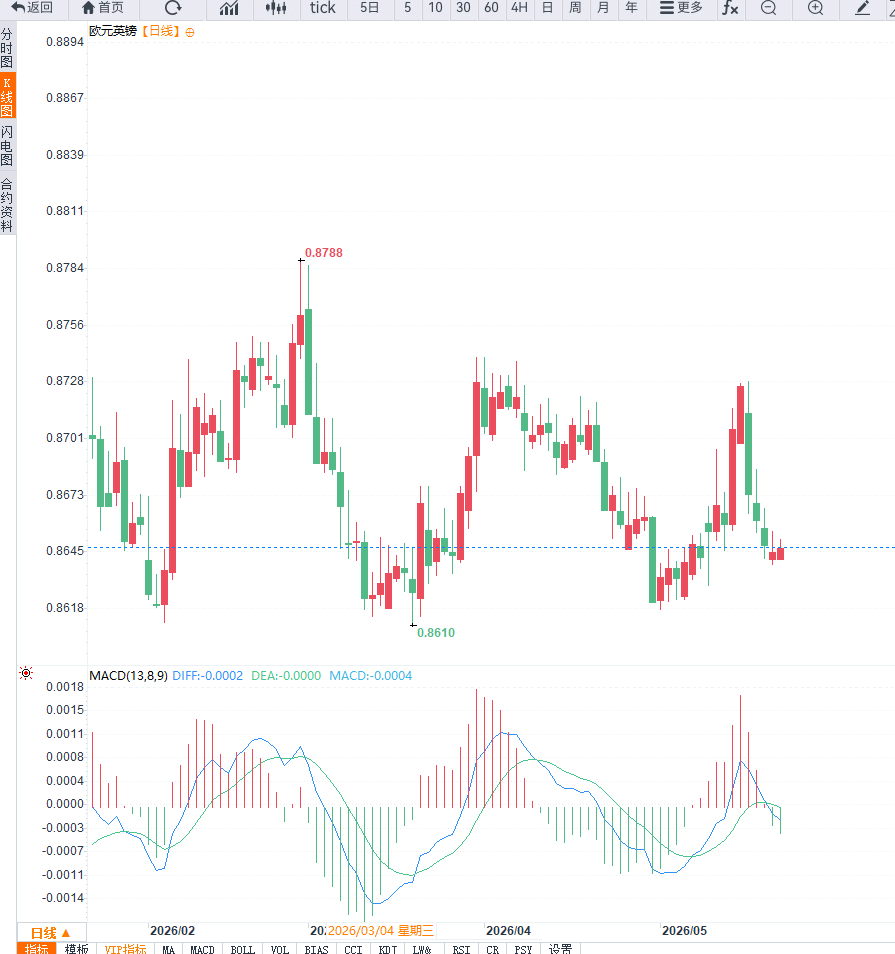
Editor's Summary : The core logic behind the current EUR/GBP exchange rate movement revolves around "Eurozone growth concerns" and "UK economic resilience." While German economic data has improved, the market is more focused on the overall stagflation risk in the Eurozone and the European Central Bank's policy dilemma. In contrast, UK business activity has been relatively stable, and easing political risks continue to support the pound's performance. From a technical perspective, EUR/GBP has formed a clear downtrend. Going forward, the market will focus on European economic data, Bank of England policy, and changes in global energy prices. If the Eurozone economy continues to weaken while the UK economy remains relatively stable, the EUR/GBP exchange rate still faces further downside risks.
Meanwhile, Germany's annualized GDP growth rate was revised upward from the previous estimate of 0.3% to 0.4% , indicating that Europe's largest economy is still maintaining a moderate recovery. Furthermore, Germany's GfK consumer confidence index also improved. The June consumer confidence index rose to -29.8, better than the market expectation of -34 and higher than the previously revised -33.1.
Although the data remains in negative territory, the market believes that German consumer confidence is gradually approaching pre-Middle East escalation levels. However, the euro's reaction has been relatively limited. Market analysts point out that while German economic data has shown marginal improvement, the overall economic outlook for the Eurozone still faces significant pressure.
The market is more concerned about the slowdown in Eurozone economic growth and the risk of stagflation than about short-term improvements in individual data . Previously released Eurozone PMI data showed a significant slowdown in business activity, while service sector and energy costs continued to rise. This combination of slowing growth and high inflation is reinforcing market concerns about the risk of stagflation in Europe.
At the same time, the market remains cautious about the future policy path of the European Central Bank. Investors worry that if the ECB continues to maintain high interest rates, it could further drag down already weak economic growth.
On the other hand, despite weak retail sales data released by the UK, the pound remained relatively strong overall. Data from the UK Office for National Statistics showed that UK retail sales fell 1.3% month-on-month in April, significantly worse than the market expectation of a 0.6% decline. Core retail sales, excluding fuel, fell 0.4% month-on-month, also slightly weaker than market expectations.
Normally, weak consumer data would weigh on the pound. However, the market reaction this time was relatively limited, mainly because investors were more focused on the overall resilience of the UK economy. Previously released UK PMI data showed that overall business activity in the UK was significantly better than in the Eurozone. This led the market to believe that the UK economy is currently more resilient to risks.
The resilience of UK economic activity compared to the Eurozone has been a key factor supporting the pound recently . Furthermore, market concerns about UK political stability have eased somewhat. Previously, leadership pressures on the UK Prime Minister had weighed on the pound, but recent improvements in market risk sentiment have led to a return of funds to pound-denominated assets.
From a global market perspective, the strength of the US dollar also indirectly affects the performance of the euro. As the market anticipates that the Federal Reserve may maintain high interest rates for an extended period, global funds continue to flow into dollar-denominated assets. At the same time, the situation in the Middle East remains complex, and energy prices remain generally high, further increasing the pressure on the Eurozone economy.
The Eurozone is highly dependent on energy imports, so high energy prices typically drag down its economy . This is especially true given the current weak manufacturing and consumer demand in Europe; high energy costs further increase the pressure on businesses and households.
From a technical perspective, the euro/pound pair has recently formed a clear downward structure. The daily chart shows that EUR/GBP continues to trade below major moving averages, with short-term moving averages beginning to align in a bearish formation, indicating an overall bearish market trend. The daily MACD indicator has formed a death cross below the zero line, and the green histogram bars are expanding, suggesting increasing bearish momentum. The RSI indicator has fallen to around 45, indicating significantly weak market sentiment, but it has not yet entered extreme oversold territory. The key support level is currently around 0.8460; a break below this level could lead to further tests of 0.8420 and 0.8380.
The main resistance levels are located at 0.8520 and 0.8560. If the pair fails to regain and hold above these levels, the overall weakness of the euro against the pound may continue. Overall, the euro/pound pair currently maintains a clearly bearish structure on both the daily and 4-hour charts, and the market is more inclined to continue to favor the pound's relative performance in the short term.
Editor's Summary : The core logic behind the current EUR/GBP exchange rate movement revolves around "Eurozone growth concerns" and "UK economic resilience." While German economic data has improved, the market is more focused on the overall stagflation risk in the Eurozone and the European Central Bank's policy dilemma. In contrast, UK business activity has been relatively stable, and easing political risks continue to support the pound's performance. From a technical perspective, EUR/GBP has formed a clear downtrend. Going forward, the market will focus on European economic data, Bank of England policy, and changes in global energy prices. If the Eurozone economy continues to weaken while the UK economy remains relatively stable, the EUR/GBP exchange rate still faces further downside risks.
- Risk Warning and Disclaimer
- The market involves risk, and trading may not be suitable for all investors. This article is for reference only and does not constitute personal investment advice, nor does it take into account certain users’ specific investment objectives, financial situation, or other needs. Any investment decisions made based on this information are at your own risk.