













May 25th Financial Breakfast: Federal Reserve Governor Waller joins the effort to abandon easing policies; gold prices may target the $4600 mark; US-Iran talks may be held next week; oil prices plunge over 5%.
2026-05-25 07:25:48
On Monday (May 25, Beijing time) in early Asian trading, spot gold rose more than 1%, trading around $4,576 per ounce, and may test $2,600 per ounce during the day; the probability of a Fed rate hike this year rose to 67.1%, and Fed Governor Waller joined in calling for abandoning the dovish tendency; US crude oil opened more than 5% lower on Monday, falling as low as around $91.25 per barrel, and Iranian media disclosed over the weekend the conditions of the memorandum of understanding reached between Iran and the US, with the next round of talks possibly taking place on June 5.

Intercontinental Exchange (ICE): In remembrance of fallen soldiers, trading in its Brent crude oil futures contracts ended early at 01:30 Beijing time on the 26th.
London Stock Exchange: Closed for the Spring Bank Holiday.
Hong Kong Stock Exchange: On Buddha's Birthday, the Hong Kong stock market will be closed for one day, and both northbound and southbound trading will be suspended.
CME Group: On Memorial Day, trading in its precious metals and U.S. crude oil futures contracts will be suspended at 02:30 Beijing time on the 26th, and trading in stock index futures contracts will be suspended at 01:00 Beijing time on the 26th.
Seoul Stock Exchange: Closed for one day as a make-up holiday for Buddha's Birthday.
NYSE: Memorial service for fallen soldiers; US stock market closed for one day.
U.S. stocks rose on Friday, with the Dow Jones Industrial Average hitting a new closing high. The Dow rose 0.58% to 50,579.70 points, the S&P 500 rose 0.37% to 7,473.47 points, and the Nasdaq Composite rose 0.19% to 26,343.97 points. Investors were encouraged by progress in U.S.-Iran negotiations and strong corporate earnings season. The S&P 500 rose for the eighth consecutive week, its longest winning streak since December 2023. Most semiconductor stocks rose, with Qualcomm surging 12% and boosting the Philadelphia Semiconductor Index, but Nvidia fell 1.90%.
US Secretary of State Marco Rubio said there had been progress in US-Iran negotiations but more work remained to be done, while the Iranian Foreign Ministry said the differences between the two sides remained deep.
Analysts pointed to strong earnings season performance, robust economic data, and news of easing tensions in the Middle East, which boosted market sentiment.
Nine of the eleven sectors in the S&P 500 rose, with healthcare, utilities, industrials, and technology leading the gains, while communication services and consumer staples declined. Dell surged 17% and HP rose 15%, boosted by strong Lenovo earnings. Long-term Treasury yields fell, with the 10-year Treasury yield dropping 2.6 basis points to 4.558%.
Warsh was sworn in as Federal Reserve chairman last Friday, at a time when the U.S. economy is facing pressure from the Iran conflict pushing up gasoline prices and inflation. Estée Lauder rose 12% after ending merger talks with Spanish perfumer Puig.
Gold prices fell on Friday, marking their second consecutive weekly decline, mainly due to rising oil prices exacerbating inflation concerns and increasing market expectations for a Federal Reserve rate hike.
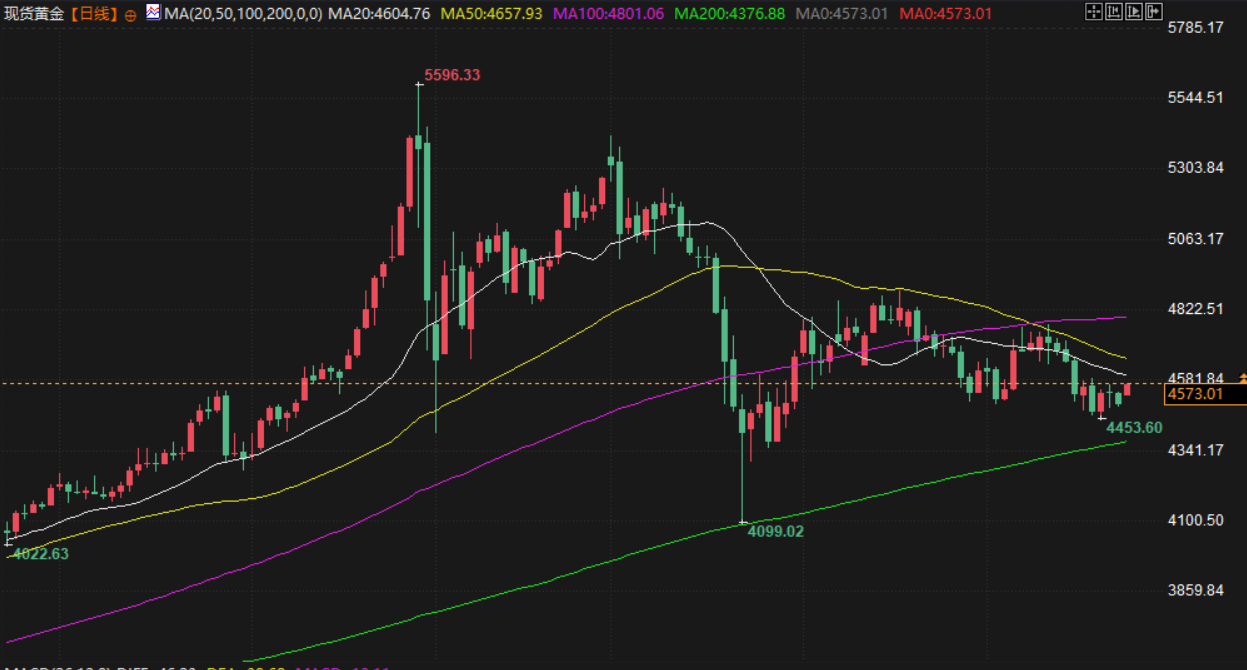
Spot gold was trading at $4,506.82 per ounce, down 0.8%, having fallen as much as 1% during the session. It had fallen 0.69% last week. StoneX analysts noted that the market was focused on the situation in the Strait of Hormuz and the risk of supply chain disruptions, which triggered concerns about inflation and interest rate hikes.
Oil prices rose as investors remained skeptical about a potential breakthrough in US-Iran negotiations. The yield on the 10-year US Treasury bond recovered its earlier losses and remained high, diminishing the appeal of gold.
The CME Group's FedWatch tool shows that traders are pricing in a 58% probability of at least one rate hike before the end of December. Federal Reserve Governor Waller has also called for abandoning the dovish bias and opening the door to rate hikes. In addition, the U.S. consumer confidence index fell to a record low in May due to soaring gasoline prices. Spot silver, platinum, and palladium also recorded weekly declines.
Oil prices fell on Friday as the market anticipated peace talks between the US and Iran. Brent crude fell 0.92% to $103.90 a barrel, while WTI crude fell 1.02% to $97 a barrel, both of which had risen more than 3% during the session. However, on a weekly basis, Brent crude fell 5.48% and WTI crude fell sharply by 8.37%, with fluctuating market expectations for a peace agreement causing significant price volatility.
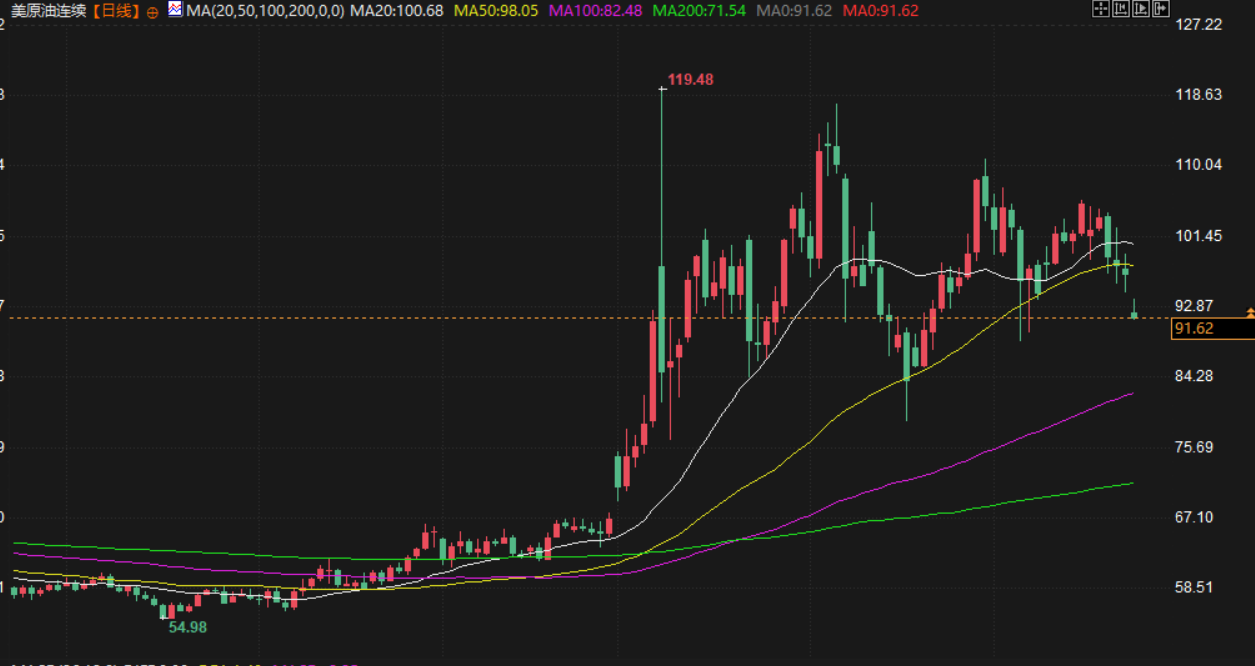
Analysts pointed out that the news flowed back and forth, with US Secretary of State Rubio stating that the negotiations had made "some positive signs" but there was still more work to be done, as the parties still had differences on issues such as Tehran's uranium stockpile and the control of the Strait of Hormuz.
Meanwhile, a Qatari negotiating delegation has arrived in Tehran to assist in facilitating the agreement, and the Pakistani Army Chief of Staff has also departed for Iran. Despite the fragile ceasefire agreement lasting six weeks, high oil prices continue to cause investor concerns about inflation and the global economic outlook.
The head of the UAE's national oil company stated that even if the conflict were to end now, oil shipments through the Straits of Hormuz would not fully recover until the first or second quarter of 2027. Furthermore, four sources revealed that the seven major OPEC+ oil-producing countries may agree to a slight increase in July production at their meeting on June 7th, despite oil shipments from several countries still being disrupted by the war.
The dollar index rose 0.12% to 99.32 on Friday, remaining near a six-week high, as traders weighed the prospect of an end to the Middle East war and the risk that accelerating inflation could prompt the Federal Reserve to raise interest rates. U.S. Secretary of State Marco Rubio said that some progress had been made in negotiations with Iran but more efforts were needed, while Iran said that the two sides had deep differences. Continued energy disruptions exacerbated market concerns about tighter monetary policy.
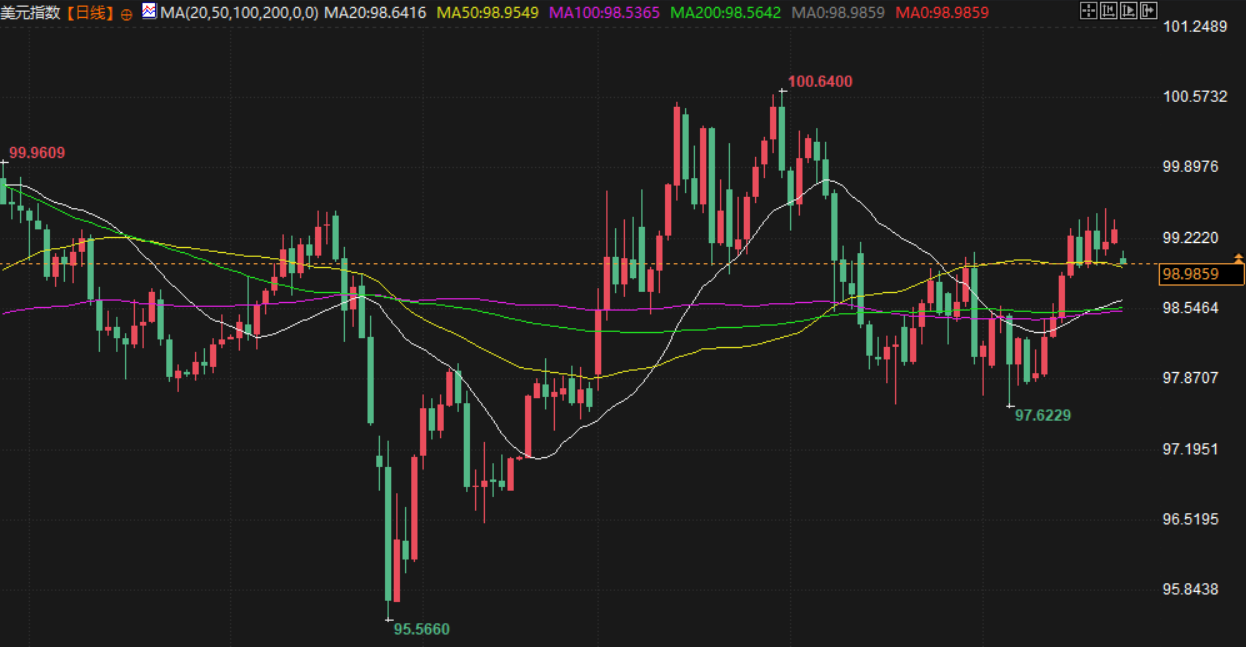
Federal funds futures indicate a 50% probability of an interest rate hike before the end of October. A University of Michigan survey showed that U.S. consumer confidence fell to a record low in May. Federal Reserve Governor Waller called for abandoning the "dodging bias" to open the door to interest rate hikes, while Warsh was sworn in as Federal Reserve Chairman on the same day.
The euro fell to 1.1611 against the dollar, while the pound sterling edged up 0.11% to 1.3444, after UK retail sales recorded their biggest drop in nearly a year in April. Australia faced a shortage of aviation fuel and diesel, causing the Australian dollar to fall 0.15% to 0.7136 against the US dollar, after an unexpected drop in Australian employment in April and the unemployment rate rising to its highest level since the end of 2021.
The yen fell 0.1% to 159.11 against the dollar, remaining fragile despite possible intervention in the currency market by Tokyo. Japan's core inflation rate slowed to a four-year low in April, and the Bank of Japan is expected to raise interest rates only gradually, while other central banks may act more quickly, putting pressure on the yen.
Iran says it has not yet made any commitments regarding the details of the nuclear issue.
On May 24 local time, Iran stated that previous reports in Israeli media that Iran would not receive facilitation to unfreeze its funds before beginning the transfer of its enriched uranium reserves were incorrect. Iran is unwilling to link the unfreezing of assets with the nuclear materials issue, and has not yet made any commitments regarding the details of the nuclear issue. Iran indicated that once an understanding can be announced, some frozen assets should be unfrozen immediately, ensuring Iran's full access to these assets. According to Iranian sources, failure to unfreeze the assets would cross one of Iran's red lines, making a consensus impossible. Iran also stated that due to various reasons, including US obstruction of unfreezing Iranian assets, the content of the memorandum of understanding has not yet been finalized, thus raising the possibility of failing to reach a consensus. (CCTV)
Trump: US-Iran deal "not fully agreed upon"
US President Donald Trump said on the 24th that the agreement between the US and Iran is "not fully finalized," accusing some uninformed people of "making unwarranted criticisms." Trump posted on social media, "If I reach an agreement with Iran, it will be a good, appropriate agreement." "Nobody has seen it or knows what it's about. It's not fully finalized. So don't listen to the losers who are criticizing something they don't understand." According to US media reports, although the draft agreement has not been publicly released, some in the US have fiercely criticized it, saying it actually undermines the goals set by the Trump administration itself. White House officials told the media that day that the US and Iran are "still several days away" from signing an agreement. (Xinhua)
Israeli media: Trump assured Israel that the agreement with Iran would dismantle its nuclear program.
The Times of Israel website reported on the 24th, citing a senior Israeli official, that US President Trump stated in a phone call with Israeli Prime Minister Netanyahu the previous night that he would insist on dismantling Iran's nuclear program. The report stated that Trump "assured" Netanyahu that the "final agreement" reached with Iran would completely dismantle Iran's nuclear program. The unnamed Israeli official said, "Trump made it clear that he would insist on his long-standing demands in the negotiations—the dismantling of Iran's nuclear program and the removal of all enriched uranium from Iranian territory—and he would not sign the final agreement if these conditions were not met." (Xinhua)
The Iranian president stated that Iran is ready to declare to the world at any time that it is not seeking nuclear weapons.
On the 24th local time, Iranian President Pezechzian, in an interview with the Iranian state news agency, mentioned potential future negotiations with the United States. Pezechzian stated that Iran is ready to declare to the world that it does not seek nuclear weapons, nor does it seek to create regional instability. In the interview, Pezechzian criticized Israel, saying it undermines regional stability and instigates wars and conflicts in various ways. Pezechzian stated that the Iranian government and its negotiating delegation will not compromise on issues involving national honor and dignity. (CCTV News)
Saudi media reports that the US and Iran will soon reach a preliminary agreement.
Al Arabiya TV reported on the 24th, citing sources, that the United States and Iran will soon reach a preliminary agreement. The report stated that the preliminary agreement between the US and Iran will be a memorandum of understanding, which Pakistan will announce without the presence of other negotiating parties. Following this, the US and Iran will negotiate a final agreement, with the next round of talks potentially taking place on June 5th. US President Trump posted on social media on the 23rd that the US and Iran have essentially reached an agreement, pending final confirmation from the US, Iran, and relevant countries. (Xinhua)
Iran says it is in its third phase of defense.
On May 24, Abdullah, commander of the Hatem Anbya Central Command of the Iranian Armed Forces, declared a "historic victory" for the Iranian nation in the current conflict and stated that Iran is shaping a "new global power structure centered on Iran." He indicated that Iran is currently in the "third defense" phase, requiring the entire nation to remain highly vigilant, and called on the people to continue following the leadership of Supreme Leader Mojtaba Khamenei to safeguard national interests and rights. He also stated that Iran will "ensure the security of the Persian Gulf region" and "end enemy interference in this waterway," emphasizing that Iran's strategy regarding "managing the Persian Gulf and the Strait of Hormuz" will determine the future order of the region, and that "foreign powers have no place in the region." He further warned that the Iranian armed forces are prepared to respond "strongly and devastatingly" to any act of aggression. (CCTV International News)
Iranian media revealed the conditions of the memorandum of understanding reached between Iran and the United States.
Iran's Tasnim News Agency disclosed on the 24th the conditions for the memorandum of understanding reached between Iran and the United States, including the unfreezing of some frozen Iranian assets and the lifting of US oil sanctions against Iran during negotiations. Tasnim reported that if Iran and the US confirm the terms of the "preliminary understanding," the two sides will first sign a memorandum of understanding emphasizing the end of fighting on all fronts, including Lebanon. Subsequently, the two sides will have 30 days to implement a series of measures related to the maritime blockade and the Strait of Hormuz. The report stated that Iran stressed the need to unfreeze some of its frozen assets at the outset of the memorandum of understanding. During the negotiations, the mechanism for unfreezing other frozen assets must also be clarified. If the US again obstructs the unfreezing, Iran will reconsider whether to proceed with the relevant negotiations. The report said that Iran has not yet accepted any action on the nuclear issue. The memorandum of understanding does not address the nuclear issue; nuclear negotiations will be postponed until after the end of the war and "after the US takes some measures." The report denied claims by some Western media that "the Strait of Hormuz will return to its pre-war state within 30 days." The report states that the proposed memorandum of understanding between Iran and the US does not require the strait to return to its previous state, but rather to restore the "number of transit vessels" to pre-war levels within 30 days. According to the memorandum, the US must completely lift its maritime blockade within 30 days, otherwise the strait's passage status will remain unchanged. The report says that Iran emphasizes it will exercise its control over the Strait of Hormuz in various ways, with specific details to be announced later. Furthermore, Iran stresses that the US must commit to withdrawing its combat troops from the region surrounding Iran. The report notes that although a memorandum of understanding may be reached between Iran and the US, Iran is also prepared for the current negotiations to fail. (Xinhua)
Media reports suggest the next round of US-Iran talks may be held on June 5.
Saudi Arabia's Al Arabiya TV reported on the 24th that sources revealed the next round of talks between the United States and Iran may be held on June 5th. (Xinhua)
Iranian Revolutionary Guard: Iranian armed forces maintain "highest state of combat readiness"
According to Iranian sources on the 24th, Ahmed Vahidi, commander-in-chief of the Iranian Islamic Revolutionary Guard Corps, stated that the Iranian armed forces are currently maintaining "the highest level of combat readiness and deterrence." Vahidi said that the Iranian air force, navy, army, space, and cyberspace sectors are maintaining "the highest level of combat readiness and deterrence." He added that if an adversary launches another military operation against Iran, it will face "a devastating response on a regional and trans-regional scale." US President Trump posted on social media on the 23rd that the US and Iran have reached a basic agreement, pending finalization by the two sides and relevant countries. (CCTV News)
Iranian media reports that the US and Iran are planning to pledge not to attack each other or their respective allies.
Iran's Fars News Agency reported on the 24th that the draft memorandum of understanding that Iran and the United States are working to finalize includes a commitment from the United States and its allies not to launch any attacks against Iran or its allies; in return, Iran also pledges that it and its allies will not launch preemptive military action against the United States and its allies. US President Trump posted on social media on the 23rd that the United States and Iran have essentially reached an agreement, pending finalization by the two sides and relevant countries. (Xinhua)
The Israeli Chief of Staff stated that the crackdown on Hezbollah in Lebanon has intensified and that the army is prepared to resume operations at any time.
The Israel Defense Forces (IDF) announced on the 24th that IDF Chief of Staff Zamir visited the IDF Northern Command and the headquarters of IDF forces operating in Lebanon, approving operational plans to continue the fight against Hezbollah. Following a situation assessment meeting, Zamir stated that the IDF will continue its operations against Hezbollah at all levels and will further intensify its efforts. He also emphasized that while continuing to monitor the current regional situation, the IDF will be prepared to engage in high-intensity combat at any time to further weaken Iran and its military capabilities. (CCTV)
The probability of a Federal Reserve rate hike this year has risen to 67.1%.
According to CME's "FedWatch": The probability of the Federal Reserve keeping interest rates unchanged by June is 97.3%, with a 2.7% probability of a cumulative 25 basis point rate hike. The probability of the Fed keeping interest rates unchanged by July is 84.8%, with a 14.8% probability of a cumulative 25 basis point rate hike and a 0.3% probability of a cumulative 50 basis point rate hike. The probability of the Fed keeping interest rates unchanged by December is 32.9%, with a 45.1% probability of a cumulative 25 basis point rate hike and a 22% probability of at least a 50 basis point rate hike.
To promote the optimal allocation of computing resources nationwide, my country is accelerating the formulation of technical standards for a nationwide integrated computing network.
Reporters learned today from the National Data Administration that my country is accelerating the research and formulation of technical standards for a nationwide integrated computing power network. Twelve related guiding technical documents have been issued, covering multiple aspects such as computing power monitoring and scheduling, computing-power coordination, and security protection, to promote the optimal allocation of computing resources nationwide. (CCTV News)
Chinese-made electric ovens are selling like hotcakes globally, and Chinese baking equipment is seeing a surge in overseas orders.
According to data from the General Administration of Customs, my country's baking equipment exports exceeded 3.8 billion yuan from January to April this year. During the same period, Foshan, Guangdong alone exported nearly 1.5 billion yuan worth of electric ovens, a year-on-year increase of 39.1%. Besides household products, industrial baking equipment is also in high demand. In an industrial baking equipment production workshop in Foshan, Guangdong, workers are busy assembling products. It is understood that the factory's overseas orders are already booked until September. From small household appliances to complete production line solutions for food factories, Chinese baking equipment companies are continuously expanding their business in overseas markets thanks to technological breakthroughs and flexible adaptability. (CCTV Finance)
Holiday Forecast
Intercontinental Exchange (ICE): In remembrance of fallen soldiers, trading in its Brent crude oil futures contracts ended early at 01:30 Beijing time on the 26th.
London Stock Exchange: Closed for the Spring Bank Holiday.
Hong Kong Stock Exchange: On Buddha's Birthday, the Hong Kong stock market will be closed for one day, and both northbound and southbound trading will be suspended.
CME Group: On Memorial Day, trading in its precious metals and U.S. crude oil futures contracts will be suspended at 02:30 Beijing time on the 26th, and trading in stock index futures contracts will be suspended at 01:00 Beijing time on the 26th.
Seoul Stock Exchange: Closed for one day as a make-up holiday for Buddha's Birthday.
NYSE: Memorial service for fallen soldiers; US stock market closed for one day.
stock market
U.S. stocks rose on Friday, with the Dow Jones Industrial Average hitting a new closing high. The Dow rose 0.58% to 50,579.70 points, the S&P 500 rose 0.37% to 7,473.47 points, and the Nasdaq Composite rose 0.19% to 26,343.97 points. Investors were encouraged by progress in U.S.-Iran negotiations and strong corporate earnings season. The S&P 500 rose for the eighth consecutive week, its longest winning streak since December 2023. Most semiconductor stocks rose, with Qualcomm surging 12% and boosting the Philadelphia Semiconductor Index, but Nvidia fell 1.90%.
US Secretary of State Marco Rubio said there had been progress in US-Iran negotiations but more work remained to be done, while the Iranian Foreign Ministry said the differences between the two sides remained deep.
Analysts pointed to strong earnings season performance, robust economic data, and news of easing tensions in the Middle East, which boosted market sentiment.
Nine of the eleven sectors in the S&P 500 rose, with healthcare, utilities, industrials, and technology leading the gains, while communication services and consumer staples declined. Dell surged 17% and HP rose 15%, boosted by strong Lenovo earnings. Long-term Treasury yields fell, with the 10-year Treasury yield dropping 2.6 basis points to 4.558%.
Warsh was sworn in as Federal Reserve chairman last Friday, at a time when the U.S. economy is facing pressure from the Iran conflict pushing up gasoline prices and inflation. Estée Lauder rose 12% after ending merger talks with Spanish perfumer Puig.
Gold Market
Gold prices fell on Friday, marking their second consecutive weekly decline, mainly due to rising oil prices exacerbating inflation concerns and increasing market expectations for a Federal Reserve rate hike.
Spot gold was trading at $4,506.82 per ounce, down 0.8%, having fallen as much as 1% during the session. It had fallen 0.69% last week. StoneX analysts noted that the market was focused on the situation in the Strait of Hormuz and the risk of supply chain disruptions, which triggered concerns about inflation and interest rate hikes.
Oil prices rose as investors remained skeptical about a potential breakthrough in US-Iran negotiations. The yield on the 10-year US Treasury bond recovered its earlier losses and remained high, diminishing the appeal of gold.
The CME Group's FedWatch tool shows that traders are pricing in a 58% probability of at least one rate hike before the end of December. Federal Reserve Governor Waller has also called for abandoning the dovish bias and opening the door to rate hikes. In addition, the U.S. consumer confidence index fell to a record low in May due to soaring gasoline prices. Spot silver, platinum, and palladium also recorded weekly declines.
oil market
Oil prices fell on Friday as the market anticipated peace talks between the US and Iran. Brent crude fell 0.92% to $103.90 a barrel, while WTI crude fell 1.02% to $97 a barrel, both of which had risen more than 3% during the session. However, on a weekly basis, Brent crude fell 5.48% and WTI crude fell sharply by 8.37%, with fluctuating market expectations for a peace agreement causing significant price volatility.
Analysts pointed out that the news flowed back and forth, with US Secretary of State Rubio stating that the negotiations had made "some positive signs" but there was still more work to be done, as the parties still had differences on issues such as Tehran's uranium stockpile and the control of the Strait of Hormuz.
Meanwhile, a Qatari negotiating delegation has arrived in Tehran to assist in facilitating the agreement, and the Pakistani Army Chief of Staff has also departed for Iran. Despite the fragile ceasefire agreement lasting six weeks, high oil prices continue to cause investor concerns about inflation and the global economic outlook.
The head of the UAE's national oil company stated that even if the conflict were to end now, oil shipments through the Straits of Hormuz would not fully recover until the first or second quarter of 2027. Furthermore, four sources revealed that the seven major OPEC+ oil-producing countries may agree to a slight increase in July production at their meeting on June 7th, despite oil shipments from several countries still being disrupted by the war.
Foreign exchange market
The dollar index rose 0.12% to 99.32 on Friday, remaining near a six-week high, as traders weighed the prospect of an end to the Middle East war and the risk that accelerating inflation could prompt the Federal Reserve to raise interest rates. U.S. Secretary of State Marco Rubio said that some progress had been made in negotiations with Iran but more efforts were needed, while Iran said that the two sides had deep differences. Continued energy disruptions exacerbated market concerns about tighter monetary policy.
Federal funds futures indicate a 50% probability of an interest rate hike before the end of October. A University of Michigan survey showed that U.S. consumer confidence fell to a record low in May. Federal Reserve Governor Waller called for abandoning the "dodging bias" to open the door to interest rate hikes, while Warsh was sworn in as Federal Reserve Chairman on the same day.
The euro fell to 1.1611 against the dollar, while the pound sterling edged up 0.11% to 1.3444, after UK retail sales recorded their biggest drop in nearly a year in April. Australia faced a shortage of aviation fuel and diesel, causing the Australian dollar to fall 0.15% to 0.7136 against the US dollar, after an unexpected drop in Australian employment in April and the unemployment rate rising to its highest level since the end of 2021.
The yen fell 0.1% to 159.11 against the dollar, remaining fragile despite possible intervention in the currency market by Tokyo. Japan's core inflation rate slowed to a four-year low in April, and the Bank of Japan is expected to raise interest rates only gradually, while other central banks may act more quickly, putting pressure on the yen.
International News
Iran says it has not yet made any commitments regarding the details of the nuclear issue.
On May 24 local time, Iran stated that previous reports in Israeli media that Iran would not receive facilitation to unfreeze its funds before beginning the transfer of its enriched uranium reserves were incorrect. Iran is unwilling to link the unfreezing of assets with the nuclear materials issue, and has not yet made any commitments regarding the details of the nuclear issue. Iran indicated that once an understanding can be announced, some frozen assets should be unfrozen immediately, ensuring Iran's full access to these assets. According to Iranian sources, failure to unfreeze the assets would cross one of Iran's red lines, making a consensus impossible. Iran also stated that due to various reasons, including US obstruction of unfreezing Iranian assets, the content of the memorandum of understanding has not yet been finalized, thus raising the possibility of failing to reach a consensus. (CCTV)
Trump: US-Iran deal "not fully agreed upon"
US President Donald Trump said on the 24th that the agreement between the US and Iran is "not fully finalized," accusing some uninformed people of "making unwarranted criticisms." Trump posted on social media, "If I reach an agreement with Iran, it will be a good, appropriate agreement." "Nobody has seen it or knows what it's about. It's not fully finalized. So don't listen to the losers who are criticizing something they don't understand." According to US media reports, although the draft agreement has not been publicly released, some in the US have fiercely criticized it, saying it actually undermines the goals set by the Trump administration itself. White House officials told the media that day that the US and Iran are "still several days away" from signing an agreement. (Xinhua)
Israeli media: Trump assured Israel that the agreement with Iran would dismantle its nuclear program.
The Times of Israel website reported on the 24th, citing a senior Israeli official, that US President Trump stated in a phone call with Israeli Prime Minister Netanyahu the previous night that he would insist on dismantling Iran's nuclear program. The report stated that Trump "assured" Netanyahu that the "final agreement" reached with Iran would completely dismantle Iran's nuclear program. The unnamed Israeli official said, "Trump made it clear that he would insist on his long-standing demands in the negotiations—the dismantling of Iran's nuclear program and the removal of all enriched uranium from Iranian territory—and he would not sign the final agreement if these conditions were not met." (Xinhua)
The Iranian president stated that Iran is ready to declare to the world at any time that it is not seeking nuclear weapons.
On the 24th local time, Iranian President Pezechzian, in an interview with the Iranian state news agency, mentioned potential future negotiations with the United States. Pezechzian stated that Iran is ready to declare to the world that it does not seek nuclear weapons, nor does it seek to create regional instability. In the interview, Pezechzian criticized Israel, saying it undermines regional stability and instigates wars and conflicts in various ways. Pezechzian stated that the Iranian government and its negotiating delegation will not compromise on issues involving national honor and dignity. (CCTV News)
Saudi media reports that the US and Iran will soon reach a preliminary agreement.
Al Arabiya TV reported on the 24th, citing sources, that the United States and Iran will soon reach a preliminary agreement. The report stated that the preliminary agreement between the US and Iran will be a memorandum of understanding, which Pakistan will announce without the presence of other negotiating parties. Following this, the US and Iran will negotiate a final agreement, with the next round of talks potentially taking place on June 5th. US President Trump posted on social media on the 23rd that the US and Iran have essentially reached an agreement, pending final confirmation from the US, Iran, and relevant countries. (Xinhua)
Iran says it is in its third phase of defense.
On May 24, Abdullah, commander of the Hatem Anbya Central Command of the Iranian Armed Forces, declared a "historic victory" for the Iranian nation in the current conflict and stated that Iran is shaping a "new global power structure centered on Iran." He indicated that Iran is currently in the "third defense" phase, requiring the entire nation to remain highly vigilant, and called on the people to continue following the leadership of Supreme Leader Mojtaba Khamenei to safeguard national interests and rights. He also stated that Iran will "ensure the security of the Persian Gulf region" and "end enemy interference in this waterway," emphasizing that Iran's strategy regarding "managing the Persian Gulf and the Strait of Hormuz" will determine the future order of the region, and that "foreign powers have no place in the region." He further warned that the Iranian armed forces are prepared to respond "strongly and devastatingly" to any act of aggression. (CCTV International News)
Iranian media revealed the conditions of the memorandum of understanding reached between Iran and the United States.
Iran's Tasnim News Agency disclosed on the 24th the conditions for the memorandum of understanding reached between Iran and the United States, including the unfreezing of some frozen Iranian assets and the lifting of US oil sanctions against Iran during negotiations. Tasnim reported that if Iran and the US confirm the terms of the "preliminary understanding," the two sides will first sign a memorandum of understanding emphasizing the end of fighting on all fronts, including Lebanon. Subsequently, the two sides will have 30 days to implement a series of measures related to the maritime blockade and the Strait of Hormuz. The report stated that Iran stressed the need to unfreeze some of its frozen assets at the outset of the memorandum of understanding. During the negotiations, the mechanism for unfreezing other frozen assets must also be clarified. If the US again obstructs the unfreezing, Iran will reconsider whether to proceed with the relevant negotiations. The report said that Iran has not yet accepted any action on the nuclear issue. The memorandum of understanding does not address the nuclear issue; nuclear negotiations will be postponed until after the end of the war and "after the US takes some measures." The report denied claims by some Western media that "the Strait of Hormuz will return to its pre-war state within 30 days." The report states that the proposed memorandum of understanding between Iran and the US does not require the strait to return to its previous state, but rather to restore the "number of transit vessels" to pre-war levels within 30 days. According to the memorandum, the US must completely lift its maritime blockade within 30 days, otherwise the strait's passage status will remain unchanged. The report says that Iran emphasizes it will exercise its control over the Strait of Hormuz in various ways, with specific details to be announced later. Furthermore, Iran stresses that the US must commit to withdrawing its combat troops from the region surrounding Iran. The report notes that although a memorandum of understanding may be reached between Iran and the US, Iran is also prepared for the current negotiations to fail. (Xinhua)
Media reports suggest the next round of US-Iran talks may be held on June 5.
Saudi Arabia's Al Arabiya TV reported on the 24th that sources revealed the next round of talks between the United States and Iran may be held on June 5th. (Xinhua)
Iranian Revolutionary Guard: Iranian armed forces maintain "highest state of combat readiness"
According to Iranian sources on the 24th, Ahmed Vahidi, commander-in-chief of the Iranian Islamic Revolutionary Guard Corps, stated that the Iranian armed forces are currently maintaining "the highest level of combat readiness and deterrence." Vahidi said that the Iranian air force, navy, army, space, and cyberspace sectors are maintaining "the highest level of combat readiness and deterrence." He added that if an adversary launches another military operation against Iran, it will face "a devastating response on a regional and trans-regional scale." US President Trump posted on social media on the 23rd that the US and Iran have reached a basic agreement, pending finalization by the two sides and relevant countries. (CCTV News)
Iranian media reports that the US and Iran are planning to pledge not to attack each other or their respective allies.
Iran's Fars News Agency reported on the 24th that the draft memorandum of understanding that Iran and the United States are working to finalize includes a commitment from the United States and its allies not to launch any attacks against Iran or its allies; in return, Iran also pledges that it and its allies will not launch preemptive military action against the United States and its allies. US President Trump posted on social media on the 23rd that the United States and Iran have essentially reached an agreement, pending finalization by the two sides and relevant countries. (Xinhua)
The Israeli Chief of Staff stated that the crackdown on Hezbollah in Lebanon has intensified and that the army is prepared to resume operations at any time.
The Israel Defense Forces (IDF) announced on the 24th that IDF Chief of Staff Zamir visited the IDF Northern Command and the headquarters of IDF forces operating in Lebanon, approving operational plans to continue the fight against Hezbollah. Following a situation assessment meeting, Zamir stated that the IDF will continue its operations against Hezbollah at all levels and will further intensify its efforts. He also emphasized that while continuing to monitor the current regional situation, the IDF will be prepared to engage in high-intensity combat at any time to further weaken Iran and its military capabilities. (CCTV)
The probability of a Federal Reserve rate hike this year has risen to 67.1%.
According to CME's "FedWatch": The probability of the Federal Reserve keeping interest rates unchanged by June is 97.3%, with a 2.7% probability of a cumulative 25 basis point rate hike. The probability of the Fed keeping interest rates unchanged by July is 84.8%, with a 14.8% probability of a cumulative 25 basis point rate hike and a 0.3% probability of a cumulative 50 basis point rate hike. The probability of the Fed keeping interest rates unchanged by December is 32.9%, with a 45.1% probability of a cumulative 25 basis point rate hike and a 22% probability of at least a 50 basis point rate hike.
Domestic News
To promote the optimal allocation of computing resources nationwide, my country is accelerating the formulation of technical standards for a nationwide integrated computing network.
Reporters learned today from the National Data Administration that my country is accelerating the research and formulation of technical standards for a nationwide integrated computing power network. Twelve related guiding technical documents have been issued, covering multiple aspects such as computing power monitoring and scheduling, computing-power coordination, and security protection, to promote the optimal allocation of computing resources nationwide. (CCTV News)
Chinese-made electric ovens are selling like hotcakes globally, and Chinese baking equipment is seeing a surge in overseas orders.
According to data from the General Administration of Customs, my country's baking equipment exports exceeded 3.8 billion yuan from January to April this year. During the same period, Foshan, Guangdong alone exported nearly 1.5 billion yuan worth of electric ovens, a year-on-year increase of 39.1%. Besides household products, industrial baking equipment is also in high demand. In an industrial baking equipment production workshop in Foshan, Guangdong, workers are busy assembling products. It is understood that the factory's overseas orders are already booked until September. From small household appliances to complete production line solutions for food factories, Chinese baking equipment companies are continuously expanding their business in overseas markets thanks to technological breakthroughs and flexible adaptability. (CCTV Finance)
- Risk Warning and Disclaimer
- The market involves risk, and trading may not be suitable for all investors. This article is for reference only and does not constitute personal investment advice, nor does it take into account certain users’ specific investment objectives, financial situation, or other needs. Any investment decisions made based on this information are at your own risk.

