The dollar fell slightly against the yen as safe-haven demand cooled and Japan issued a warning of intervention.
2026-05-25 09:41:41
The USD/JPY pair weakened significantly in early Asian trading on Monday, falling to around 158.90, as market risk sentiment showed signs of recovery. Previously strong demand for safe-haven assets in the Middle East, which had been supporting the dollar's rise, cooled somewhat, while warnings from the Japanese government regarding exchange rate volatility prompted some dollar bulls to cautiously adjust their positions. The market is currently closely watching the peace talks between the US and Iran, and whether the Japanese government will intervene again as the USD/JPY approaches the key 160 level.
One of the key drivers in the recent international foreign exchange market has been the changing situation in the Middle East. With the US-Iran peace talks making some progress, market concerns about a further escalation of regional conflict have eased significantly. Safe-haven buying, previously driven by shipping risks in the Strait of Hormuz, has begun to subside, putting some pressure on the overall rise of the US dollar.
A senior U.S. official said on Sunday that the United States and Iran are close to reaching an agreement that could help restore normal shipping traffic in the Strait of Hormuz. U.S. Secretary of State Marco Rubio said the agreement has the support of regional countries, but some key issues cannot be resolved completely in the short term. He emphasized that a complex agreement cannot be completed "in 72 hours."
Meanwhile, US President Trump stated that he was "in no hurry to reach a quick agreement," indicating that some differences remain between the two sides. However, the market is currently more focused on signs of easing tensions in the overall direction than on short-term details. This optimism has diminished the dollar's appeal as a traditional safe-haven currency and driven some funds back into lower-risk assets such as the Japanese yen.
From a market perspective, the recent rise in the USD/JPY exchange rate has primarily benefited from the widening interest rate differential between the US and Japan, as well as safe-haven inflows into the US dollar. Due to the Federal Reserve's prolonged maintenance of a high-interest-rate environment, US Treasury yields have remained high, while the Bank of Japan has maintained a relatively loose policy, keeping the USD/JPY exchange rate strong in the long term. However, with the easing of Middle East risks and increased verbal intervention from the Japanese government, the market is beginning to reassess the potential for further dollar appreciation in the short term.
Investors are currently paying close attention to the 160 level, as it is seen by the market as a crucial warning line for potential currency intervention by the Japanese government. The 160 level is not only a significant psychological level but is also considered one of the "intervention red lines" set by the Japanese Ministry of Finance. Last year, the Japanese government conducted a large-scale currency intervention at a similar high level, which resulted in a rapid rebound of the yen and triggered significant volatility in the global foreign exchange market.
Japanese Finance Minister Satsuki Katayama stated last week that the Japanese government is prepared to respond to excessive exchange rate volatility, emphasizing that any intervention will be carried out without pushing up US Treasury yields. This statement indicates that while the Japanese government remains cautious, it has clearly become more vigilant regarding the continued depreciation of the yen.
From a fundamental perspective, Japan is currently facing a persistent increase in imported inflationary pressures. Due to the prolonged weakness of the yen, the cost of imported energy and raw materials in Japan is continuously rising, putting pressure on domestic corporate profits and household consumption. While a weaker yen benefits export-oriented companies, it also significantly increases the cost of imported energy and food in Japan. Therefore, the Japanese government does not want the exchange rate to continue its disorderly depreciation.
On the other hand, the Federal Reserve's policy path remains a crucial determinant of the medium- to long-term trend of the USD/JPY exchange rate. Recent US economic data has generally remained resilient, market expectations for a Fed rate cut have been somewhat delayed, and the yield on 10-year US Treasury bonds has remained high. This provides strong support for the US dollar overall and limits the potential for a significant rebound in the yen.
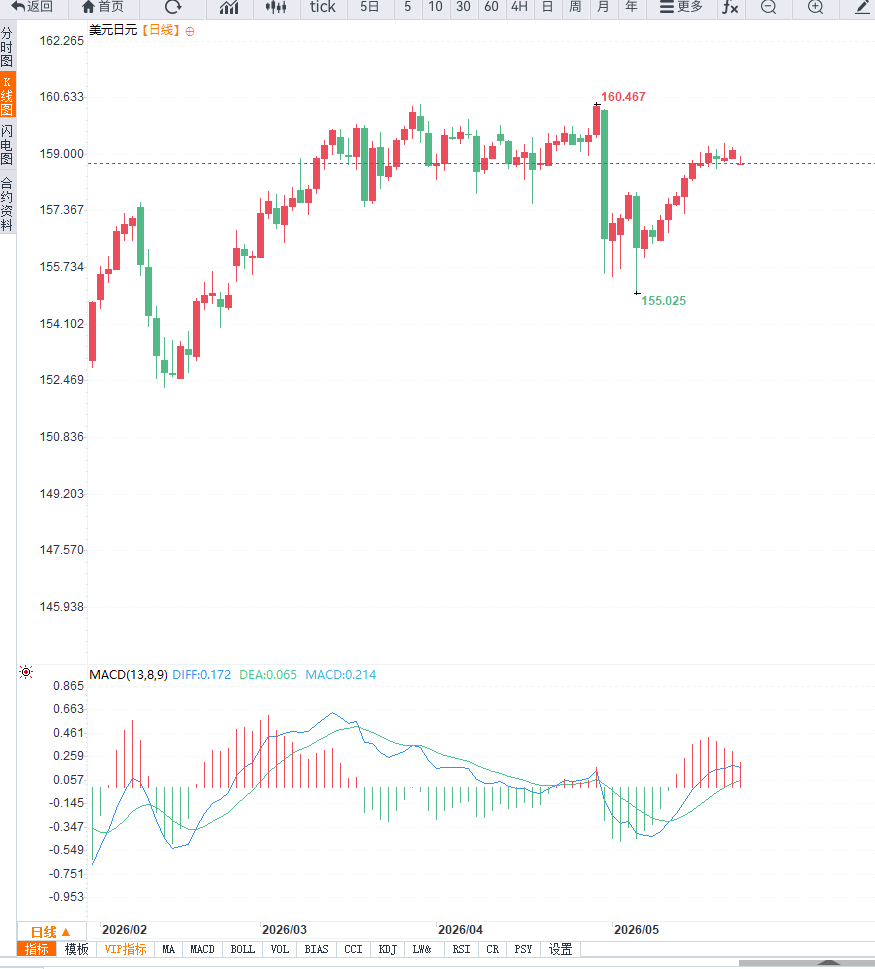
From a technical perspective, the USD/JPY daily chart maintains its medium- to long-term upward trend, but short-term signs of high-level consolidation have emerged. Currently, the exchange rate faces significant technical and policy pressure around the 160 level, with initial support around 158.30 and further support in the 157.00 area. If market risk aversion continues to cool, and the Japanese government continues to signal intervention, the USD/JPY pair may experience further pullback.
From the daily chart indicators, while the MACD still maintains a bullish structure, the red bars have shortened significantly, indicating that upward momentum is weakening. The RSI indicator, which previously entered overbought territory, is currently gradually declining, reflecting a cooling of short-term bullish sentiment in the market. Overall, although the USD/JPY pair remains in a long-term uptrend, the risk of a short-term correction is increasing.
In addition, the market also needs to pay attention to the final outcome of the US-Iran agreement. If normal shipping resumes in the Strait of Hormuz, global market risk sentiment may improve further, and the demand for the US dollar as a safe haven may continue to decline, thereby further pushing the USD/JPY exchange rate down. However, if new uncertainties arise in the negotiations and the situation in the Middle East escalates again, the US dollar may regain support from safe-haven buying.
Overall, the USD/JPY exchange rate is currently in a phase of intertwined factors. On the one hand, the USD/JPY interest rate differential continues to support the long-term strength of the US dollar; on the other hand, the risk of Japanese government intervention and changes in market risk aversion have increased short-term adjustment pressure. Market volatility is likely to remain high in the future.
Editor's Summary : The USD/JPY pair is currently in a highly sensitive phase. Easing tensions in the Middle East have reduced demand for the dollar as a safe haven, while the Japanese government's strong warnings regarding the 160 level have significantly limited further upside potential. Although the Fed's high-interest-rate environment continues to support the dollar, the market has begun to reassess the possibility of a continued one-sided rise in USD/JPY. In the short term, the 160 level remains the most important area to watch. If the Japanese government formally intervenes in the foreign exchange market, USD/JPY may experience a rapid pullback; however, if the US economy continues to be strong and the Bank of Japan maintains its accommodative stance, the pair may still have the potential to retest higher levels in the medium to long term. Going forward, investors need to pay close attention to the progress of US-Iran negotiations, statements from the Japanese Ministry of Finance, changes in US Treasury yields, and expectations regarding Fed policy, as these factors could all be key variables influencing the USD/JPY exchange rate.
One of the key drivers in the recent international foreign exchange market has been the changing situation in the Middle East. With the US-Iran peace talks making some progress, market concerns about a further escalation of regional conflict have eased significantly. Safe-haven buying, previously driven by shipping risks in the Strait of Hormuz, has begun to subside, putting some pressure on the overall rise of the US dollar.
A senior U.S. official said on Sunday that the United States and Iran are close to reaching an agreement that could help restore normal shipping traffic in the Strait of Hormuz. U.S. Secretary of State Marco Rubio said the agreement has the support of regional countries, but some key issues cannot be resolved completely in the short term. He emphasized that a complex agreement cannot be completed "in 72 hours."
Meanwhile, US President Trump stated that he was "in no hurry to reach a quick agreement," indicating that some differences remain between the two sides. However, the market is currently more focused on signs of easing tensions in the overall direction than on short-term details. This optimism has diminished the dollar's appeal as a traditional safe-haven currency and driven some funds back into lower-risk assets such as the Japanese yen.
From a market perspective, the recent rise in the USD/JPY exchange rate has primarily benefited from the widening interest rate differential between the US and Japan, as well as safe-haven inflows into the US dollar. Due to the Federal Reserve's prolonged maintenance of a high-interest-rate environment, US Treasury yields have remained high, while the Bank of Japan has maintained a relatively loose policy, keeping the USD/JPY exchange rate strong in the long term. However, with the easing of Middle East risks and increased verbal intervention from the Japanese government, the market is beginning to reassess the potential for further dollar appreciation in the short term.
Investors are currently paying close attention to the 160 level, as it is seen by the market as a crucial warning line for potential currency intervention by the Japanese government. The 160 level is not only a significant psychological level but is also considered one of the "intervention red lines" set by the Japanese Ministry of Finance. Last year, the Japanese government conducted a large-scale currency intervention at a similar high level, which resulted in a rapid rebound of the yen and triggered significant volatility in the global foreign exchange market.
Japanese Finance Minister Satsuki Katayama stated last week that the Japanese government is prepared to respond to excessive exchange rate volatility, emphasizing that any intervention will be carried out without pushing up US Treasury yields. This statement indicates that while the Japanese government remains cautious, it has clearly become more vigilant regarding the continued depreciation of the yen.
From a fundamental perspective, Japan is currently facing a persistent increase in imported inflationary pressures. Due to the prolonged weakness of the yen, the cost of imported energy and raw materials in Japan is continuously rising, putting pressure on domestic corporate profits and household consumption. While a weaker yen benefits export-oriented companies, it also significantly increases the cost of imported energy and food in Japan. Therefore, the Japanese government does not want the exchange rate to continue its disorderly depreciation.
On the other hand, the Federal Reserve's policy path remains a crucial determinant of the medium- to long-term trend of the USD/JPY exchange rate. Recent US economic data has generally remained resilient, market expectations for a Fed rate cut have been somewhat delayed, and the yield on 10-year US Treasury bonds has remained high. This provides strong support for the US dollar overall and limits the potential for a significant rebound in the yen.
From a technical perspective, the USD/JPY daily chart maintains its medium- to long-term upward trend, but short-term signs of high-level consolidation have emerged. Currently, the exchange rate faces significant technical and policy pressure around the 160 level, with initial support around 158.30 and further support in the 157.00 area. If market risk aversion continues to cool, and the Japanese government continues to signal intervention, the USD/JPY pair may experience further pullback.
From the daily chart indicators, while the MACD still maintains a bullish structure, the red bars have shortened significantly, indicating that upward momentum is weakening. The RSI indicator, which previously entered overbought territory, is currently gradually declining, reflecting a cooling of short-term bullish sentiment in the market. Overall, although the USD/JPY pair remains in a long-term uptrend, the risk of a short-term correction is increasing.
In addition, the market also needs to pay attention to the final outcome of the US-Iran agreement. If normal shipping resumes in the Strait of Hormuz, global market risk sentiment may improve further, and the demand for the US dollar as a safe haven may continue to decline, thereby further pushing the USD/JPY exchange rate down. However, if new uncertainties arise in the negotiations and the situation in the Middle East escalates again, the US dollar may regain support from safe-haven buying.
Overall, the USD/JPY exchange rate is currently in a phase of intertwined factors. On the one hand, the USD/JPY interest rate differential continues to support the long-term strength of the US dollar; on the other hand, the risk of Japanese government intervention and changes in market risk aversion have increased short-term adjustment pressure. Market volatility is likely to remain high in the future.
Editor's Summary : The USD/JPY pair is currently in a highly sensitive phase. Easing tensions in the Middle East have reduced demand for the dollar as a safe haven, while the Japanese government's strong warnings regarding the 160 level have significantly limited further upside potential. Although the Fed's high-interest-rate environment continues to support the dollar, the market has begun to reassess the possibility of a continued one-sided rise in USD/JPY. In the short term, the 160 level remains the most important area to watch. If the Japanese government formally intervenes in the foreign exchange market, USD/JPY may experience a rapid pullback; however, if the US economy continues to be strong and the Bank of Japan maintains its accommodative stance, the pair may still have the potential to retest higher levels in the medium to long term. Going forward, investors need to pay close attention to the progress of US-Iran negotiations, statements from the Japanese Ministry of Finance, changes in US Treasury yields, and expectations regarding Fed policy, as these factors could all be key variables influencing the USD/JPY exchange rate.
- Risk Warning and Disclaimer
- The market involves risk, and trading may not be suitable for all investors. This article is for reference only and does not constitute personal investment advice, nor does it take into account certain users’ specific investment objectives, financial situation, or other needs. Any investment decisions made based on this information are at your own risk.