The Federal Reserve is undergoing an epic transformation; Warsh's new policies are reshaping the underlying logic of central bank operations.
2026-05-25 11:01:04
With Kevin Warsh officially taking office as the new chairman of the Federal Reserve, the Fed is expected to usher in systemic policy changes unseen for many years.
Market analysts widely anticipate that this round of adjustments will not be limited to interest rate changes and personnel reshuffles, but will also reshape the Federal Reserve's balance sheet management rules, financial market intervention models, and external communication system. This reform abandons a radical and disruptive approach, focusing instead on gradual optimization, redefining the Federal Reserve's role in the financial markets, and establishing a standardized intervention mechanism.
However, significant differences of opinion among internal officials, coupled with the long implementation cycle of reforms, mean that the Fed's new policies will be steadily advanced amidst multi-party competition, and will reshape the global dollar liquidity landscape in the long run.
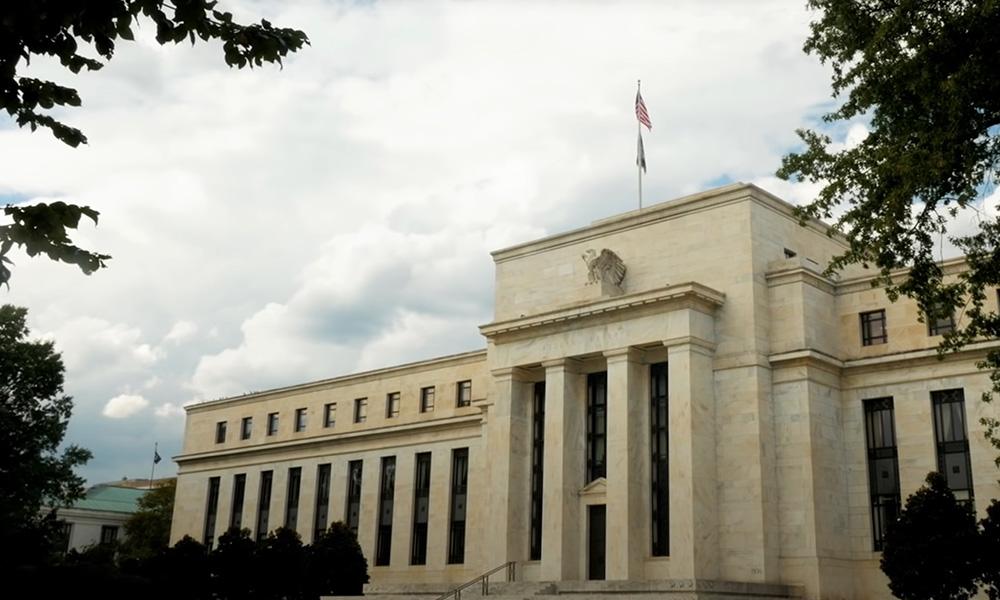
Warsh's proposed reforms to the Federal Reserve system focus on the massive balance sheet and financial circulation system management model accumulated during the 18-year crisis cycle.
The Federal Reserve's balance sheet currently stands at a staggering $6.8 trillion, serving as a core tool for regulating market liquidity. Before the 2008 financial crisis, the Fed's assets were only $800 billion, peaking at $9 trillion. Currently, its assets represent 23% of the total US economy, more than seven times the pre-crisis size. For a long time, the Fed has used balance sheet expansion and contraction as a regular regulatory tool to stabilize financial markets and adjust the macroeconomic environment. The Warsh Plan, however, fundamentally alters this operational logic.
The core controversy surrounding this reform lies in whether the Federal Reserve will continue to use its balance sheet as a daily regulatory tool, or only employ it in extreme scenarios such as market failures or severe economic stress. Warsh previously publicly commented on the Fed's bloated balance sheet, arguing that while steadily reducing its balance sheet, the Fed still retains room for interest rate cuts, thus balancing economic regulation with long-term market stability.
Lou Crandall, chief economist at Leterson Capital, said that policy discussions will be fully launched in the second half of this year, and all reforms will be implemented gradually without any short-term radical adjustments. It is a medium- to long-term structural reform project.
Market institutions, combining the Walsh policy concept, have deduced a new framework for the operation of monetary policy.
Steve Blitz, chief U.S. economist at Lombard Consulting, believes that the Federal Reserve under Warsh's leadership may adjust its policy transmission mechanism, weakening the traditional central role of the federal funds rate and instead using the overnight repurchase market as the primary regulatory vehicle, anchoring overall liquidity through the short-term money market. This innovative model is expected to alleviate inflationary pressures and tighten basic financing conditions while adapting to market expectations of interest rate cuts, achieving a flexible balance in policy.
However, this reform approach has encountered significant internal disagreements. Federal Reserve Governor Michael Barr explicitly expressed his opposition in a public speech last week, stating that focusing solely on balance sheet reduction has significant drawbacks. He argued that blindly reducing asset size would weaken banks' ability to withstand risks, disrupt the money market, and even exacerbate volatility in the financial system. Furthermore, some balance sheet reduction measures could indirectly increase the Fed's intervention in the market. He emphasized that the core evaluation criteria for a balance sheet include multiple dimensions such as size, maturity, and structure, and that unilaterally reducing its size could easily trigger negative consequences.
Currently, the Federal Reserve operates under an ample reserve model, continuously injecting excess liquidity into the market. In contrast, Warsh advocates returning to the scarce reserve mechanism predating the financial crisis, only supplementing liquidity when market liquidity is tight.
Yale University professor and former head of monetary affairs at the Federal Reserve, Bill English, said the model is fully feasible and its overall operating logic is mature and stable. The only difficulty lies in the complex transition process, which requires long-term and steady progress and cannot be implemented hastily.
The long-term reliance on the Federal Reserve's balance sheet expansion to provide a safety net has become the norm in the financial markets for the past 18 years and a crucial support for the stable operation of the capital markets. Previously, the Federal Reserve had never issued clear rules for balance sheet control, nor had it clarified the triggering conditions and applicable scenarios for quantitative easing and balance sheet reduction policies. It was also unable to clearly distinguish whether the use of these tools was to repair the market or to meet the dual policy objectives of inflation and employment.
Former Cleveland Fed President Loretta Mester stated that the Federal Reserve has long lacked a standardized framework for applying quantitative policies, and the interpretation and implementation standards of its external policies have remained unclear.
Optimizing policy communication mechanisms is a key component of Warsh's new policy. He plans to reshape market expectations, break the ingrained perception that "market volatility equates to quantitative easing," and reduce the Federal Reserve's routine bailout of the capital markets. Simultaneously, he supports the banking regulatory easing reforms implemented by Federal Reserve Vice Chair for Banking Supervision Michelle Bowman, adjusting the scope of reserve assets that can be used in the event of a banking crisis.
Dallas Fed President Lorie Logan echoed this sentiment, drawing on her experience in the New York Fed's trading department and her expertise in balance sheet management. In a public speech on April 2nd, she stated that the Fed possesses diverse liquidity control tools, and that all reform measures must be meticulously planned and implemented gradually, avoiding a one-size-fits-all approach.
The Federal Reserve has already launched comprehensive reform discussions. Official research reports estimate that the existing framework could reduce assets by $2.1 trillion. Switching to a scarce reserve model would further expand the scope for balance sheet reduction. The entire reform process will take at least a year, or even several years, to implement . With Warsh officially assuming office, all reform proposals will enter the comprehensive discussion and implementation phase.
Overall, the core of the Federal Reserve's new round of systemic reforms is to reduce routine intervention, establish a standardized regulatory framework, and optimize the liquidity operation model. The new policy aims to move away from the old model of over-reliance on balance sheet intervention, allowing monetary policy to return to its precise and prudent regulatory essence. However, constrained by internal disagreements among officials, a lengthy implementation period, and a complex macroeconomic environment, this round of reforms will not produce a sudden, transformative effect.
In the medium to long term, the Federal Reserve's intervention logic and the reshaping of liquidity rules will fundamentally change the global dollar liquidity landscape and have a profound impact on capital markets and the interest rate system.
Market analysts widely anticipate that this round of adjustments will not be limited to interest rate changes and personnel reshuffles, but will also reshape the Federal Reserve's balance sheet management rules, financial market intervention models, and external communication system. This reform abandons a radical and disruptive approach, focusing instead on gradual optimization, redefining the Federal Reserve's role in the financial markets, and establishing a standardized intervention mechanism.
However, significant differences of opinion among internal officials, coupled with the long implementation cycle of reforms, mean that the Fed's new policies will be steadily advanced amidst multi-party competition, and will reshape the global dollar liquidity landscape in the long run.
The core implementation of the new policy: restructuring the balance sheet regulation system.
Warsh's proposed reforms to the Federal Reserve system focus on the massive balance sheet and financial circulation system management model accumulated during the 18-year crisis cycle.
The Federal Reserve's balance sheet currently stands at a staggering $6.8 trillion, serving as a core tool for regulating market liquidity. Before the 2008 financial crisis, the Fed's assets were only $800 billion, peaking at $9 trillion. Currently, its assets represent 23% of the total US economy, more than seven times the pre-crisis size. For a long time, the Fed has used balance sheet expansion and contraction as a regular regulatory tool to stabilize financial markets and adjust the macroeconomic environment. The Warsh Plan, however, fundamentally alters this operational logic.
The core controversy surrounding this reform lies in whether the Federal Reserve will continue to use its balance sheet as a daily regulatory tool, or only employ it in extreme scenarios such as market failures or severe economic stress. Warsh previously publicly commented on the Fed's bloated balance sheet, arguing that while steadily reducing its balance sheet, the Fed still retains room for interest rate cuts, thus balancing economic regulation with long-term market stability.
Lou Crandall, chief economist at Leterson Capital, said that policy discussions will be fully launched in the second half of this year, and all reforms will be implemented gradually without any short-term radical adjustments. It is a medium- to long-term structural reform project.
Iteration of regulatory mechanisms: Reshaping the transmission path of monetary policy
Market institutions, combining the Walsh policy concept, have deduced a new framework for the operation of monetary policy.
Steve Blitz, chief U.S. economist at Lombard Consulting, believes that the Federal Reserve under Warsh's leadership may adjust its policy transmission mechanism, weakening the traditional central role of the federal funds rate and instead using the overnight repurchase market as the primary regulatory vehicle, anchoring overall liquidity through the short-term money market. This innovative model is expected to alleviate inflationary pressures and tighten basic financing conditions while adapting to market expectations of interest rate cuts, achieving a flexible balance in policy.
However, this reform approach has encountered significant internal disagreements. Federal Reserve Governor Michael Barr explicitly expressed his opposition in a public speech last week, stating that focusing solely on balance sheet reduction has significant drawbacks. He argued that blindly reducing asset size would weaken banks' ability to withstand risks, disrupt the money market, and even exacerbate volatility in the financial system. Furthermore, some balance sheet reduction measures could indirectly increase the Fed's intervention in the market. He emphasized that the core evaluation criteria for a balance sheet include multiple dimensions such as size, maturity, and structure, and that unilaterally reducing its size could easily trigger negative consequences.
Reserve Model Innovation: Saying Goodbye to Excess Liquidity Intervention
Currently, the Federal Reserve operates under an ample reserve model, continuously injecting excess liquidity into the market. In contrast, Warsh advocates returning to the scarce reserve mechanism predating the financial crisis, only supplementing liquidity when market liquidity is tight.
Yale University professor and former head of monetary affairs at the Federal Reserve, Bill English, said the model is fully feasible and its overall operating logic is mature and stable. The only difficulty lies in the complex transition process, which requires long-term and steady progress and cannot be implemented hastily.
The long-term reliance on the Federal Reserve's balance sheet expansion to provide a safety net has become the norm in the financial markets for the past 18 years and a crucial support for the stable operation of the capital markets. Previously, the Federal Reserve had never issued clear rules for balance sheet control, nor had it clarified the triggering conditions and applicable scenarios for quantitative easing and balance sheet reduction policies. It was also unable to clearly distinguish whether the use of these tools was to repair the market or to meet the dual policy objectives of inflation and employment.
Former Cleveland Fed President Loretta Mester stated that the Federal Reserve has long lacked a standardized framework for applying quantitative policies, and the interpretation and implementation standards of its external policies have remained unclear.
Communication and oversight have been optimized, and internal reforms are progressing steadily.
Optimizing policy communication mechanisms is a key component of Warsh's new policy. He plans to reshape market expectations, break the ingrained perception that "market volatility equates to quantitative easing," and reduce the Federal Reserve's routine bailout of the capital markets. Simultaneously, he supports the banking regulatory easing reforms implemented by Federal Reserve Vice Chair for Banking Supervision Michelle Bowman, adjusting the scope of reserve assets that can be used in the event of a banking crisis.
Dallas Fed President Lorie Logan echoed this sentiment, drawing on her experience in the New York Fed's trading department and her expertise in balance sheet management. In a public speech on April 2nd, she stated that the Fed possesses diverse liquidity control tools, and that all reform measures must be meticulously planned and implemented gradually, avoiding a one-size-fits-all approach.
The Federal Reserve has already launched comprehensive reform discussions. Official research reports estimate that the existing framework could reduce assets by $2.1 trillion. Switching to a scarce reserve model would further expand the scope for balance sheet reduction. The entire reform process will take at least a year, or even several years, to implement . With Warsh officially assuming office, all reform proposals will enter the comprehensive discussion and implementation phase.
Summarize
Overall, the core of the Federal Reserve's new round of systemic reforms is to reduce routine intervention, establish a standardized regulatory framework, and optimize the liquidity operation model. The new policy aims to move away from the old model of over-reliance on balance sheet intervention, allowing monetary policy to return to its precise and prudent regulatory essence. However, constrained by internal disagreements among officials, a lengthy implementation period, and a complex macroeconomic environment, this round of reforms will not produce a sudden, transformative effect.
In the medium to long term, the Federal Reserve's intervention logic and the reshaping of liquidity rules will fundamentally change the global dollar liquidity landscape and have a profound impact on capital markets and the interest rate system.
- Risk Warning and Disclaimer
- The market involves risk, and trading may not be suitable for all investors. This article is for reference only and does not constitute personal investment advice, nor does it take into account certain users’ specific investment objectives, financial situation, or other needs. Any investment decisions made based on this information are at your own risk.