A glimpse into the Fed's logic: Why it hesitates to act rashly
2026-05-25 20:39:21
The Federal Reserve’s core mission is to achieve a balance between full employment and price stability while being accountable to Congress, a goal that inherently presents policy tensions.
Interest rate cuts can reduce corporate financing costs and boost employment, but they may trigger rising inflation or even a vicious cycle of inflation.
Raising interest rates can curb price increases, but it will also increase borrowing costs, impact the job market, and thus suppress economic activity.
At the same time, if the Fed were to cut interest rates rashly and make a move that would make the market question the Fed's independence, US Treasury bonds would be sold off, and borrowing costs would likely rise instead of fall. This dilemma of "choosing one thing over another" is the core challenge for the Fed's monetary policy formulation.
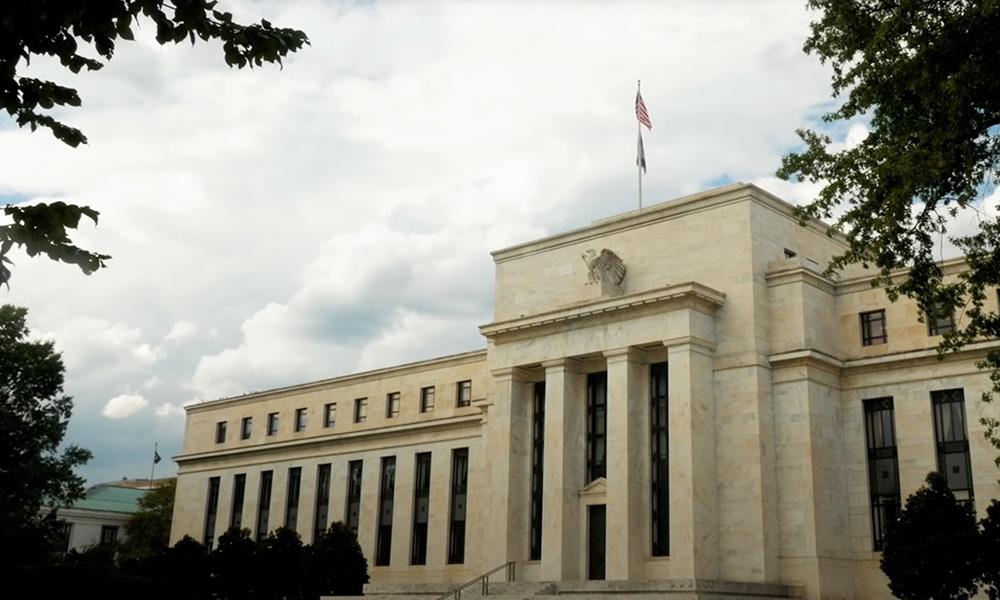
On April 29, the Federal Open Market Committee (FOMC) voted 8-4 to maintain the federal funds rate in the range of 3.50%-3.75%.
This vote set a record in over 30 years—the first time four votes were against it, highlighting internal divisions.
Three dissenting committee members argued that the post-meeting announcement should reflect expectations of tightening policies in light of the current inflation situation, demonstrating a high level of vigilance regarding inflation risks.
This is the third pause after the Federal Reserve cut interest rates by a total of 75 basis points in three meetings at the end of 2025 (to support weak employment), and the policy slowdown sends a cautious signal.
Behind the disagreement lies the decentralized nature of the Federal Reserve's power: most governors believed that interest rates might need to rise, which was in stark contrast to the Trump administration's expectation of interest rate cuts, laying the groundwork for future policies.
June 16-17 will mark Warsh's first FOMC meeting since taking office as Federal Reserve Chairman.
Warsh's appointment may mark Trump's complete control over the top economic policy-making body in the United States—in the past, Trump could say that Powell was imposed by the previous administration, but Warsh was personally selected by him, and the president is directly responsible for the final economic results.
As a supporter of low interest rates, Warsh's policy ideas are closely watched by the market and are also closely tied to Trump's campaign promises.
However, the actual data is not optimistic: since March 2025, the inflation indicator corresponding to the Fed's 2% target has risen from 2.3% to 3.5%, the 30-year mortgage rate has rebounded to over 6.5% (a nine-month high), and the average price of a gallon of gasoline has risen from less than $3 before the conflict with Iran to $4.55, highlighting the pressure on people's livelihoods.
Eric Deaton, president of the Wealth Alliance, analyzed that the inflationary risks posed by energy price volatility and tariff barriers have made the Federal Reserve's policies more cautious and inclined to tighten.
Despite multiple negative factors, the market has shown resilience, but the consensus has become that "high interest rates will persist for a long time."
Deaton points out that the Federal Reserve has subtly warned of the stagflation risk that inflation may drag down economic growth, while Warsh's core logic for supporting interest rate cuts is his optimism about the long-term potential of artificial intelligence to empower the real economy and improve productivity.
However, the current environment is complex, and Warsh faces numerous obstacles in pushing the FOMC to reach a consensus on interest rate cuts—both hard constraints from inflation data and internal disagreements.
He added that if the geopolitical conflict in Iran subsides, it will ease pressure on energy prices and weaken the core driver of this round of inflation.
Furthermore, Warsh's preference for a debating style that allows for differing opinions echoes the decentralized nature of the Federal Reserve's power, suggesting that future policy communication may be more uncertain and could exceed financial market expectations.
Astor Capital's head of fixed income, Teyner, pointed out that due to the huge fiscal deficit, the yield on 10-year US Treasury bonds rose to 4.56% as of the close of trading on May 22, the highest level since 1987 when a new Federal Reserve chairman took over, putting pressure on Warsh's administration.
Tainer explicitly refuted speculation that Walsh was a "proxygen agent for the Trump campaign's interest rate cuts," calling it an inappropriate assumption about his formal congressional appointment.
Conservative think tank researchers bluntly stated that Powell was previously Trump's "scapegoat," and with Walsh taking office, all economic responsibility will fall directly on Trump. The issues of rising prices and declining purchasing power that the public is concerned about will be difficult to resolve completely in the coming years or even longer.
Tainer stated that Warsh has extensive professional experience and, while intending to promote reforms to the Federal Reserve system, the reform process is lengthy and requires unanimous approval from other FOMC members.
Its governing style combines innovation and data-driven approaches, and policy adjustments are all based on objective economic data.
In fact, with inflation exceeding the target for five consecutive years and price fluctuations affecting people's livelihoods, the reform of the Federal Reserve system has become a real topic of discussion. However, with the current rise in inflation risks, maintaining policy independence and refusing administrative intervention remain Warsh's core bottom line—this is the tradition of the Federal Reserve system and the key to maintaining market credibility.
Warsh's appointment does not mean that the White House can dominate monetary policy. The Federal Reserve's independent decision-making mechanism will continue to play a role, and the struggle between Trump's demands for interest rate cuts and inflation constraints will continue.
The most critical factor determining the direction of the Federal Reserve's interest rates remains oil prices, because the Strait of Hormuz will not see an additional barrel of oil shipped out due to the Fed's interest rate cuts or hikes, just as a hen will not lay more eggs because of the Fed's policies.
Trump's initial call for the Federal Reserve to cut interest rates was largely driven by a desire to reduce government financing costs. Interest payments from government debt have already exceeded military spending, reaching 3.2% of GDP. A hasty rate cut would compromise the Fed's independence, leading to a sell-off of US Treasury bonds and higher financing rates, ultimately resulting in more harm than good.
Meanwhile, moderate inflation is conducive to diluting government debt, and coincidentally, Trump changed his statement about demanding that the Federal Reserve cut interest rates at this time, no longer demanding that the Federal Reserve cut interest rates immediately.
In the short term, the CME Group’s interest rate monitoring model shows that the probability of the FOMC keeping interest rates unchanged in June is close to full. The market generally expects Warsh to prioritize stability in order to avoid causing sharp market fluctuations during his first time at the helm, while also buying himself time to observe and coordinate.
In the medium to long term, the 54.6% probability of a rate hike at the December meeting reflects the market's continued concern about inflation risks. The Fed's previous dot plot predicted two rate cuts in 2025. Behind the divergence in expectations is a complex interplay of economic growth, inflation data, geopolitical risks, and political pressures.
If the easing of the conflict in Iran leads to a decline in energy prices, coupled with AI technology improving production efficiency, inflationary pressures are expected to ease, expanding the scope for Walsh's interest rate cut policy and providing support for Trump's economic promises.
Currently, it seems there is no good solution other than respecting the data. We should continue to monitor inflation and employment-related indicators. At the same time, if the Strait of Hormuz reopens and Gulf countries' dollar income recovers, global energy prices will fall, naturally reducing the momentum for converting to dollar assets or selling US Treasury bonds globally. This will naturally lead to a decline in government bond yields, and the effect of lower financing costs is similar to an interest rate cut.
Interest rate cuts can reduce corporate financing costs and boost employment, but they may trigger rising inflation or even a vicious cycle of inflation.
Raising interest rates can curb price increases, but it will also increase borrowing costs, impact the job market, and thus suppress economic activity.
At the same time, if the Fed were to cut interest rates rashly and make a move that would make the market question the Fed's independence, US Treasury bonds would be sold off, and borrowing costs would likely rise instead of fall. This dilemma of "choosing one thing over another" is the core challenge for the Fed's monetary policy formulation.
April Interest Rate Decision: A Choice of Maintaining Stability Amid Historic Divergence
On April 29, the Federal Open Market Committee (FOMC) voted 8-4 to maintain the federal funds rate in the range of 3.50%-3.75%.
This vote set a record in over 30 years—the first time four votes were against it, highlighting internal divisions.
Three dissenting committee members argued that the post-meeting announcement should reflect expectations of tightening policies in light of the current inflation situation, demonstrating a high level of vigilance regarding inflation risks.
This is the third pause after the Federal Reserve cut interest rates by a total of 75 basis points in three meetings at the end of 2025 (to support weak employment), and the policy slowdown sends a cautious signal.
Behind the disagreement lies the decentralized nature of the Federal Reserve's power: most governors believed that interest rates might need to rise, which was in stark contrast to the Trump administration's expectation of interest rate cuts, laying the groundwork for future policies.
Key Developments: Warsh's Leadership and the Game of Policy Stances
June 16-17 will mark Warsh's first FOMC meeting since taking office as Federal Reserve Chairman.
Warsh's appointment may mark Trump's complete control over the top economic policy-making body in the United States—in the past, Trump could say that Powell was imposed by the previous administration, but Warsh was personally selected by him, and the president is directly responsible for the final economic results.
As a supporter of low interest rates, Warsh's policy ideas are closely watched by the market and are also closely tied to Trump's campaign promises.
However, the actual data is not optimistic: since March 2025, the inflation indicator corresponding to the Fed's 2% target has risen from 2.3% to 3.5%, the 30-year mortgage rate has rebounded to over 6.5% (a nine-month high), and the average price of a gallon of gasoline has risen from less than $3 before the conflict with Iran to $4.55, highlighting the pressure on people's livelihoods.
Eric Deaton, president of the Wealth Alliance, analyzed that the inflationary risks posed by energy price volatility and tariff barriers have made the Federal Reserve's policies more cautious and inclined to tighten.
Despite multiple negative factors, the market has shown resilience, but the consensus has become that "high interest rates will persist for a long time."
Deaton points out that the Federal Reserve has subtly warned of the stagflation risk that inflation may drag down economic growth, while Warsh's core logic for supporting interest rate cuts is his optimism about the long-term potential of artificial intelligence to empower the real economy and improve productivity.
However, the current environment is complex, and Warsh faces numerous obstacles in pushing the FOMC to reach a consensus on interest rate cuts—both hard constraints from inflation data and internal disagreements.
He added that if the geopolitical conflict in Iran subsides, it will ease pressure on energy prices and weaken the core driver of this round of inflation.
Furthermore, Warsh's preference for a debating style that allows for differing opinions echoes the decentralized nature of the Federal Reserve's power, suggesting that future policy communication may be more uncertain and could exceed financial market expectations.
Upholding Independence: Warsh's Policy Bottom Line and Reform Challenges
Astor Capital's head of fixed income, Teyner, pointed out that due to the huge fiscal deficit, the yield on 10-year US Treasury bonds rose to 4.56% as of the close of trading on May 22, the highest level since 1987 when a new Federal Reserve chairman took over, putting pressure on Warsh's administration.
Tainer explicitly refuted speculation that Walsh was a "proxygen agent for the Trump campaign's interest rate cuts," calling it an inappropriate assumption about his formal congressional appointment.
Conservative think tank researchers bluntly stated that Powell was previously Trump's "scapegoat," and with Walsh taking office, all economic responsibility will fall directly on Trump. The issues of rising prices and declining purchasing power that the public is concerned about will be difficult to resolve completely in the coming years or even longer.
Tainer stated that Warsh has extensive professional experience and, while intending to promote reforms to the Federal Reserve system, the reform process is lengthy and requires unanimous approval from other FOMC members.
Its governing style combines innovation and data-driven approaches, and policy adjustments are all based on objective economic data.
In fact, with inflation exceeding the target for five consecutive years and price fluctuations affecting people's livelihoods, the reform of the Federal Reserve system has become a real topic of discussion. However, with the current rise in inflation risks, maintaining policy independence and refusing administrative intervention remain Warsh's core bottom line—this is the tradition of the Federal Reserve system and the key to maintaining market credibility.
Warsh's appointment does not mean that the White House can dominate monetary policy. The Federal Reserve's independent decision-making mechanism will continue to play a role, and the struggle between Trump's demands for interest rate cuts and inflation constraints will continue.
Summary and Outlook for Interest Rate Decisions
The most critical factor determining the direction of the Federal Reserve's interest rates remains oil prices, because the Strait of Hormuz will not see an additional barrel of oil shipped out due to the Fed's interest rate cuts or hikes, just as a hen will not lay more eggs because of the Fed's policies.
Trump's initial call for the Federal Reserve to cut interest rates was largely driven by a desire to reduce government financing costs. Interest payments from government debt have already exceeded military spending, reaching 3.2% of GDP. A hasty rate cut would compromise the Fed's independence, leading to a sell-off of US Treasury bonds and higher financing rates, ultimately resulting in more harm than good.
Meanwhile, moderate inflation is conducive to diluting government debt, and coincidentally, Trump changed his statement about demanding that the Federal Reserve cut interest rates at this time, no longer demanding that the Federal Reserve cut interest rates immediately.
In the short term, the CME Group’s interest rate monitoring model shows that the probability of the FOMC keeping interest rates unchanged in June is close to full. The market generally expects Warsh to prioritize stability in order to avoid causing sharp market fluctuations during his first time at the helm, while also buying himself time to observe and coordinate.
In the medium to long term, the 54.6% probability of a rate hike at the December meeting reflects the market's continued concern about inflation risks. The Fed's previous dot plot predicted two rate cuts in 2025. Behind the divergence in expectations is a complex interplay of economic growth, inflation data, geopolitical risks, and political pressures.
If the easing of the conflict in Iran leads to a decline in energy prices, coupled with AI technology improving production efficiency, inflationary pressures are expected to ease, expanding the scope for Walsh's interest rate cut policy and providing support for Trump's economic promises.
Currently, it seems there is no good solution other than respecting the data. We should continue to monitor inflation and employment-related indicators. At the same time, if the Strait of Hormuz reopens and Gulf countries' dollar income recovers, global energy prices will fall, naturally reducing the momentum for converting to dollar assets or selling US Treasury bonds globally. This will naturally lead to a decline in government bond yields, and the effect of lower financing costs is similar to an interest rate cut.
- Risk Warning and Disclaimer
- The market involves risk, and trading may not be suitable for all investors. This article is for reference only and does not constitute personal investment advice, nor does it take into account certain users’ specific investment objectives, financial situation, or other needs. Any investment decisions made based on this information are at your own risk.