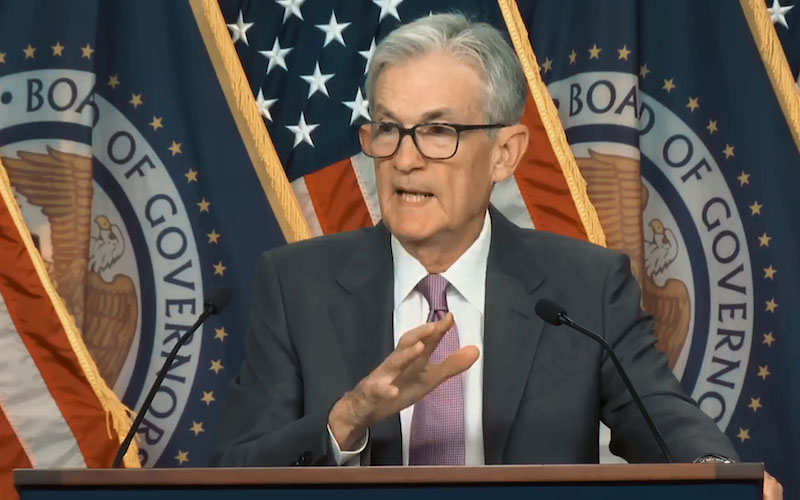
The US dollar index weakened, and the USD/JPY pair remained range-bound at high levels, awaiting a directional move.
2026-05-26 10:00:40
The US dollar rose slightly against the Japanese yen (USD/JPY) in Asian trading on Tuesday, holding steady around 158.80 and continuing to approach the three-week high reached last week. The market is awaiting confirmation that the pair can break through the key psychological level of 159.00 to establish a new upward trend.

Recent developments in the Middle East remain a key driver of currency market volatility. Over the weekend, the market was optimistic about a potential agreement between the US and Iran, believing that the two sides could end the nearly three-month-long conflict and reopen the Strait of Hormuz. This expectation briefly led to a pullback in the US dollar as market risk appetite improved.
However, the situation subsequently changed again. The US military launched a "self-defense" strike on southern Iran on Monday, targeting missile facilities. Although the US emphasized that it would exercise restraint during the ceasefire, market concerns about an escalation of tensions in the Middle East intensified again.
Amid escalating geopolitical risks, demand for the US dollar as a safe haven has been revived. The dollar index had previously fallen to a more than one-week low, but as market risk sentiment worsened, funds flowed back into dollar assets, driving a dollar rebound. As a typical risk-sensitive currency pair, the USD/JPY pair thus gained further upward momentum.
Meanwhile, expectations that the Federal Reserve will maintain a hawkish policy stance continue to support the dollar's performance. Recent US inflation data remains sticky, and the overall US economy continues to perform robustly, fueling market expectations that the Fed will maintain high interest rates for an extended period. Some market participants have even begun discussing the possibility of further rate hikes in the future.
The high-interest-rate environment has enhanced the yield advantage of dollar-denominated assets, attracting continued global capital inflows into the US market. In contrast, although the Bank of Japan has gradually withdrawn from its ultra-loose monetary policy, its overall interest rate level remains significantly lower than that of the United States. The persistently high interest rate differential between the US and Japan is one of the key reasons driving the long-term appreciation of the US dollar against the Japanese yen.
On the other hand, the Japanese economy also faces risks related to energy supply. Given Japan's heavy reliance on energy imports, instability in the Middle East could keep crude oil and natural gas prices high, increasing cost pressures on Japanese businesses and consumers. Market concerns that this could hinder Japan's economic recovery further weaken the yen.
However, the market remains cautious about further appreciation of the US dollar against the Japanese yen. Previously, the Japanese Ministry of Finance and the Bank of Japan had repeatedly issued verbal warnings and even intervened directly when the exchange rate approached the 160 level. Investors are generally concerned that if the exchange rate rapidly approaches 160 again, Japanese authorities may take further action to support the yen.
Analysts point out that the Japanese government's biggest concern is not the yen's depreciation itself, but rather the impact of excessive exchange rate volatility on financial markets and import costs. Therefore, even if the Bank of Japan is unlikely to raise interest rates significantly in the short term, the Japanese government may intervene in the foreign exchange market to curb the yen's rapid decline.
This week, the market will also focus on US economic data. Among them, the Conference Board's Consumer Confidence Index will be released on Tuesday evening, and the results could influence market assessments of US consumption and the economic outlook. If the data is stronger than expected, the dollar may receive further support; conversely, it could suppress the dollar's gains in the short term.
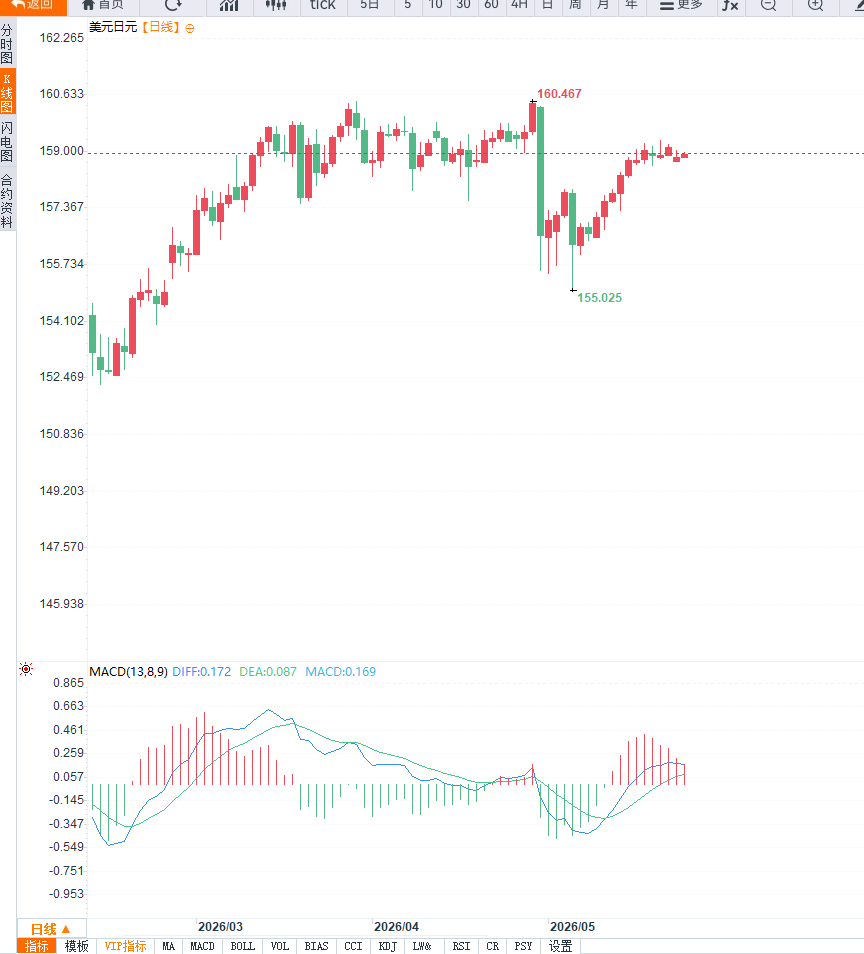
From the daily chart, the USD/JPY pair has rebounded from a low near 155.00 and is currently approaching the key resistance area of 159.00 . On the daily chart, the 20-day and 50-day moving averages have re-formed a bullish alignment, indicating a continued strong overall trend. The MACD indicator has returned above the zero line, and the red histogram bars continue to expand, suggesting that bullish momentum is strengthening.
The key resistance levels are currently at 159.00 and 160.20 . A break above 159 could see the market retest its year-to-date high; key support levels are around 157.80 and 156.50 . A break below 156.50 could damage the short-term bullish structure.
However, given the continued risk of official intervention from Japan, the market may become noticeably cautious around the 159-160 range. A rapid pullback in USD/JPY could occur should the Japanese Ministry of Finance issue a stronger warning.
Overall, the current USD/JPY exchange rate is mainly driven by three factors: "expectations of high interest rates from the Federal Reserve," "demand for safe-haven assets in the Middle East," and "economic pressures in Japan." However, the potential risk of intervention by the Japanese authorities remains the biggest potential variable in the market.
Editor's Summary: The recent strengthening of the USD/JPY pair essentially reflects the continued global capital flow to high-yield dollar assets, while also indicating market concerns about the Japanese economic outlook. The ongoing Middle East situation has led to a return of safe-haven demand to the dollar, while the resilience of the US economy and inflation has further strengthened expectations that the Federal Reserve will maintain high interest rates for an extended period. However, as the exchange rate gradually approaches the important 160 level, the risk of official intervention by the Japanese government is rapidly increasing. Future market movements will depend not only on US economic data and the Middle East situation but also on close monitoring of changes in the attitudes of the Japanese Ministry of Finance and the Bank of Japan. If the dollar continues to strengthen and oil prices remain high, the USD/JPY pair still has room for further appreciation, but short-term volatility may increase significantly.
Recent developments in the Middle East remain a key driver of currency market volatility. Over the weekend, the market was optimistic about a potential agreement between the US and Iran, believing that the two sides could end the nearly three-month-long conflict and reopen the Strait of Hormuz. This expectation briefly led to a pullback in the US dollar as market risk appetite improved.
However, the situation subsequently changed again. The US military launched a "self-defense" strike on southern Iran on Monday, targeting missile facilities. Although the US emphasized that it would exercise restraint during the ceasefire, market concerns about an escalation of tensions in the Middle East intensified again.
Amid escalating geopolitical risks, demand for the US dollar as a safe haven has been revived. The dollar index had previously fallen to a more than one-week low, but as market risk sentiment worsened, funds flowed back into dollar assets, driving a dollar rebound. As a typical risk-sensitive currency pair, the USD/JPY pair thus gained further upward momentum.
Meanwhile, expectations that the Federal Reserve will maintain a hawkish policy stance continue to support the dollar's performance. Recent US inflation data remains sticky, and the overall US economy continues to perform robustly, fueling market expectations that the Fed will maintain high interest rates for an extended period. Some market participants have even begun discussing the possibility of further rate hikes in the future.
The high-interest-rate environment has enhanced the yield advantage of dollar-denominated assets, attracting continued global capital inflows into the US market. In contrast, although the Bank of Japan has gradually withdrawn from its ultra-loose monetary policy, its overall interest rate level remains significantly lower than that of the United States. The persistently high interest rate differential between the US and Japan is one of the key reasons driving the long-term appreciation of the US dollar against the Japanese yen.
On the other hand, the Japanese economy also faces risks related to energy supply. Given Japan's heavy reliance on energy imports, instability in the Middle East could keep crude oil and natural gas prices high, increasing cost pressures on Japanese businesses and consumers. Market concerns that this could hinder Japan's economic recovery further weaken the yen.
However, the market remains cautious about further appreciation of the US dollar against the Japanese yen. Previously, the Japanese Ministry of Finance and the Bank of Japan had repeatedly issued verbal warnings and even intervened directly when the exchange rate approached the 160 level. Investors are generally concerned that if the exchange rate rapidly approaches 160 again, Japanese authorities may take further action to support the yen.
Analysts point out that the Japanese government's biggest concern is not the yen's depreciation itself, but rather the impact of excessive exchange rate volatility on financial markets and import costs. Therefore, even if the Bank of Japan is unlikely to raise interest rates significantly in the short term, the Japanese government may intervene in the foreign exchange market to curb the yen's rapid decline.
This week, the market will also focus on US economic data. Among them, the Conference Board's Consumer Confidence Index will be released on Tuesday evening, and the results could influence market assessments of US consumption and the economic outlook. If the data is stronger than expected, the dollar may receive further support; conversely, it could suppress the dollar's gains in the short term.
From the daily chart, the USD/JPY pair has rebounded from a low near 155.00 and is currently approaching the key resistance area of 159.00 . On the daily chart, the 20-day and 50-day moving averages have re-formed a bullish alignment, indicating a continued strong overall trend. The MACD indicator has returned above the zero line, and the red histogram bars continue to expand, suggesting that bullish momentum is strengthening.
The key resistance levels are currently at 159.00 and 160.20 . A break above 159 could see the market retest its year-to-date high; key support levels are around 157.80 and 156.50 . A break below 156.50 could damage the short-term bullish structure.
However, given the continued risk of official intervention from Japan, the market may become noticeably cautious around the 159-160 range. A rapid pullback in USD/JPY could occur should the Japanese Ministry of Finance issue a stronger warning.
Overall, the current USD/JPY exchange rate is mainly driven by three factors: "expectations of high interest rates from the Federal Reserve," "demand for safe-haven assets in the Middle East," and "economic pressures in Japan." However, the potential risk of intervention by the Japanese authorities remains the biggest potential variable in the market.
Editor's Summary: The recent strengthening of the USD/JPY pair essentially reflects the continued global capital flow to high-yield dollar assets, while also indicating market concerns about the Japanese economic outlook. The ongoing Middle East situation has led to a return of safe-haven demand to the dollar, while the resilience of the US economy and inflation has further strengthened expectations that the Federal Reserve will maintain high interest rates for an extended period. However, as the exchange rate gradually approaches the important 160 level, the risk of official intervention by the Japanese government is rapidly increasing. Future market movements will depend not only on US economic data and the Middle East situation but also on close monitoring of changes in the attitudes of the Japanese Ministry of Finance and the Bank of Japan. If the dollar continues to strengthen and oil prices remain high, the USD/JPY pair still has room for further appreciation, but short-term volatility may increase significantly.
- Risk Warning and Disclaimer
- The market involves risk, and trading may not be suitable for all investors. This article is for reference only and does not constitute personal investment advice, nor does it take into account certain users’ specific investment objectives, financial situation, or other needs. Any investment decisions made based on this information are at your own risk.