Iraq's crude oil production was severely impacted in April, prompting the country to urgently establish new crude oil transportation routes.
2026-05-26 11:13:44
Affected by the closure of the Strait of Hormuz, Iraqi crude oil production fell to its lowest level in over two decades in April. As oil is the mainstay of the country's economy, the sharp decline in production has triggered a severe crisis. Prolonged shutdowns of oil wells could also cause permanent damage. Therefore, Iraq is accelerating the development of diversified export routes, including cross-border pipelines in the north and land transportation.
The conflict of interests between the central government and the Kurdistan Region, the geopolitical maneuvering of major powers outside the region, and the deep involvement of major Asian companies in core pipeline projects have all drawn attention to the restructuring of Iraq's crude oil transportation network.
April this year marked a difficult turning point for Iraq's oil industry in decades, with domestic crude oil production averaging only 1.389 million barrels per day. In contrast, from 2002 to March of this year, the country's average daily production remained stable at 3.47 million barrels, exceeding 4.1 million barrels in the three months leading up to the conflict between the US, Israel, and Iran. The last time production fell to current levels was during the war in 2003.
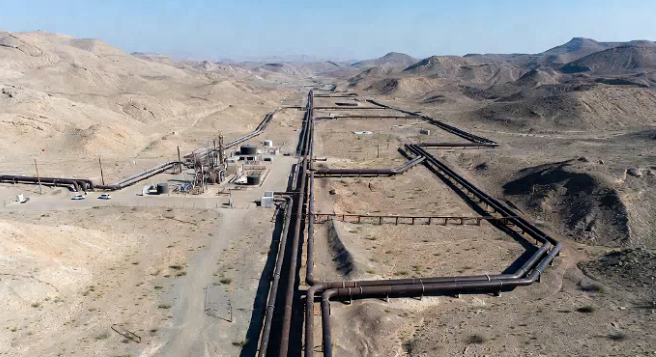
Oil accounts for over 90% of Iraq's fiscal revenue, and nearly 95% of the country's crude oil relies on exports through the Strait of Hormuz. With the closure of the shipping lanes, oil storage facilities quickly became saturated, forcing the shutdown of numerous oil wells. Well shutdowns can lead to problems such as decreased reservoir pressure, water seepage, and equipment corrosion. The main, mature oil fields in the south are less resilient to these risks, and the industry faces the risk of permanent damage.
For a long time, Iraq's crude oil export routes have been clearly divided between the north and south. Crude oil from the northern Kurdistan Region mainly supplies the European market, while crude oil from the southern production area is transported eastward to major Asian countries, heavily reliant on the Strait of Hormuz. Previously, there was also a practice of transshipping Iranian crude oil through local channels.
At the geopolitical level, the Iraqi central government has consistently sought to weaken the economic independence of the Kurdistan Region, while the United States and its allies intend to support the Kurdistan Region and expand their own regional influence.
In 2014, the two sides reached a fiscal and crude oil swap agreement, but the cooperation has been plagued by constant conflicts over the years. After the strait blockade, the cross-border pipelines controlled by the Kurdistan Region became a scarce resource for external transportation. Coupled with Europe's urgent need to replenish its crude oil reserves, the Iraqi central government had to temporarily rely on land trucks to transport oil to Turkey. However, the capacity of truck transportation is limited and far from enough to make up for the pipeline capacity gap. Restarting and building a new northern pipeline has become an urgent task.
Iraq already has a transnational pipeline from Kirkuk to Ceyhan, Turkey, with a theoretical daily capacity of 1.6 million barrels. However, its actual capacity has been significantly reduced due to frequent attacks by armed groups. The capacity of the branch pipeline in the Kurdistan Region has also not been fully utilized. Now, Iraq is focusing on building the Kirkuk/Nineveh pipeline, independent of the Kurdistan Region. This section is designed to have a daily capacity of 350,000 barrels, prioritizing the trial shipment of 150,000 to 250,000 barrels next month. According to the plan, after the subsequent construction of the Basra-Hadisa corridor, the north-south pipeline network will be connected, forming a complete transportation trunk line from the Persian Gulf to Turkey.
At a crucial stage of pipeline reconstruction, major Asian companies have become key partners. Iraq, leveraging a previously agreed-upon "oil-for-projects" framework and a $1.5 billion emergency infrastructure budget, has entrusted the $5 billion, 700-kilometer-long Basra-Hadisa pipeline project to its state-owned enterprises for expedited construction. This main pipeline is designed to transport 2.5 million barrels of oil per day, with Iraq allocating 150,000 barrels of crude oil daily as a performance guarantee. Once completed, this project will completely remove the bottleneck in transporting oil from large southern oil fields and improve the national crude oil transportation system.
The closure of the Strait of Hormuz has thoroughly exposed the weakness of Iraq's reliance on a single crude oil export route. The sharp drop in production has not only impacted the country's economy but also threatened the security of its oil facilities. As the region works to repair and construct the northern pipeline, regional interests and great power rivalry continue to entangle the issue.
The core pipeline project, in which major Asian powers are involved, will help Iraq build a diversified external transportation system and will continue to influence the energy circulation pattern in the Middle East.
The conflict of interests between the central government and the Kurdistan Region, the geopolitical maneuvering of major powers outside the region, and the deep involvement of major Asian companies in core pipeline projects have all drawn attention to the restructuring of Iraq's crude oil transportation network.
Production plummets, plunging the domestic oil industry into crisis
April this year marked a difficult turning point for Iraq's oil industry in decades, with domestic crude oil production averaging only 1.389 million barrels per day. In contrast, from 2002 to March of this year, the country's average daily production remained stable at 3.47 million barrels, exceeding 4.1 million barrels in the three months leading up to the conflict between the US, Israel, and Iran. The last time production fell to current levels was during the war in 2003.
Oil accounts for over 90% of Iraq's fiscal revenue, and nearly 95% of the country's crude oil relies on exports through the Strait of Hormuz. With the closure of the shipping lanes, oil storage facilities quickly became saturated, forcing the shutdown of numerous oil wells. Well shutdowns can lead to problems such as decreased reservoir pressure, water seepage, and equipment corrosion. The main, mature oil fields in the south are less resilient to these risks, and the industry faces the risk of permanent damage.
Geopolitical competition and complex crude oil export patterns between the north and south
For a long time, Iraq's crude oil export routes have been clearly divided between the north and south. Crude oil from the northern Kurdistan Region mainly supplies the European market, while crude oil from the southern production area is transported eastward to major Asian countries, heavily reliant on the Strait of Hormuz. Previously, there was also a practice of transshipping Iranian crude oil through local channels.
At the geopolitical level, the Iraqi central government has consistently sought to weaken the economic independence of the Kurdistan Region, while the United States and its allies intend to support the Kurdistan Region and expand their own regional influence.
In 2014, the two sides reached a fiscal and crude oil swap agreement, but the cooperation has been plagued by constant conflicts over the years. After the strait blockade, the cross-border pipelines controlled by the Kurdistan Region became a scarce resource for external transportation. Coupled with Europe's urgent need to replenish its crude oil reserves, the Iraqi central government had to temporarily rely on land trucks to transport oil to Turkey. However, the capacity of truck transportation is limited and far from enough to make up for the pipeline capacity gap. Restarting and building a new northern pipeline has become an urgent task.
Revitalizing aging pipelines to advance the transformation of the northern transportation network
Iraq already has a transnational pipeline from Kirkuk to Ceyhan, Turkey, with a theoretical daily capacity of 1.6 million barrels. However, its actual capacity has been significantly reduced due to frequent attacks by armed groups. The capacity of the branch pipeline in the Kurdistan Region has also not been fully utilized. Now, Iraq is focusing on building the Kirkuk/Nineveh pipeline, independent of the Kurdistan Region. This section is designed to have a daily capacity of 350,000 barrels, prioritizing the trial shipment of 150,000 to 250,000 barrels next month. According to the plan, after the subsequent construction of the Basra-Hadisa corridor, the north-south pipeline network will be connected, forming a complete transportation trunk line from the Persian Gulf to Turkey.
China is deeply involved in the joint construction of large-scale cross-border energy corridors.
At a crucial stage of pipeline reconstruction, major Asian companies have become key partners. Iraq, leveraging a previously agreed-upon "oil-for-projects" framework and a $1.5 billion emergency infrastructure budget, has entrusted the $5 billion, 700-kilometer-long Basra-Hadisa pipeline project to its state-owned enterprises for expedited construction. This main pipeline is designed to transport 2.5 million barrels of oil per day, with Iraq allocating 150,000 barrels of crude oil daily as a performance guarantee. Once completed, this project will completely remove the bottleneck in transporting oil from large southern oil fields and improve the national crude oil transportation system.
Summarize
The closure of the Strait of Hormuz has thoroughly exposed the weakness of Iraq's reliance on a single crude oil export route. The sharp drop in production has not only impacted the country's economy but also threatened the security of its oil facilities. As the region works to repair and construct the northern pipeline, regional interests and great power rivalry continue to entangle the issue.
The core pipeline project, in which major Asian powers are involved, will help Iraq build a diversified external transportation system and will continue to influence the energy circulation pattern in the Middle East.
- Risk Warning and Disclaimer
- The market involves risk, and trading may not be suitable for all investors. This article is for reference only and does not constitute personal investment advice, nor does it take into account certain users’ specific investment objectives, financial situation, or other needs. Any investment decisions made based on this information are at your own risk.