US-Iran talks eased energy concerns, and the USD/CAD pair remained range-bound around 1.38 ahead of Canadian economic data releases.
2026-05-27 14:08:11
The USD/CAD pair traded in a narrow range during Asian trading on Wednesday, fluctuating around 1.3810. Current market sentiment is primarily influenced by the progress of US-Iran negotiations, changes in international oil prices, and expectations for Canadian economic data. Looking at major currencies, the Canadian dollar has been relatively stable overall, showing weakness only against the New Zealand dollar, while remaining largely flat against the US dollar, euro, and British pound.

The situation in the Middle East remains a key focus for global markets. Markets continue to monitor the progress of negotiations between the United States and Iran regarding a long-term ceasefire and the resumption of normal shipping in the Strait of Hormuz. Although Iran has accused the United States of recent military attacks, the U.S. Central Command has stated that the actions were "defensive" in nature and primarily aimed at protecting U.S. forces from threats by Iranian armed forces.
Meanwhile, the latest news from Iran indicates that, with Qatar's mediation, the two sides are close to resolving the issue of frozen Iranian assets. The market believes this could mean the US and Iran are one step closer to a final agreement. The Strait of Hormuz handles approximately 20% of global seaborne crude oil transport. Therefore, the market generally believes that if normal shipping activity resumes in the region, global energy supply risks could be significantly alleviated.
This expectation has also led to a slowdown in the recent rise in international oil prices. Changes in international oil prices have a significant impact on the Canadian dollar, as Canada is one of the world's major crude oil exporters. Generally, rising oil prices favor a stronger Canadian dollar, while falling prices can limit its performance. However, given that current oil prices remain relatively high, the Canadian dollar is still receiving some support from the energy market.
Meanwhile, the US dollar's performance continues to influence the USD/CAD exchange rate. Currently, the dollar remains supported by safe-haven demand and expectations of high interest rates from the Federal Reserve, thus limiting the short-term downside for USD/CAD. The market expects the Federal Reserve to maintain high interest rates this year. Inflation concerns stemming from rising international oil prices have made the market cautious about the Fed's future policy path.
However, with some progress in negotiations between the US and Iran, market concerns about severe energy supply disruptions have eased, limiting further expansion of safe-haven buying of the US dollar. Domestically in Canada, market focus has shifted to the upcoming release of Canadian GDP data. Investors are assessing whether the Canadian economy can maintain its growth momentum.
The market expects Canada's monthly GDP growth rate to slow to 0.1% from the previous 0.2%. However, looking at annualized data, Canada's first-quarter GDP is expected to grow by 1.5%, a significant improvement compared to the previous contraction of 0.6%.
If Canadian GDP data beats market expectations, the Canadian dollar could receive further support. Conversely, weak economic data could reignite market concerns about a slowdown in the Canadian economy. The future policy path of the Bank of Canada is also under close market scrutiny. With overall inflation in Canada having moderated, the market is watching to see if the Bank of Canada will gradually shift to a more accommodative policy stance in the future.
From an overall market perspective, the current USD/CAD exchange rate is primarily influenced by two factors: changes in international oil prices and expectations of high US interest rates. On the one hand, high international oil prices support the Canadian dollar; on the other hand, hawkish expectations from the Federal Reserve continue to support the US dollar.
From a technical perspective, the USD/CAD daily chart maintains an overall medium-term bullish consolidation structure. The exchange rate continues to trade above major moving averages, indicating that the US dollar still holds a certain advantage. The MACD indicator remains in positive territory, but the red histogram bars are narrowing, suggesting a slowdown in upward momentum. The RSI indicator remains around 56, indicating a neutral to slightly bullish market sentiment. Key resistance levels to watch are 1.3860 and 1.3920; a decisive break above these levels could lead to further testing of the recent highs. Important support levels are located around 1.3760 and 1.3700.
The 4-hour chart shows that the USD/CAD pair has entered a short-term consolidation phase, with the price fluctuating narrowly around the short-term moving averages. The MACD indicator is gradually approaching the zero line, indicating that the short-term direction is currently unclear. Meanwhile, the RSI indicator remains around 50, reflecting a relatively balanced market sentiment between bulls and bears. If Canadian GDP data is strong and international oil prices remain high, the Canadian dollar may be pushed back; however, if the US dollar continues to be driven by safe-haven demand, the USD/CAD pair may retest the 1.39 level.
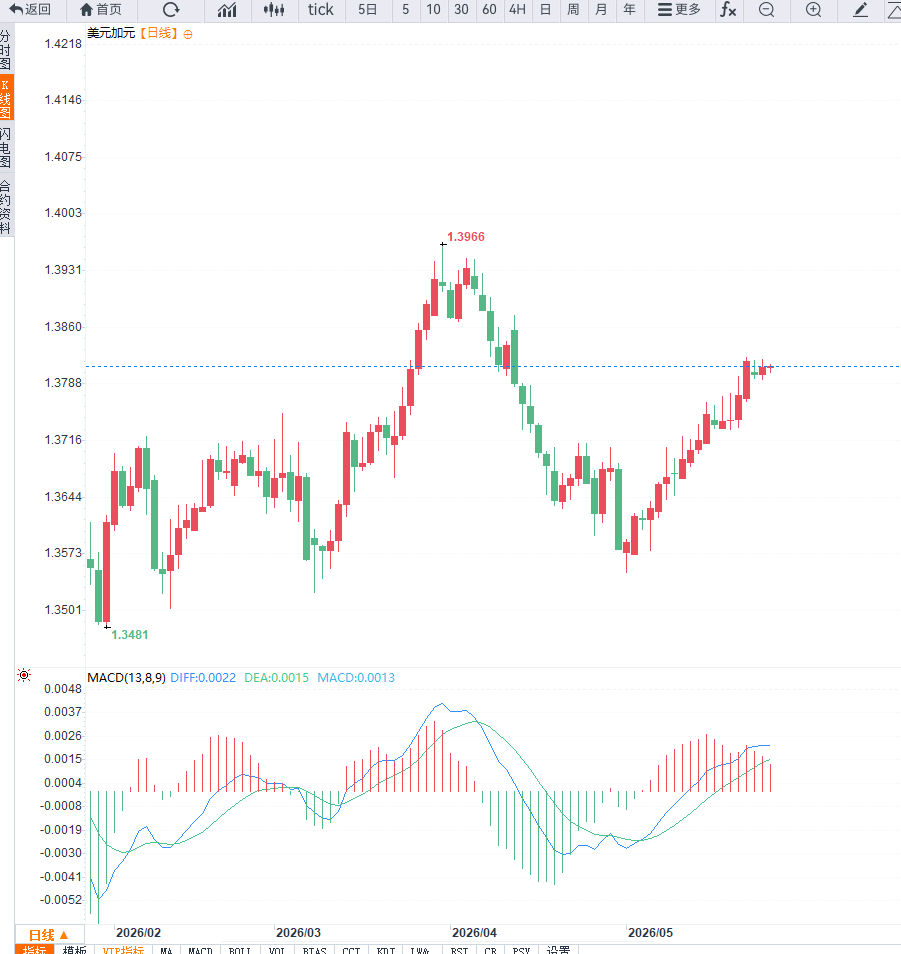
Investors are currently focused on the progress of negotiations between the US and Iran, international oil price trends, and Canadian GDP data. The market is also closely watching future policy changes from the Federal Reserve and the Bank of Canada to determine the next direction of the USD/CAD exchange rate.
Editor's Summary : The USD/CAD market is currently in a balancing act between expectations of easing energy market concerns and support from high US interest rates. Progress in US-Iran negotiations has eased market concerns about global energy supply disruptions, providing some support for the Canadian dollar. However, the Federal Reserve's continued high interest rate expectations and the safe-haven demand for the US dollar limit the downside potential for USD/CAD. Meanwhile, Canadian economic data will be a crucial variable influencing the Canadian dollar's movement. Future market direction will largely depend on international oil prices, Canadian GDP data, and developments in the Middle East. In the short term, USD/CAD is likely to continue fluctuating within the 1.37 to 1.39 range.
The situation in the Middle East remains a key focus for global markets. Markets continue to monitor the progress of negotiations between the United States and Iran regarding a long-term ceasefire and the resumption of normal shipping in the Strait of Hormuz. Although Iran has accused the United States of recent military attacks, the U.S. Central Command has stated that the actions were "defensive" in nature and primarily aimed at protecting U.S. forces from threats by Iranian armed forces.
Meanwhile, the latest news from Iran indicates that, with Qatar's mediation, the two sides are close to resolving the issue of frozen Iranian assets. The market believes this could mean the US and Iran are one step closer to a final agreement. The Strait of Hormuz handles approximately 20% of global seaborne crude oil transport. Therefore, the market generally believes that if normal shipping activity resumes in the region, global energy supply risks could be significantly alleviated.
This expectation has also led to a slowdown in the recent rise in international oil prices. Changes in international oil prices have a significant impact on the Canadian dollar, as Canada is one of the world's major crude oil exporters. Generally, rising oil prices favor a stronger Canadian dollar, while falling prices can limit its performance. However, given that current oil prices remain relatively high, the Canadian dollar is still receiving some support from the energy market.
Meanwhile, the US dollar's performance continues to influence the USD/CAD exchange rate. Currently, the dollar remains supported by safe-haven demand and expectations of high interest rates from the Federal Reserve, thus limiting the short-term downside for USD/CAD. The market expects the Federal Reserve to maintain high interest rates this year. Inflation concerns stemming from rising international oil prices have made the market cautious about the Fed's future policy path.
However, with some progress in negotiations between the US and Iran, market concerns about severe energy supply disruptions have eased, limiting further expansion of safe-haven buying of the US dollar. Domestically in Canada, market focus has shifted to the upcoming release of Canadian GDP data. Investors are assessing whether the Canadian economy can maintain its growth momentum.
The market expects Canada's monthly GDP growth rate to slow to 0.1% from the previous 0.2%. However, looking at annualized data, Canada's first-quarter GDP is expected to grow by 1.5%, a significant improvement compared to the previous contraction of 0.6%.
If Canadian GDP data beats market expectations, the Canadian dollar could receive further support. Conversely, weak economic data could reignite market concerns about a slowdown in the Canadian economy. The future policy path of the Bank of Canada is also under close market scrutiny. With overall inflation in Canada having moderated, the market is watching to see if the Bank of Canada will gradually shift to a more accommodative policy stance in the future.
From an overall market perspective, the current USD/CAD exchange rate is primarily influenced by two factors: changes in international oil prices and expectations of high US interest rates. On the one hand, high international oil prices support the Canadian dollar; on the other hand, hawkish expectations from the Federal Reserve continue to support the US dollar.
From a technical perspective, the USD/CAD daily chart maintains an overall medium-term bullish consolidation structure. The exchange rate continues to trade above major moving averages, indicating that the US dollar still holds a certain advantage. The MACD indicator remains in positive territory, but the red histogram bars are narrowing, suggesting a slowdown in upward momentum. The RSI indicator remains around 56, indicating a neutral to slightly bullish market sentiment. Key resistance levels to watch are 1.3860 and 1.3920; a decisive break above these levels could lead to further testing of the recent highs. Important support levels are located around 1.3760 and 1.3700.
The 4-hour chart shows that the USD/CAD pair has entered a short-term consolidation phase, with the price fluctuating narrowly around the short-term moving averages. The MACD indicator is gradually approaching the zero line, indicating that the short-term direction is currently unclear. Meanwhile, the RSI indicator remains around 50, reflecting a relatively balanced market sentiment between bulls and bears. If Canadian GDP data is strong and international oil prices remain high, the Canadian dollar may be pushed back; however, if the US dollar continues to be driven by safe-haven demand, the USD/CAD pair may retest the 1.39 level.
Investors are currently focused on the progress of negotiations between the US and Iran, international oil price trends, and Canadian GDP data. The market is also closely watching future policy changes from the Federal Reserve and the Bank of Canada to determine the next direction of the USD/CAD exchange rate.
Editor's Summary : The USD/CAD market is currently in a balancing act between expectations of easing energy market concerns and support from high US interest rates. Progress in US-Iran negotiations has eased market concerns about global energy supply disruptions, providing some support for the Canadian dollar. However, the Federal Reserve's continued high interest rate expectations and the safe-haven demand for the US dollar limit the downside potential for USD/CAD. Meanwhile, Canadian economic data will be a crucial variable influencing the Canadian dollar's movement. Future market direction will largely depend on international oil prices, Canadian GDP data, and developments in the Middle East. In the short term, USD/CAD is likely to continue fluctuating within the 1.37 to 1.39 range.
- Risk Warning and Disclaimer
- The market involves risk, and trading may not be suitable for all investors. This article is for reference only and does not constitute personal investment advice, nor does it take into account certain users’ specific investment objectives, financial situation, or other needs. Any investment decisions made based on this information are at your own risk.