The US dollar remained range-bound at high levels, and the USD/CAD pair continued its rebound.
2026-05-28 13:13:57
The US dollar continued its strong upward trend against the Canadian dollar (USD/CAD) during Thursday's Asian trading session, rising to around 1.3850, a new high since April 13. As tensions between the US and Iran escalated further, market risk aversion increased significantly, pushing the US dollar index higher, while USD/CAD rose for the third consecutive trading day, driven by a combination of technical breakouts and fundamental factors.
The recent situation in the Middle East has once again become a core focus of global financial markets. Market research indicates that the US military launched a new round of strikes on Wednesday against a military target in Iran deemed a threat to US forces and commercial shipping in the Strait of Hormuz. Simultaneously, the US military intercepted and shot down several Iranian drones. Market concerns are growing that the conflict between the US and Iran could escalate further, increasing risks to the global energy supply chain.
Furthermore, US President Trump previously stated that he was "not satisfied" with the current state of negotiations with Iran and emphasized that he would not rush to reach an agreement. The market believes this means that significant differences remain between the US and Iran on the nuclear issue and the security of the Strait of Hormuz, and that geopolitical risks in the Middle East may be difficult to alleviate significantly in the short term.
The Strait of Hormuz handles approximately 20% of global seaborne crude oil transport; therefore, any security risks involving the region can rapidly impact risk appetite in global energy and financial markets. Currently, with heightened market risk aversion, the US dollar, as the global reserve currency, is experiencing significant capital inflows, while risk-sensitive currencies are facing some pressure.
Meanwhile, renewed inflation expectations in the US have further strengthened market bets that the Federal Reserve will maintain a hawkish policy. Recent gains in international oil prices, coupled with generally resilient US economic data, have led the market to reassess the Fed's future policy path. Some investors even believe that further interest rate hikes by the Fed are still possible this year.
The US Dollar Index (DXY) has recently risen to a one-week high, and US Treasury yields have remained high, providing significant support for the dollar. Against this backdrop, USD/CAD broke through the key technical level of the 200-day moving average, further attracting trend-following funds. However, the rebound in international oil prices has also limited the Canadian dollar's decline to some extent. As Canada is one of the world's major oil exporters, the Canadian dollar typically moves in close correlation with oil prices. Recently, WTI crude oil has rebounded from a near three-week low, regaining its footing around $89, providing some support for the commodity currency Canadian dollar.
Market participants believe that if international oil prices continue to rise, improved Canadian export revenues could help alleviate some pressure on the Canadian dollar, thus limiting further significant upside potential for USD/CAD. However, given the current market environment dominated by risk aversion, the US dollar is expected to remain relatively strong in the short term.
Investors are currently awaiting the release of the US PCE price index and preliminary US GDP data later in the day. The market expects the US core PCE annual rate to rise to 3.3%. If the data is higher than expected, the Federal Reserve may extend its high interest rate policy, thus continuing to support the dollar's rise.
In addition, US GDP data is also under close scrutiny. Strong economic growth would further strengthen market expectations for a "soft landing" for the US economy and enhance the attractiveness of dollar-denominated assets.
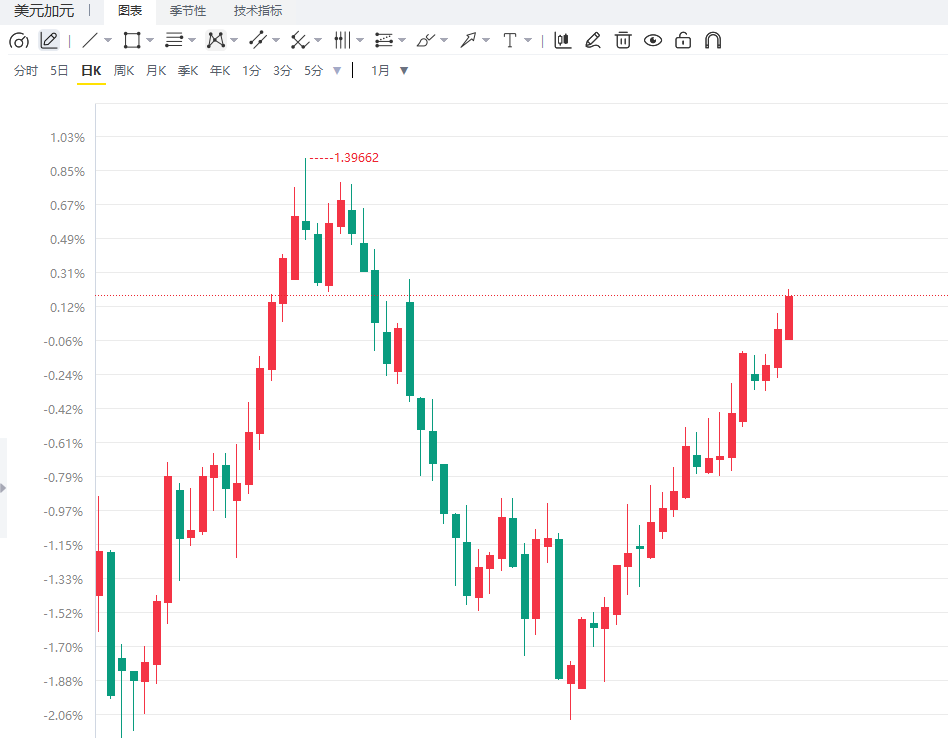
From a daily chart perspective, USD/CAD has recently broken through a key medium- to long-term resistance zone. After successfully closing above the 200-day moving average, market sentiment has become significantly bullish. The MACD indicator has returned above the zero line, indicating a recovery in medium- to long-term bullish momentum. Currently, key resistance levels are at 1.3880 and 1.3920. If the US dollar continues to strengthen, a further test of the 1.4000 level cannot be ruled out.
The 4-hour chart shows that USD/CAD has formed a stable upward channel in the short term. The RSI indicator remains above 60, indicating that short-term buying pressure still dominates. However, given that the exchange rate has risen for several consecutive days, there may be some technical pullback in the short term. Key support levels to watch are the 1.3800 and 1.3760 areas. If subsequent US data falls short of expectations, the exchange rate may temporarily retreat and consolidate.
It's worth noting that the Canadian economy remains susceptible to changes in global energy demand. If international oil prices remain high, Canadian trade revenues may improve, providing some support for the Canadian dollar. However, if global risk aversion continues to rise, demand for the US dollar as a safe haven may continue to dominate the market.
Overall, the USD/CAD pair is currently in a dual game between the "safe-haven US dollar" and "oil price support for the Canadian dollar," and US economic data and changes in the Middle East situation will be key factors in determining the next direction of the exchange rate.
Editor's Summary : The current rise in USD/CAD is primarily driven by a stronger safe-haven US dollar and a market repricing of the Federal Reserve's policy path. Escalating tensions in the Middle East not only strengthen the demand for the US dollar as a safe haven but also influence global inflation expectations through energy prices, further supporting dollar assets. However, due to the synchronized rise in international oil prices, Canada's advantage as an energy exporter is partially mitigating the Canadian dollar's decline. Therefore, the future trend of USD/CAD will depend more on whether the strength of the US dollar continues and whether international oil prices can rise further. In the short term, US PCE and GDP data may become important catalysts for the market's next direction. If the US economy and inflation continue to be stronger than expected, USD/CAD still has room for further upside; however, if oil prices continue to rise and drive a rebound in the Canadian dollar, the upward speed of the exchange rate may slow down.
The recent situation in the Middle East has once again become a core focus of global financial markets. Market research indicates that the US military launched a new round of strikes on Wednesday against a military target in Iran deemed a threat to US forces and commercial shipping in the Strait of Hormuz. Simultaneously, the US military intercepted and shot down several Iranian drones. Market concerns are growing that the conflict between the US and Iran could escalate further, increasing risks to the global energy supply chain.
Furthermore, US President Trump previously stated that he was "not satisfied" with the current state of negotiations with Iran and emphasized that he would not rush to reach an agreement. The market believes this means that significant differences remain between the US and Iran on the nuclear issue and the security of the Strait of Hormuz, and that geopolitical risks in the Middle East may be difficult to alleviate significantly in the short term.
The Strait of Hormuz handles approximately 20% of global seaborne crude oil transport; therefore, any security risks involving the region can rapidly impact risk appetite in global energy and financial markets. Currently, with heightened market risk aversion, the US dollar, as the global reserve currency, is experiencing significant capital inflows, while risk-sensitive currencies are facing some pressure.
Meanwhile, renewed inflation expectations in the US have further strengthened market bets that the Federal Reserve will maintain a hawkish policy. Recent gains in international oil prices, coupled with generally resilient US economic data, have led the market to reassess the Fed's future policy path. Some investors even believe that further interest rate hikes by the Fed are still possible this year.
The US Dollar Index (DXY) has recently risen to a one-week high, and US Treasury yields have remained high, providing significant support for the dollar. Against this backdrop, USD/CAD broke through the key technical level of the 200-day moving average, further attracting trend-following funds. However, the rebound in international oil prices has also limited the Canadian dollar's decline to some extent. As Canada is one of the world's major oil exporters, the Canadian dollar typically moves in close correlation with oil prices. Recently, WTI crude oil has rebounded from a near three-week low, regaining its footing around $89, providing some support for the commodity currency Canadian dollar.
Market participants believe that if international oil prices continue to rise, improved Canadian export revenues could help alleviate some pressure on the Canadian dollar, thus limiting further significant upside potential for USD/CAD. However, given the current market environment dominated by risk aversion, the US dollar is expected to remain relatively strong in the short term.
Investors are currently awaiting the release of the US PCE price index and preliminary US GDP data later in the day. The market expects the US core PCE annual rate to rise to 3.3%. If the data is higher than expected, the Federal Reserve may extend its high interest rate policy, thus continuing to support the dollar's rise.
In addition, US GDP data is also under close scrutiny. Strong economic growth would further strengthen market expectations for a "soft landing" for the US economy and enhance the attractiveness of dollar-denominated assets.
From a daily chart perspective, USD/CAD has recently broken through a key medium- to long-term resistance zone. After successfully closing above the 200-day moving average, market sentiment has become significantly bullish. The MACD indicator has returned above the zero line, indicating a recovery in medium- to long-term bullish momentum. Currently, key resistance levels are at 1.3880 and 1.3920. If the US dollar continues to strengthen, a further test of the 1.4000 level cannot be ruled out.
The 4-hour chart shows that USD/CAD has formed a stable upward channel in the short term. The RSI indicator remains above 60, indicating that short-term buying pressure still dominates. However, given that the exchange rate has risen for several consecutive days, there may be some technical pullback in the short term. Key support levels to watch are the 1.3800 and 1.3760 areas. If subsequent US data falls short of expectations, the exchange rate may temporarily retreat and consolidate.
It's worth noting that the Canadian economy remains susceptible to changes in global energy demand. If international oil prices remain high, Canadian trade revenues may improve, providing some support for the Canadian dollar. However, if global risk aversion continues to rise, demand for the US dollar as a safe haven may continue to dominate the market.
Overall, the USD/CAD pair is currently in a dual game between the "safe-haven US dollar" and "oil price support for the Canadian dollar," and US economic data and changes in the Middle East situation will be key factors in determining the next direction of the exchange rate.
Editor's Summary : The current rise in USD/CAD is primarily driven by a stronger safe-haven US dollar and a market repricing of the Federal Reserve's policy path. Escalating tensions in the Middle East not only strengthen the demand for the US dollar as a safe haven but also influence global inflation expectations through energy prices, further supporting dollar assets. However, due to the synchronized rise in international oil prices, Canada's advantage as an energy exporter is partially mitigating the Canadian dollar's decline. Therefore, the future trend of USD/CAD will depend more on whether the strength of the US dollar continues and whether international oil prices can rise further. In the short term, US PCE and GDP data may become important catalysts for the market's next direction. If the US economy and inflation continue to be stronger than expected, USD/CAD still has room for further upside; however, if oil prices continue to rise and drive a rebound in the Canadian dollar, the upward speed of the exchange rate may slow down.
- Risk Warning and Disclaimer
- The market involves risk, and trading may not be suitable for all investors. This article is for reference only and does not constitute personal investment advice, nor does it take into account certain users’ specific investment objectives, financial situation, or other needs. Any investment decisions made based on this information are at your own risk.