The European Central Bank warned that an energy shock could push up inflation for an extended period, adding further uncertainty to the Eurozone's interest rate path.
2026-05-28 15:05:55
European Central Bank Chief Economist Philip Lane said on Thursday that the current surge in energy prices triggered by the Middle East conflict may not fall as quickly as in the past, and even if the geopolitical situation eases in the future, the energy shock may continue to affect the eurozone's inflation performance through multiple channels.

Lane points out that while historical experience shows that international oil prices typically return to their original levels after a sharp rise, the current global energy market structure has undergone significant changes. As countries accelerate the replenishment of energy reserves and adjust their long-term energy supply systems, future energy costs may remain relatively high.
Lane stated, "Global oil supply experienced a fairly rapid and significant drop overnight, a situation that had previously been masked by inventories." He further emphasized that even as the initial energy shock gradually subsides, the subsequent "second wave" could still last for a considerable period.
The escalating situation in the Middle East has clearly impacted the global energy supply chain. The Strait of Hormuz handles approximately 20% of global seaborne crude oil transport, and as regional tensions escalate, international market concerns about energy transport security continue to intensify.
International oil prices have remained high recently, with WTI crude oil stabilizing around $90, and volatility in the European natural gas market has also increased significantly. Rising energy costs not only directly impact consumer fuel and electricity expenditures but may also further drive up prices in manufacturing, transportation, food, and other sectors.
Lane stated that in the past, energy shocks have often triggered a "non-linear" inflation diffusion mechanism, meaning that rising energy prices initially affect the energy sector, but then gradually spread to the entire economic system, causing broader price increases.
Analysts believe this means the European Central Bank now needs to pay attention not only to changes in energy prices themselves, but also to whether wages, the service sector, and core inflation are being persistently affected. However, Lane also points out that this energy shock is significantly different from that of four years ago. Back then, the global economic reopening, coupled with supply chain disruptions caused by the Russia-Ukraine conflict, led to a surge in inflation driven by both demand and supply factors.
In contrast, with global economic growth slowing and consumer demand relatively weak, the European Central Bank does not believe that current inflation risks will completely replicate previous scenarios. Nevertheless, Lane emphasized that central banks must take any significant energy shocks and their potential impact on inflation seriously. He stated that monetary policymakers need to remain vigilant, but should also avoid overreacting to short-term market fluctuations.
The market is currently reassessing the European Central Bank's (ECB) future policy path. Previously, some investors had expected the ECB to gradually shift towards an easing policy in the future, but with the rebound in international oil prices, market expectations for the ECB to maintain a hawkish stance are rising again.
There is now increased discussion within the European Central Bank regarding the risks of persistently high energy prices. Some officials worry that if energy costs remain high, overall inflation in the Eurozone could deviate from its target level again, forcing the ECB to maintain high interest rates for an extended period. Meanwhile, the European economy itself continues to face growth pressures. High energy prices are increasing business operating costs and weakening consumer purchasing power. Manufacturing activity in major economies such as Germany, France, and Italy remains relatively sluggish.
Therefore, the European Central Bank (ECB) currently faces a classic dilemma: on the one hand, it needs to control inflation expectations, and on the other hand, it needs to avoid excessive tightening that could further drag down economic growth. Looking at the foreign exchange market, the euro has remained generally weak recently. Although some ECB officials have continued to send hawkish signals, rising demand for the safe-haven dollar and persistently high US Treasury yields continue to put pressure on the euro.
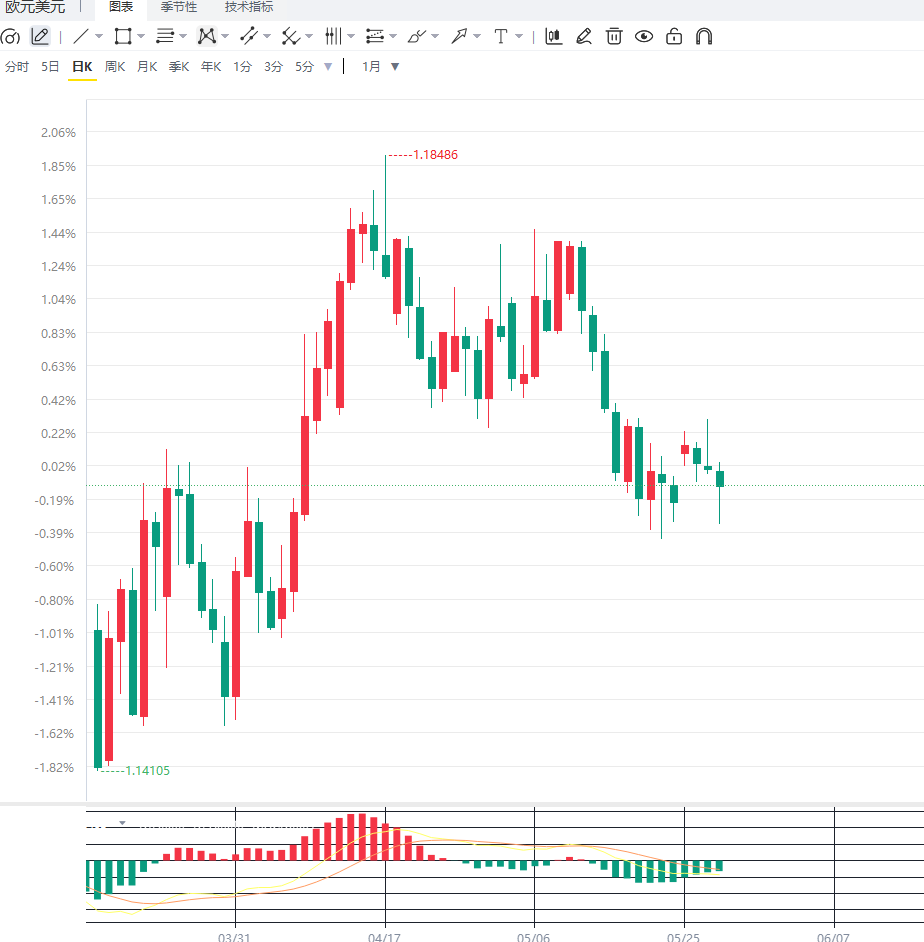
From a daily chart perspective, EUR/USD has recently broken below the key support level of 1.1600 and is maintaining a weak, oscillating structure. The MACD indicator continues to run below the zero line, indicating that the medium- to long-term bearish pressure has not yet eased significantly. Currently, key support levels to watch are the 1.1550 and 1.1500 areas. If the US dollar continues to strengthen, the euro may face further pressure. Resistance levels are located at the 1.1635 and 1.1680 areas.
The 4-hour chart shows that EUR/USD has formed a short-term descending channel. The RSI indicator is below 50, indicating that market sentiment remains cautious. However, if subsequent European inflation data continues to be high, market expectations for a hawkish stance from the European Central Bank may resurface, potentially helping the euro stabilize in the short term.
Furthermore, the European bond market is also affected by energy risks. The recent rebound in German government bond yields reflects a market reassessment of the European Central Bank's future interest rate path. Overall, current changes in the global energy market are re-influencing the outlook for European inflation and monetary policy, and the risk of persistently high energy costs may become one of the major challenges facing the Eurozone economy in the future.
Editor's Summary : The European Central Bank's (ECB) biggest concern has shifted from short-term energy price fluctuations to the potential for sustained inflationary pressures from persistently high long-term energy costs. With escalating tensions in the Middle East, restructuring of the global energy supply chain, and increased demand for inventory replenishment, the future path of European inflation decline may become more complex. For the ECB, striking a balance between controlling inflation and avoiding excessive economic slowdown will be a core policy challenge. If international oil prices remain high, the ECB may be forced to maintain high interest rates for an extended period. Investors should pay close attention to international oil price trends, developments in the Middle East, European inflation data, and speeches by ECB officials. These factors will determine the future interest rate path in the Eurozone and the overall performance of the Euro market.
Lane points out that while historical experience shows that international oil prices typically return to their original levels after a sharp rise, the current global energy market structure has undergone significant changes. As countries accelerate the replenishment of energy reserves and adjust their long-term energy supply systems, future energy costs may remain relatively high.
Lane stated, "Global oil supply experienced a fairly rapid and significant drop overnight, a situation that had previously been masked by inventories." He further emphasized that even as the initial energy shock gradually subsides, the subsequent "second wave" could still last for a considerable period.
The escalating situation in the Middle East has clearly impacted the global energy supply chain. The Strait of Hormuz handles approximately 20% of global seaborne crude oil transport, and as regional tensions escalate, international market concerns about energy transport security continue to intensify.
International oil prices have remained high recently, with WTI crude oil stabilizing around $90, and volatility in the European natural gas market has also increased significantly. Rising energy costs not only directly impact consumer fuel and electricity expenditures but may also further drive up prices in manufacturing, transportation, food, and other sectors.
Lane stated that in the past, energy shocks have often triggered a "non-linear" inflation diffusion mechanism, meaning that rising energy prices initially affect the energy sector, but then gradually spread to the entire economic system, causing broader price increases.
Analysts believe this means the European Central Bank now needs to pay attention not only to changes in energy prices themselves, but also to whether wages, the service sector, and core inflation are being persistently affected. However, Lane also points out that this energy shock is significantly different from that of four years ago. Back then, the global economic reopening, coupled with supply chain disruptions caused by the Russia-Ukraine conflict, led to a surge in inflation driven by both demand and supply factors.
In contrast, with global economic growth slowing and consumer demand relatively weak, the European Central Bank does not believe that current inflation risks will completely replicate previous scenarios. Nevertheless, Lane emphasized that central banks must take any significant energy shocks and their potential impact on inflation seriously. He stated that monetary policymakers need to remain vigilant, but should also avoid overreacting to short-term market fluctuations.
The market is currently reassessing the European Central Bank's (ECB) future policy path. Previously, some investors had expected the ECB to gradually shift towards an easing policy in the future, but with the rebound in international oil prices, market expectations for the ECB to maintain a hawkish stance are rising again.
There is now increased discussion within the European Central Bank regarding the risks of persistently high energy prices. Some officials worry that if energy costs remain high, overall inflation in the Eurozone could deviate from its target level again, forcing the ECB to maintain high interest rates for an extended period. Meanwhile, the European economy itself continues to face growth pressures. High energy prices are increasing business operating costs and weakening consumer purchasing power. Manufacturing activity in major economies such as Germany, France, and Italy remains relatively sluggish.
Therefore, the European Central Bank (ECB) currently faces a classic dilemma: on the one hand, it needs to control inflation expectations, and on the other hand, it needs to avoid excessive tightening that could further drag down economic growth. Looking at the foreign exchange market, the euro has remained generally weak recently. Although some ECB officials have continued to send hawkish signals, rising demand for the safe-haven dollar and persistently high US Treasury yields continue to put pressure on the euro.
From a daily chart perspective, EUR/USD has recently broken below the key support level of 1.1600 and is maintaining a weak, oscillating structure. The MACD indicator continues to run below the zero line, indicating that the medium- to long-term bearish pressure has not yet eased significantly. Currently, key support levels to watch are the 1.1550 and 1.1500 areas. If the US dollar continues to strengthen, the euro may face further pressure. Resistance levels are located at the 1.1635 and 1.1680 areas.
The 4-hour chart shows that EUR/USD has formed a short-term descending channel. The RSI indicator is below 50, indicating that market sentiment remains cautious. However, if subsequent European inflation data continues to be high, market expectations for a hawkish stance from the European Central Bank may resurface, potentially helping the euro stabilize in the short term.
Furthermore, the European bond market is also affected by energy risks. The recent rebound in German government bond yields reflects a market reassessment of the European Central Bank's future interest rate path. Overall, current changes in the global energy market are re-influencing the outlook for European inflation and monetary policy, and the risk of persistently high energy costs may become one of the major challenges facing the Eurozone economy in the future.
Editor's Summary : The European Central Bank's (ECB) biggest concern has shifted from short-term energy price fluctuations to the potential for sustained inflationary pressures from persistently high long-term energy costs. With escalating tensions in the Middle East, restructuring of the global energy supply chain, and increased demand for inventory replenishment, the future path of European inflation decline may become more complex. For the ECB, striking a balance between controlling inflation and avoiding excessive economic slowdown will be a core policy challenge. If international oil prices remain high, the ECB may be forced to maintain high interest rates for an extended period. Investors should pay close attention to international oil price trends, developments in the Middle East, European inflation data, and speeches by ECB officials. These factors will determine the future interest rate path in the Eurozone and the overall performance of the Euro market.
- Risk Warning and Disclaimer
- The market involves risk, and trading may not be suitable for all investors. This article is for reference only and does not constitute personal investment advice, nor does it take into account certain users’ specific investment objectives, financial situation, or other needs. Any investment decisions made based on this information are at your own risk.