The USD/CAD pair remained range-bound ahead of the Canadian GDP data release, awaiting a directional move.
2026-05-29 13:29:01
The USD/CAD pair traded sideways in Asian trading on Friday, hovering around 1.3785. The market is currently digesting progress in the US-Iran ceasefire negotiations while awaiting Canada's upcoming first-quarter GDP data for further directional guidance.
The United States and Iran are moving forward with a 60-day ceasefire extension agreement. Under the agreement, shipping through the Strait of Hormuz is expected to remain open, while negotiations on the Iranian nuclear issue will continue. U.S. Vice President Vance said on Friday that while some details are still being discussed, overall progress is being made in the negotiations.
The market believes that the easing of tensions in the Middle East means that the significant geopolitical risk premium previously accumulated in international oil prices is gradually diminishing. WTI crude oil has recently declined continuously, with a cumulative drop of nearly 15% this month, indicating a significant decrease in market concerns about global energy supply disruptions. For the Canadian dollar, oil price movements remain a crucial variable influencing its exchange rate. As one of the world's major oil exporters, energy exports play a vital role in Canada's economic and trade structure. Generally, rising international oil prices benefit Canadian export revenue and strengthen the Canadian dollar; conversely, falling oil prices may weaken the Canadian dollar.
However, the market logic this time is slightly different. While the decline in international oil prices theoretically puts pressure on the Canadian dollar, the market also believes that the easing of tensions in the Middle East helps alleviate global inflationary pressures and improves global economic risk appetite, which to some extent boosts the overall performance of risk currencies. Furthermore, strong Canadian economic data could also partially offset the negative impact of falling oil prices.
The market is currently highly focused on Canada's first-quarter GDP data. The market expects the Canadian economy to grow at an annualized rate of approximately 1.5% in the first quarter of 2026, significantly higher than the 0.6% contraction in the fourth quarter of 2025. If the data meets or exceeds expectations, it could indicate that the Canadian economy is gradually recovering from its previous weak growth, thereby strengthening market expectations that the Bank of Canada will maintain a relatively hawkish stance.
Analysts believe that Canada's GDP data will directly influence market expectations regarding the Bank of Canada's future policy path. If economic growth significantly exceeds expectations, the Bank of Canada may maintain higher interest rates for a longer period, thereby supporting the Canadian dollar; conversely, weak data could reignite market concerns about a slowdown in the Canadian economy.
Meanwhile, the US dollar remains supported by the high-interest-rate environment in the US. Recent US inflation data has generally remained resilient, US Treasury yields have remained high, and expectations for a rapid rate cut by the Federal Reserve in the near term have cooled somewhat. This has kept the US dollar index generally strong and volatile, limiting further appreciation of the Canadian dollar.
From a global capital flow perspective, the market still favors holding high-yield US dollar assets. Although there is disagreement in the market regarding the timing of future interest rate cuts by the Federal Reserve, the overall performance of the US economy is still significantly stronger than that of most developed economies, keeping the attractiveness of US dollar assets at a high level.
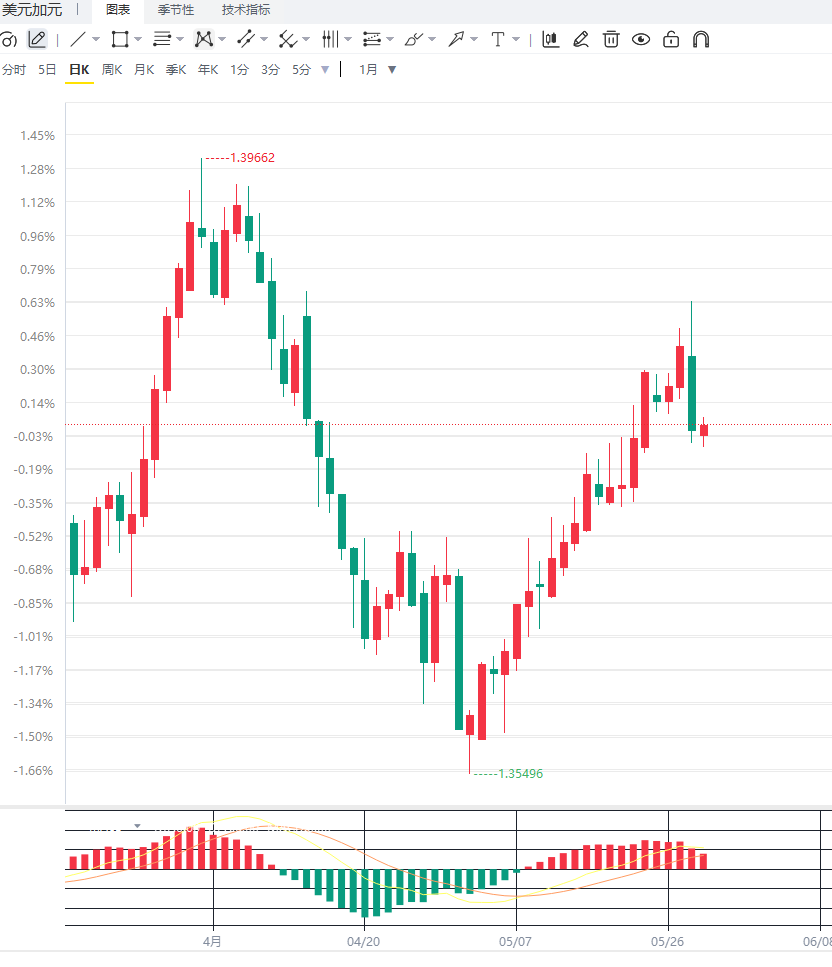
From a technical perspective, the USD/CAD pair is currently maintaining a high-level consolidation pattern on the daily chart. The pair has continued to trade above 1.3750 in the short term, indicating that the US dollar still holds a certain advantage overall. The daily MACD indicator is flattening at high levels, and the RSI remains around 55, suggesting that the market has entered a short-term consolidation phase. A decisive break above 1.3800 could lead to a further test of the 1.3850 area; conversely, if Canadian GDP data is stronger than expected, the pair may retest the support areas of 1.3720 and 1.3680.
From a 4-hour chart perspective, the USD/CAD pair has seen a significant narrowing of short-term volatility, with the moving average system gradually flattening, indicating market caution ahead of important data releases. Currently, the area around 1.3760 is a key short-term support level, while 1.3800 constitutes a major resistance zone. If market volatility intensifies after the data release, the exchange rate may quickly choose a direction.
Overall, the current USD/CAD exchange rate is seeking a new balance between falling oil prices and expectations of a Canadian economic recovery. In the short term, Canadian GDP data and changes in international oil prices will remain key factors determining the exchange rate's direction.
Editor's Summary : The USD/CAD pair has recently maintained a high level of fluctuation, with the market's core logic gradually shifting from Middle East geopolitical risks to economic fundamentals. As negotiations to extend the US-Iran ceasefire progress, international oil prices have continued to decline, weakening traditional support for the Canadian dollar. However, expectations of improved Canadian economic data have limited the Canadian dollar's decline to some extent. Meanwhile, the high-interest-rate environment in the US continues to support the US dollar, making a significant downward trend in the USD/CAD pair unlikely in the short term. Going forward, the market will focus on Canadian GDP data, the Federal Reserve's policy path, and international oil price trends, as these factors may determine whether the USD/CAD pair can break through the key 1.38 level in the next phase.
The United States and Iran are moving forward with a 60-day ceasefire extension agreement. Under the agreement, shipping through the Strait of Hormuz is expected to remain open, while negotiations on the Iranian nuclear issue will continue. U.S. Vice President Vance said on Friday that while some details are still being discussed, overall progress is being made in the negotiations.
The market believes that the easing of tensions in the Middle East means that the significant geopolitical risk premium previously accumulated in international oil prices is gradually diminishing. WTI crude oil has recently declined continuously, with a cumulative drop of nearly 15% this month, indicating a significant decrease in market concerns about global energy supply disruptions. For the Canadian dollar, oil price movements remain a crucial variable influencing its exchange rate. As one of the world's major oil exporters, energy exports play a vital role in Canada's economic and trade structure. Generally, rising international oil prices benefit Canadian export revenue and strengthen the Canadian dollar; conversely, falling oil prices may weaken the Canadian dollar.
However, the market logic this time is slightly different. While the decline in international oil prices theoretically puts pressure on the Canadian dollar, the market also believes that the easing of tensions in the Middle East helps alleviate global inflationary pressures and improves global economic risk appetite, which to some extent boosts the overall performance of risk currencies. Furthermore, strong Canadian economic data could also partially offset the negative impact of falling oil prices.
The market is currently highly focused on Canada's first-quarter GDP data. The market expects the Canadian economy to grow at an annualized rate of approximately 1.5% in the first quarter of 2026, significantly higher than the 0.6% contraction in the fourth quarter of 2025. If the data meets or exceeds expectations, it could indicate that the Canadian economy is gradually recovering from its previous weak growth, thereby strengthening market expectations that the Bank of Canada will maintain a relatively hawkish stance.
Analysts believe that Canada's GDP data will directly influence market expectations regarding the Bank of Canada's future policy path. If economic growth significantly exceeds expectations, the Bank of Canada may maintain higher interest rates for a longer period, thereby supporting the Canadian dollar; conversely, weak data could reignite market concerns about a slowdown in the Canadian economy.
Meanwhile, the US dollar remains supported by the high-interest-rate environment in the US. Recent US inflation data has generally remained resilient, US Treasury yields have remained high, and expectations for a rapid rate cut by the Federal Reserve in the near term have cooled somewhat. This has kept the US dollar index generally strong and volatile, limiting further appreciation of the Canadian dollar.
From a global capital flow perspective, the market still favors holding high-yield US dollar assets. Although there is disagreement in the market regarding the timing of future interest rate cuts by the Federal Reserve, the overall performance of the US economy is still significantly stronger than that of most developed economies, keeping the attractiveness of US dollar assets at a high level.
From a technical perspective, the USD/CAD pair is currently maintaining a high-level consolidation pattern on the daily chart. The pair has continued to trade above 1.3750 in the short term, indicating that the US dollar still holds a certain advantage overall. The daily MACD indicator is flattening at high levels, and the RSI remains around 55, suggesting that the market has entered a short-term consolidation phase. A decisive break above 1.3800 could lead to a further test of the 1.3850 area; conversely, if Canadian GDP data is stronger than expected, the pair may retest the support areas of 1.3720 and 1.3680.
From a 4-hour chart perspective, the USD/CAD pair has seen a significant narrowing of short-term volatility, with the moving average system gradually flattening, indicating market caution ahead of important data releases. Currently, the area around 1.3760 is a key short-term support level, while 1.3800 constitutes a major resistance zone. If market volatility intensifies after the data release, the exchange rate may quickly choose a direction.
Overall, the current USD/CAD exchange rate is seeking a new balance between falling oil prices and expectations of a Canadian economic recovery. In the short term, Canadian GDP data and changes in international oil prices will remain key factors determining the exchange rate's direction.
Editor's Summary : The USD/CAD pair has recently maintained a high level of fluctuation, with the market's core logic gradually shifting from Middle East geopolitical risks to economic fundamentals. As negotiations to extend the US-Iran ceasefire progress, international oil prices have continued to decline, weakening traditional support for the Canadian dollar. However, expectations of improved Canadian economic data have limited the Canadian dollar's decline to some extent. Meanwhile, the high-interest-rate environment in the US continues to support the US dollar, making a significant downward trend in the USD/CAD pair unlikely in the short term. Going forward, the market will focus on Canadian GDP data, the Federal Reserve's policy path, and international oil price trends, as these factors may determine whether the USD/CAD pair can break through the key 1.38 level in the next phase.
- Risk Warning and Disclaimer
- The market involves risk, and trading may not be suitable for all investors. This article is for reference only and does not constitute personal investment advice, nor does it take into account certain users’ specific investment objectives, financial situation, or other needs. Any investment decisions made based on this information are at your own risk.