False alarm? Crude oil prices surged over 7% in a single day before retreating, as the Iran nuclear talks continue to face twists and turns.
2026-06-02 02:02:54
On Monday (June 1st), the crude oil market experienced a rare and dramatic rollercoaster ride. According to the intraday chart, US crude oil (WTI) traded relatively smoothly throughout the morning and afternoon, mainly fluctuating within the $88-90 range. However, after 21:00 Beijing time, the market suddenly rallied, with a significant initial surge. This was followed by a near-vertical second surge between 22:00 and midnight, with the intraday maximum gain approaching 8%, reaching a high of nearly $97, before finally closing at $91.75, a gain of +5.03%.
The initial surge was primarily driven by the escalation of the conflict in Lebanon. Israel launched its largest ground offensive in approximately 25 years over the weekend and into Monday, conducting deep strikes against Iranian-backed Hezbollah targets. This major military operation quickly ignited market concerns about a further escalation of the Middle East conflict, causing oil prices to accelerate upwards as bullish funds gradually entered the market.
The second wave (and the most intense) came from Iran's strong response. Iranian semi-official media released two major announcements in quick succession: first, announcing the suspension of dialogue and document exchange with the United States through intermediaries (i.e., a suspension of nuclear talks); second, further vowing to "completely blockade" the Strait of Hormuz in response to Israel's military action in Lebanon. As a vital waterway for approximately one-fifth of the world's oil exports, the threat of its blockade carries immense real-world impact, instantly pushing market panic to its peak.
The two waves of impact combined to create today's classic "V"-shaped reversal, from a stable start to a sharp rise, followed by a pullback. Just last week, the market was optimistic about a possible temporary agreement between the US and Iran, causing Brent crude oil to fall by more than 11%. The rapid reversal of bullish and bearish sentiment makes today's market movement particularly striking.
Three key news items quickly halted the upward trend.
However, this extreme surge of nearly 8% did not last long. Three important pieces of information that followed acted like buckets of cold water, quickly extinguishing the market's euphoria, and oil prices rapidly fell from their peak to a level of around 5%.
Article 1: Hezbollah sends a goodwill signal. Hezbollah in Lebanon clearly stated that if Israel ceases its military aggression and withdraws from the relevant areas, they will abide by the previously reached ceasefire agreement. This response cleverly puts the ball back in Israel's court, indicating that the current conflict is not entirely unsolvable and that there is still room for diplomatic de-escalation, significantly alleviating market fears of a full-scale war.
Article Two: Trump's Down-to-Earth Response. In an interview with CNBC, Trump stated that he had not yet received formal official notification of Iran's suspension of negotiations, and casually told the reporter, "I really don't care." More importantly, he explicitly predicted that oil prices "will fall like rocks in a very short time," while emphasizing that the US would maintain its existing blockade measures on the Strait of Hormuz. This statement sent a strong signal: the US maintains sufficient strategic composure in the current situation, neither intending to compromise easily nor to further escalate the conflict, thus significantly reducing market risk appetite.
The third, and most decisive, point is that Iran actually hopes to continue mediation. According to Saudi Arabia's Al Arabiya television, citing the Pakistani Foreign Ministry, Iran has requested continued mediation through a third party to ease current tensions and advance the ceasefire process. This contrasts sharply with its previous hardline stance of publicly announcing a "suspension of negotiations" and a "blockade of the Strait," further confirming that this move by Iran is more of a tactical than a strategic shift.
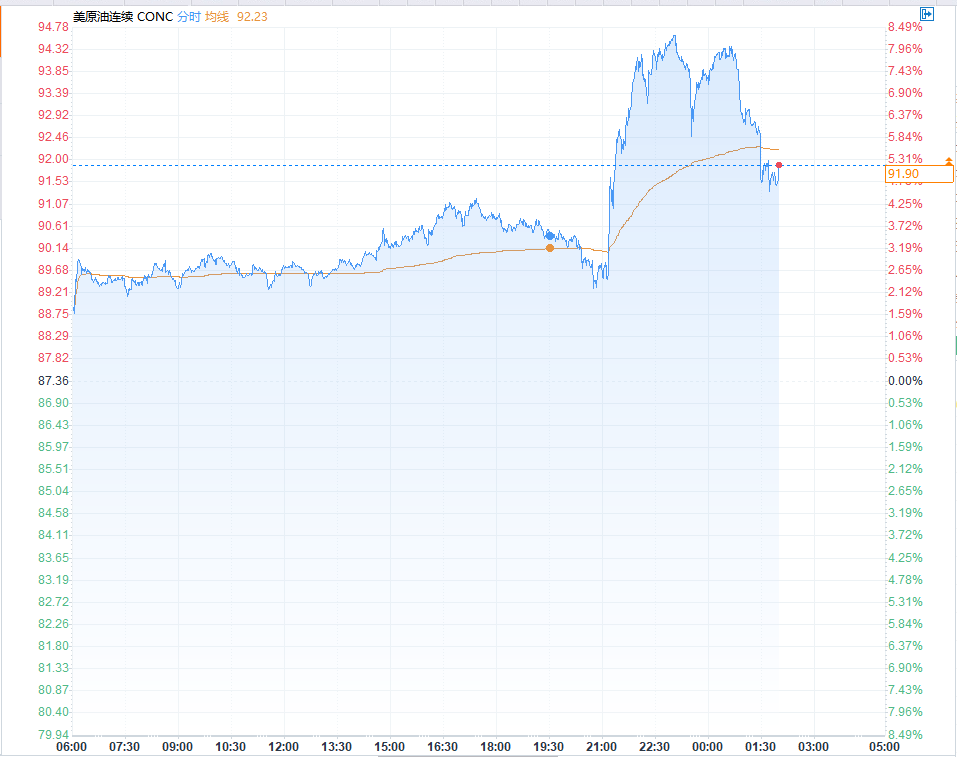
(WTI crude oil intraday chart source: EasyForex)
Iran's "strategic rhetoric": a carefully designed release of pressure
In summary, Iran's high-profile announcement of suspending negotiations and its threat of blockade is less a genuine "shirking of responsibility" and more a carefully orchestrated strategic statement and pressure test. It achieved at least three objectives: first, to demonstrate a firm stance against external pressure to domestic hardliners; second, to draw a clear red line for Israel's large-scale military operation in Lebanon; and third, to gain more leverage at the US-Iran negotiating table.
This operational model of "making high-profile threats while secretly leaving loopholes" is not unfamiliar to Iran. Suddenly announcing a withdrawal or taking strong measures at the most critical juncture of negotiations allows them to both provide a political explanation domestically and subtly send a soft signal of "hope for continued mediation" through neutral channels such as Pakistan, preventing the other side from completely misjudging the situation and causing it to spiral out of control.
To put it bluntly, Iran has "played a bit too big" in this round of games—it has made a lot of noise, but it has always kept its back door open, demonstrating superb survival wisdom and negotiation skills in its advances and retreats.
The main theme remains unchanged, but risks still exist.
Today's dramatic turn of events is essentially just an episode in the US-Iran nuclear talks, not a fundamental reversal of strategic direction. The willingness and underlying motivation for both sides to continue negotiations remain: Iran urgently needs the lifting of sanctions, the reopening of its ports, and the alleviation of domestic economic pressure; the US, on the other hand, hopes to use diplomatic achievements to lower oil prices, stabilize the global energy market, and fulfill its political commitments. This structural interest-driven dynamic has not changed.
However, one crucial variable warrants close attention: Israel. The closer the US-Iran negotiations get to an agreement, the greater the strategic pressure Israel faces. Once the Straits of Iran reopen and the US lifts some of its blockade, Israel's room for maneuver in the Middle East will significantly shrink. Therefore, there exists a risk, though low in probability, but potentially extremely destructive: Israel might further escalate the Lebanese conflict, creating a new fait accompli to force deeper US involvement, thereby disrupting the pace of US-Iran negotiations. The large-scale Israeli ground operations in Lebanon today are not without this underlying strategic consideration.
Furthermore, from a longer-term perspective, this event once again highlights the fragile dependence of the global energy market on Middle Eastern geopolitics. Any disturbance in the Strait of Hormuz will immediately have a ripple effect on global oil prices, supply chain costs, and even end-consumer prices.
Conclusion
This was a false alarm, but it was by no means a trivial matter. A nearly 8% surge in crude oil prices in a single day is extremely rare even in peacetime, fully demonstrating the market's extreme sensitivity to the risk of supply disruptions. Prices serve as a direct reminder to global participants that even the slightest uncertainty in the Middle East geopolitical situation is enough to change the energy market overnight.
The current basic assessment remains: the general direction of the US-Iran negotiations has not changed, and this round of shocks is more of a noise in the negotiation process than a signal of a trend reversal. However, investors should not let their guard down against tail risks—especially Israel, a "variable piece" that could suddenly stir up the entire game before either side makes its final move.
In the coming days, the market will continue to focus on subsequent statements from all parties, progress of the ceasefire, and actual military developments. Amidst the ongoing tug-of-war between geopolitical maneuvering and supply and demand realities, the high volatility of the crude oil market will persist, and rationality, caution, and risk control remain the best course of action.
The initial surge was primarily driven by the escalation of the conflict in Lebanon. Israel launched its largest ground offensive in approximately 25 years over the weekend and into Monday, conducting deep strikes against Iranian-backed Hezbollah targets. This major military operation quickly ignited market concerns about a further escalation of the Middle East conflict, causing oil prices to accelerate upwards as bullish funds gradually entered the market.
The second wave (and the most intense) came from Iran's strong response. Iranian semi-official media released two major announcements in quick succession: first, announcing the suspension of dialogue and document exchange with the United States through intermediaries (i.e., a suspension of nuclear talks); second, further vowing to "completely blockade" the Strait of Hormuz in response to Israel's military action in Lebanon. As a vital waterway for approximately one-fifth of the world's oil exports, the threat of its blockade carries immense real-world impact, instantly pushing market panic to its peak.
The two waves of impact combined to create today's classic "V"-shaped reversal, from a stable start to a sharp rise, followed by a pullback. Just last week, the market was optimistic about a possible temporary agreement between the US and Iran, causing Brent crude oil to fall by more than 11%. The rapid reversal of bullish and bearish sentiment makes today's market movement particularly striking.
Three key news items quickly halted the upward trend.
However, this extreme surge of nearly 8% did not last long. Three important pieces of information that followed acted like buckets of cold water, quickly extinguishing the market's euphoria, and oil prices rapidly fell from their peak to a level of around 5%.
Article 1: Hezbollah sends a goodwill signal. Hezbollah in Lebanon clearly stated that if Israel ceases its military aggression and withdraws from the relevant areas, they will abide by the previously reached ceasefire agreement. This response cleverly puts the ball back in Israel's court, indicating that the current conflict is not entirely unsolvable and that there is still room for diplomatic de-escalation, significantly alleviating market fears of a full-scale war.
Article Two: Trump's Down-to-Earth Response. In an interview with CNBC, Trump stated that he had not yet received formal official notification of Iran's suspension of negotiations, and casually told the reporter, "I really don't care." More importantly, he explicitly predicted that oil prices "will fall like rocks in a very short time," while emphasizing that the US would maintain its existing blockade measures on the Strait of Hormuz. This statement sent a strong signal: the US maintains sufficient strategic composure in the current situation, neither intending to compromise easily nor to further escalate the conflict, thus significantly reducing market risk appetite.
The third, and most decisive, point is that Iran actually hopes to continue mediation. According to Saudi Arabia's Al Arabiya television, citing the Pakistani Foreign Ministry, Iran has requested continued mediation through a third party to ease current tensions and advance the ceasefire process. This contrasts sharply with its previous hardline stance of publicly announcing a "suspension of negotiations" and a "blockade of the Strait," further confirming that this move by Iran is more of a tactical than a strategic shift.
(WTI crude oil intraday chart source: EasyForex)
Iran's "strategic rhetoric": a carefully designed release of pressure
In summary, Iran's high-profile announcement of suspending negotiations and its threat of blockade is less a genuine "shirking of responsibility" and more a carefully orchestrated strategic statement and pressure test. It achieved at least three objectives: first, to demonstrate a firm stance against external pressure to domestic hardliners; second, to draw a clear red line for Israel's large-scale military operation in Lebanon; and third, to gain more leverage at the US-Iran negotiating table.
This operational model of "making high-profile threats while secretly leaving loopholes" is not unfamiliar to Iran. Suddenly announcing a withdrawal or taking strong measures at the most critical juncture of negotiations allows them to both provide a political explanation domestically and subtly send a soft signal of "hope for continued mediation" through neutral channels such as Pakistan, preventing the other side from completely misjudging the situation and causing it to spiral out of control.
To put it bluntly, Iran has "played a bit too big" in this round of games—it has made a lot of noise, but it has always kept its back door open, demonstrating superb survival wisdom and negotiation skills in its advances and retreats.
The main theme remains unchanged, but risks still exist.
Today's dramatic turn of events is essentially just an episode in the US-Iran nuclear talks, not a fundamental reversal of strategic direction. The willingness and underlying motivation for both sides to continue negotiations remain: Iran urgently needs the lifting of sanctions, the reopening of its ports, and the alleviation of domestic economic pressure; the US, on the other hand, hopes to use diplomatic achievements to lower oil prices, stabilize the global energy market, and fulfill its political commitments. This structural interest-driven dynamic has not changed.
However, one crucial variable warrants close attention: Israel. The closer the US-Iran negotiations get to an agreement, the greater the strategic pressure Israel faces. Once the Straits of Iran reopen and the US lifts some of its blockade, Israel's room for maneuver in the Middle East will significantly shrink. Therefore, there exists a risk, though low in probability, but potentially extremely destructive: Israel might further escalate the Lebanese conflict, creating a new fait accompli to force deeper US involvement, thereby disrupting the pace of US-Iran negotiations. The large-scale Israeli ground operations in Lebanon today are not without this underlying strategic consideration.
Furthermore, from a longer-term perspective, this event once again highlights the fragile dependence of the global energy market on Middle Eastern geopolitics. Any disturbance in the Strait of Hormuz will immediately have a ripple effect on global oil prices, supply chain costs, and even end-consumer prices.
Conclusion
This was a false alarm, but it was by no means a trivial matter. A nearly 8% surge in crude oil prices in a single day is extremely rare even in peacetime, fully demonstrating the market's extreme sensitivity to the risk of supply disruptions. Prices serve as a direct reminder to global participants that even the slightest uncertainty in the Middle East geopolitical situation is enough to change the energy market overnight.
The current basic assessment remains: the general direction of the US-Iran negotiations has not changed, and this round of shocks is more of a noise in the negotiation process than a signal of a trend reversal. However, investors should not let their guard down against tail risks—especially Israel, a "variable piece" that could suddenly stir up the entire game before either side makes its final move.
In the coming days, the market will continue to focus on subsequent statements from all parties, progress of the ceasefire, and actual military developments. Amidst the ongoing tug-of-war between geopolitical maneuvering and supply and demand realities, the high volatility of the crude oil market will persist, and rationality, caution, and risk control remain the best course of action.
- Risk Warning and Disclaimer
- The market involves risk, and trading may not be suitable for all investors. This article is for reference only and does not constitute personal investment advice, nor does it take into account certain users’ specific investment objectives, financial situation, or other needs. Any investment decisions made based on this information are at your own risk.