Hawkish expectations from the Federal Reserve, coupled with a slowdown in the Japanese economy, pushed the dollar to a one-month high near the 160 yen level.
2026-06-03 10:19:57
The US dollar continued its strength against the Japanese yen (USD/JPY) during Wednesday's Asian trading session, briefly touching above 160.00, its highest level in nearly a month. Despite renewed verbal warnings of intervention from the Japanese government, the market reaction was muted, and the exchange rate remained high, indicating that dollar bulls still hold the upper hand.

Japan's Finance Minister stated that the government is closely monitoring foreign exchange market trends and will take appropriate measures to stabilize the exchange rate if necessary. However, the market generally believes that verbal intervention alone is unlikely to change the current fundamental situation of a strong dollar and a weak yen. The Japanese government has repeatedly released similar signals in recent months, but with the interest rate differential between the US and Japan widening, the actual effect has been relatively limited.
The core reason driving the dollar's rise against the yen remains the deteriorating outlook for Japanese economic growth. Newly released data shows a significant weakening of expansion momentum in Japan's service sector. The data shows that Japan's final services Purchasing Managers' Index (PMI) for May fell to 50.0, down from 51.0 in April, marking the lowest level in nearly a year and ending a 13-month streak of expansion.
More concerning is that Japan's new business growth has slowed for the third consecutive month, reaching its lowest level in nearly two years. This reflects the impact of external uncertainties on the business environment. Market concerns are that the escalating tensions in the Middle East, leading to continued increases in energy prices, will further increase the cost burden on Japanese businesses and households.
As a major global energy importer, Japan is highly dependent on overseas energy supplies. The current tense situation in the Persian Gulf region has led markets to reassess Japan's economic growth prospects for the coming quarters. Market estimates indicate that over 90% of Japan's crude oil imports rely on supplies from the Middle East, while the Strait of Hormuz handles approximately 20% of global seaborne crude oil transport. If energy transport continues to be disrupted, the Japanese economy will face greater imported inflationary pressures.
Meanwhile, positive factors in the US continue to drive the dollar higher. Recent negotiations between the US and Iran have stalled, escalating geopolitical risks in the Middle East. Market risk aversion is driving funds to flow into dollar assets. Furthermore, investor expectations regarding the Federal Reserve's future policy path are also changing.
The recent surge in energy prices has reignited market concerns about a rebound in inflationary pressures. Some institutions believe that if oil prices remain high, the pace of decline in US inflation may slow, which would limit the Federal Reserve's future room for easing. The market has even begun to discuss the possibility of the Fed maintaining high interest rates or even further tightening policy in 2026.
U.S. Secretary of State Marco Rubio previously stated that the U.S. would not lift sanctions against Iran simply because normal navigation had resumed in the Strait of Hormuz, and that any adjustments to sanctions would require further concessions from Iran on the nuclear issue. This implies that the conflict is unlikely to be resolved quickly in the short term, thus somewhat suppressing market risk appetite.
Meanwhile, US President Donald Trump announced an extension of the ceasefire agreement, while maintaining related lockdown measures until a final agreement is reached. The market believes that although the current situation is not out of control, uncertainty remains high, an environment that typically helps the US dollar maintain its safe-haven advantage.
Investors are currently focusing on the upcoming US ADP employment report and ISM services PMI data. If the data shows the US labor market remains robust while service sector activity continues to expand, it could further strengthen market expectations that the Federal Reserve will maintain a hawkish policy, thereby continuing to drive the dollar higher.
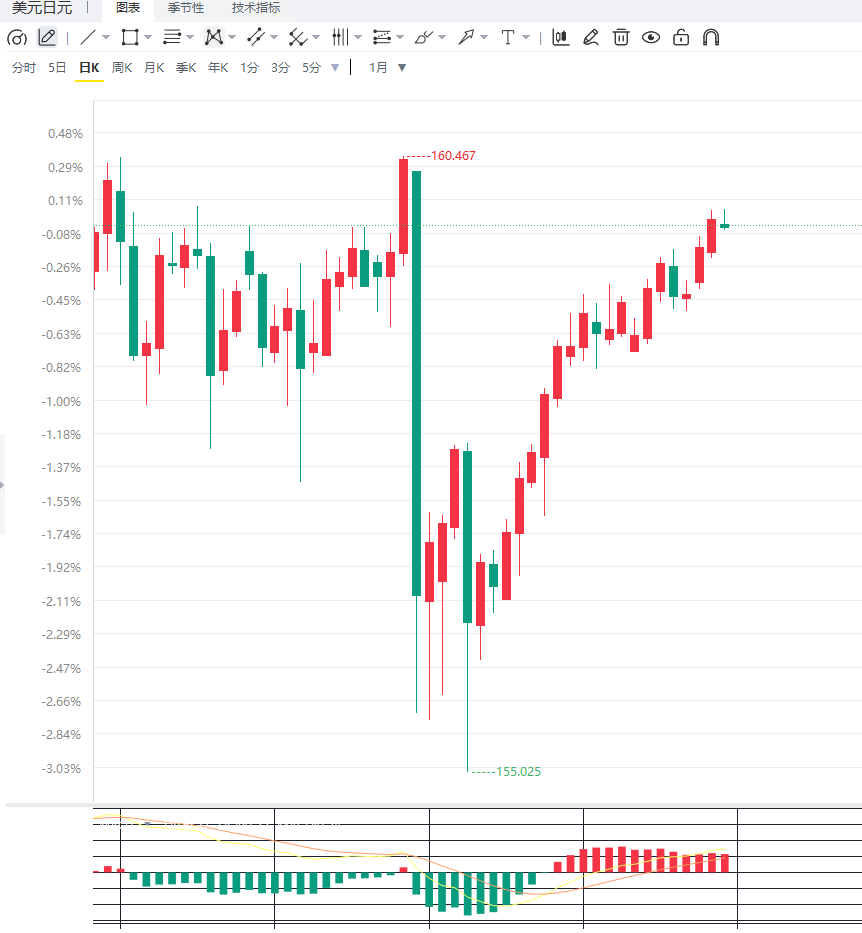
From a technical perspective, the USD/JPY daily chart has successfully broken through the key resistance area of 159.00 and stabilized above the major moving average system. The MACD indicator maintains a golden cross structure, indicating that the medium-term upward trend continues. Currently, 160.00 has become an important psychological level; if it is effectively broken and held, the upside targets are likely to be the 161.50 and 163.00 areas.
From a 4-hour chart perspective, the exchange rate maintains a clear upward channel. The RSI indicator is approaching overbought territory, indicating a slight acceleration in the short-term upward momentum, and a technical pullback cannot be ruled out. However, as long as the price remains above the 158.80 to 159.00 range, the bullish trend will remain intact. Even if a pullback occurs, it may attract new buying interest, and the overall market sentiment remains biased towards buying on dips.
Editor's Summary:
The recent rise in the USD/JPY exchange rate essentially reflects the continued divergence in economic fundamentals and monetary policy expectations between the US and Japan. On the one hand, Japan's slowing economic growth and rising energy import pressures have weakened the yen's attractiveness; on the other hand, the relatively robust US economy, coupled with a market reassessment of inflation risks, has provided significant support for the dollar. In the short term, the 160 level has become the focus of market attention. If US economic data continues to improve, the USD/JPY exchange rate is expected to further challenge its year-to-date high. However, at the same time, the risk of Japanese government intervention is also rising, and investors need to be wary of the possibility of increased exchange rate volatility.
Japan's Finance Minister stated that the government is closely monitoring foreign exchange market trends and will take appropriate measures to stabilize the exchange rate if necessary. However, the market generally believes that verbal intervention alone is unlikely to change the current fundamental situation of a strong dollar and a weak yen. The Japanese government has repeatedly released similar signals in recent months, but with the interest rate differential between the US and Japan widening, the actual effect has been relatively limited.
The core reason driving the dollar's rise against the yen remains the deteriorating outlook for Japanese economic growth. Newly released data shows a significant weakening of expansion momentum in Japan's service sector. The data shows that Japan's final services Purchasing Managers' Index (PMI) for May fell to 50.0, down from 51.0 in April, marking the lowest level in nearly a year and ending a 13-month streak of expansion.
More concerning is that Japan's new business growth has slowed for the third consecutive month, reaching its lowest level in nearly two years. This reflects the impact of external uncertainties on the business environment. Market concerns are that the escalating tensions in the Middle East, leading to continued increases in energy prices, will further increase the cost burden on Japanese businesses and households.
As a major global energy importer, Japan is highly dependent on overseas energy supplies. The current tense situation in the Persian Gulf region has led markets to reassess Japan's economic growth prospects for the coming quarters. Market estimates indicate that over 90% of Japan's crude oil imports rely on supplies from the Middle East, while the Strait of Hormuz handles approximately 20% of global seaborne crude oil transport. If energy transport continues to be disrupted, the Japanese economy will face greater imported inflationary pressures.
Meanwhile, positive factors in the US continue to drive the dollar higher. Recent negotiations between the US and Iran have stalled, escalating geopolitical risks in the Middle East. Market risk aversion is driving funds to flow into dollar assets. Furthermore, investor expectations regarding the Federal Reserve's future policy path are also changing.
The recent surge in energy prices has reignited market concerns about a rebound in inflationary pressures. Some institutions believe that if oil prices remain high, the pace of decline in US inflation may slow, which would limit the Federal Reserve's future room for easing. The market has even begun to discuss the possibility of the Fed maintaining high interest rates or even further tightening policy in 2026.
U.S. Secretary of State Marco Rubio previously stated that the U.S. would not lift sanctions against Iran simply because normal navigation had resumed in the Strait of Hormuz, and that any adjustments to sanctions would require further concessions from Iran on the nuclear issue. This implies that the conflict is unlikely to be resolved quickly in the short term, thus somewhat suppressing market risk appetite.
Meanwhile, US President Donald Trump announced an extension of the ceasefire agreement, while maintaining related lockdown measures until a final agreement is reached. The market believes that although the current situation is not out of control, uncertainty remains high, an environment that typically helps the US dollar maintain its safe-haven advantage.
Investors are currently focusing on the upcoming US ADP employment report and ISM services PMI data. If the data shows the US labor market remains robust while service sector activity continues to expand, it could further strengthen market expectations that the Federal Reserve will maintain a hawkish policy, thereby continuing to drive the dollar higher.
From a technical perspective, the USD/JPY daily chart has successfully broken through the key resistance area of 159.00 and stabilized above the major moving average system. The MACD indicator maintains a golden cross structure, indicating that the medium-term upward trend continues. Currently, 160.00 has become an important psychological level; if it is effectively broken and held, the upside targets are likely to be the 161.50 and 163.00 areas.
From a 4-hour chart perspective, the exchange rate maintains a clear upward channel. The RSI indicator is approaching overbought territory, indicating a slight acceleration in the short-term upward momentum, and a technical pullback cannot be ruled out. However, as long as the price remains above the 158.80 to 159.00 range, the bullish trend will remain intact. Even if a pullback occurs, it may attract new buying interest, and the overall market sentiment remains biased towards buying on dips.
Editor's Summary:
The recent rise in the USD/JPY exchange rate essentially reflects the continued divergence in economic fundamentals and monetary policy expectations between the US and Japan. On the one hand, Japan's slowing economic growth and rising energy import pressures have weakened the yen's attractiveness; on the other hand, the relatively robust US economy, coupled with a market reassessment of inflation risks, has provided significant support for the dollar. In the short term, the 160 level has become the focus of market attention. If US economic data continues to improve, the USD/JPY exchange rate is expected to further challenge its year-to-date high. However, at the same time, the risk of Japanese government intervention is also rising, and investors need to be wary of the possibility of increased exchange rate volatility.
- Risk Warning and Disclaimer
- The market involves risk, and trading may not be suitable for all investors. This article is for reference only and does not constitute personal investment advice, nor does it take into account certain users’ specific investment objectives, financial situation, or other needs. Any investment decisions made based on this information are at your own risk.