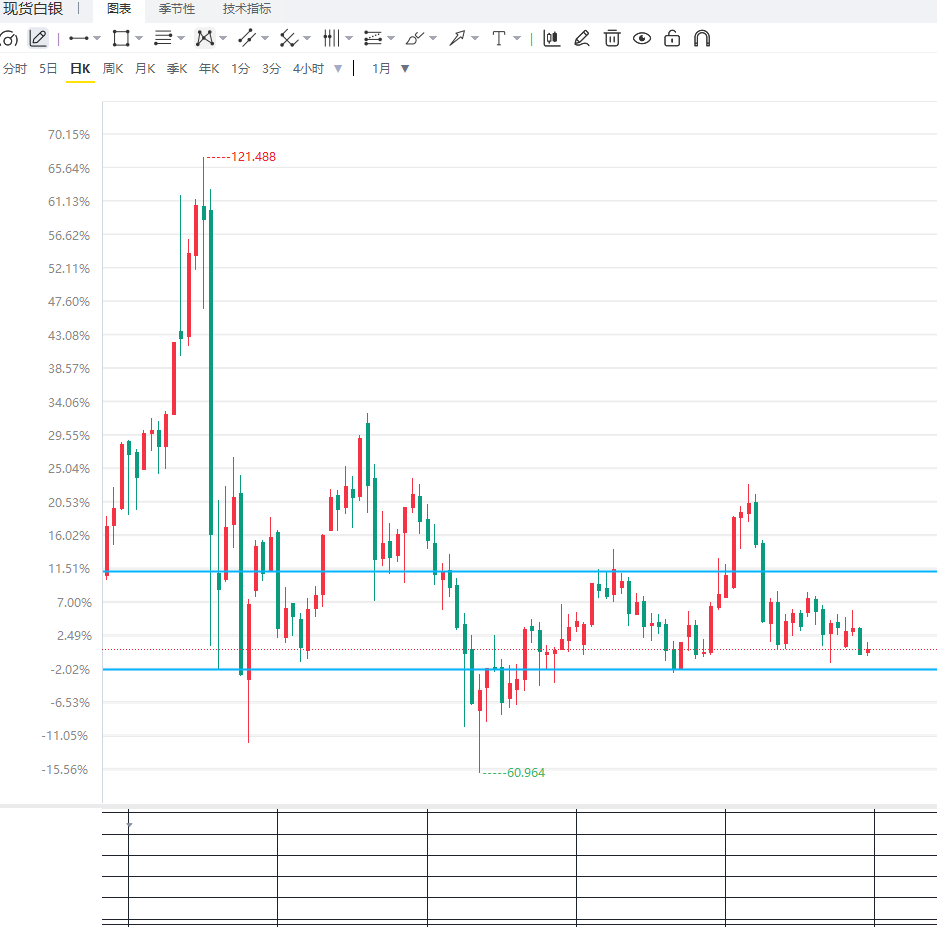
Silver rebounded near the lower edge of the trading range; be wary of another breakout.
2026-06-04 15:05:27
Spot silver (XAG/USD) rebounded during Asian trading hours on Thursday, rising about 0.6% to around $73.10 at one point. This followed a technical correction after a sharp sell-off on Wednesday. However, considering the overall market environment, silver still faces multiple pressures, and the sustainability of the rebound remains to be seen.
The market's focus remains on the situation in the Middle East and the resulting energy supply risks. US President Trump recently stated that the US maritime blockade of Iranian ports could theoretically continue until around Labor Day this year. Although he believes a prolonged blockade is unlikely, this statement has still raised concerns in the market about the future of Middle Eastern energy supplies.
If the United States and Iran fail to reach a long-term peace agreement, the restrictions on energy transport through the Strait of Hormuz could persist for an extended period. As one of the world's most important energy transport routes, the Strait of Hormuz handles approximately 20% of global seaborne crude oil shipments, and its operational status directly impacts international energy supply security.
Tensions in the energy market have kept international oil prices at high levels. This situation is not entirely favorable for the silver market. While geopolitical risks typically increase demand for safe-haven assets, inflationary pressures from rising oil prices are altering market perceptions of monetary policy.
As energy prices continue to climb, investor concerns about a resurgence of global inflation have increased significantly. The market generally believes that, given the high oil prices, the Federal Reserve may be forced to maintain high interest rates for an extended period to ensure inflation returns to a manageable level.
For silver, a high-interest-rate environment is a clear negative factor. Since silver itself does not generate interest income, when market interest rates rise, investors tend to allocate more funds to bonds and money market instruments with higher yields, thereby weakening the investment demand for precious metals such as silver.
In fact, since the escalation of the Middle East conflict, silver's overall performance has significantly lagged behind traditional safe-haven assets such as gold. The market had previously anticipated two possible interest rate cuts by the Federal Reserve, but this expectation has been significantly reversed with rising energy prices and renewed inflationary pressures.
Strong US economic data has further reinforced market expectations of a continued high-interest-rate environment. The latest ADP private sector employment data for May showed that 122,000 jobs were added that month, exceeding market expectations of 117,000 and significantly higher than the previous month's 105,000.
The continued resilience of the job market indicates that the US economy still possesses strong growth momentum, while also reducing the need for the Federal Reserve to shift to an easing policy in the short term. Following the data release, US Treasury yields remained high, supporting the US dollar index and putting downward pressure on the precious metals market.
The market is currently awaiting the upcoming US non-farm payrolls report. As a key indicator of the US economic situation, the non-farm payrolls data will directly influence investors' judgments on the future path of monetary policy. If the employment data continues to grow beyond expectations, market bets on the Federal Reserve maintaining a high-interest-rate policy may intensify further, thus putting new pressure on silver. Conversely, if employment growth slows significantly, it may weaken the advantage of the US dollar and US Treasury yields, providing some opportunities for a rebound in silver prices.
From a fund flow perspective, current market sentiment remains cautious. Investors are weighing the safe-haven demand stemming from geopolitical risks against the downward pressure on silver valuations from the high-interest-rate environment, resulting in a clearly volatile short-term trend for silver.
From a daily chart perspective, silver is still in a correction phase. The price continues to trade below the 20-day exponential moving average, indicating that short-term bearish forces remain dominant. Currently, the 20-day moving average is around $76.02, acting as a significant technical resistance level. The MACD indicator is below the zero line, suggesting that bearish momentum has not yet fully dissipated. The RSI indicator is around 43, below the 50 level, reflecting continued selling pressure in the market.
From a 4-hour chart perspective, silver rebounded after finding technical support around $71.80, but the overall structure remains weak. If it can break through the resistance at $76.02, it may further challenge the $78.83 area; if it falls below the support at $71.79, it may further test the important support area around $68.28.
Editor's Summary : The silver market is currently facing a dual struggle between geopolitical risks and monetary policy expectations. On the one hand, the ongoing tensions in the Middle East provide some safe-haven support for precious metals; on the other hand, rising energy prices and strong US economic data have reinforced market expectations that the Federal Reserve will maintain its high-interest-rate policy. The upcoming non-farm payroll report will be a crucial catalyst for silver's price movement. If the US job market continues to be strong, silver may face renewed selling pressure; if the data falls short of market expectations, it could push the dollar lower and drive a phased rebound in silver prices. In the medium term, the $76 area remains a key dividing line between bulls and bears; until a decisive breakout occurs, silver is expected to maintain a generally weak and volatile pattern.
The market's focus remains on the situation in the Middle East and the resulting energy supply risks. US President Trump recently stated that the US maritime blockade of Iranian ports could theoretically continue until around Labor Day this year. Although he believes a prolonged blockade is unlikely, this statement has still raised concerns in the market about the future of Middle Eastern energy supplies.
If the United States and Iran fail to reach a long-term peace agreement, the restrictions on energy transport through the Strait of Hormuz could persist for an extended period. As one of the world's most important energy transport routes, the Strait of Hormuz handles approximately 20% of global seaborne crude oil shipments, and its operational status directly impacts international energy supply security.
Tensions in the energy market have kept international oil prices at high levels. This situation is not entirely favorable for the silver market. While geopolitical risks typically increase demand for safe-haven assets, inflationary pressures from rising oil prices are altering market perceptions of monetary policy.
As energy prices continue to climb, investor concerns about a resurgence of global inflation have increased significantly. The market generally believes that, given the high oil prices, the Federal Reserve may be forced to maintain high interest rates for an extended period to ensure inflation returns to a manageable level.
For silver, a high-interest-rate environment is a clear negative factor. Since silver itself does not generate interest income, when market interest rates rise, investors tend to allocate more funds to bonds and money market instruments with higher yields, thereby weakening the investment demand for precious metals such as silver.
In fact, since the escalation of the Middle East conflict, silver's overall performance has significantly lagged behind traditional safe-haven assets such as gold. The market had previously anticipated two possible interest rate cuts by the Federal Reserve, but this expectation has been significantly reversed with rising energy prices and renewed inflationary pressures.
Strong US economic data has further reinforced market expectations of a continued high-interest-rate environment. The latest ADP private sector employment data for May showed that 122,000 jobs were added that month, exceeding market expectations of 117,000 and significantly higher than the previous month's 105,000.
The continued resilience of the job market indicates that the US economy still possesses strong growth momentum, while also reducing the need for the Federal Reserve to shift to an easing policy in the short term. Following the data release, US Treasury yields remained high, supporting the US dollar index and putting downward pressure on the precious metals market.
The market is currently awaiting the upcoming US non-farm payrolls report. As a key indicator of the US economic situation, the non-farm payrolls data will directly influence investors' judgments on the future path of monetary policy. If the employment data continues to grow beyond expectations, market bets on the Federal Reserve maintaining a high-interest-rate policy may intensify further, thus putting new pressure on silver. Conversely, if employment growth slows significantly, it may weaken the advantage of the US dollar and US Treasury yields, providing some opportunities for a rebound in silver prices.
From a fund flow perspective, current market sentiment remains cautious. Investors are weighing the safe-haven demand stemming from geopolitical risks against the downward pressure on silver valuations from the high-interest-rate environment, resulting in a clearly volatile short-term trend for silver.
From a daily chart perspective, silver is still in a correction phase. The price continues to trade below the 20-day exponential moving average, indicating that short-term bearish forces remain dominant. Currently, the 20-day moving average is around $76.02, acting as a significant technical resistance level. The MACD indicator is below the zero line, suggesting that bearish momentum has not yet fully dissipated. The RSI indicator is around 43, below the 50 level, reflecting continued selling pressure in the market.
From a 4-hour chart perspective, silver rebounded after finding technical support around $71.80, but the overall structure remains weak. If it can break through the resistance at $76.02, it may further challenge the $78.83 area; if it falls below the support at $71.79, it may further test the important support area around $68.28.
Editor's Summary : The silver market is currently facing a dual struggle between geopolitical risks and monetary policy expectations. On the one hand, the ongoing tensions in the Middle East provide some safe-haven support for precious metals; on the other hand, rising energy prices and strong US economic data have reinforced market expectations that the Federal Reserve will maintain its high-interest-rate policy. The upcoming non-farm payroll report will be a crucial catalyst for silver's price movement. If the US job market continues to be strong, silver may face renewed selling pressure; if the data falls short of market expectations, it could push the dollar lower and drive a phased rebound in silver prices. In the medium term, the $76 area remains a key dividing line between bulls and bears; until a decisive breakout occurs, silver is expected to maintain a generally weak and volatile pattern.
- Risk Warning and Disclaimer
- The market involves risk, and trading may not be suitable for all investors. This article is for reference only and does not constitute personal investment advice, nor does it take into account certain users’ specific investment objectives, financial situation, or other needs. Any investment decisions made based on this information are at your own risk.