Crude oil trading alert: A sharp drop of nearly 8 million barrels in US crude oil inventories coupled with escalating supply risks in the Middle East has kept oil prices range-bound.
2026-06-05 09:22:07
International crude oil prices edged lower in Asian trading on Friday, with WTI crude oil on the New York Mercantile Exchange remaining around $93 per barrel, last trading near $92.70 per barrel. Despite continued geopolitical tensions in the Middle East, market optimism regarding progress in diplomatic negotiations is waning some safe-haven buying, leading to a technical correction in oil prices after three consecutive days of gains.

The core factors influencing the energy market recently remain from the Middle East. Iranian Foreign Minister Araqchi stated that the Strait of Hormuz falls within the territorial waters of both Iran and Oman, and emphasized that US military facilities in the region still face the risk of retaliation. As the Strait of Hormuz is one of the world's most important energy transport routes, its future accessibility is of great concern to the market. Market estimates indicate that the Strait of Hormuz handles approximately 20% of global seaborne crude oil transport, and any disruption to this transport could quickly push up international oil prices.
Meanwhile, US President Trump stated that the US and Iran are close to reaching a peace agreement, with substantial progress expected around the weekend. This eased market concerns about a full-blown escalation of the situation in the Middle East. Investors believe that if diplomatic negotiations proceed smoothly, future regional supply risks may decrease, thereby reducing pressure on the global energy market.
However, geopolitical risks have not completely subsided. Israeli Defense Minister Katz stated that even with the ceasefire agreement in effect, Israel will continue its military operations in Lebanon, leaving some displaced residents temporarily unable to return home. This indicates that significant uncertainty remains in the region, and market risk aversion has not completely dissipated.
On the supply side, oil prices continued to receive significant support. The latest data from the U.S. Energy Information Administration (EIA) showed that U.S. commercial crude oil inventories fell by 7.974 million barrels in the week ending May 29, significantly higher than the previous week's decrease of 3.327 million barrels and far exceeding market expectations of a 4 million barrel decline. This sustained and substantial decline in inventories reflects strong domestic refinery demand and sustained high levels of export demand.
Analysts point out that a continued decline in inventory data typically indicates a tightening supply in the spot market. Especially with the summer travel season approaching, US gasoline demand may increase further, thus accelerating the destocking of crude oil. On the other hand, the Organization of the Petroleum Exporting Countries (OPEC) remains optimistic about the global oil demand outlook. OPEC Secretary General Haitham Al-Gheis stated that despite continued volatility in the Middle East and the risk of the Strait of Hormuz being closed, the organization still expects global oil demand to maintain robust growth in the future and therefore will not adjust its current demand forecast.
He further emphasized that energy companies' long-term investment plans should not be significantly altered by short-term events. OPEC believes that global economic activity remains resilient, and energy consumption growth in emerging economies will continue to support the fundamentals of the oil market. From a market sentiment perspective, investors are currently weighing the interplay between two main factors. On the one hand, Middle East supply risks and a significant decline in US inventories continue to support oil prices; on the other hand, expectations of a potential easing of tensions between the US and Iran limit further upward movement in oil prices. In the short term, these two forces may jointly dominate the crude oil market trend.
From a daily chart perspective, WTI crude oil remains within a range, with prices consistently trading above major moving averages, indicating that the medium- to long-term bullish trend remains intact. The key support level is currently around $90, with further support around $88; significant resistance levels are around $93.50 and $95.00. The MACD indicator remains above the zero line, suggesting that bullish momentum still dominates. The RSI indicator is in a relatively strong zone but is gradually approaching overbought levels, indicating a potential need for short-term technical consolidation.
From a 4-hour chart perspective, oil prices have entered a high-level consolidation phase after a continuous rise, with the short-term moving average system maintaining a bullish alignment. If a breakout above the $93.50 resistance area is achieved, there is a chance to further challenge the $95 level; conversely, a break below the $90 support could trigger some profit-taking and test the support level in the $88-$87 area. The short-term MACD histogram has narrowed, indicating a slight weakening of short-term bullish momentum, but the overall trend remains biased towards a slightly bullish consolidation.
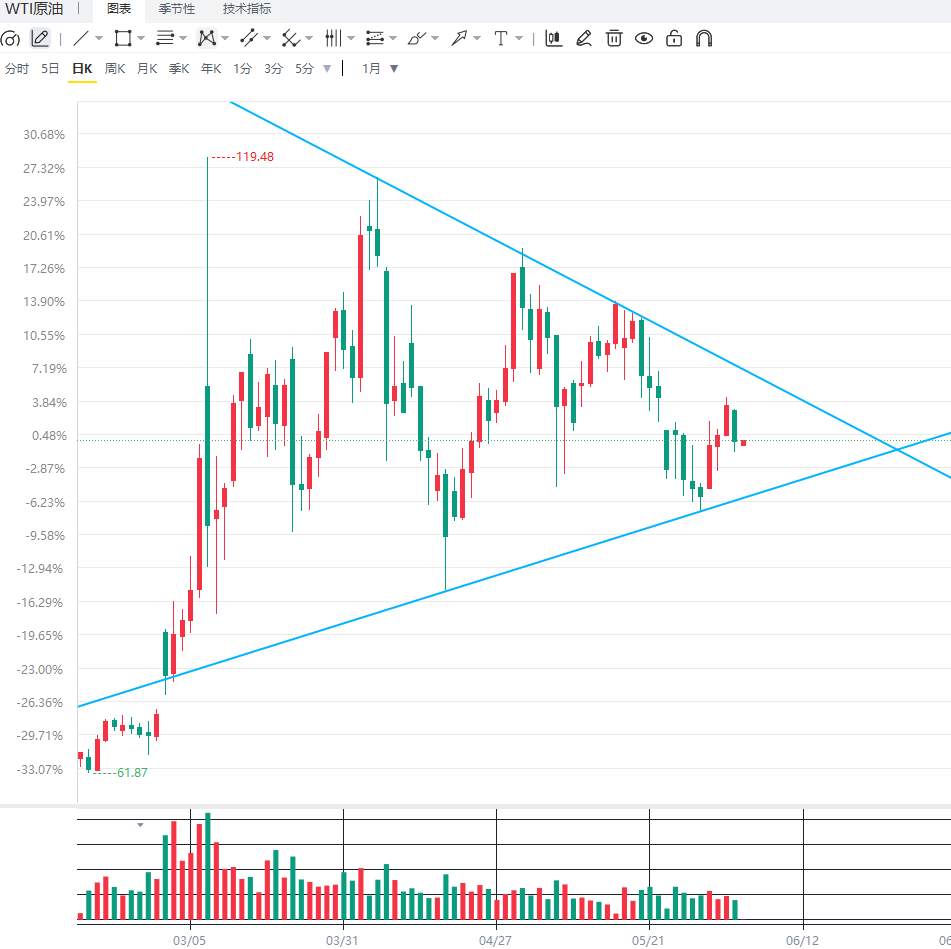
The editor summarizes that the current international crude oil market is in a phase where geopolitical risks and fundamental support are at play. The unexpected decline in US crude oil inventories indicates a tightening supply, while OPEC's continued optimism about global demand growth further strengthens market expectations of a tightening supply-demand balance. From a medium- to long-term perspective, as long as global economic activity remains stable, the crude oil market still has a strong supporting foundation. However, the biggest variable affecting future oil price trends remains the situation in the Middle East. If the US and Iran can reach a peace agreement, market risk premiums may gradually decline, thus limiting the upside potential for oil prices; conversely, if shipping through the Strait of Hormuz is affected, international oil prices may re-enter a phase of rapid increases. Investors should pay close attention to changes in the geopolitical situation, US inventory data, and subsequent policy signals from OPEC, as these factors will determine the direction of crude oil prices in the next stage.
The core factors influencing the energy market recently remain from the Middle East. Iranian Foreign Minister Araqchi stated that the Strait of Hormuz falls within the territorial waters of both Iran and Oman, and emphasized that US military facilities in the region still face the risk of retaliation. As the Strait of Hormuz is one of the world's most important energy transport routes, its future accessibility is of great concern to the market. Market estimates indicate that the Strait of Hormuz handles approximately 20% of global seaborne crude oil transport, and any disruption to this transport could quickly push up international oil prices.
Meanwhile, US President Trump stated that the US and Iran are close to reaching a peace agreement, with substantial progress expected around the weekend. This eased market concerns about a full-blown escalation of the situation in the Middle East. Investors believe that if diplomatic negotiations proceed smoothly, future regional supply risks may decrease, thereby reducing pressure on the global energy market.
However, geopolitical risks have not completely subsided. Israeli Defense Minister Katz stated that even with the ceasefire agreement in effect, Israel will continue its military operations in Lebanon, leaving some displaced residents temporarily unable to return home. This indicates that significant uncertainty remains in the region, and market risk aversion has not completely dissipated.
On the supply side, oil prices continued to receive significant support. The latest data from the U.S. Energy Information Administration (EIA) showed that U.S. commercial crude oil inventories fell by 7.974 million barrels in the week ending May 29, significantly higher than the previous week's decrease of 3.327 million barrels and far exceeding market expectations of a 4 million barrel decline. This sustained and substantial decline in inventories reflects strong domestic refinery demand and sustained high levels of export demand.
Analysts point out that a continued decline in inventory data typically indicates a tightening supply in the spot market. Especially with the summer travel season approaching, US gasoline demand may increase further, thus accelerating the destocking of crude oil. On the other hand, the Organization of the Petroleum Exporting Countries (OPEC) remains optimistic about the global oil demand outlook. OPEC Secretary General Haitham Al-Gheis stated that despite continued volatility in the Middle East and the risk of the Strait of Hormuz being closed, the organization still expects global oil demand to maintain robust growth in the future and therefore will not adjust its current demand forecast.
He further emphasized that energy companies' long-term investment plans should not be significantly altered by short-term events. OPEC believes that global economic activity remains resilient, and energy consumption growth in emerging economies will continue to support the fundamentals of the oil market. From a market sentiment perspective, investors are currently weighing the interplay between two main factors. On the one hand, Middle East supply risks and a significant decline in US inventories continue to support oil prices; on the other hand, expectations of a potential easing of tensions between the US and Iran limit further upward movement in oil prices. In the short term, these two forces may jointly dominate the crude oil market trend.
From a daily chart perspective, WTI crude oil remains within a range, with prices consistently trading above major moving averages, indicating that the medium- to long-term bullish trend remains intact. The key support level is currently around $90, with further support around $88; significant resistance levels are around $93.50 and $95.00. The MACD indicator remains above the zero line, suggesting that bullish momentum still dominates. The RSI indicator is in a relatively strong zone but is gradually approaching overbought levels, indicating a potential need for short-term technical consolidation.
From a 4-hour chart perspective, oil prices have entered a high-level consolidation phase after a continuous rise, with the short-term moving average system maintaining a bullish alignment. If a breakout above the $93.50 resistance area is achieved, there is a chance to further challenge the $95 level; conversely, a break below the $90 support could trigger some profit-taking and test the support level in the $88-$87 area. The short-term MACD histogram has narrowed, indicating a slight weakening of short-term bullish momentum, but the overall trend remains biased towards a slightly bullish consolidation.
The editor summarizes that the current international crude oil market is in a phase where geopolitical risks and fundamental support are at play. The unexpected decline in US crude oil inventories indicates a tightening supply, while OPEC's continued optimism about global demand growth further strengthens market expectations of a tightening supply-demand balance. From a medium- to long-term perspective, as long as global economic activity remains stable, the crude oil market still has a strong supporting foundation. However, the biggest variable affecting future oil price trends remains the situation in the Middle East. If the US and Iran can reach a peace agreement, market risk premiums may gradually decline, thus limiting the upside potential for oil prices; conversely, if shipping through the Strait of Hormuz is affected, international oil prices may re-enter a phase of rapid increases. Investors should pay close attention to changes in the geopolitical situation, US inventory data, and subsequent policy signals from OPEC, as these factors will determine the direction of crude oil prices in the next stage.
- Risk Warning and Disclaimer
- The market involves risk, and trading may not be suitable for all investors. This article is for reference only and does not constitute personal investment advice, nor does it take into account certain users’ specific investment objectives, financial situation, or other needs. Any investment decisions made based on this information are at your own risk.