Gold and crude oil are entering a period of uncertainty: High oil prices may simultaneously destroy demand and ignite safe-haven demand.
2026-06-05 20:29:28
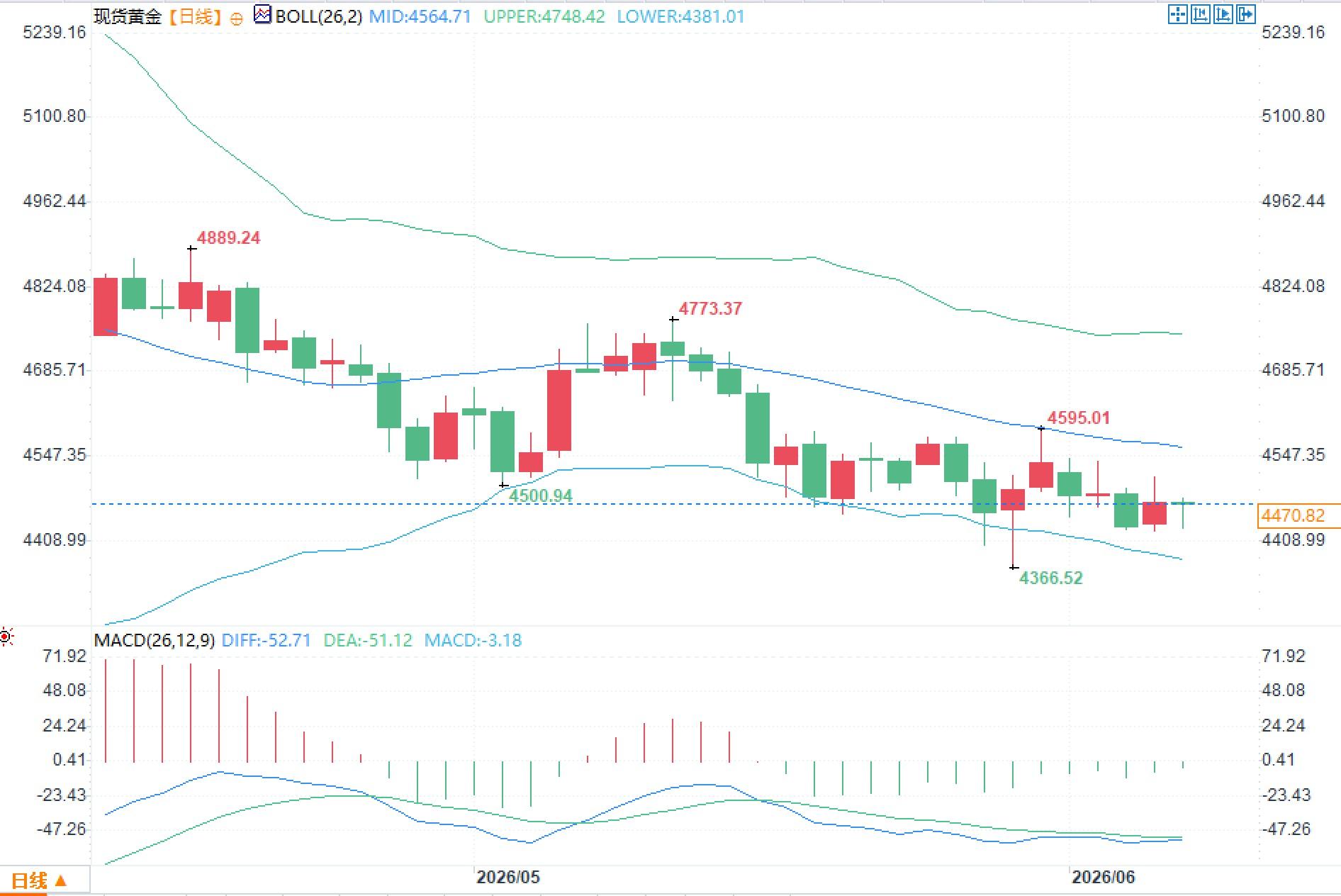
On Friday, June 5th, in pre-market trading in the US, both precious metals and energy markets were in a highly volatile range. Spot gold was trading around $4,470 per ounce, while Brent crude was around $95 per barrel. Oil prices, driven by expectations of Persian Gulf shipping, declining inventories, and summer demand variables, remained significantly higher than levels seen a year ago, but had retreated from their near one-month highs. US commercial crude oil inventories fell by approximately 8 million barrels to 433.7 million barrels in the latest weekly update, about 3% below the five-year average for the same period.
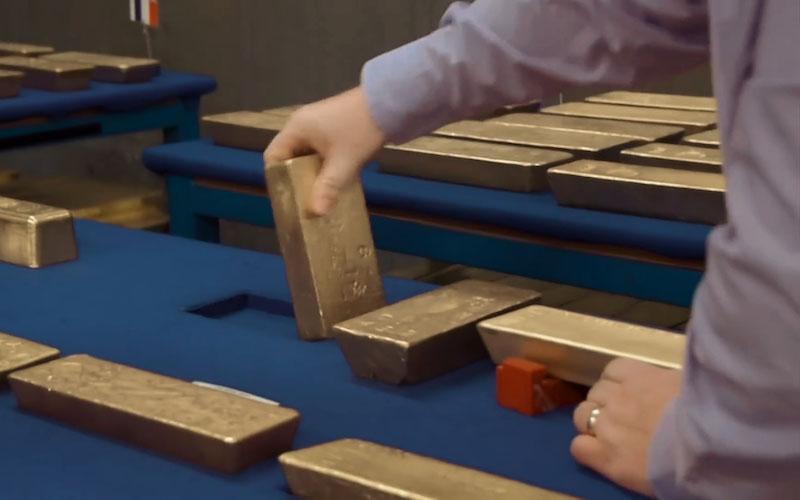
The most significant change in the gold market right now is not the continued expansion of aggregate demand, but rather a reshuffling of the demand structure. Annual forecasts from precious metals research institutions indicate that global gold demand is projected to decline by 2% to 4,177 tons in 2026, primarily dragged down by an 11% drop in jewelry demand and a slowdown in central bank gold purchases. Meanwhile, physical investment demand, such as gold bars and coins, is expected to grow by 15%, reaching its highest level since 2013, and may surpass jewelry demand for the first time.
This means that high gold prices have significantly squeezed end-user decorative consumption, but have not weakened gold's financial attributes. Data from the World Gold Council in the first quarter also shows that, amid record-high prices, jewelry demand by weight decreased by 23% year-on-year, but the value of purchases increased by 31% year-on-year, indicating that buying has not disappeared, but rather shifted from weight expansion to value confirmation. Central banks' net gold purchases in the first quarter were 244 tons, still up 3% year-on-year, but selling activity increased during the quarter, indicating that official departments' gold allocation is more dependent on foreign exchange liquidity and energy bill pressures.
The short-term pressure on spot gold does not signify the end of its upward trend. The core contradiction for gold lies in the fact that rising oil prices will increase inflation stickiness and raise expectations of real interest rates, thereby suppressing the valuation of non-interest-bearing assets; however, the same energy shock will increase demand for safe-haven assets and reserves, providing support for gold on the downside.
Traders are focusing on shifts in demand elasticity. Declining jewelry demand typically weakens support during traditional peak seasons, but increased investment demand raises price sensitivity to real interest rates, risk events, and monetary credit variables. In other words, gold is no longer primarily priced by end-consumer demand, but rather by asset allocation needs. Under this structure, price fluctuations may be faster and more concentrated, especially during periods when oil prices push up inflation expectations while negotiations are stalled, making gold susceptible to a simultaneous interplay between interest rate pressures and safe-haven buying.
The crude oil market appears to still be trading on expectations of a recovery in Persian Gulf flows, but inventory data is eroding the safety margin of this optimistic pricing. The latest weekly report from the U.S. Energy Information Administration shows that for the week ending May 29, U.S. refinery utilization was 94.7%, with crude oil processing averaging 16.9 million barrels per day, gasoline production falling to 9.4 million barrels per day, and distillate fuel production rising to 5.2 million barrels per day. Commercial crude oil inventories fell by 8 million barrels weekly, coupled with a decline in strategic reserves, indicating that the supply buffer is being continuously depleted.
The tightness in the oil market is more alarming. Refined product inventories in the ARA region fell by 17,000 tons weekly to 4.4 million tons, with gasoline and jet fuel inventories declining by 81,000 tons and 49,000 tons respectively, with jet fuel inventories falling to their lowest level since 2020. Singapore's oil product inventories fell by 6.14 million barrels in a single week, the largest drop since December 2024 and the lowest level since October 2024. While crude oil prices themselves may not immediately undergo a risk reassessment, tightness in the refining end of gasoline, jet fuel, and diesel may trigger a cooling in end-user demand before crude oil prices do.
The current relationship between gold and crude oil is not a simple matter of them rising and falling in tandem. If oil prices rise due to supply constraints, it will suppress gold valuations through inflation expectations and policy interest rate expectations; however, if rising oil prices are accompanied by a continued decline in inventories, increased transportation risks, and weakening growth expectations, gold will attract safe-haven demand and asset rebalancing demand. The International Energy Agency's May report shows that, affected by contracting end-consumer demand, global oil demand is expected to decline by 420,000 barrels per day in 2026, and by 2.4 million barrels per day year-on-year in the second quarter, reflecting that high oil prices and supply disruptions have already begun to undermine some demand.
Therefore, the core issue for commodities at present is not a single-directional judgment, but rather the tug-of-war between "high prices suppressing demand" and "low inventories amplifying risks." For gold, the focus is on whether investment demand continues to absorb the shrinking jewelry demand; for crude oil, the focus is on whether refined oil inventories continue to decline and force prices to rebalance through demand disruption. If expectations for Middle East negotiations continue to fluctuate, and inventory reduction does not reverse, the risk premium for crude oil will be difficult to completely disappear. If oil prices continue to transmit to inflation, gold will face short-term pressure from interest rate repricing, but may still be supported by physical investment and reserve demand in the medium term.
The main driver for gold has shifted from consumer demand to investment demand.
The most significant change in the gold market right now is not the continued expansion of aggregate demand, but rather a reshuffling of the demand structure. Annual forecasts from precious metals research institutions indicate that global gold demand is projected to decline by 2% to 4,177 tons in 2026, primarily dragged down by an 11% drop in jewelry demand and a slowdown in central bank gold purchases. Meanwhile, physical investment demand, such as gold bars and coins, is expected to grow by 15%, reaching its highest level since 2013, and may surpass jewelry demand for the first time.
This means that high gold prices have significantly squeezed end-user decorative consumption, but have not weakened gold's financial attributes. Data from the World Gold Council in the first quarter also shows that, amid record-high prices, jewelry demand by weight decreased by 23% year-on-year, but the value of purchases increased by 31% year-on-year, indicating that buying has not disappeared, but rather shifted from weight expansion to value confirmation. Central banks' net gold purchases in the first quarter were 244 tons, still up 3% year-on-year, but selling activity increased during the quarter, indicating that official departments' gold allocation is more dependent on foreign exchange liquidity and energy bill pressures.
High gold prices face both pressure and support.
The short-term pressure on spot gold does not signify the end of its upward trend. The core contradiction for gold lies in the fact that rising oil prices will increase inflation stickiness and raise expectations of real interest rates, thereby suppressing the valuation of non-interest-bearing assets; however, the same energy shock will increase demand for safe-haven assets and reserves, providing support for gold on the downside.
Traders are focusing on shifts in demand elasticity. Declining jewelry demand typically weakens support during traditional peak seasons, but increased investment demand raises price sensitivity to real interest rates, risk events, and monetary credit variables. In other words, gold is no longer primarily priced by end-consumer demand, but rather by asset allocation needs. Under this structure, price fluctuations may be faster and more concentrated, especially during periods when oil prices push up inflation expectations while negotiations are stalled, making gold susceptible to a simultaneous interplay between interest rate pressures and safe-haven buying.
The focus of the crude oil market has shifted from news expectations to inventory depletion.
The crude oil market appears to still be trading on expectations of a recovery in Persian Gulf flows, but inventory data is eroding the safety margin of this optimistic pricing. The latest weekly report from the U.S. Energy Information Administration shows that for the week ending May 29, U.S. refinery utilization was 94.7%, with crude oil processing averaging 16.9 million barrels per day, gasoline production falling to 9.4 million barrels per day, and distillate fuel production rising to 5.2 million barrels per day. Commercial crude oil inventories fell by 8 million barrels weekly, coupled with a decline in strategic reserves, indicating that the supply buffer is being continuously depleted.
The tightness in the oil market is more alarming. Refined product inventories in the ARA region fell by 17,000 tons weekly to 4.4 million tons, with gasoline and jet fuel inventories declining by 81,000 tons and 49,000 tons respectively, with jet fuel inventories falling to their lowest level since 2020. Singapore's oil product inventories fell by 6.14 million barrels in a single week, the largest drop since December 2024 and the lowest level since October 2024. While crude oil prices themselves may not immediately undergo a risk reassessment, tightness in the refining end of gasoline, jet fuel, and diesel may trigger a cooling in end-user demand before crude oil prices do.
The correlation between gold and crude oil has entered a complex phase.
The current relationship between gold and crude oil is not a simple matter of them rising and falling in tandem. If oil prices rise due to supply constraints, it will suppress gold valuations through inflation expectations and policy interest rate expectations; however, if rising oil prices are accompanied by a continued decline in inventories, increased transportation risks, and weakening growth expectations, gold will attract safe-haven demand and asset rebalancing demand. The International Energy Agency's May report shows that, affected by contracting end-consumer demand, global oil demand is expected to decline by 420,000 barrels per day in 2026, and by 2.4 million barrels per day year-on-year in the second quarter, reflecting that high oil prices and supply disruptions have already begun to undermine some demand.
Therefore, the core issue for commodities at present is not a single-directional judgment, but rather the tug-of-war between "high prices suppressing demand" and "low inventories amplifying risks." For gold, the focus is on whether investment demand continues to absorb the shrinking jewelry demand; for crude oil, the focus is on whether refined oil inventories continue to decline and force prices to rebalance through demand disruption. If expectations for Middle East negotiations continue to fluctuate, and inventory reduction does not reverse, the risk premium for crude oil will be difficult to completely disappear. If oil prices continue to transmit to inflation, gold will face short-term pressure from interest rate repricing, but may still be supported by physical investment and reserve demand in the medium term.
- Risk Warning and Disclaimer
- The market involves risk, and trading may not be suitable for all investors. This article is for reference only and does not constitute personal investment advice, nor does it take into account certain users’ specific investment objectives, financial situation, or other needs. Any investment decisions made based on this information are at your own risk.